Table of Contents
Introduction
Cimzia is the brand name of certolizumab pegol, a biologic anti-inflammatory drug used in several immune-mediated inflammatory diseases. Pharmacologically, Cimzia is a tumor necrosis factor blocker, commonly called a TNF inhibitor or anti-TNF drug.
Tumor necrosis factor-alpha, or TNF-alpha, is a major pro-inflammatory cytokine involved in immune-cell activation, cytokine release, leukocyte migration, endothelial activation, granuloma formation, synovial inflammation, intestinal inflammation, skin inflammation, and tissue damage. Excessive TNF-alpha activity is important in diseases such as Crohn’s disease, rheumatoid arthritis, psoriatic arthritis, ankylosing spondylitis, non-radiographic axial spondyloarthritis, polyarticular juvenile idiopathic arthritis, and plaque psoriasis.
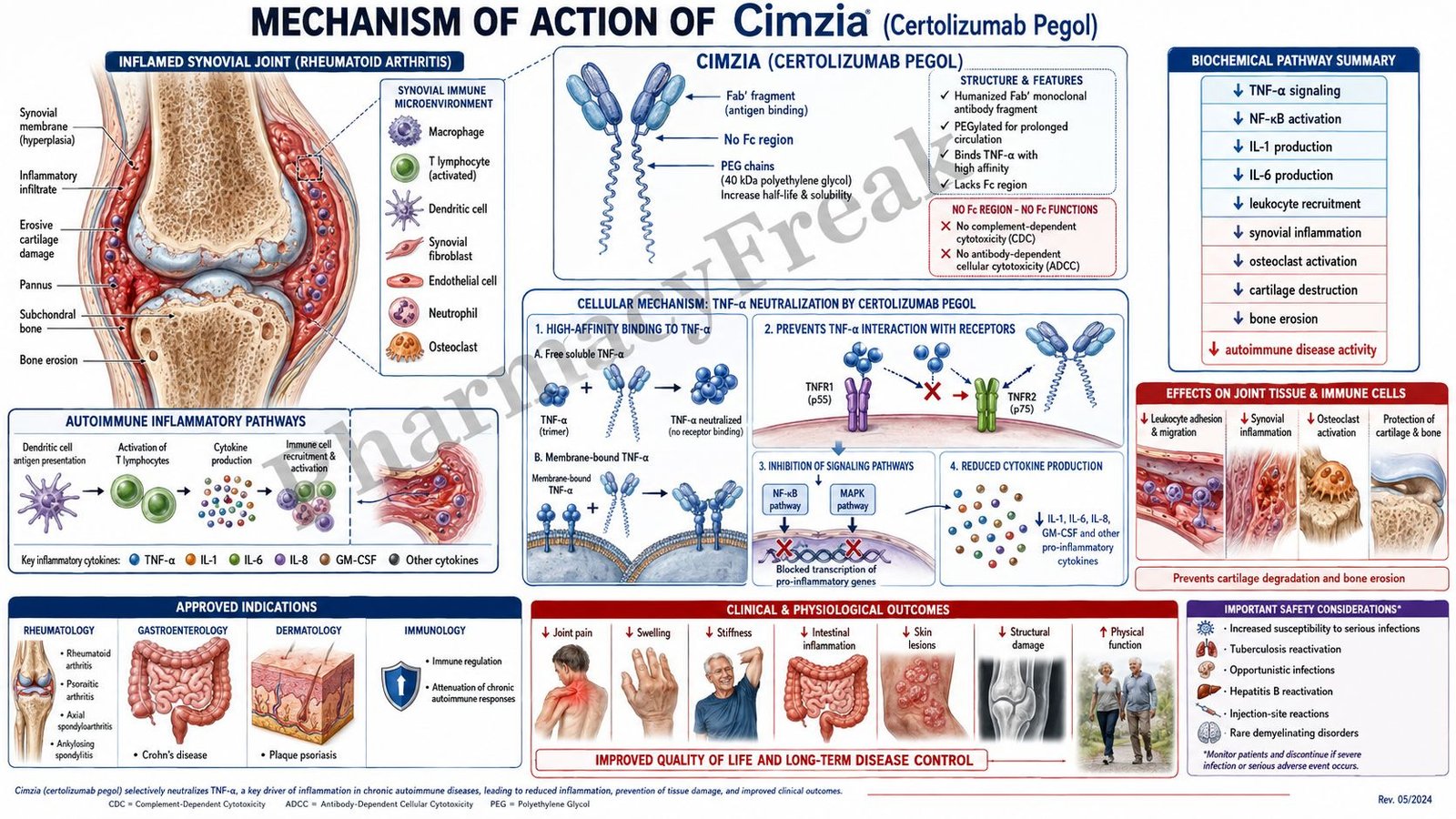
Certolizumab pegol is different from many other TNF inhibitors because it is a pegylated Fab’ fragment of a humanized antibody. It is conjugated to polyethylene glycol, or PEG, which increases its duration of action. Unlike complete IgG antibodies, certolizumab pegol does not contain an Fc region. This structural feature is clinically important because it does not fix complement or cause antibody-dependent cell-mediated cytotoxicity in vitro. The official label describes Cimzia as a recombinant humanized antibody Fab’ fragment specific for human TNF-alpha and conjugated to PEG.
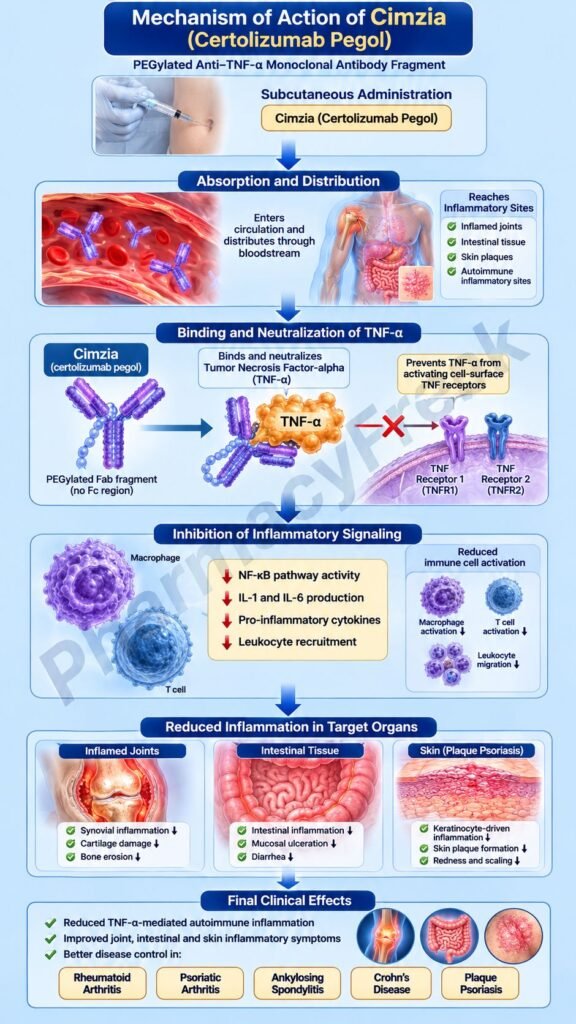
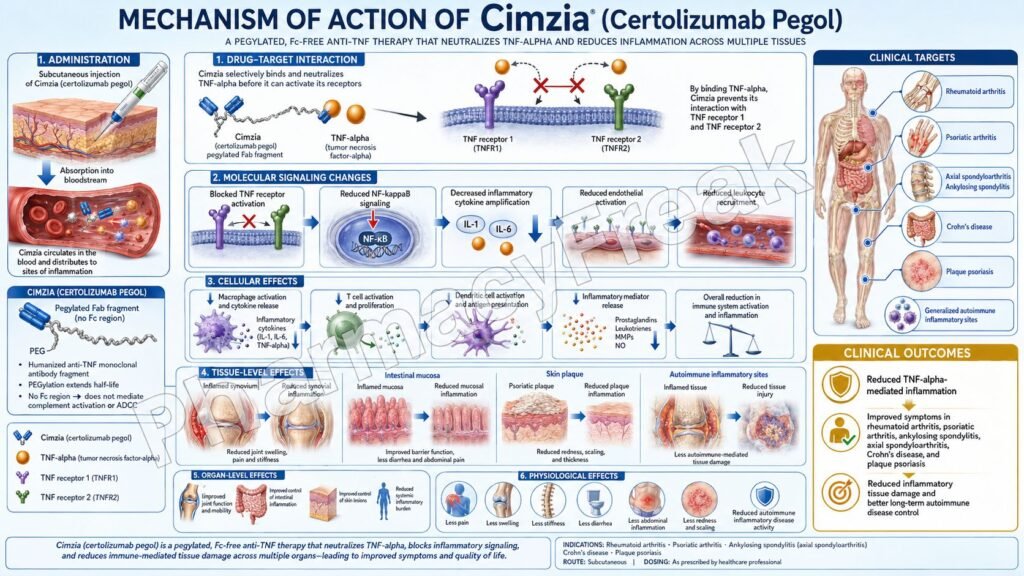
Cimzia works by selectively binding and neutralizing human TNF-alpha. By preventing TNF-alpha from activating TNF receptors, it reduces downstream inflammatory signaling and improves inflammatory disease activity.
For exam purposes, Cimzia should be remembered as a pegylated anti-TNF-alpha Fab’ fragment without an Fc region. It neutralizes soluble and membrane-associated TNF-alpha, reduces TNF-driven inflammation, and is used in inflammatory bowel disease, arthritis, spondyloarthritis, and plaque psoriasis.
Mechanism of Action (Step-wise)
Step 1: TNF-alpha is produced during immune activation
TNF-alpha is produced mainly by activated macrophages, monocytes, T lymphocytes, natural killer cells, and other immune cells. It is released during inflammatory and autoimmune responses and acts as a central amplifier of inflammation.
Step 2: TNF-alpha binds to TNF receptors
TNF-alpha normally binds to cell-surface TNF receptors, mainly TNFR1 and TNFR2. These receptors are present on many cell types, including immune cells, endothelial cells, fibroblasts, synoviocytes, keratinocytes, and intestinal epithelial-associated cells.
Step 3: TNF receptor activation triggers inflammatory signaling
After TNF-alpha binds to its receptors, intracellular signaling pathways such as NF-kB, MAPK, and other inflammatory cascades are activated. These pathways increase transcription of inflammatory genes.
Step 4: Pro-inflammatory mediators increase
TNF-alpha signaling increases production of cytokines, chemokines, adhesion molecules, prostaglandins, nitric oxide, matrix metalloproteinases, and other inflammatory mediators. The label notes that TNF-alpha upregulates adhesion molecules, chemokines, MHC molecules, and downstream inflammatory mediators such as interleukin-1, prostaglandins, platelet activating factor, and nitric oxide.
Step 5: TNF-alpha drives intestinal inflammation in Crohn’s disease
In Crohn’s disease, TNF-alpha is strongly expressed in inflamed bowel tissue. It contributes to immune-cell recruitment, mucosal ulceration, epithelial barrier injury, abdominal pain, diarrhea, bleeding, and systemic inflammation. Neutralizing TNF-alpha reduces intestinal inflammatory activity.
Step 6: TNF-alpha drives joint destruction in rheumatoid arthritis
In rheumatoid arthritis, TNF-alpha is found in inflamed synovial tissue and synovial fluid. It activates synoviocytes, recruits leukocytes, increases matrix metalloproteinases, stimulates osteoclast activity, and promotes cartilage destruction and bone erosion.
Step 7: TNF-alpha contributes to spondyloarthritis and psoriatic disease
In psoriatic arthritis, ankylosing spondylitis, non-radiographic axial spondyloarthritis, and plaque psoriasis, TNF-alpha contributes to inflammation in skin, joints, entheses, spine, and immune-cell networks. This produces plaques, pain, stiffness, swelling, enthesitis, and functional limitation.
Step 8: Cimzia binds selectively to human TNF-alpha
Certolizumab pegol binds human TNF-alpha with high affinity. The official label states that certolizumab pegol selectively neutralizes TNF-alpha and does not neutralize lymphotoxin-alpha, also called TNF-beta.
Step 9: Soluble and membrane-associated TNF-alpha are neutralized
Cimzia neutralizes both soluble TNF-alpha and membrane-associated TNF-alpha in a dose-dependent manner. This prevents TNF-alpha from effectively activating TNF receptors on inflammatory target cells.
Step 10: TNF receptor activation decreases
When TNF-alpha is bound by certolizumab pegol, less free TNF-alpha is available to bind TNFR1 and TNFR2. This reduces TNF receptor-mediated intracellular inflammatory signaling.
Step 11: Cytokine and chemokine production decreases
Reduced TNF signaling lowers production of inflammatory cytokines and chemokines. In vitro, certolizumab pegol inhibits LPS-induced TNF-alpha and IL-1 beta production in human monocytes, showing its ability to reduce inflammatory mediator release.
Step 12: Leukocyte recruitment decreases
TNF-alpha normally increases adhesion molecules and chemokines that help leukocytes migrate into inflamed tissue. Cimzia reduces this TNF-driven recruitment, lowering inflammatory-cell accumulation in joints, bowel, skin, and entheses.
Step 13: Tissue inflammation and damage decrease
With reduced TNF-alpha activity, inflammatory swelling, pain, mucosal injury, synovitis, plaque inflammation, and tissue destruction decrease. In Crohn’s disease patients, treatment with certolizumab pegol was associated with decreased C-reactive protein levels, reflecting reduced systemic inflammation.
Step 14: Lack of Fc region affects immune effector functions
Unlike complete IgG monoclonal antibodies, certolizumab pegol lacks an Fc region. Therefore, it does not fix complement or cause antibody-dependent cell-mediated cytotoxicity in vitro. It also does not induce apoptosis in human peripheral blood-derived monocytes or lymphocytes in vitro.
Step 15: Final therapeutic outcome
The final therapeutic outcome is reduction of TNF-alpha-mediated inflammation. This improves clinical signs and symptoms in Crohn’s disease, rheumatoid arthritis, polyarticular juvenile idiopathic arthritis, psoriatic arthritis, ankylosing spondylitis, non-radiographic axial spondyloarthritis, and plaque psoriasis.
Pharmacokinetics
Cimzia is administered by subcutaneous injection. It is available as a 200 mg lyophilized powder for injection and as a 200 mg/mL solution in a single-dose prefilled syringe. The U.S. label lists Cimzia as a subcutaneous TNF blocker.
For Crohn’s disease, the recommended induction dose is 400 mg at Weeks 0, 2, and 4. If clinical response occurs, maintenance dosing is 400 mg every 4 weeks. For rheumatoid arthritis, psoriatic arthritis, ankylosing spondylitis, and non-radiographic axial spondyloarthritis, loading doses are commonly followed by 200 mg every other week or 400 mg every 4 weeks depending on indication and regimen.
In plaque psoriasis, adult dosing is commonly 400 mg every other week. For some patients weighing 90 kg or less, a regimen of 400 mg at Weeks 0, 2, and 4 followed by 200 mg every other week may be considered.
For polyarticular juvenile idiopathic arthritis, dosing is weight-based in patients 2 years of age and older. The label gives different loading and maintenance doses for patients weighing 10 kg to less than 20 kg, 20 kg to less than 40 kg, and 40 kg or more.
After subcutaneous administration, certolizumab pegol is absorbed slowly. Peak plasma concentrations are reached between about 54 and 171 hours after injection. Subcutaneous bioavailability is approximately 80%, ranging from 76% to 88%.
Certolizumab pegol has a relatively small volume of distribution, estimated around 4.7 to 8 L in adult population pharmacokinetic analyses. This reflects distribution mainly within vascular and extracellular spaces.
The PEG portion delays elimination by reducing renal clearance, proteolysis, and immunogenicity. The terminal elimination half-life is approximately 14 days across tested doses, supporting dosing every 2 or 4 weeks depending on indication.
Certolizumab pegol is not primarily metabolized by hepatic cytochrome P450 enzymes. As a biologic Fab’ fragment, it is expected to undergo protein catabolism. The PEG component is mainly eliminated through urinary pathways after cleavage, but the exact route of elimination in humans has not been fully studied.
Anti-certolizumab antibodies can occur and may reduce drug exposure and efficacy. Higher antibody titers have been associated with lower certolizumab pegol plasma levels in several disease settings.
A unique clinical point is pregnancy transfer. Because certolizumab pegol lacks an Fc region, placental transfer is low compared with complete IgG antibodies. Clinical pharmacokinetic studies showed low or not measurable infant concentrations in many samples at birth.
Clinical Uses
Cimzia is used for reducing signs and symptoms of Crohn’s disease and maintaining clinical response in adult patients with moderately to severely active disease who have had an inadequate response to conventional therapy.
Cimzia is used for adults with moderately to severely active rheumatoid arthritis. By neutralizing TNF-alpha, it reduces synovial inflammation, improves pain and swelling, and helps reduce inflammatory disease activity.
Cimzia is used for active polyarticular juvenile idiopathic arthritis in patients 2 years of age and older. This is an important updated indication because it extends Cimzia use into a pediatric inflammatory arthritis population.
Cimzia is used for adults with active psoriatic arthritis. It can reduce peripheral joint inflammation, stiffness, swelling, enthesitis, dactylitis, and skin-related inflammatory activity.
Cimzia is used for adults with active ankylosing spondylitis. Ankylosing spondylitis is a radiographic axial spondyloarthritis involving inflammation of the sacroiliac joints and spine, commonly causing inflammatory back pain and morning stiffness.
Cimzia is used for adults with active non-radiographic axial spondyloarthritis with objective signs of inflammation. These patients have axial inflammatory symptoms without definite radiographic sacroiliitis but with objective evidence such as MRI inflammation or elevated inflammatory markers.
Cimzia is used for adults with moderate-to-severe plaque psoriasis who are candidates for systemic therapy or phototherapy. Plaque psoriasis involves immune-driven keratinocyte activation, erythematous plaques, scaling, and chronic skin inflammation.
Cimzia is not an NSAID, corticosteroid, antibiotic, painkiller, or immediate rescue medicine. It is a biologic disease-modifying therapy used for long-term control of selected immune-mediated inflammatory diseases.
Adverse Effects
The most important safety warning with Cimzia is serious infections. The boxed warning states that patients treated with Cimzia are at increased risk for serious infections that may lead to hospitalization or death, including tuberculosis, bacterial sepsis, invasive fungal infections, and infections due to opportunistic pathogens.
Tuberculosis is a major exam-relevant warning. Patients should be tested for latent TB before starting Cimzia. If latent TB is present, treatment should be started before Cimzia therapy. Patients should also be monitored for active TB during treatment, even if the initial test is negative.
Invasive fungal infections are important, especially histoplasmosis, coccidioidomycosis, candidiasis, aspergillosis, blastomycosis, and pneumocystosis. In endemic areas or severe systemic illness, empiric antifungal therapy may need to be considered.
Malignancy is another boxed warning. Lymphoma and other malignancies, some fatal, have been reported in children and adolescent patients treated with TNF blockers, including Cimzia. Hepatosplenic T-cell lymphoma has also been reported with TNF blockers, especially in young males with inflammatory bowel disease receiving azathioprine or 6-mercaptopurine.
Common adverse reactions include upper respiratory tract infection, rash, and urinary tract infection. Injection-site reactions such as redness, pain, itching, bruising, or swelling can also occur.
Heart failure is an important warning. TNF blockers, including Cimzia, have been associated with new onset or worsening congestive heart failure. Patients with heart failure require caution and monitoring.
Hypersensitivity reactions can occur. Cimzia is contraindicated in patients with serious hypersensitivity reaction to certolizumab pegol or any excipient. Reactions have included angioedema, anaphylaxis, serum sickness, and urticaria. The removable cap of the prefilled syringe contains a derivative of natural rubber latex, which may matter for latex-sensitive individuals.
Hepatitis B virus reactivation can occur with TNF blockers. Patients should be tested for HBV infection before starting Cimzia, and HBV carriers should be monitored during therapy and for several months after discontinuation.
Neurologic reactions are important. TNF blockers have been associated with new onset or exacerbation of demyelinating disease, including multiple sclerosis, optic neuritis, peripheral demyelinating disease, and Guillain-Barré syndrome. Cimzia should be used cautiously in patients with demyelinating disorders.
Hematologic reactions can occur, including leukopenia, pancytopenia, thrombocytopenia, and rare aplastic anemia. Warning symptoms include persistent fever, bruising, bleeding, or pallor.
Autoimmune reactions can occur, including lupus-like syndrome. Cimzia should be discontinued if lupus-like syndrome develops.
Live vaccines should be avoided during Cimzia therapy. Combination with certain biologic DMARDs such as anakinra, abatacept, rituximab, or natalizumab is not recommended because of increased serious infection risk.
Cimzia may interfere with certain coagulation laboratory tests and cause erroneously elevated activated partial thromboplastin time, or aPTT, results. This is a laboratory artifact and should be interpreted carefully.
Comparative Analysis
Cimzia is commonly compared with other TNF inhibitors such as etanercept, infliximab, adalimumab, golimumab, and biosimilar anti-TNF agents.
Compared with infliximab, Cimzia is not a full monoclonal antibody. Infliximab is a chimeric anti-TNF-alpha IgG monoclonal antibody with an Fc region and is given by intravenous infusion. Cimzia is a pegylated Fab’ fragment without an Fc region and is given subcutaneously.
Compared with adalimumab, Cimzia differs structurally. Adalimumab is a fully human IgG1 monoclonal antibody against TNF-alpha, while certolizumab pegol is a humanized PEGylated Fab’ fragment without Fc-mediated complement fixation or ADCC in vitro.
Compared with etanercept, Cimzia has a different TNF-binding profile. Etanercept is a soluble p75 TNF receptor-Fc fusion protein and binds TNF-alpha and TNF-beta. Cimzia selectively neutralizes TNF-alpha and does not neutralize lymphotoxin-alpha, or TNF-beta.
Compared with golimumab, Cimzia has a pegylated Fab’ structure, while golimumab is a complete human monoclonal antibody. Both are subcutaneous TNF inhibitors used in inflammatory rheumatologic disease, but their structures, dosing schedules, and indication details differ.
Compared with methotrexate, Cimzia is a biologic targeted therapy. Methotrexate is a conventional synthetic DMARD that broadly affects immune-cell proliferation and folate-dependent pathways. Cimzia specifically neutralizes TNF-alpha.
Compared with IL-17 inhibitors such as secukinumab and ixekizumab, Cimzia targets TNF-alpha instead of IL-17A. IL-17 inhibitors are important in psoriasis and spondyloarthritis but may worsen inflammatory bowel disease in some patients. Cimzia has an approved role in Crohn’s disease.
Compared with IL-23 inhibitors such as guselkumab and risankizumab, Cimzia acts on the TNF pathway, while IL-23 inhibitors suppress the IL-23/Th17 axis. These biologics differ in disease coverage, mechanism, and safety profile.
Compared with JAK inhibitors such as tofacitinib and upadacitinib, Cimzia is an injectable extracellular cytokine blocker. JAK inhibitors are oral small molecules that block intracellular cytokine signaling pathways and have different monitoring concerns.
Compared with corticosteroids, Cimzia is not a broad rapid anti-inflammatory rescue drug. Corticosteroids suppress many inflammatory pathways quickly, while Cimzia selectively neutralizes TNF-alpha for long-term disease control.
MCQs
- Cimzia contains which active drug?
a) Adalimumab
b) Certolizumab pegol
c) Infliximab
d) Etanercept
Answer: b) Certolizumab pegol
- Cimzia belongs to which pharmacological class?
a) TNF inhibitor
b) IL-17A inhibitor
c) JAK inhibitor
d) CD20 monoclonal antibody
Answer: a) TNF inhibitor
- Certolizumab pegol is structurally best described as:
a) Pegylated humanized antibody Fab’ fragment
b) Complete chimeric IgG antibody
c) Soluble TNF receptor-Fc fusion protein
d) Oral small-molecule kinase inhibitor
Answer: a) Pegylated humanized antibody Fab’ fragment
- The main cytokine neutralized by Cimzia is:
a) TNF-alpha
b) IL-17A
c) IL-23 p19
d) Interferon-gamma only
Answer: a) TNF-alpha
- Cimzia does not neutralize:
a) Lymphotoxin-alpha or TNF-beta
b) TNF-alpha
c) Soluble TNF-alpha
d) Membrane-associated TNF-alpha
Answer: a) Lymphotoxin-alpha or TNF-beta
- Which structural feature distinguishes Cimzia from many complete IgG antibodies?
a) It lacks an Fc region
b) It contains insulin
c) It is an oral tablet
d) It is a steroid molecule
Answer: a) It lacks an Fc region
- Because Cimzia lacks an Fc region, it does not:
a) Fix complement or cause ADCC in vitro
b) Bind TNF-alpha
c) Reduce inflammation
d) Require injection
Answer: a) Fix complement or cause ADCC in vitro
- Cimzia is approved for which inflammatory bowel disease indication?
a) Moderately to severely active Crohn’s disease in adults with inadequate response to conventional therapy
b) Acute appendicitis
c) Irritable bowel syndrome
d) Viral gastroenteritis
Answer: a) Moderately to severely active Crohn’s disease in adults with inadequate response to conventional therapy
- Cimzia is administered by which route?
a) Subcutaneous injection
b) Oral tablet
c) Inhalation
d) Intrathecal injection
Answer: a) Subcutaneous injection
- The boxed warning of Cimzia includes:
a) Serious infections and malignancy
b) Severe hypoglycemia only
c) Irreversible hearing loss
d) Acute opioid withdrawal
Answer: a) Serious infections and malignancy
- Which infection must be screened for before starting Cimzia?
a) Tuberculosis
b) Common cold only
c) Dermatophyte infection only
d) Helicobacter pylori only
Answer: a) Tuberculosis
- Which virus may reactivate during Cimzia therapy?
a) Hepatitis B virus
b) Rabies virus in every patient
c) Poliovirus in every patient
d) Influenza virus only
Answer: a) Hepatitis B virus
- Which neurologic condition may occur or worsen with TNF blockers such as Cimzia?
a) Demyelinating disease
b) Essential tremor only
c) Migraine aura only
d) Benign positional vertigo
Answer: a) Demyelinating disease
- Which vaccine type should generally be avoided during Cimzia therapy?
a) Live vaccines
b) Inactivated influenza vaccine only
c) Recombinant vaccines only
d) Toxoid vaccines only
Answer: a) Live vaccines
- Which statement best describes Cimzia?
a) It is a pegylated anti-TNF-alpha Fab’ fragment that neutralizes TNF-alpha and reduces inflammatory signaling
b) It is a CD20 antibody that depletes B cells
c) It is an IL-17A antibody used only for psoriasis
d) It is an oral JAK inhibitor that blocks intracellular cytokine signaling
Answer: a) It is a pegylated anti-TNF-alpha Fab’ fragment that neutralizes TNF-alpha and reduces inflammatory signaling
FAQs
What is the mechanism of action of Cimzia?
Cimzia, or certolizumab pegol, selectively binds and neutralizes TNF-alpha. This prevents TNF-alpha from activating TNF receptors and reduces downstream inflammatory signaling, cytokine production, leukocyte recruitment, and tissue inflammation.
What is the generic name of Cimzia?
The generic name of Cimzia is certolizumab pegol.
Is Cimzia a monoclonal antibody?
Cimzia is not a complete monoclonal antibody. It is a PEGylated humanized antibody Fab’ fragment specific for TNF-alpha. It lacks an Fc region, which distinguishes it from many full IgG anti-TNF antibodies.
What is Cimzia used for?
Cimzia is used for Crohn’s disease, rheumatoid arthritis, active polyarticular juvenile idiopathic arthritis, psoriatic arthritis, ankylosing spondylitis, non-radiographic axial spondyloarthritis, and moderate-to-severe plaque psoriasis in approved populations.
Why does Cimzia increase infection risk?
TNF-alpha is important for immune defense against infections, especially tuberculosis, fungal infections, and opportunistic pathogens. Blocking TNF-alpha can reduce immune control of these infections.
Why is TB screening needed before Cimzia?
Cimzia can increase the risk of tuberculosis reactivation or new active TB. Patients should be tested for latent TB before treatment, treated if positive, and monitored during therapy.
How is Cimzia different from adalimumab?
Adalimumab is a complete human IgG1 monoclonal antibody against TNF-alpha. Cimzia is a PEGylated Fab’ fragment without an Fc region. Therefore, Cimzia does not fix complement or cause ADCC in vitro.
How is Cimzia different from Enbrel?
Enbrel is a soluble TNF receptor-Fc fusion protein that binds TNF-alpha and TNF-beta. Cimzia selectively neutralizes TNF-alpha and does not neutralize TNF-beta.
Can live vaccines be given with Cimzia?
Live vaccines should generally be avoided during Cimzia therapy because TNF blockade can reduce immune defense and increase infection risk.
References
Goodman & Gilman’s The Pharmacological Basis of Therapeutics
Katzung Basic & Clinical Pharmacology