Table of Contents
Introduction
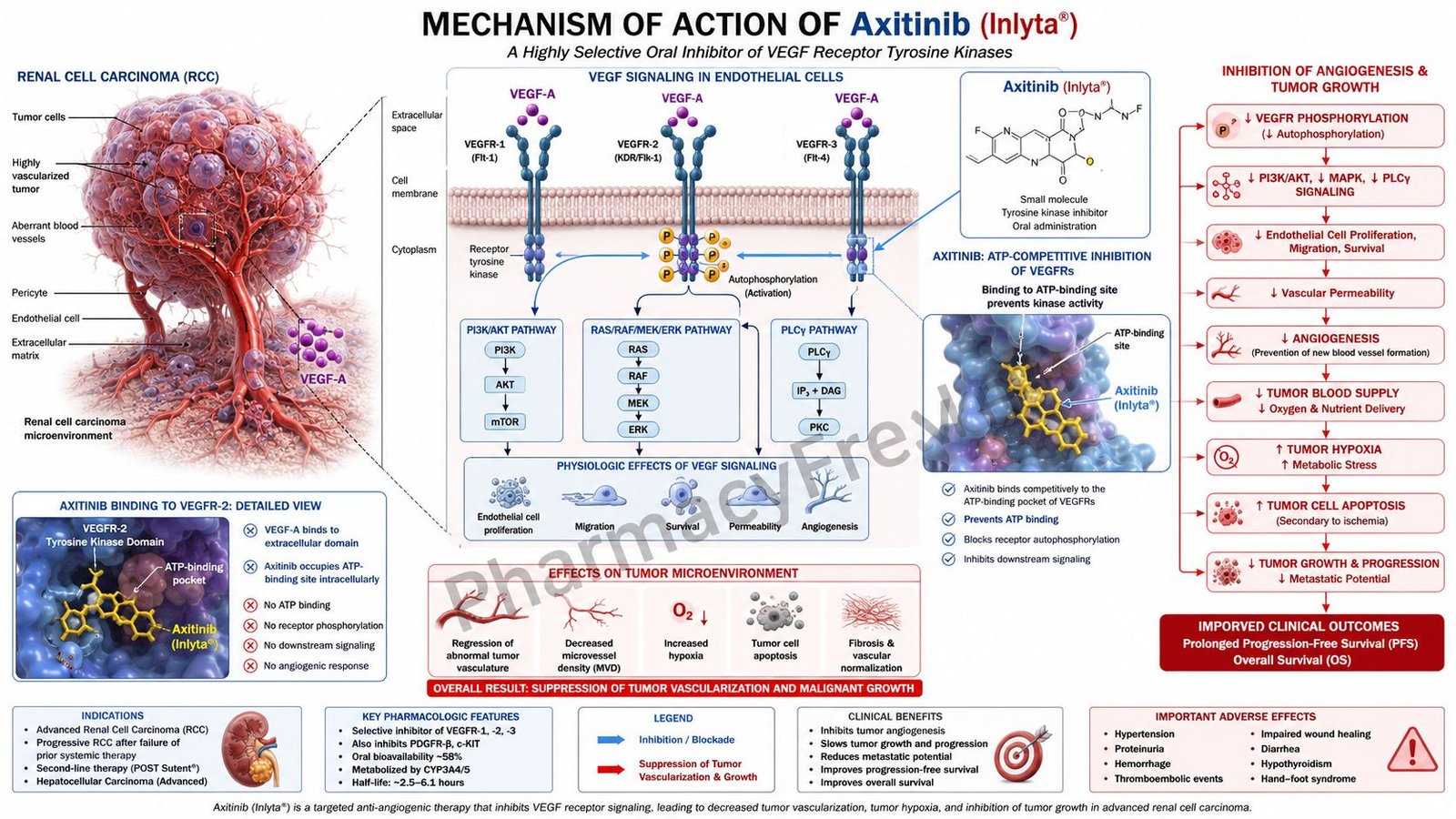
Axitinib is an oral targeted anticancer drug marketed under the brand name Inlyta. Pharmacologically, axitinib is a receptor tyrosine kinase inhibitor that mainly blocks vascular endothelial growth factor receptors, also called VEGFRs.
Renal cell carcinoma is a highly vascular tumor, meaning it depends strongly on blood vessel formation for growth and spread. Tumor cells release vascular endothelial growth factor, or VEGF, which stimulates endothelial cells to form new blood vessels. These new vessels supply oxygen and nutrients to the tumor and support cancer progression.
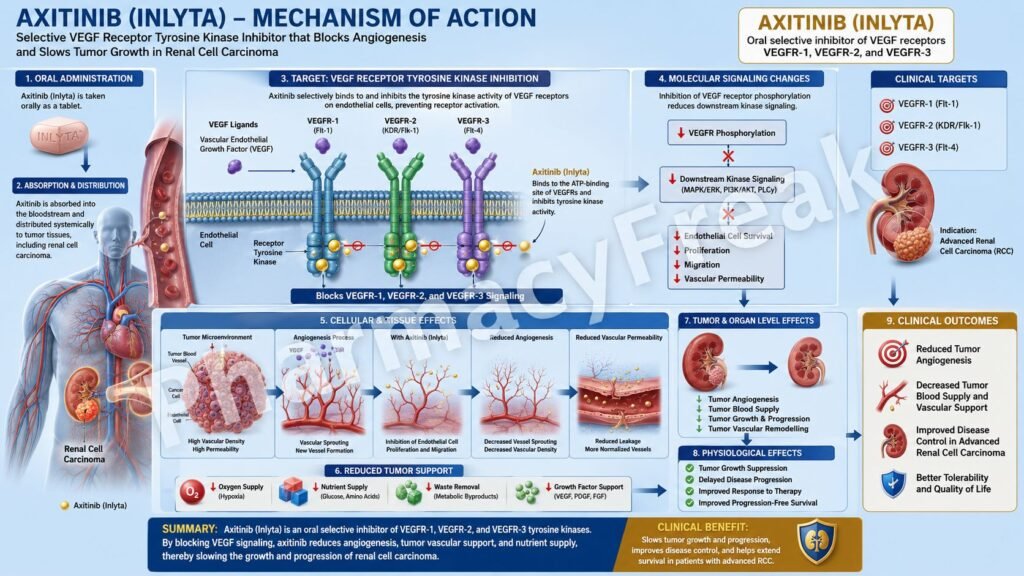
Axitinib works by inhibiting VEGFR-1, VEGFR-2, and VEGFR-3. These receptors are involved in pathological angiogenesis, tumor growth, and cancer progression. By blocking VEGFR signaling, axitinib reduces endothelial cell proliferation, tumor vascularization, and tumor growth. The official label states that axitinib inhibits receptor tyrosine kinases including VEGFR-1, VEGFR-2, and VEGFR-3 at therapeutic plasma concentrations.
Axitinib is indicated for advanced renal cell carcinoma. It may be used with pembrolizumab or avelumab as first-line treatment for advanced RCC, and it may also be used as a single agent after failure of one prior systemic therapy.
For exam purposes, axitinib should be remembered as an oral VEGFR tyrosine kinase inhibitor used in advanced renal cell carcinoma. Its key mechanism is inhibition of VEGF-mediated angiogenesis through VEGFR-1, VEGFR-2, and VEGFR-3 blockade.
Mechanism of Action (Step-wise)
Step 1: Tumor cells require angiogenesis for growth
Solid tumors need blood vessels to grow beyond a small size. Without new blood vessel formation, tumor cells cannot receive enough oxygen and nutrients. Angiogenesis is therefore a major survival mechanism for many cancers, especially renal cell carcinoma.
Step 2: Renal cell carcinoma is strongly angiogenesis-driven
Clear cell renal cell carcinoma often shows increased VEGF signaling because of dysregulation of hypoxia-related pathways. Increased VEGF promotes formation of abnormal tumor blood vessels and supports tumor growth, invasion, and metastasis.
Step 3: VEGF binds VEGF receptors on endothelial cells
VEGF binds to VEGFR-1, VEGFR-2, and VEGFR-3 on endothelial cells and related vascular cells. These receptors are receptor tyrosine kinases. After ligand binding, they become activated and trigger intracellular phosphorylation cascades.
Step 4: VEGFR activation promotes endothelial proliferation
Activated VEGFR signaling stimulates endothelial cell survival, proliferation, migration, and tube formation. These steps are essential for new blood vessel development inside and around tumors.
Step 5: VEGFR-2 is especially important in angiogenesis
VEGFR-2 is a major mediator of VEGF-driven endothelial proliferation and vascular permeability. VEGFR-1 and VEGFR-3 also contribute to vascular and lymphatic signaling. Together, these receptors help sustain tumor vascular networks.
Step 6: Tumor blood vessels support cancer progression
The newly formed tumor vessels supply glucose, amino acids, oxygen, and growth-supporting factors. They also provide a route for tumor cells to spread to distant sites. This makes angiogenesis a valuable anticancer target.
Step 7: Axitinib inhibits VEGFR tyrosine kinase activity
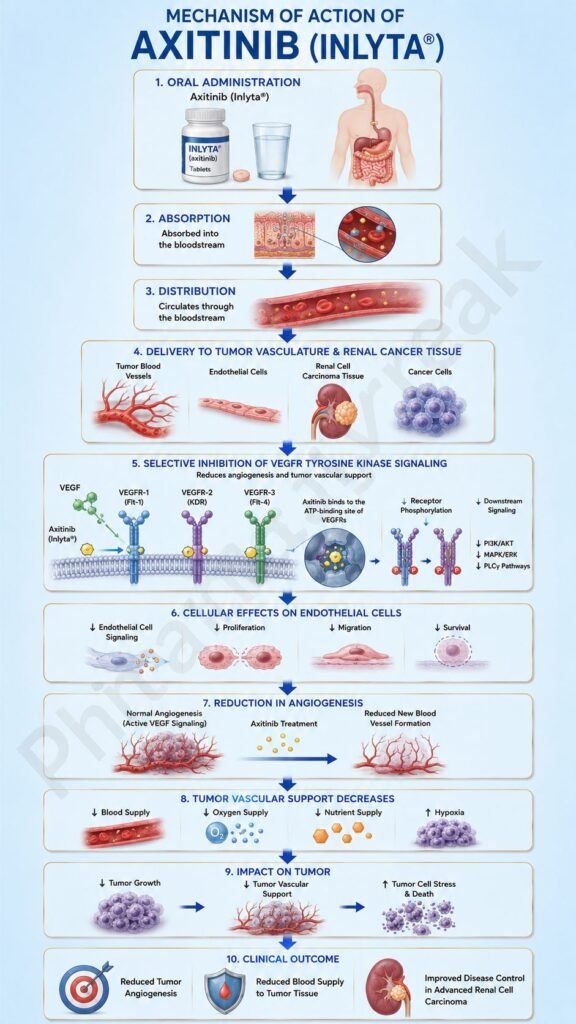
Axitinib blocks the intracellular kinase activity of VEGFR-1, VEGFR-2, and VEGFR-3. By inhibiting these receptor tyrosine kinases, it prevents VEGF-triggered downstream signaling. The label states that VEGF-mediated endothelial cell proliferation and survival were inhibited by axitinib in vitro and in mouse models.
Step 8: Receptor phosphorylation decreases
When VEGFR kinase activity is inhibited, receptor autophosphorylation decreases. Reduced phosphorylation prevents activation of downstream signaling proteins that normally drive angiogenesis.
Step 9: Endothelial cell proliferation decreases
Because VEGFR signaling is blocked, endothelial cells receive fewer growth and survival signals. This reduces the ability of endothelial cells to multiply and form new blood vessels.
Step 10: Tumor vascularization decreases
With less endothelial proliferation and migration, tumor blood vessel formation decreases. Existing abnormal tumor vasculature may become less supportive, and the tumor receives less oxygen and nutrient supply.
Step 11: Tumor growth slows
Reduced angiogenesis limits tumor expansion. Axitinib does not primarily work by directly damaging cancer DNA like traditional cytotoxic chemotherapy. Instead, it starves the tumor-supporting vascular pathway by blocking VEGFR signaling.
Step 12: Combination with immunotherapy improves anticancer strategy
In advanced RCC, axitinib may be combined with immune checkpoint inhibitors such as pembrolizumab or avelumab. Axitinib targets VEGF-driven angiogenesis, while checkpoint inhibitors enhance antitumor immune activity. These complementary mechanisms can improve disease control in selected patients.
Step 13: Blood pressure may rise due to VEGF pathway inhibition
VEGF signaling is important for endothelial function and nitric oxide-related vascular homeostasis. When VEGF signaling is inhibited, vascular resistance may increase, leading to hypertension. This is one of the most important mechanism-related adverse effects of axitinib.
Step 14: Wound healing may be impaired
Angiogenesis is required for wound repair. Because axitinib blocks VEGF signaling and new blood vessel formation, wound healing can be impaired. This is why axitinib may need to be withheld around surgery.
Step 15: Final therapeutic outcome
The final therapeutic outcome is inhibition of tumor angiogenesis and reduced tumor growth signaling in advanced renal cell carcinoma. Axitinib blocks VEGFR-mediated vascular support, thereby helping slow disease progression.
Pharmacokinetics
Axitinib is administered orally as Inlyta tablets. The usual starting dose is 5 mg twice daily, approximately 12 hours apart, with or without food. Tablets should be swallowed whole with a glass of water. If a dose is missed or vomited, an extra dose should not be taken; the next dose should be taken at the usual time.
When axitinib is combined with avelumab, the recommended starting axitinib dose is 5 mg orally twice daily with avelumab 800 mg intravenously every 2 weeks. When combined with pembrolizumab, axitinib is started at 5 mg orally twice daily with pembrolizumab 200 mg every 3 weeks or 400 mg every 6 weeks.
Dose adjustment is based on safety and tolerability. If the patient tolerates therapy well, dose escalation may be considered. Dose reductions are also used for adverse effects. The common dose levels are 5 mg twice daily, 7 mg twice daily, 10 mg twice daily, then reduction to 3 mg twice daily and 2 mg twice daily if toxicity occurs.
After oral administration, axitinib reaches peak plasma concentration in about 2.5 to 4.1 hours. The mean absolute bioavailability after a 5 mg oral dose is about 58%. Steady state is expected within 2 to 3 days of dosing.
Food does not produce a clinically major restriction because Inlyta can be taken with or without food. A moderate-fat meal decreased exposure slightly, while a high-fat, high-calorie meal increased exposure modestly.
Axitinib is highly bound to plasma proteins, greater than 99%, mainly to albumin and alpha-1 acid glycoprotein. This high protein binding is important in pharmacokinetic interpretation.
Axitinib is metabolized mainly in the liver by CYP3A4 and CYP3A5. Lesser pathways include CYP1A2, CYP2C19, and UGT1A1. The plasma half-life ranges from about 2.5 to 6.1 hours.
Strong CYP3A4/5 inhibitors can increase axitinib exposure and toxicity. Examples include ketoconazole, itraconazole, clarithromycin, ritonavir, voriconazole, and similar drugs. Strong CYP3A4/5 inducers can reduce axitinib exposure and may decrease effectiveness. Examples include rifampin, carbamazepine, phenytoin, phenobarbital, and St. John’s wort.
In moderate hepatic impairment, the starting dose should be reduced by approximately half. No starting dose adjustment is required in mild hepatic impairment. Axitinib has not been studied in severe hepatic impairment.
Renal impairment does not meaningfully affect axitinib clearance in mild to severe renal impairment, but caution is advised in end-stage renal disease because limited data are available.
Clinical Uses
Axitinib is used in advanced renal cell carcinoma, especially advanced or metastatic RCC. Its clinical role is based on inhibition of VEGF-driven angiogenesis, a central pathway in kidney cancer growth.
Axitinib is used with pembrolizumab as first-line treatment for advanced renal cell carcinoma. Pembrolizumab is an immune checkpoint inhibitor that blocks PD-1, while axitinib blocks VEGFR-mediated angiogenesis. This combination targets both tumor vasculature and antitumor immune response.
Axitinib is also used with avelumab as first-line treatment for advanced renal cell carcinoma. Avelumab is a PD-L1 inhibitor. In this combination, avelumab supports immune-mediated tumor attack while axitinib reduces tumor blood vessel support.
Axitinib can also be used as a single agent for advanced renal cell carcinoma after failure of one prior systemic therapy. This makes it important in second-line RCC pharmacology.
Axitinib is not a general chemotherapy drug, not an immune checkpoint inhibitor, and not a hormonal anticancer drug. It is a targeted tyrosine kinase inhibitor focused mainly on VEGFR signaling.
Axitinib is not approved for pediatric patients. The safety and effectiveness of Inlyta in pediatric patients have not been established.
Adverse Effects
The adverse effects of axitinib are closely related to VEGF pathway inhibition, vascular effects, gastrointestinal toxicity, hepatic effects, and anticancer TKI class effects.
Hypertension is one of the most important adverse effects. In the label, hypertension occurred in 40% of patients receiving axitinib in a controlled RCC study, and blood pressure increases were seen as early as 4 days after starting therapy. Blood pressure should be controlled before treatment and monitored during therapy.
Arterial thromboembolic events can occur, including transient ischemic attack, cerebrovascular accident, myocardial infarction, and retinal artery occlusion. Axitinib should be permanently discontinued if an arterial thromboembolic event occurs during treatment.
Venous thromboembolic events can occur, including pulmonary embolism, deep vein thrombosis, retinal vein occlusion, and retinal vein thrombosis. Patients should be monitored for symptoms such as chest pain, shortness of breath, leg swelling, visual symptoms, or sudden neurological deficits.
Hemorrhage is another serious warning. Bleeding events may include cerebral hemorrhage, hematuria, hemoptysis, gastrointestinal bleeding, melena, and fatal hemorrhage. Axitinib should not be used in patients with untreated brain metastasis or recent active gastrointestinal bleeding.
Cardiac failure can occur. Patients should be monitored for dyspnea, edema, rapid weight gain, fatigue, or reduced exercise tolerance. Dose interruption, reduction, or permanent discontinuation may be required.
Gastrointestinal perforation and fistula formation are rare but serious adverse effects. Patients should report severe abdominal pain, fever, vomiting, or signs of peritonitis.
Thyroid dysfunction is important. Hypothyroidism is more common than hyperthyroidism. Thyroid function should be checked before starting treatment and periodically during therapy.
Impaired wound healing can occur because VEGF signaling is required for angiogenesis and tissue repair. The label recommends withholding Inlyta for at least 2 days before elective surgery and not administering it for at least 2 weeks after major surgery and until adequate wound healing.
Reversible posterior leukoencephalopathy syndrome, or RPLS, is a rare neurological warning. It may present with headache, seizures, confusion, lethargy, blindness, visual symptoms, and hypertension. Axitinib should be permanently discontinued if RPLS occurs.
Proteinuria can occur because VEGF signaling is important in kidney glomerular function. Urine protein should be monitored before and during treatment. Moderate to severe proteinuria may require withholding and dose reduction.
Hepatotoxicity can occur. Liver enzymes and bilirubin should be monitored, especially when axitinib is combined with pembrolizumab or avelumab, where liver enzyme elevations can be more frequent.
Common adverse effects include diarrhea, fatigue, hypertension, decreased appetite, nausea, dysphonia, palmar-plantar erythrodysesthesia, weight loss, vomiting, constipation, rash, hypothyroidism, cough, headache, and mucositis. In combination regimens, immune-related adverse effects from pembrolizumab or avelumab must also be considered.
Embryo-fetal toxicity is an important warning. Based on its mechanism and animal findings, axitinib can cause fetal harm. Effective contraception is recommended during treatment and for a period after the last dose. Breastfeeding is not recommended during treatment and for 2 weeks after the last dose.
Comparative Analysis
Axitinib is commonly compared with other renal cell carcinoma therapies such as sunitinib, pazopanib, cabozantinib, lenvatinib, sorafenib, tivozanib, pembrolizumab, avelumab, nivolumab, ipilimumab, and belzutifan.
Compared with sunitinib, axitinib is more selective for VEGFR signaling. Sunitinib inhibits multiple kinases including VEGFR, PDGFR, KIT, FLT3, and RET. Axitinib is especially known as a potent VEGFR-1, VEGFR-2, and VEGFR-3 inhibitor.
Compared with pazopanib, axitinib shares anti-angiogenic VEGFR inhibition but differs in kinase selectivity, dosing, adverse effect profile, and clinical positioning. Pazopanib has important hepatic toxicity concerns and is usually taken once daily.
Compared with sorafenib, axitinib is generally considered a more potent VEGFR inhibitor. Sorafenib inhibits RAF kinases as well as VEGFR and other targets, while axitinib is more focused on VEGFR-driven angiogenesis.
Compared with cabozantinib, axitinib has a narrower VEGFR-focused profile. Cabozantinib inhibits VEGFR, MET, AXL, and other kinases. Cabozantinib is therefore important in tumors where MET and AXL signaling contribute to progression or resistance.
Compared with lenvatinib, axitinib differs in target spectrum. Lenvatinib inhibits VEGFR, FGFR, PDGFR-alpha, RET, and KIT. Axitinib mainly targets VEGFR-1, VEGFR-2, and VEGFR-3.
Compared with tivozanib, axitinib shares VEGFR-selective anti-angiogenic activity. Both are VEGFR tyrosine kinase inhibitors used in RCC, but they differ in dosing schedule, approved treatment setting, half-life, and toxicity patterns.
Compared with pembrolizumab and avelumab, axitinib is not an immune checkpoint inhibitor. Pembrolizumab blocks PD-1, while avelumab blocks PD-L1. Axitinib blocks VEGFR-mediated angiogenesis. These mechanisms are complementary, which is why axitinib may be combined with these immunotherapies.
Compared with nivolumab plus ipilimumab, axitinib-based combinations include a VEGFR TKI plus checkpoint inhibition. Nivolumab plus ipilimumab combines PD-1 inhibition with CTLA-4 inhibition and does not directly target tumor angiogenesis.
Compared with belzutifan, axitinib acts downstream on VEGFR signaling, while belzutifan inhibits hypoxia-inducible factor-2 alpha, or HIF-2 alpha. Both are relevant in RCC biology, but they target different parts of the hypoxia-angiogenesis pathway.
MCQs
- Axitinib is marketed under which brand name?
a) Nexavar
b) Inlyta
c) Sutent
d) Votrient
Answer: b) Inlyta
- Axitinib belongs to which pharmacological class?
a) VEGFR tyrosine kinase inhibitor
b) PD-1 inhibitor
c) CTLA-4 inhibitor
d) mTOR inhibitor
Answer: a) VEGFR tyrosine kinase inhibitor
- Axitinib mainly inhibits which receptors?
a) VEGFR-1, VEGFR-2, and VEGFR-3
b) EGFR and HER2
c) CD20 and CD52
d) Dopamine D2 and serotonin 5-HT2A
Answer: a) VEGFR-1, VEGFR-2, and VEGFR-3
- The main anticancer effect of axitinib is:
a) Direct DNA alkylation
b) Inhibition of tumor angiogenesis
c) Estrogen receptor degradation
d) B-cell depletion
Answer: b) Inhibition of tumor angiogenesis
- VEGF signaling mainly promotes:
a) Endothelial cell proliferation and survival
b) Platelet aggregation only
c) Dopamine release
d) Acetylcholine breakdown
Answer: a) Endothelial cell proliferation and survival
- Axitinib is mainly used in:
a) Advanced renal cell carcinoma
b) Acute lymphoblastic leukemia
c) Parkinson’s disease
d) Rheumatoid arthritis
Answer: a) Advanced renal cell carcinoma
- Axitinib may be used first-line in advanced RCC with:
a) Pembrolizumab or avelumab
b) Amoxicillin or azithromycin
c) Levodopa or carbidopa
d) Insulin or metformin
Answer: a) Pembrolizumab or avelumab
- The usual starting dose of axitinib is:
a) 5 mg twice daily
b) 500 mg once weekly
c) 1 mg monthly injection
d) 40 mg once daily
Answer: a) 5 mg twice daily
- Axitinib is taken:
a) Orally
b) By inhalation
c) Intrathecally
d) As an eye drop
Answer: a) Orally
- Axitinib is metabolized mainly by:
a) CYP3A4/5
b) Acetylcholinesterase
c) Monoamine oxidase-B only
d) Renal filtration unchanged only
Answer: a) CYP3A4/5
- Which adverse effect is especially important with axitinib?
a) Hypertension
b) Severe hypoglycemia in every patient
c) Ototoxicity
d) Gingival hyperplasia
Answer: a) Hypertension
- Which monitoring is important during axitinib therapy?
a) Blood pressure, liver enzymes, thyroid function, and proteinuria
b) Only blood group
c) Only hearing test
d) Only serum calcium every hour
Answer: a) Blood pressure, liver enzymes, thyroid function, and proteinuria
- Which rare neurological syndrome may occur with axitinib?
a) Reversible posterior leukoencephalopathy syndrome
b) Parkinson’s disease cure
c) Myasthenic crisis in every patient
d) Bell’s palsy in every patient
Answer: a) Reversible posterior leukoencephalopathy syndrome
- Axitinib can impair wound healing because it:
a) Inhibits VEGF-mediated angiogenesis
b) Stimulates platelet production
c) Blocks histamine H1 receptors
d) Activates insulin receptors
Answer: a) Inhibits VEGF-mediated angiogenesis
- Which statement best describes axitinib?
a) It inhibits VEGFR-1, VEGFR-2, and VEGFR-3, reducing angiogenesis and tumor growth in advanced RCC
b) It blocks PD-1 on T cells
c) It depletes CD20-positive B cells
d) It inhibits bacterial cell wall synthesis
Answer: a) It inhibits VEGFR-1, VEGFR-2, and VEGFR-3, reducing angiogenesis and tumor growth in advanced RCC
FAQs
What is the mechanism of action of axitinib?
Axitinib inhibits VEGFR-1, VEGFR-2, and VEGFR-3 tyrosine kinases. This blocks VEGF-mediated endothelial cell proliferation, angiogenesis, tumor blood vessel formation, and tumor growth in advanced renal cell carcinoma.
What is the brand name of axitinib?
The brand name of axitinib is Inlyta.
What is axitinib used for?
Axitinib is used for advanced renal cell carcinoma. It may be used with pembrolizumab or avelumab as first-line therapy, or as a single agent after failure of one prior systemic therapy.
Is axitinib chemotherapy?
No. Axitinib is not traditional cytotoxic chemotherapy. It is an oral targeted therapy that blocks VEGFR tyrosine kinase signaling and reduces tumor angiogenesis.
Why does axitinib cause hypertension?
Axitinib blocks VEGF signaling, which is important for endothelial function and vascular homeostasis. VEGF pathway inhibition can increase vascular resistance and cause hypertension.
Can axitinib affect wound healing?
Yes. Axitinib can impair wound healing because angiogenesis is necessary for tissue repair. It may need to be withheld before and after surgery according to clinical guidance.
Which drug interactions are important with axitinib?
Strong CYP3A4/5 inhibitors can increase axitinib exposure and toxicity, while strong CYP3A4/5 inducers can reduce axitinib exposure and effectiveness. Grapefruit products should generally be avoided.
How is axitinib different from pembrolizumab?
Axitinib is a VEGFR tyrosine kinase inhibitor that blocks angiogenesis. Pembrolizumab is a PD-1 immune checkpoint inhibitor that enhances antitumor immune response. They can be combined in advanced RCC because their mechanisms are complementary.
References
Goodman & Gilman’s The Pharmacological Basis of Therapeutics
Katzung Basic & Clinical Pharmacology