Trusted by 50K+ Pharmacy StudentsHigh Quality Notes, MCQs, Mock Tests & Study ResourcesGo Premium (Ads Free)
Pharmacy Freak

Acids, Bases and Buffers MCQs
Acids, Bases and Buffers MCQs

We have provided 30 MCQs on Acids, Bases and Buffers, Unit-2, 1st semester, PHARMACEUTICAL INORGANIC CHEMISTRY, B. Pharm. We have covered following topics. Acids, Bases and Buffers: Buffer equations and buffer capacity in general, buffers in pharmaceutical systems, preparation, stability, buffered isotonic solutions, measurements of tonicity, calculations and methods of adjusting isotonicity. MCQ on Acids, … Read more
Major Extra and Intracellular Electrolytes MCQs

Major Extra and Intracellular Electrolytes MCQs

We have provided 45 MCQs on Major extra and intracellular electrolytes, Unit-3, 1st semester, PHARMACEUTICAL INORGANIC CHEMISTRY,B. Pharm. We have covered following topics.  Major extra and intracellular electrolytes: Functions of major physiological ions, Electrolytes used in the replacement therapy: Sodium chloride*, Potassium chloride, Calcium gluconate* and Oral Rehydration Salt (ORS), Physiological acid base balance MCQ … Read more

General Methods of Preparation MCQs

General Methods of Preparation MCQs

We have provided 50 MCQs on General methods of preparation, Unit-1,1st semester, PHARMACEUTICAL INORGANIC CHEMISTRY, B. Pharm. We have covered following topics. General methods of preparation, assay for the compounds superscripted with asterisk properties, and medicinal uses of inorganic compounds belonging to the following classes. MCQ on General methods of preparation Question 1: Which of … Read more

ADVERSE DRUG REACTION REPORTING AND MANAGEMENT

ADVERSE DRUG REACTION REPORTING AND MANAGEMENT

During reporting an ADR, the healthcare professional should keep in mind that these reports are only showing suspected associations of a drug with a particular adverse event. Reporting an ADR does not confirm a causal relationship between the drug and the adverse reaction. But, it is always better to report a case in a doubtful … Read more

METHODS FOR DETECTING DRUG INTERACTIONS

METHODS FOR DETECTING DRUG INTERACTIONS

ADR is detected by the following two methods: Pharmacovigilance (Spontaneous Case Reports and Record Linkage Studies) Pharmacovigilance is a branch of clinical pharmacy in which drug-induced unknown adverse effects and their risk factors are detected and studied to prevent iatrogenic disease and promote the safe and rational use of drugs. The WHO defined pharmacovigilance as … Read more

DRUG INTERACTIONS

DRUG INTERACTIONS

A situation in which a substance affects the drug activity (i.e., either increases or decreases the effects) or produces a new effect that does not produce on its own is termed a drug interaction. Interaction between drugs (i.e., drug-drug interaction) occurs most commonly. However, interactions also occur between drugs and foods (i.e., drug-food interactions), and … Read more

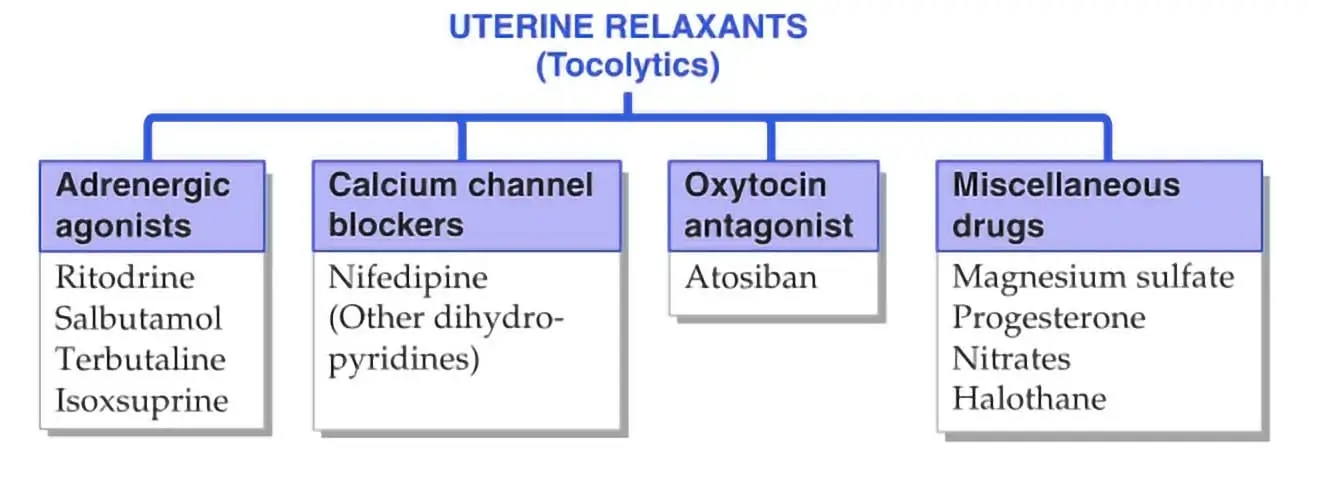
Classification of Uterine Relaxants

Classification of Uterine Relaxants

Uterine relaxants are like the peacekeepers of the uterus. While uterine stimulants, which you might have heard of, help to make the uterus contract during labor, uterine relaxants do the opposite – they help to calm things down. When Are They Used? Uterine relaxants come into play when the uterus gets a little too excited, … Read more

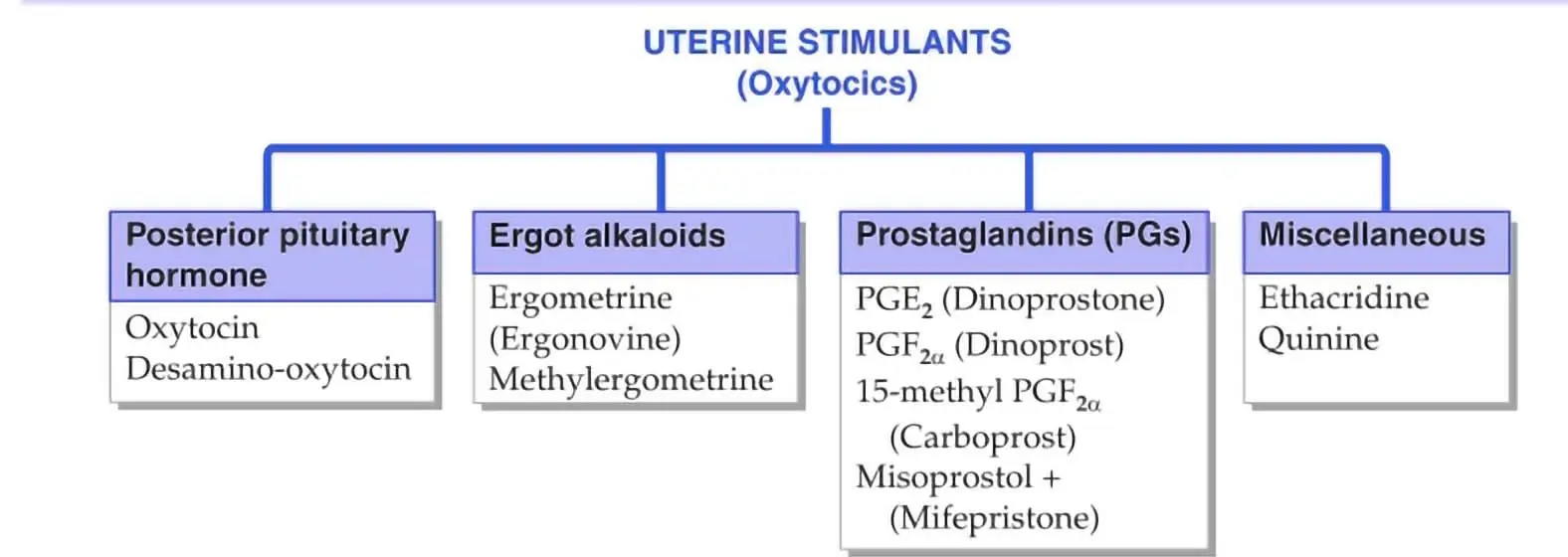
Classification of Uterine Stimulants

Classification of Uterine Stimulants

Uterine stimulants are substances or medications used to induce or strengthen contractions in the uterus, the muscular organ that holds a baby during pregnancy and helps in its delivery. These stimulants come into play during childbirth, especially if labor isn’t progressing as it should. When Are They Used? Uterine stimulants are mainly used when a … Read more

ADVERSE DRUG REACTIONS

ADVERSE DRUG REACTIONS

Any appreciable harmful or unpleasant reaction resulting from an intervention related to the use of a medicinal product, which predicts hazard from future administration and warrants prevention or specific treatment, or alteration of the dosage regimen or withdrawal of the product is known as an Adverse Drug Reaction (ADR). Both toxic effects and side effects … Read more

Impurities in Pharmaceutical Substances MCQs

Impurities in Pharmaceutical Substances MCQs

We have provided MCQs on Impurities in pharmaceutical substances, Unit-1, 1st semester, PHARMACEUTICAL INORGANIC CHEMISTRY, B. Pharm. We have covered following topics.  Impurities in pharmaceutical substances: History of Pharmacopoeia, Sources and types of impurities, principle involved in the limit test for Chloride, Sulphate, Iron, Arsenic, Lead and Heavy metals, modified limit test for Chloride and MCQ … Read more

PRO
Ad-Free Access
$3.99 / month
  • No Interruptions
  • Faster Page Loads
  • Support Content Creators