Trusted by 50K+ Pharmacy StudentsHigh Quality Notes, MCQs, Mock Tests & Study ResourcesGo Premium (Ads Free)
Pharmacy Freak

MCQ/Multiple choice question unit-2 3rd semester (Microbiology) B.Pharmacy

MCQ of unit 2 of Microbiology 3rd semester B.Pharmacy 1. The stains which differentiate two groups of bacteria in a mixture are known as: (a) Negative stain (b) Simple stain (c) Differential stain (d) Indirect stain Answer:- (c) Differential stain 2. The purpose of simple staining is to demonstrate: (a) Cell size (b) Cell shape … Read more
MCQ / Multiple Choice Question B.Pharm 3rd semester microbiology

MCQ with answer of unit-1 of Microbiology 3rd semester B.Pharmacy. 1. Microorganisms which grow in absence of oxygen are called: (a) Aerobic (b) Microscopic (c) Anaerobic  (d) None of the above Answer:-  (c) Anaerobic 2. The process of sterilization is used in dairy industry is: (a) Pasteurization (b) Tyndallization (c) Fermentation (d) Segregation Answer:- (a) … Read more

Methods of Preservation of Pure Cultures (microbiology)

METHODS OF PRESERVATION OF PURE CULTURES After the isolation of any microorganism in pure culture, it is imperative to maintain the viability and purity of such microorganism by keeping the pure culture free from any contamination. To preserve microorganisms, it is necessary to reduce their metabolism up to its minimum due to which the processes … Read more

Factors Affecting Bacterial Growth

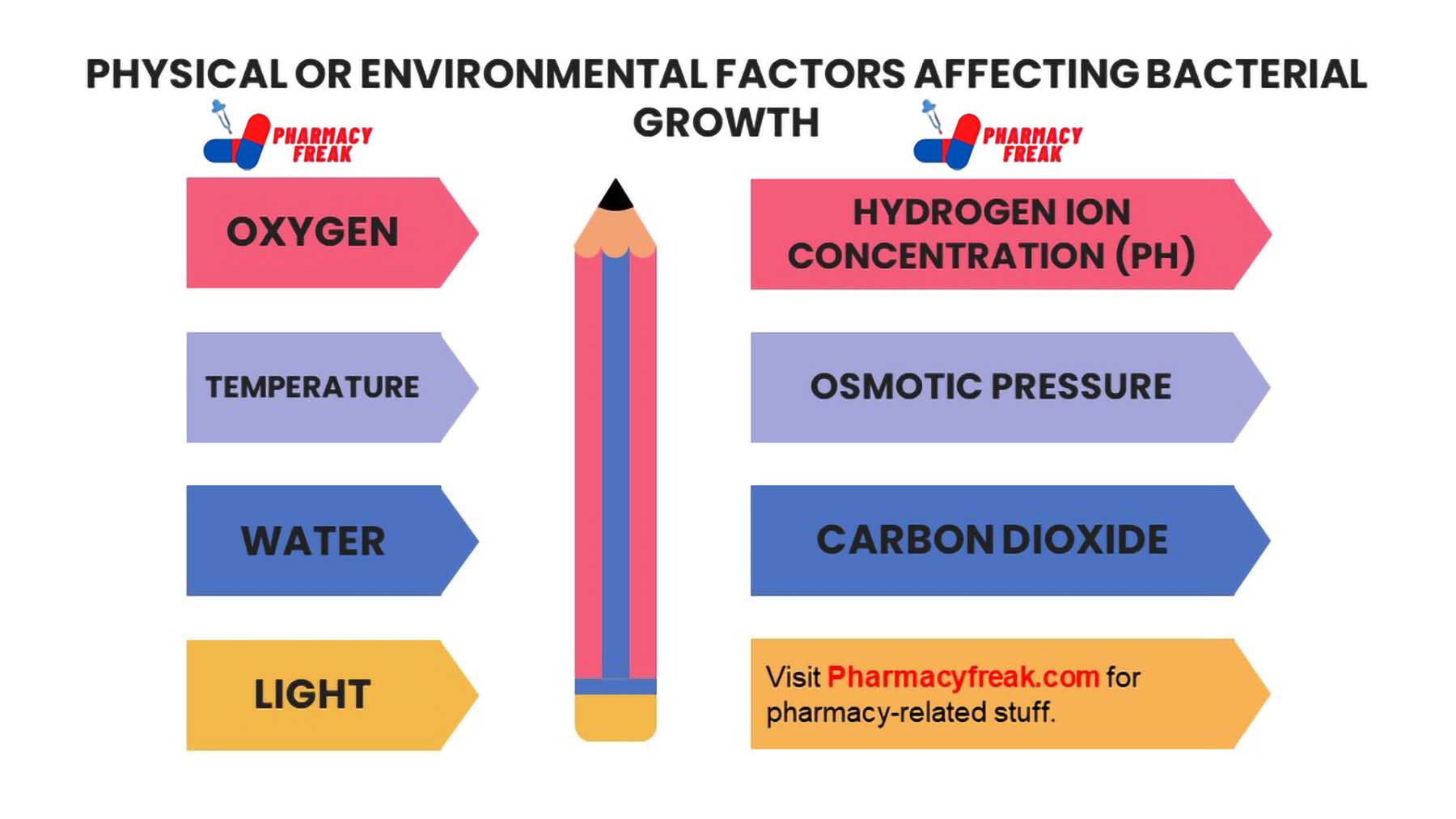
PHYSICAL OR ENVIRONMENTAL FACTORS AFFECTING BACTERIAL GROWTH The various factors affecting bacterial growth are: 1. Oxygen Oxygen is a universal component of cells and is always provided in large amounts by H₂O. Bacteria differ in their requirement for molecular oxygen and are mainly divided into two groups. a. Aerobes They require oxygen for growth. b. … Read more

Classification of culture media

A.CLASSIFICATION BASED ON NATURE OF ONSTITUENTS/INGREDIENTS 1.  Those media that require living cells or tissues which are parasitized by the microorganisms to be cultured, A perfect example is cultivation of Rickettsiae and viruses which are obligate intracellular parasites that require living host cells within which only they can multiply. 2. Those media that doesn’t require … Read more

Bacteria- Structure and Morphological Classification

bacteria

Bacteria Bacteria (singular: bacterium) form a large group of unicellular prokaryotes that do not contain a nucleus and other membrane-bound organelles. Antony Van Leeuwenhoek first observed them in 1676 using a single-lens microscope of his own design. He called them animalcules” and published his observations in a series of letters to the Royal Society of … Read more

Applications and scope of pharmaceutical microbiology

MICROBIOLOGY SCOPE

Pharmaceutical microbiology plays an important role in ensuring the safety and efficacy of pharmaceutical products. It involves the study of microorganisms and their interactions with pharmaceuticals. The application of pharmaceutical microbiology extends to various areas, including drug development, production, and quality control. By understanding the scope and applications of pharmaceutical microbiology, we can better appreciate … Read more

Scope of Microbiology

Write down the scope of microbiology. The scope of microbiology : Production of Antibiotics Antibiotics are compounds that can inhibit the growth or kill microorganisms. There are two main types of antibiotics: bacteriostatic, which inhibit the growth of bacteria, and bactericidal, which kill the bacteria. In 1929, Alexander Fleming discovered penicillin from Penicillium notatum, which … Read more

History of Microbiology and it’s Development

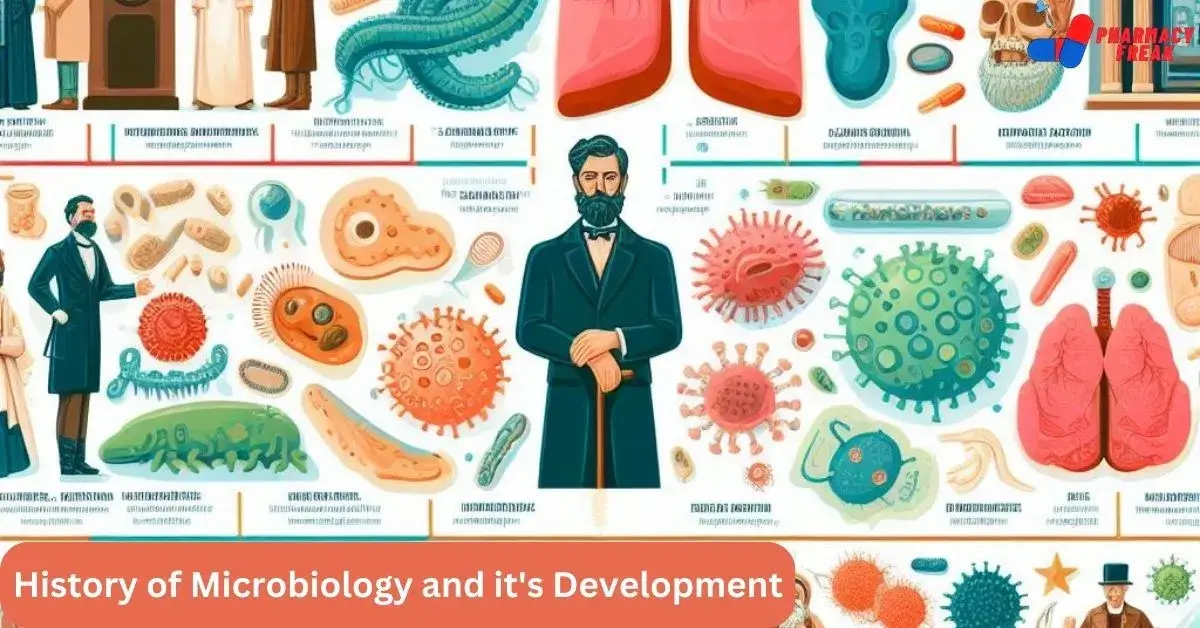
History of Microbiology and it's Development

The development of microbiology took place in  three distinct historical eras :- DISCOVERY ERA In this era, microbial world was explored with the discovery of the microscope. The lens was first invented by Roger Bacone (1267) who developed the lens. Janes & Jansen (1590) developed a crude type of microscope by placing two lenses together … Read more

Introduction to Microbiology

MICROBIOLOGY SCOPE

Microbiology Microbiology is a specialized branch of biology that deals with the study of organisms (particularly microscopic or submicroscopic) which are usually invisible to the naked eye (Greek, micro = small, bios = life, logos = study). Louis Pasteur (1822-95) introduced the term microbiology, who demonstrated that the fermentation process was due to the action … Read more

PRO
Ad-Free Access
$3.99 / month
  • No Interruptions
  • Faster Page Loads
  • Support Content Creators