Mechanism of Action of Aspirin as an Antiplatelet Drug
Introduction Aspirin (Acetylsalicylic Acid, ASA) is the most widely used antiplatelet agent in clinical medicine. Its antiplatelet mechanism … Read more
Introduction ARNI (Angiotensin Receptor–Neprilysin Inhibitor) represents a major advancement in the treatment of heart failure with reduced ejection … Read more
Introduction Antiviral drugs are pharmacological agents that inhibit the replication of viruses within host cells. Unlike antibacterial drugs, … Read more
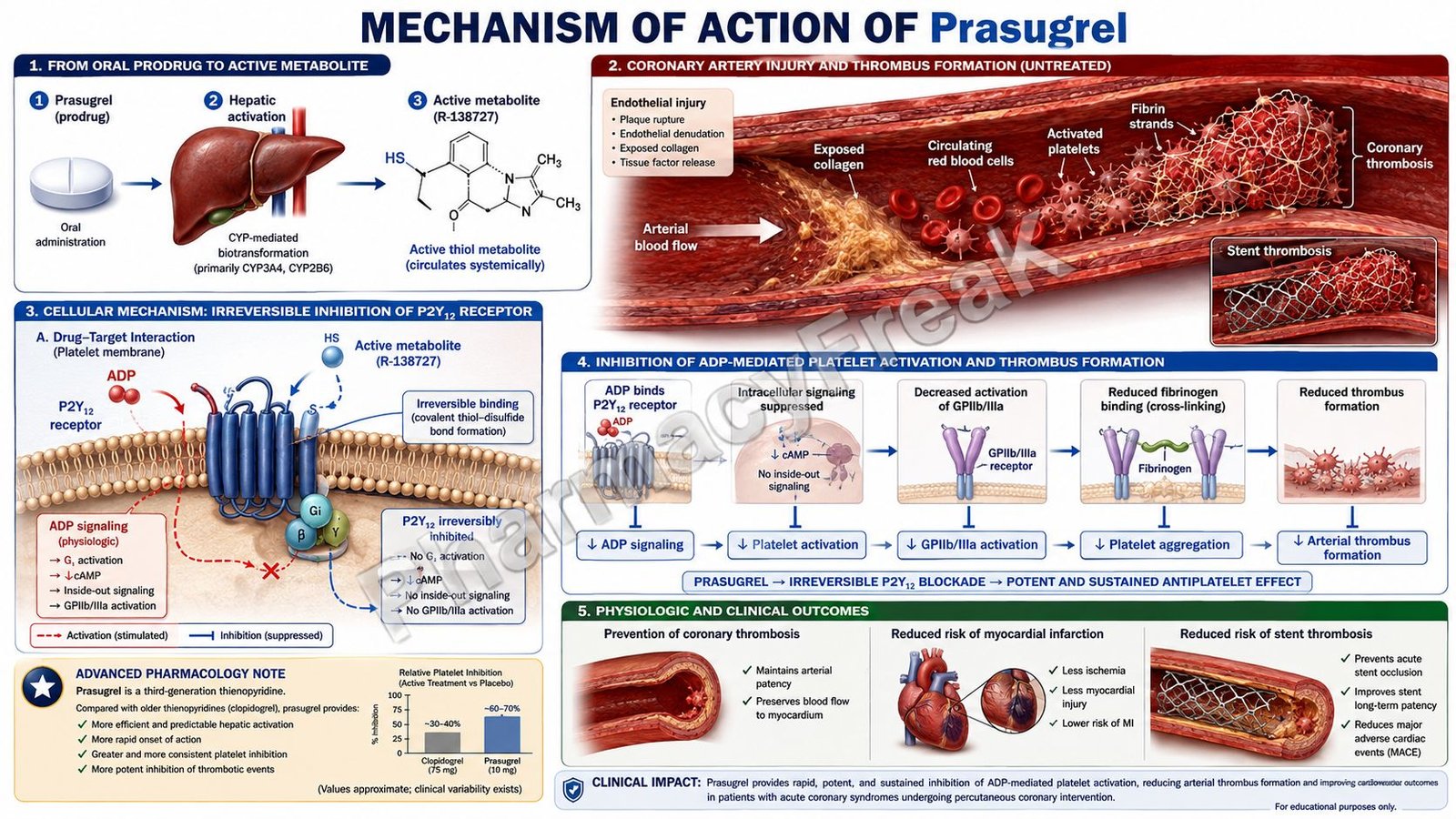
Introduction Antiplatelet drugs are pharmacological agents that inhibit platelet aggregation, thereby preventing arterial thrombosis — a key contributor … Read more
Introduction Antihypertensive drugs are pharmacological agents used to lower elevated blood pressure and prevent complications such as stroke, … Read more
Introduction Antihistamines are pharmacological agents that counteract the effects of histamine, a biogenic amine released during allergic and … Read more
1. Identification Summary Ester denotes the carboxylate ester functional group with general formula R–C(=O)–OR′ (R, R′ = carbon … Read more
1. Identification Summary Aldehyde is a carbonyl functional group in which the carbonyl carbon is bonded to one … Read more
1. Identification Summary Fructose is a ketohexose monosaccharide (C₆H₁₂O₆). It exists predominantly as furanose/pyranose hemiketals in solution and … Read more
1. Identification Summary Pyridine is a six-membered nitrogen heteroaromatic (C₅H₅N) isoelectronic with benzene, with a ring sp²-N that … Read more