Table of Contents
Introduction
Pentoxifylline is a hemorheologic agent used to improve blood flow, particularly in peripheral vascular diseases such as intermittent claudication. It enhances microcirculation by improving red blood cell flexibility and reducing blood viscosity. Unlike classic vasodilators, pentoxifylline primarily acts by modifying blood rheology and cellular properties.
Mechanism of Action (Step-wise)
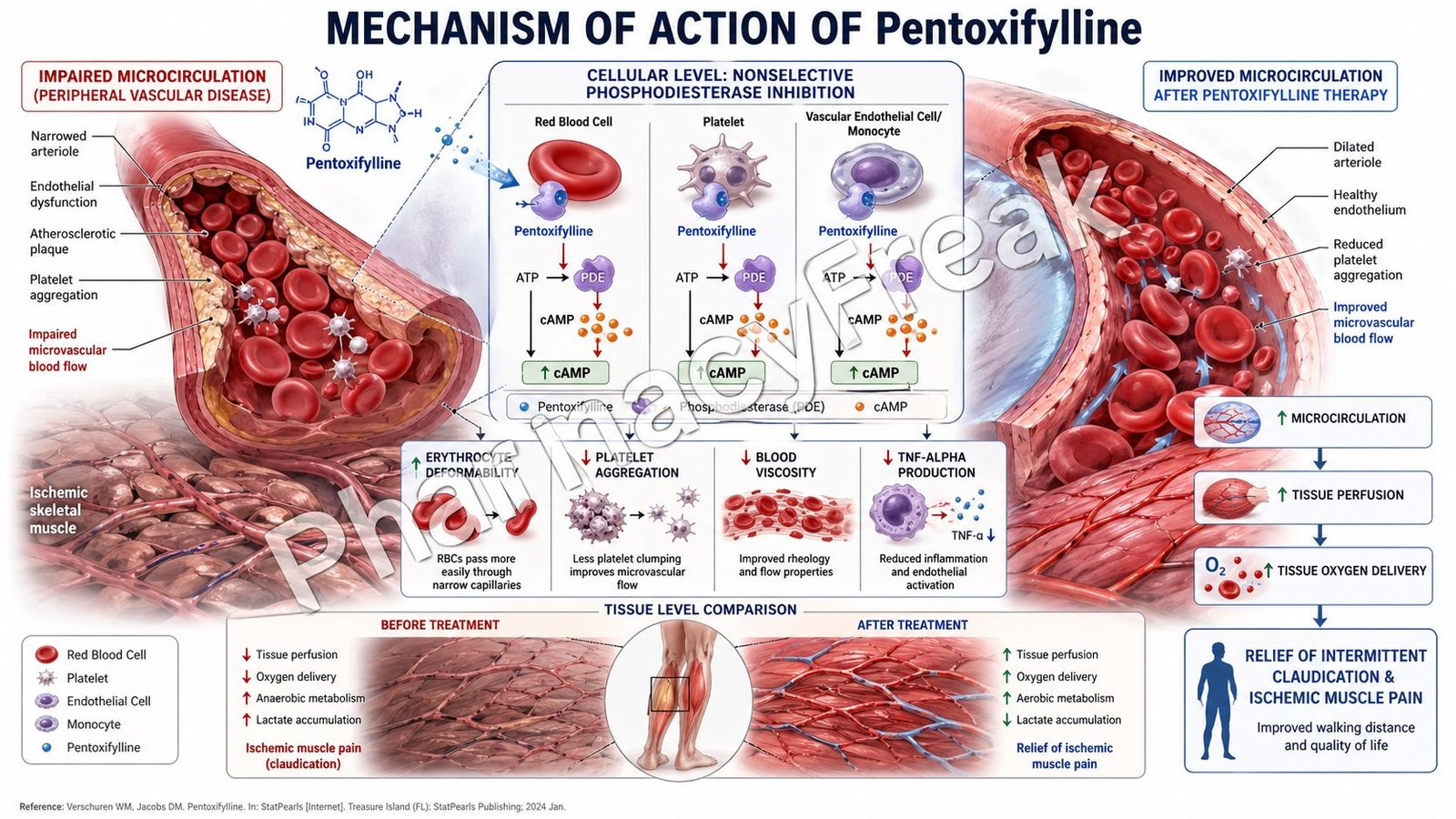
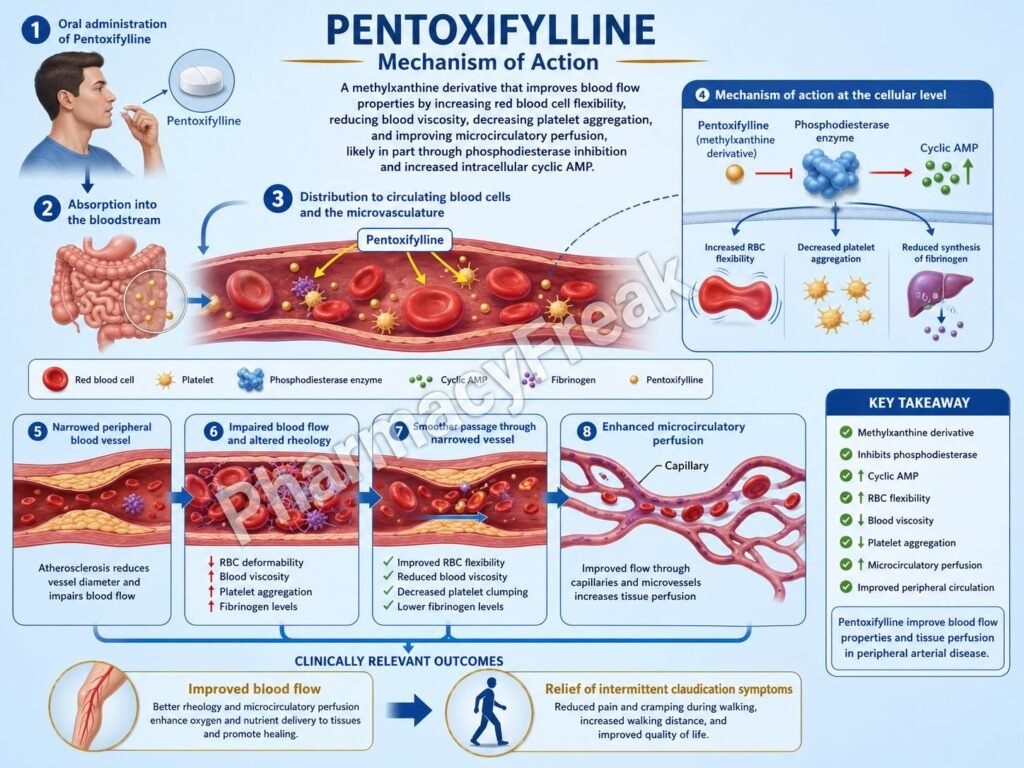
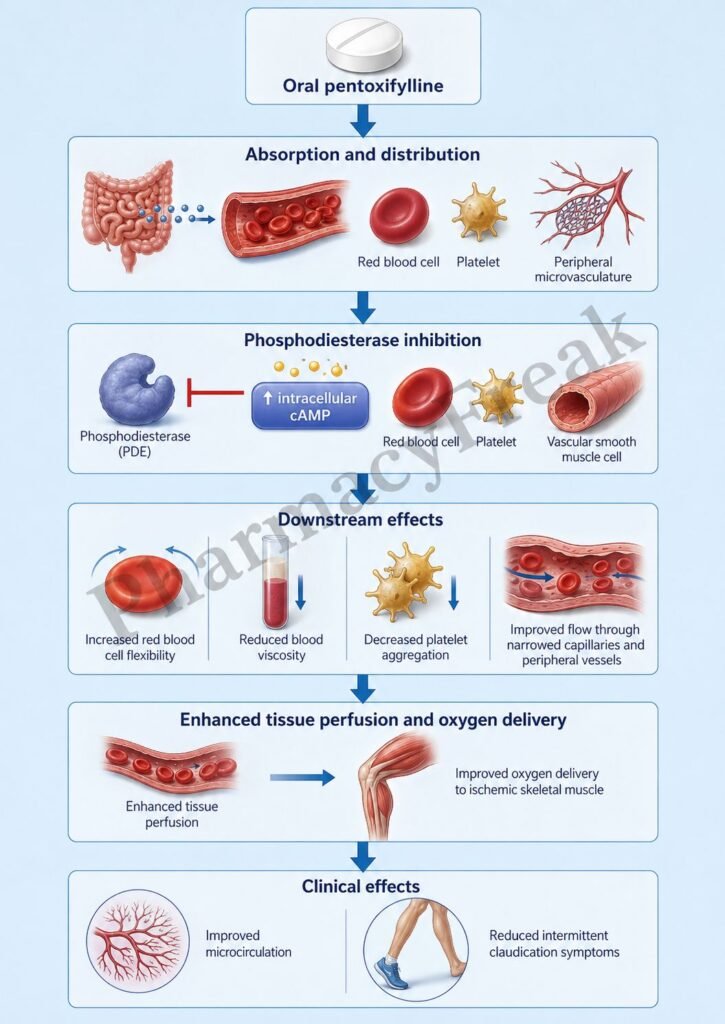
- Pentoxifylline inhibits phosphodiesterase (PDE) enzymes in cells.
- This inhibition leads to increased intracellular cyclic AMP (cAMP) levels.
- Elevated cAMP improves red blood cell (RBC) deformability.
- More flexible RBCs can pass through narrow capillaries easily.
- Pentoxifylline reduces blood viscosity.
- It decreases platelet aggregation.
- Reduced platelet aggregation lowers the risk of microvascular thrombosis.
- It also decreases leukocyte adhesion to endothelium.
- This reduces inflammation and microvascular obstruction.
- Improved microcirculation enhances tissue oxygen delivery.
- The overall effect is better blood flow in peripheral tissues.
A key exam point is that pentoxifylline improves microcirculation by increasing RBC flexibility and reducing blood viscosity.
Pharmacokinetics
Pentoxifylline is administered orally and is well absorbed. It undergoes extensive first-pass metabolism in the liver, forming active metabolites. It has a relatively short half-life but sustained-release formulations are available. It is excreted mainly via the kidneys.
Clinical Uses
Pentoxifylline is used in peripheral vascular disease, particularly intermittent claudication, to improve walking distance and reduce symptoms. It may also be used in conditions with impaired microcirculation, such as diabetic vascular complications.
Adverse Effects
Common adverse effects include nausea, vomiting, dizziness, and headache. It may cause hypotension and flushing due to mild vasodilatory effects. Rarely, it can increase bleeding risk due to its effect on platelet aggregation.
Comparative Analysis
| Feature | Pentoxifylline | Cilostazol | Aspirin |
|---|---|---|---|
| Mechanism | PDE inhibition, ↑ cAMP, improves RBC flexibility | PDE3 inhibition, vasodilation | COX inhibition |
| Main effect | Improves blood viscosity | Vasodilation + antiplatelet | Antiplatelet |
| Use | Intermittent claudication | Claudication | Cardiovascular prevention |
| Platelet effect | Mild | Moderate | Strong |
| Vasodilation | Mild | Significant | None |
| Unique feature | RBC deformability | Strong vasodilation | COX inhibition |
Pentoxifylline differs from cilostazol by having a weaker vasodilatory effect but a stronger impact on blood rheology. Compared to aspirin, it has less antiplatelet activity and primarily improves microcirculation.
MCQs
- Pentoxifylline inhibits:
a) Cyclooxygenase
b) Phosphodiesterase
c) ATP synthase
d) DNA polymerase
Answer: b) Phosphodiesterase
- PDE inhibition leads to increased:
a) cGMP
b) cAMP
c) ATP
d) ADP
Answer: b) cAMP
- Pentoxifylline improves:
a) RBC rigidity
b) RBC deformability
c) Platelet count
d) Sodium levels
Answer: b) RBC deformability
- Pentoxifylline reduces:
a) Blood viscosity
b) Blood glucose
c) Calcium
d) Sodium
Answer: a) Blood viscosity
- Pentoxifylline decreases:
a) Platelet aggregation
b) RBC count
c) Sodium
d) Insulin
Answer: a) Platelet aggregation
- Pentoxifylline is used in:
a) Asthma
b) Peripheral vascular disease
c) Diabetes
d) Anemia
Answer: b) Peripheral vascular disease
- A common adverse effect is:
a) Bradycardia
b) Nausea
c) Hypoglycemia
d) Hypercalcemia
Answer: b) Nausea
- Pentoxifylline improves:
a) Blood pressure
b) Microcirculation
c) Sodium levels
d) Insulin secretion
Answer: b) Microcirculation
- Pentoxifylline reduces leukocyte:
a) Production
b) Adhesion
c) Destruction
d) Count
Answer: b) Adhesion
- Pentoxifylline is metabolized in the:
a) Kidney
b) Liver
c) Lung
d) Brain
Answer: b) Liver
- Compared to aspirin, pentoxifylline has:
a) Stronger antiplatelet effect
b) Weaker antiplatelet effect
c) Same effect
d) No effect
Answer: b) Weaker antiplatelet effect
- Pentoxifylline enhances oxygen delivery by:
a) Increasing hemoglobin
b) Improving blood flow
c) Increasing calcium
d) Decreasing sodium
Answer: b) Improving blood flow
FAQs
What is the mechanism of action of pentoxifylline?
It inhibits phosphodiesterase, increasing cAMP and improving red blood cell flexibility.
How does pentoxifylline improve circulation?
By reducing blood viscosity and enhancing microcirculation.
What is its main clinical use?
Intermittent claudication.
Does pentoxifylline affect platelets?
Yes, it reduces platelet aggregation.
Why does it improve oxygen delivery?
Because of better blood flow and RBC deformability.
What is a common side effect?
Nausea and dizziness.
References
Goodman & Gilman’s The Pharmacological Basis of Therapeutics – Peripheral Vasodilators
https://accessmedicine.mhmedical.com/book.aspx?bookid=3191
Katzung: Basic and Clinical Pharmacology – Drugs for Peripheral Vascular Disease
https://accessmedicine.mhmedical.com/content.aspx?bookid=3382
Tripathi: Essentials of Medical Pharmacology – Peripheral Vasodilators
https://www.jaypeedigital.com
Harrison’s Principles of Internal Medicine – Peripheral Arterial Disease
https://accessmedicine.mhmedical.com