Trusted by 50K+ Pharmacy StudentsHigh Quality Notes, MCQs, Mock Tests & Study ResourcesGo Premium (Ads Free)
Pharmacy Freak

Mechanism of Action of Flucytosine
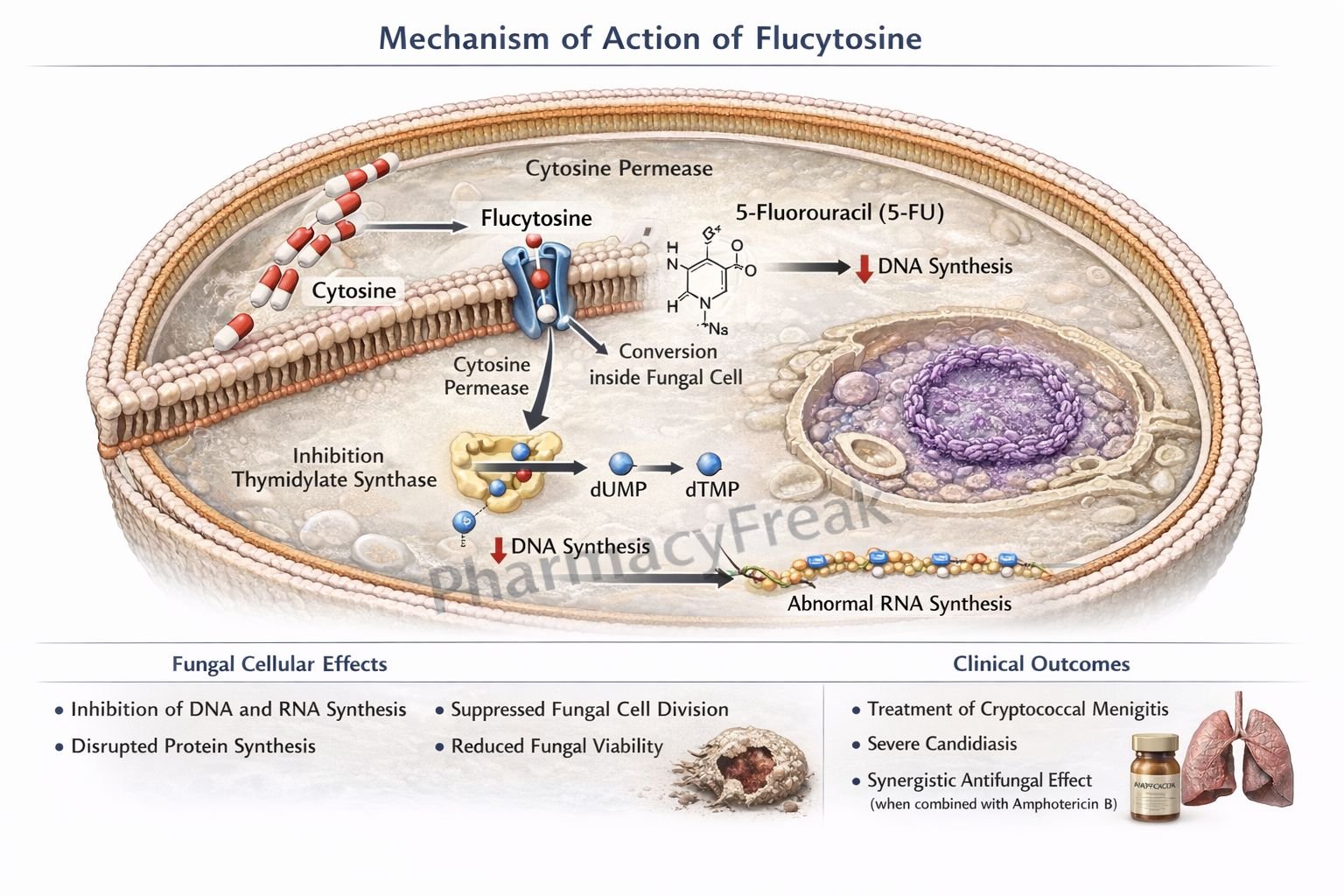
Mechanism of Action of Flucytosine

Introduction Flucytosine (5-fluorocytosine) is a fluorinated pyrimidine antifungal agent primarily used in combination therapy for serious systemic fungal infections. It is especially important in the treatment of cryptococcal meningitis and severe candidiasis, where it is commonly combined with amphotericin B to enhance efficacy and reduce resistance. Flucytosine is high-yield for exams due to its unique … Read more
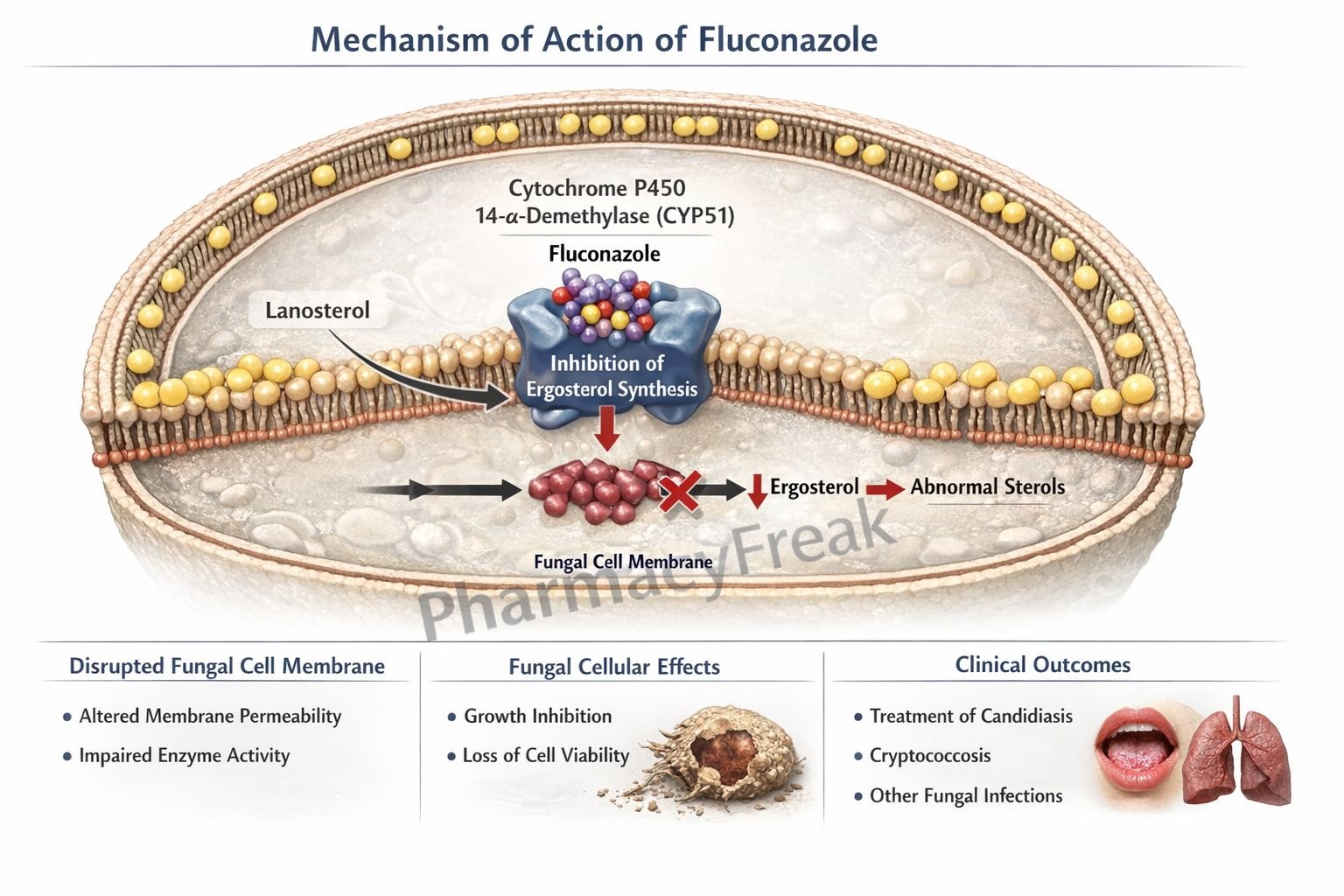
Mechanism of Action of Fluconazole

Mechanism of Action of Fluconazole

Introduction Fluconazole is a triazole antifungal agent widely used in the treatment and prophylaxis of systemic and superficial fungal infections. It is especially effective against Candida species and Cryptococcus neoformans. Fluconazole is high-yield for pharmacology and infectious disease examinations due to its selective inhibition of fungal sterol synthesis, excellent oral bioavailability, CNS penetration, and characteristic … Read more

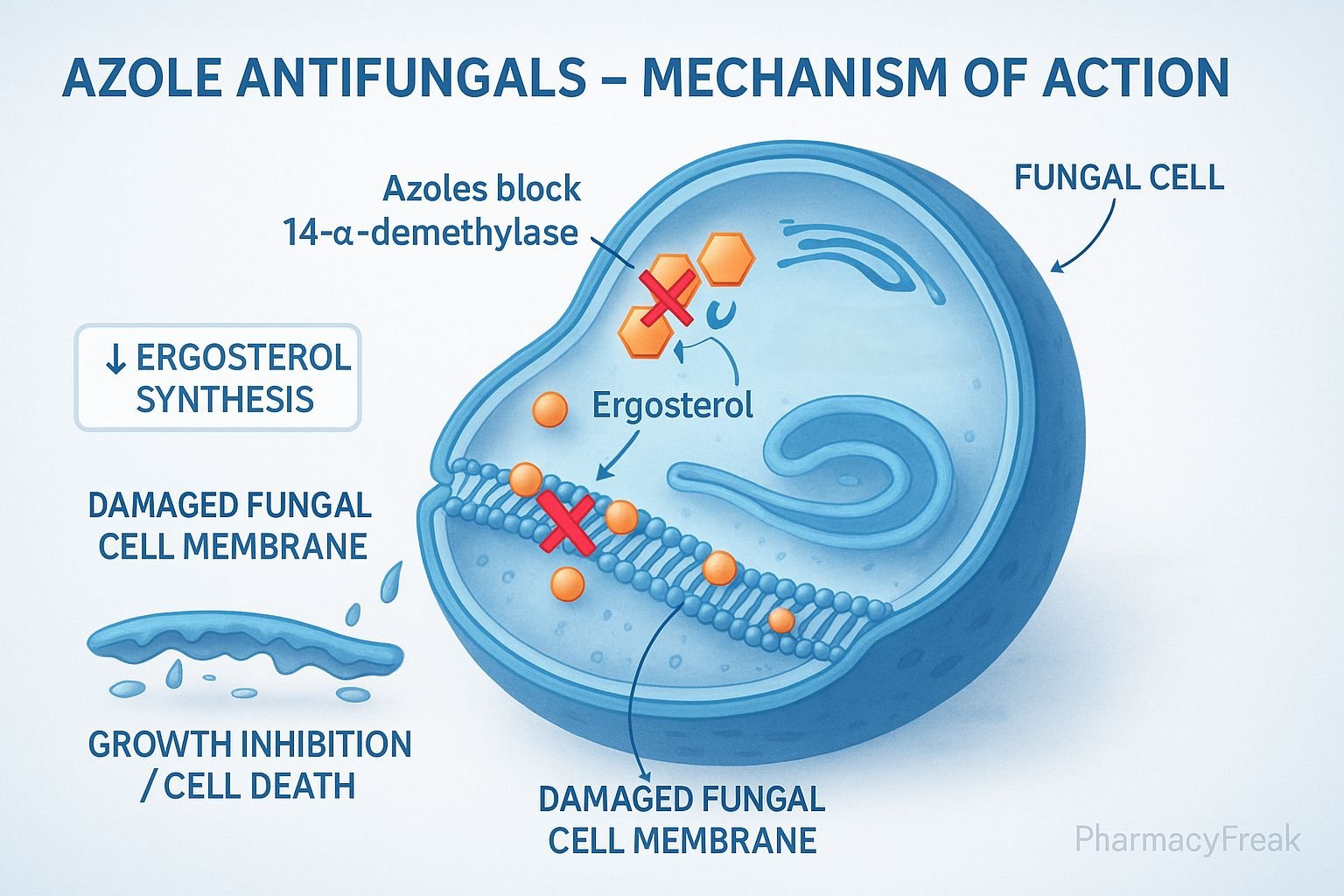
Mechanism of Action of Azole Antifungal

MOA of Azole Antifungal Drugs

Introduction Azoles are a major class of antifungal drugs widely used for the treatment of systemic and superficial fungal infections. They include imidazoles (e.g., ketoconazole, clotrimazole, miconazole) and triazoles (e.g., fluconazole, itraconazole, voriconazole, posaconazole). Mechanism of Action of Azole Antifungal Drugs centers on the inhibition of fungal ergosterol synthesis, an essential component of the fungal … Read more

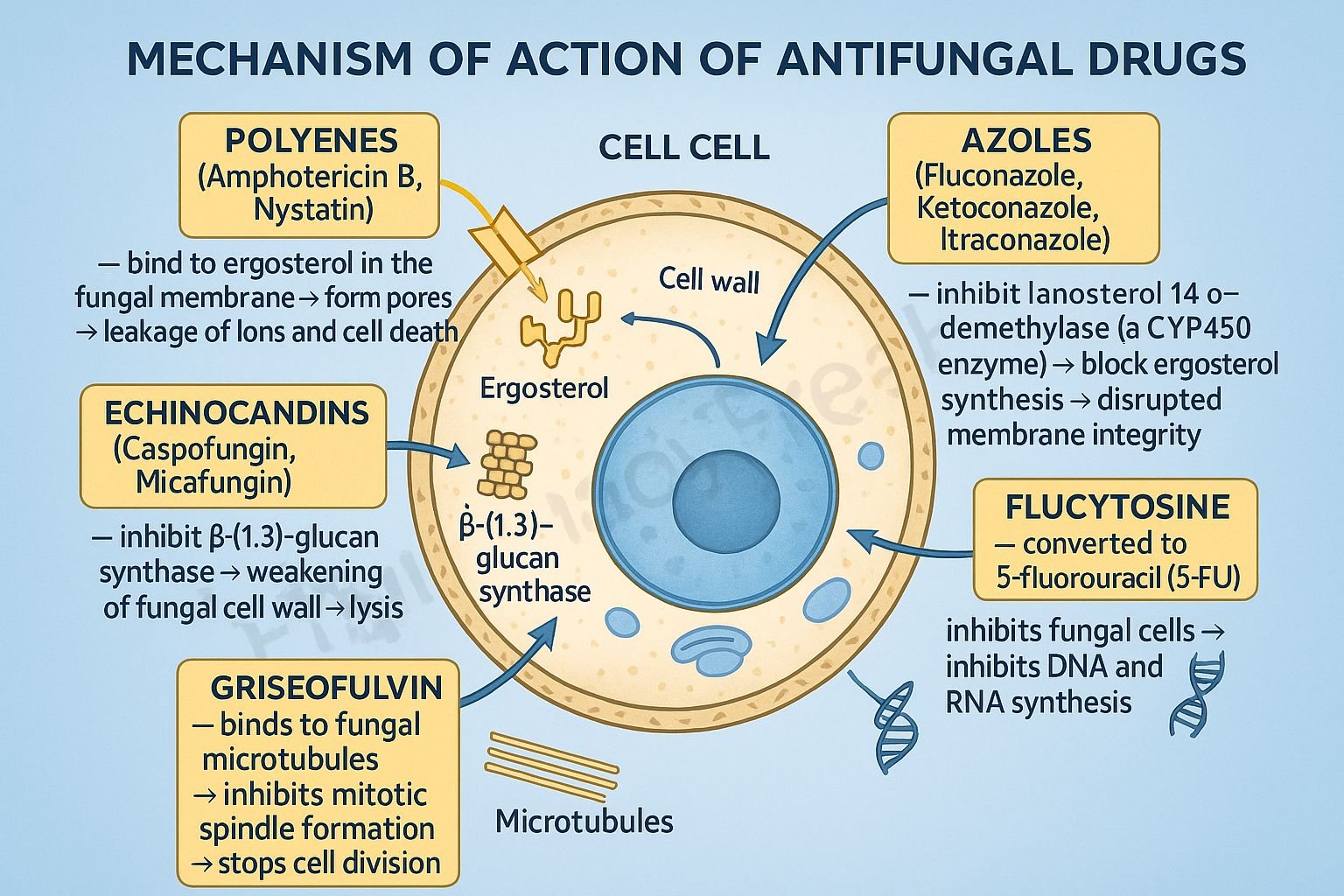
Mechanism of Action of Antifungal Drugs

MOA of Antifungal Drugs

Introduction Antifungal drugs are pharmacological agents that target fungal infections (mycoses) of the skin, mucosa, and internal organs. Mechanism of Action of Antifungal Drugs centers on disruption of ergosterol synthesis, cell membrane integrity, cell wall formation, or nucleic acid synthesis. Fungi are eukaryotic, so selective toxicity is achieved by exploiting pathways unique to fungal cells, … Read more

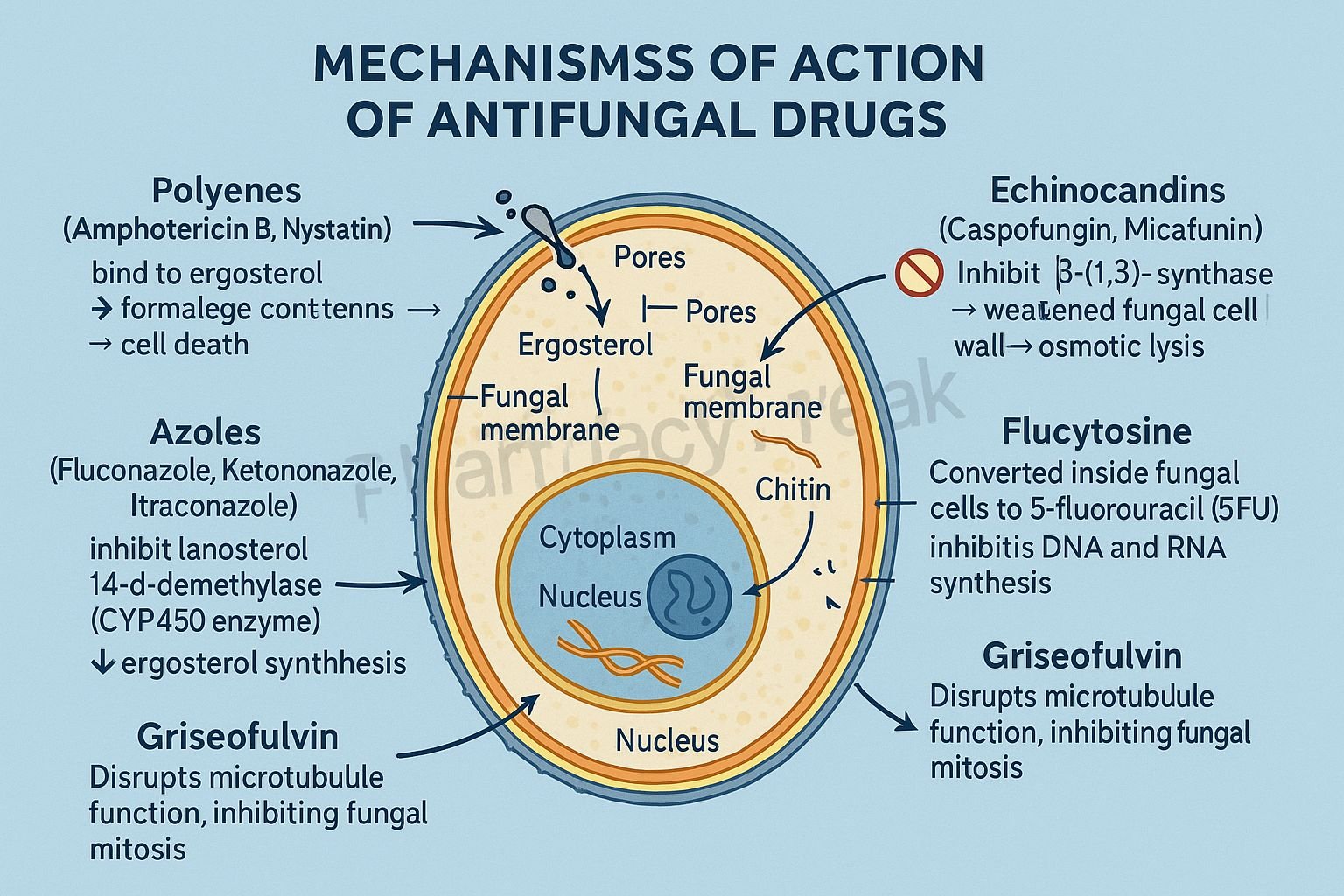
Mechanism of Action of Antifungal Drugs

Pharmacology and clinical mechanisms of Antifungal Drugs

Introduction Antifungal drugs are pharmacological agents used to treat fungal infections (mycoses) affecting the skin, mucous membranes, or internal organs. Mechanism of Action of Antifungal Drugs involves disruption of fungal cell membrane integrity, cell wall synthesis, or nucleic acid function. Since fungal cells are eukaryotic and share many structural similarities with human cells, antifungal agents … Read more

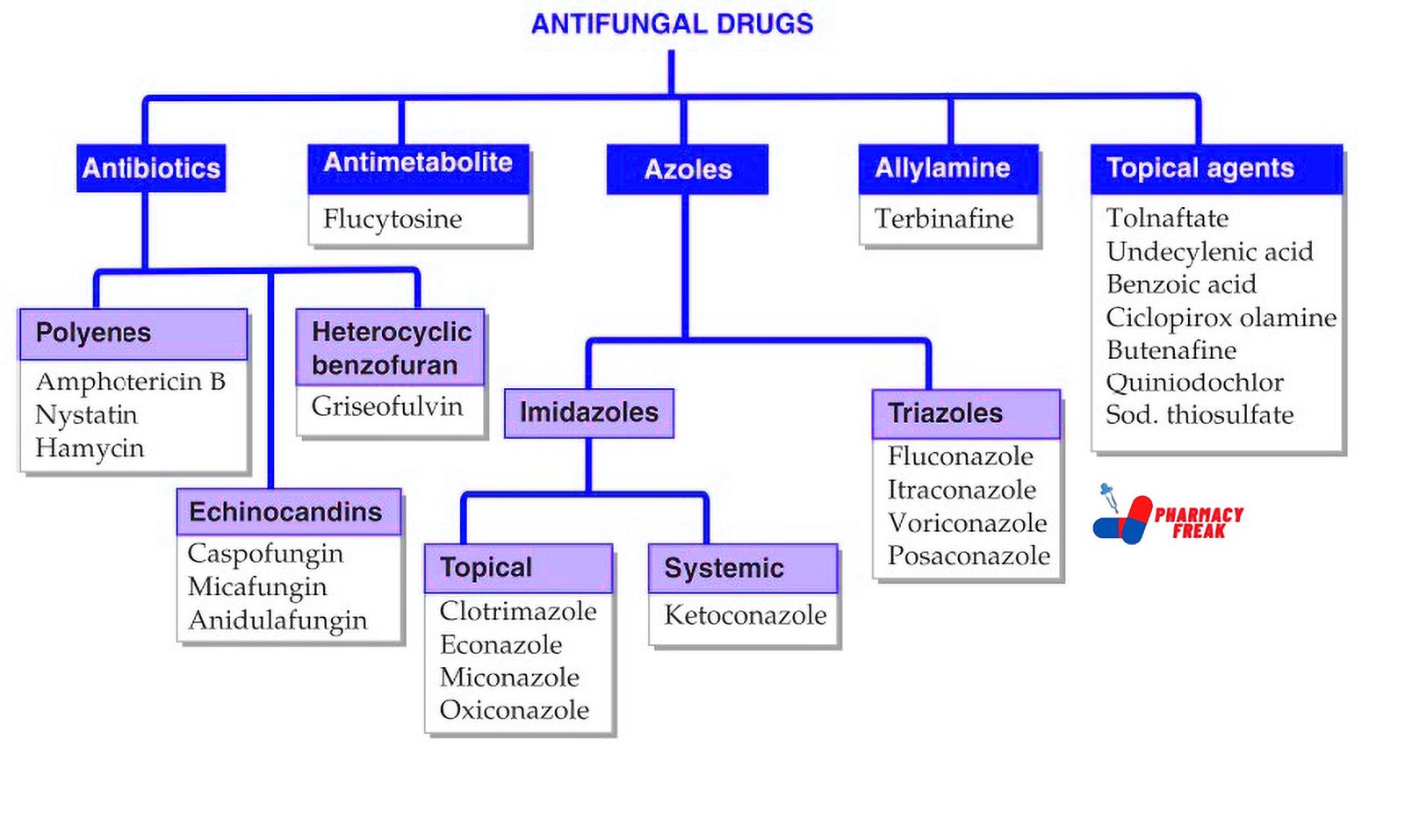
Classification of Antifungal Drugs

ANTIFUNGAL DRUGS CLASSIFICATION

Fungal infections, also known as mycoses, range from superficial skin infections to life-threatening systemic diseases. They are especially problematic in immunocompromised individuals such as those undergoing chemotherapy, organ transplant, or prolonged antibiotic therapy. Antifungal drugs are used to treat these infections and are classified based on their mechanism and site of action. This blog from … Read more

PRO
Ad-Free Access
$3.99 / month
  • No Interruptions
  • Faster Page Loads
  • Support Content Creators