Table of Contents
Introduction
Guselkumab is a biologic immunomodulator used in inflammatory immune-mediated diseases. It is marketed under the brand name Tremfya. Pharmacologically, guselkumab is an interleukin-23 antagonist and a human IgG1 lambda monoclonal antibody.
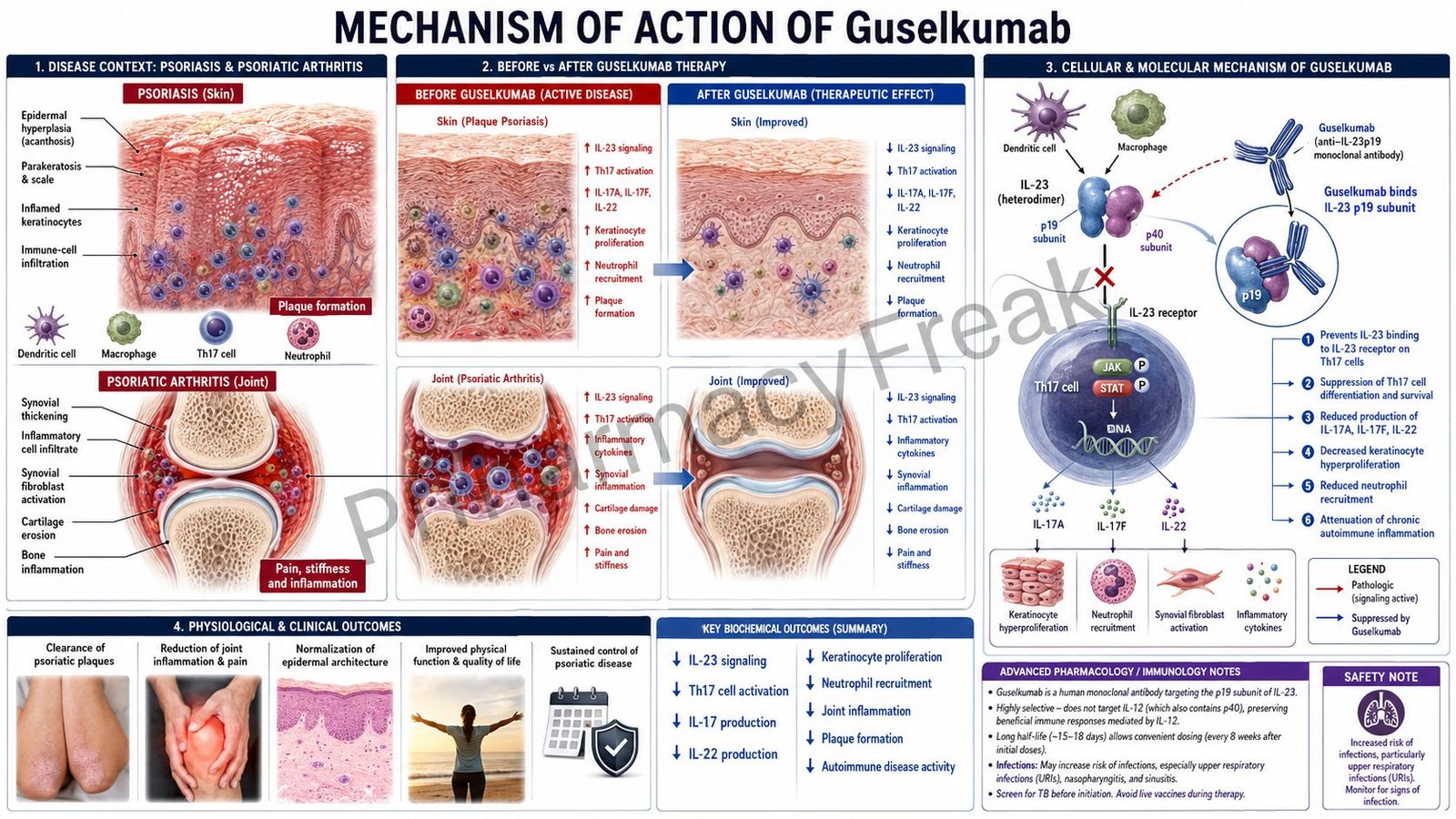
Interleukin-23, commonly called IL-23, is an important cytokine involved in chronic inflammation. It plays a major role in the activation and maintenance of Th17 immune pathways. These pathways promote the release of inflammatory cytokines such as IL-17A, IL-17F, IL-22, and other mediators that contribute to skin, joint, and intestinal inflammation.
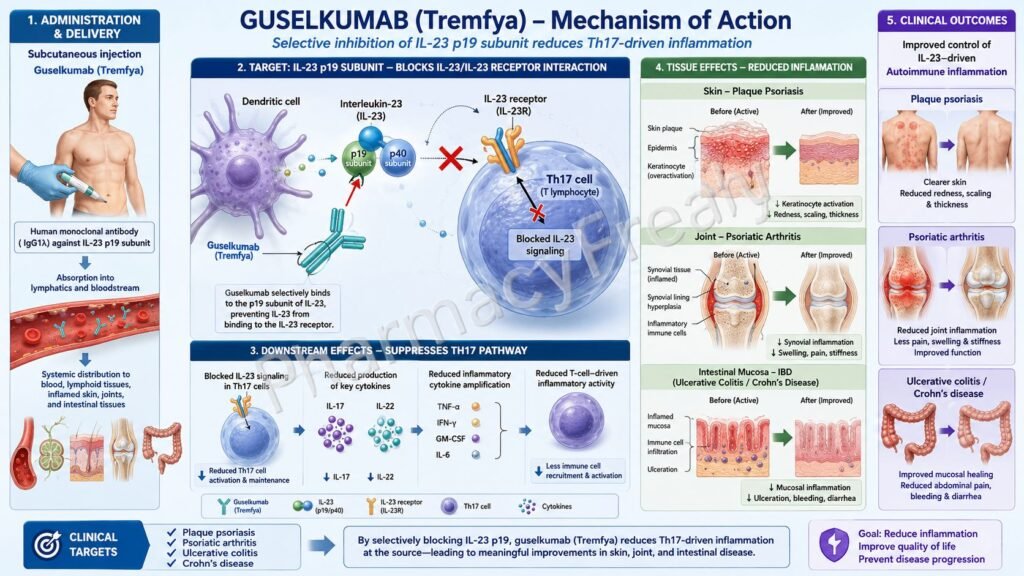
Guselkumab works by selectively binding to the p19 subunit of IL-23. This prevents IL-23 from binding to the IL-23 receptor on immune cells. By blocking IL-23 signaling, guselkumab reduces downstream Th17-mediated inflammation and improves inflammatory disease activity.
Current Tremfya labeling includes use in adults and pediatric patients 6 years of age and older who weigh at least 40 kg with moderate-to-severe plaque psoriasis and active psoriatic arthritis. It is also indicated in adults with moderately to severely active ulcerative colitis and adults with moderately to severely active Crohn’s disease.
For exam purposes, guselkumab should be remembered as a selective IL-23 p19 monoclonal antibody that suppresses the IL-23/Th17 inflammatory axis. It is different from ustekinumab, which targets the shared p40 subunit of IL-12 and IL-23.
Mechanism of Action (Step-wise)
Step 1: Chronic immune inflammation begins in target tissues
In diseases such as plaque psoriasis, psoriatic arthritis, ulcerative colitis, and Crohn’s disease, immune cells become abnormally activated. This causes persistent inflammation in the skin, joints, entheses, and intestinal mucosa.
Step 2: IL-23 is released by antigen-presenting cells
IL-23 is produced mainly by activated dendritic cells, macrophages, and other antigen-presenting cells. It is part of the cytokine network that maintains chronic inflammatory responses.
Step 3: IL-23 activates the IL-23 receptor on immune cells
IL-23 normally binds to the IL-23 receptor complex on immune cells, especially Th17 cells and other IL-23-responsive lymphocytes. This receptor activation supports inflammatory cell survival, expansion, and cytokine production.
Step 4: IL-23 maintains the Th17 inflammatory pathway
The IL-23 pathway is important for maintaining pathogenic Th17 responses. Th17 cells produce cytokines such as IL-17A, IL-17F, and IL-22. These cytokines recruit inflammatory cells, stimulate keratinocyte activation, increase chemokine release, and promote tissue inflammation.
Step 5: In psoriasis, IL-23 drives keratinocyte inflammation
In plaque psoriasis, IL-23/Th17 signaling stimulates keratinocytes and immune cells. This leads to epidermal hyperproliferation, scaling, erythema, thick plaques, itching, and chronic skin inflammation.
Step 6: In psoriatic arthritis, IL-23 contributes to joint and enthesis inflammation
In psoriatic arthritis, IL-23-driven immune signaling contributes to synovitis, enthesitis, dactylitis, joint pain, stiffness, swelling, and progressive joint damage. Blocking this pathway reduces inflammatory immune activity in musculoskeletal tissues.
Step 7: In inflammatory bowel disease, IL-23 supports intestinal inflammation
In ulcerative colitis and Crohn’s disease, IL-23 contributes to chronic intestinal immune activation. This promotes cytokine release, mucosal inflammation, barrier disruption, ulceration, diarrhea, abdominal pain, and rectal bleeding.
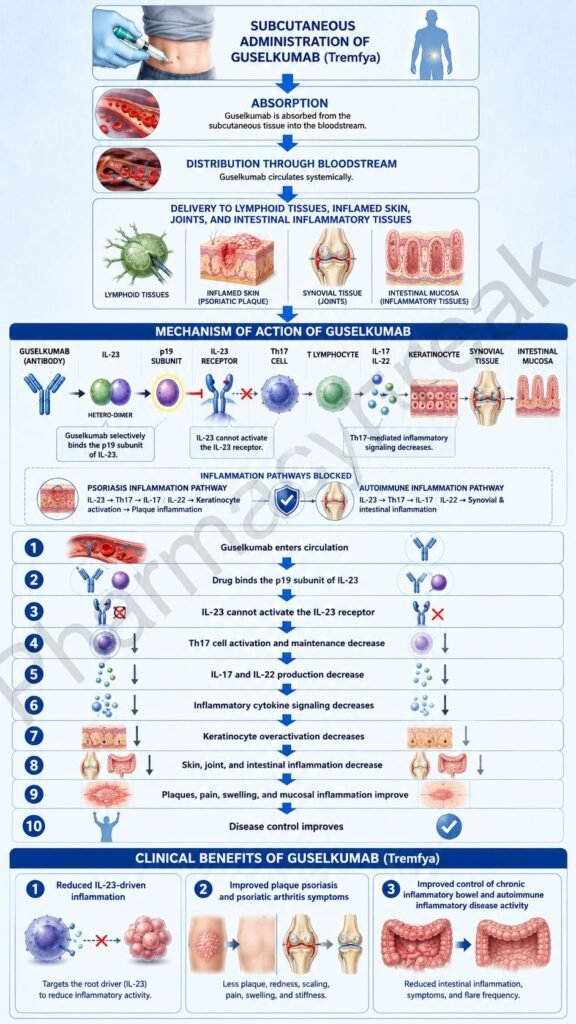
Step 8: Guselkumab binds selectively to the IL-23 p19 subunit
Guselkumab is a human monoclonal IgG1 lambda antibody that selectively binds to the p19 subunit of IL-23. This prevents IL-23 from interacting with the IL-23 receptor.
Step 9: IL-23 receptor activation is blocked
When guselkumab neutralizes IL-23, the cytokine cannot effectively activate IL-23 receptors on immune cells. This reduces downstream immune signaling that normally sustains chronic inflammation.
Step 10: Th17-related cytokine production decreases
Blocking IL-23 reduces inflammatory mediators associated with the Th17 pathway, including IL-17A, IL-17F, and IL-22. Lower levels of these cytokines reduce inflammatory recruitment and tissue activation.
Step 11: Skin, joint, and intestinal inflammation improve
As inflammatory cytokine signaling decreases, disease activity improves. In psoriasis, plaques become less thick, scaly, and inflamed. In psoriatic arthritis, joint and enthesis inflammation decrease. In ulcerative colitis and Crohn’s disease, intestinal inflammation is reduced.
Step 12: Guselkumab does not broadly suppress all cytokines
Guselkumab is selective for IL-23 p19. It does not directly block TNF-alpha, IL-17A, JAK enzymes, or the IL-12 p35 pathway. This selective mechanism helps distinguish it from several other immunomodulators.
Pharmacokinetics
Guselkumab is administered by injection, not by oral tablet. Because it is a monoclonal antibody protein, it would be degraded in the gastrointestinal tract if taken orally.
For plaque psoriasis and psoriatic arthritis, guselkumab is commonly administered by subcutaneous injection at Week 0, Week 4, and then every 8 weeks. For ulcerative colitis and Crohn’s disease, dosing may include intravenous or subcutaneous induction followed by subcutaneous maintenance dosing according to the approved product schedule.
After subcutaneous administration, guselkumab is absorbed slowly into the systemic circulation. In adult plaque psoriasis, the apparent volume of distribution is approximately 13.5 L. In ulcerative colitis and Crohn’s disease, the apparent volume of distribution at steady state is around 10.1 L and 11.4 L, respectively.
The mean half-life of guselkumab is approximately 15 to 18 days in plaque psoriasis and approximately 17 days in ulcerative colitis and Crohn’s disease. This long half-life supports maintenance dosing at extended intervals rather than daily administration.
Guselkumab is not primarily metabolized by cytochrome P450 enzymes. Like endogenous IgG antibodies, it is expected to be degraded into small peptides and amino acids by catabolic pathways. Therefore, classic CYP-based drug interactions are not a major pharmacokinetic concern.
No specific clinical trials have fully determined the effect of renal or hepatic impairment on guselkumab pharmacokinetics. However, because monoclonal antibodies are not mainly cleared by renal filtration or hepatic CYP metabolism, large changes from mild organ dysfunction are not generally expected.
Before starting therapy, patients should be evaluated for tuberculosis, vaccination status should be reviewed, and liver enzymes and bilirubin should be checked when clinically appropriate, especially in inflammatory bowel disease use. Live vaccines should generally be avoided during therapy.
Clinical Uses
Guselkumab is used for moderate-to-severe plaque psoriasis in adults and pediatric patients 6 years of age and older who weigh at least 40 kg and are candidates for systemic therapy or phototherapy. Plaque psoriasis is characterized by erythematous, scaly plaques caused by immune-mediated keratinocyte activation and inflammation.
Guselkumab is also used for active psoriatic arthritis in adults and pediatric patients 6 years of age and older who weigh at least 40 kg. In psoriatic arthritis, it helps reduce joint inflammation, enthesitis, dactylitis, skin symptoms, and functional impairment.
In adults, guselkumab is used for moderately to severely active ulcerative colitis. Ulcerative colitis is a chronic inflammatory disease limited to the colon and rectum, usually causing bloody diarrhea, urgency, abdominal pain, and mucosal ulceration.
Guselkumab is also used in adults with moderately to severely active Crohn’s disease. Crohn’s disease can affect any part of the gastrointestinal tract and may cause transmural inflammation, strictures, fistulas, abdominal pain, diarrhea, weight loss, and systemic symptoms.
Guselkumab is not a general pain medicine, steroid, antibiotic, or immediate rescue drug. Its role is long-term immune pathway control in selected inflammatory diseases.
Adverse Effects
The most important adverse effects of guselkumab are related to immune modulation. Because it reduces IL-23-mediated immune responses, it may increase the risk of infections. Patients should be assessed for active infection before treatment and monitored during therapy.
Upper respiratory tract infections are among the most common adverse effects. Other possible infections include gastroenteritis, fungal infections, herpes simplex infections, bronchitis, and other respiratory or skin infections.
Serious hypersensitivity reactions, including anaphylaxis, have been reported. Guselkumab is contraindicated in patients with a history of serious hypersensitivity reaction to guselkumab or any excipient. If a serious hypersensitivity reaction occurs, the drug should be discontinued and appropriate therapy should be started.
Tuberculosis is an important safety concern. Patients should be evaluated for TB infection before starting therapy. Guselkumab should not be started in patients with active TB, and latent TB should be treated according to standard recommendations before or during biologic therapy.
Hepatotoxicity has been added as an important warning. Liver injury has been reported, and liver enzymes and bilirubin should be assessed before starting treatment for ulcerative colitis or Crohn’s disease. For plaque psoriasis or psoriatic arthritis, liver testing is recommended if clinically indicated. Symptoms such as jaundice, dark urine, nausea, vomiting, fatigue, anorexia, abdominal pain, or unexplained rash should prompt evaluation.
Injection-site reactions may occur with subcutaneous administration. These may include redness, pain, swelling, itching, bruising, or irritation at the injection site.
Live vaccines should be avoided during guselkumab treatment. Age-appropriate immunizations should ideally be completed before therapy begins. Non-live vaccines may be used, but immune response may be altered in some immunosuppressed patients.
Pregnancy data are limited. As an IgG monoclonal antibody, guselkumab may cross the placenta, especially during the second and third trimesters. Use during pregnancy requires careful risk-benefit assessment, especially considering disease activity and maternal health.
Comparative Analysis
Guselkumab is commonly compared with other biologics used in psoriasis, psoriatic arthritis, and inflammatory bowel disease.
Compared with ustekinumab, guselkumab is more selective. Ustekinumab blocks the p40 subunit shared by IL-12 and IL-23, while guselkumab blocks only the p19 subunit of IL-23. This means guselkumab inhibits IL-23 signaling without directly blocking IL-12.
Compared with risankizumab and tildrakizumab, guselkumab belongs to the same general IL-23 p19 inhibitor class. All reduce IL-23-driven Th17 inflammation, but they differ in approved indications, dosing schedules, clinical trial data, and formulation.
Compared with IL-17 inhibitors such as secukinumab, ixekizumab, and brodalumab, guselkumab acts upstream. IL-17 inhibitors block IL-17A or IL-17 receptor signaling directly, while guselkumab reduces upstream IL-23 stimulation that maintains Th17 cytokine production.
Compared with TNF-alpha inhibitors such as adalimumab, infliximab, and etanercept, guselkumab has a more specific cytokine target. TNF inhibitors broadly reduce TNF-mediated inflammation and are useful across many immune diseases. Guselkumab specifically targets IL-23-mediated pathways.
Compared with JAK inhibitors such as tofacitinib and upadacitinib, guselkumab is more extracellular and cytokine-specific. JAK inhibitors are oral small molecules that block intracellular cytokine signaling pathways and often require monitoring for infections, thrombosis, lipid changes, and laboratory abnormalities.
Compared with corticosteroids, guselkumab is not a broad anti-inflammatory rescue drug. Corticosteroids rapidly suppress many immune pathways, while guselkumab selectively targets IL-23 and is used for long-term disease control.
Compared with vedolizumab in inflammatory bowel disease, guselkumab blocks the IL-23 cytokine pathway, while vedolizumab blocks alpha-4 beta-7 integrin-mediated gut lymphocyte trafficking. Both can treat intestinal inflammation but act through different immune mechanisms.
MCQs
- Guselkumab belongs to which pharmacological class?
a) IL-23 antagonist
b) TNF-alpha inhibitor
c) JAK inhibitor
d) IL-17 receptor agonist
Answer: a) IL-23 antagonist
- The brand name of guselkumab is:
a) Humira
b) Tremfya
c) Stelara
d) Cosentyx
Answer: b) Tremfya
- Guselkumab selectively binds to which subunit of IL-23?
a) p40 subunit
b) p35 subunit
c) p19 subunit
d) p55 subunit
Answer: c) p19 subunit
- IL-23 is especially important in maintaining which immune pathway?
a) Th17 pathway
b) Cholinergic pathway
c) Dopamine pathway
d) Coagulation pathway
Answer: a) Th17 pathway
- Blocking IL-23 signaling reduces production of which cytokine group?
a) IL-17A, IL-17F, and IL-22
b) Insulin and glucagon
c) Dopamine and serotonin
d) Histamine and acetylcholine only
Answer: a) IL-17A, IL-17F, and IL-22
- Guselkumab is used in moderate-to-severe plaque psoriasis because it reduces:
a) Keratinocyte-driven inflammatory plaque formation
b) Gastric acid secretion
c) Platelet aggregation
d) Dopamine receptor activation
Answer: a) Keratinocyte-driven inflammatory plaque formation
- Which disease is an approved use of guselkumab?
a) Active psoriatic arthritis
b) Acute bacterial pneumonia
c) Type 1 diabetes mellitus
d) Parkinson’s disease
Answer: a) Active psoriatic arthritis
- Guselkumab differs from ustekinumab because ustekinumab blocks:
a) IL-12/23 p40 subunit
b) IL-23 p19 subunit only
c) TNF-alpha receptor only
d) JAK1 enzyme only
Answer: a) IL-12/23 p40 subunit
- Which route is commonly used for guselkumab maintenance therapy?
a) Subcutaneous injection
b) Oral tablet
c) Inhalation
d) Intrathecal injection
Answer: a) Subcutaneous injection
- Guselkumab is expected to be metabolized mainly by:
a) Catabolic degradation into peptides and amino acids
b) CYP3A4 oxidation only
c) Renal tubular secretion unchanged only
d) Acetylcholinesterase metabolism
Answer: a) Catabolic degradation into peptides and amino acids
- Which screening is important before starting guselkumab?
a) Tuberculosis evaluation
b) Audiometry only
c) Blood group testing only
d) Pregnancy test in all males only
Answer: a) Tuberculosis evaluation
- Which vaccine type should generally be avoided during guselkumab therapy?
a) Live vaccines
b) Inactivated influenza vaccine only
c) Recombinant vaccines only
d) Toxoid vaccines only
Answer: a) Live vaccines
- Which serious reaction is a contraindication to further guselkumab use?
a) Serious hypersensitivity reaction
b) Mild injection-site redness only
c) Mild headache only
d) Temporary fatigue only
Answer: a) Serious hypersensitivity reaction
- Which warning has become important with guselkumab, especially in inflammatory bowel disease treatment?
a) Hepatotoxicity
b) Irreversible hearing loss
c) Severe hypoglycemia
d) Mandatory nephrolithiasis
Answer: a) Hepatotoxicity
- Which statement best describes guselkumab?
a) It selectively blocks IL-23 p19 and reduces Th17-mediated inflammation
b) It directly blocks dopamine D2 receptors
c) It inhibits cyclooxygenase irreversibly
d) It stimulates beta-2 receptors
Answer: a) It selectively blocks IL-23 p19 and reduces Th17-mediated inflammation
FAQs
What is the mechanism of action of guselkumab?
Guselkumab selectively binds to the p19 subunit of interleukin-23 and prevents IL-23 from interacting with its receptor. This reduces IL-23/Th17 pathway signaling and decreases inflammatory cytokines such as IL-17A, IL-17F, and IL-22.
What is the brand name of guselkumab?
The brand name of guselkumab is Tremfya.
What is guselkumab used for?
Guselkumab is used for moderate-to-severe plaque psoriasis, active psoriatic arthritis, moderately to severely active ulcerative colitis, and moderately to severely active Crohn’s disease in appropriate patients.
Is guselkumab an IL-17 inhibitor?
No. Guselkumab is not an IL-17 inhibitor. It blocks IL-23 p19, which is upstream of IL-17 production in the Th17 inflammatory pathway.
How is guselkumab different from ustekinumab?
Guselkumab selectively blocks the IL-23 p19 subunit. Ustekinumab blocks the p40 subunit shared by IL-12 and IL-23. Therefore, guselkumab is more selective for IL-23 signaling.
Does guselkumab suppress the immune system?
Guselkumab modulates immune activity by blocking IL-23 signaling. It does not suppress every immune pathway, but it can increase infection risk and requires screening and monitoring.
Why is TB screening needed before guselkumab?
Because guselkumab affects immune defense pathways, patients should be evaluated for tuberculosis before starting therapy. Active TB should be treated before biologic therapy is started.
Can live vaccines be given with guselkumab?
Live vaccines should generally be avoided during guselkumab therapy. Age-appropriate vaccines should ideally be completed before starting treatment.
References
Goodman & Gilman’s The Pharmacological Basis of Therapeutics
Katzung Basic & Clinical Pharmacology