Table of Contents
Introduction
Trulicity is the brand name of dulaglutide, a once-weekly injectable antidiabetic medicine used in type 2 diabetes mellitus. Pharmacologically, dulaglutide is a glucagon-like peptide-1 receptor agonist, commonly called a GLP-1 receptor agonist.
GLP-1 is an incretin hormone released from intestinal L-cells after food intake. It helps regulate blood glucose by increasing insulin secretion, decreasing glucagon secretion, slowing gastric emptying, and promoting satiety. In type 2 diabetes mellitus, incretin effect and insulin response are often impaired, contributing to fasting and postprandial hyperglycemia.
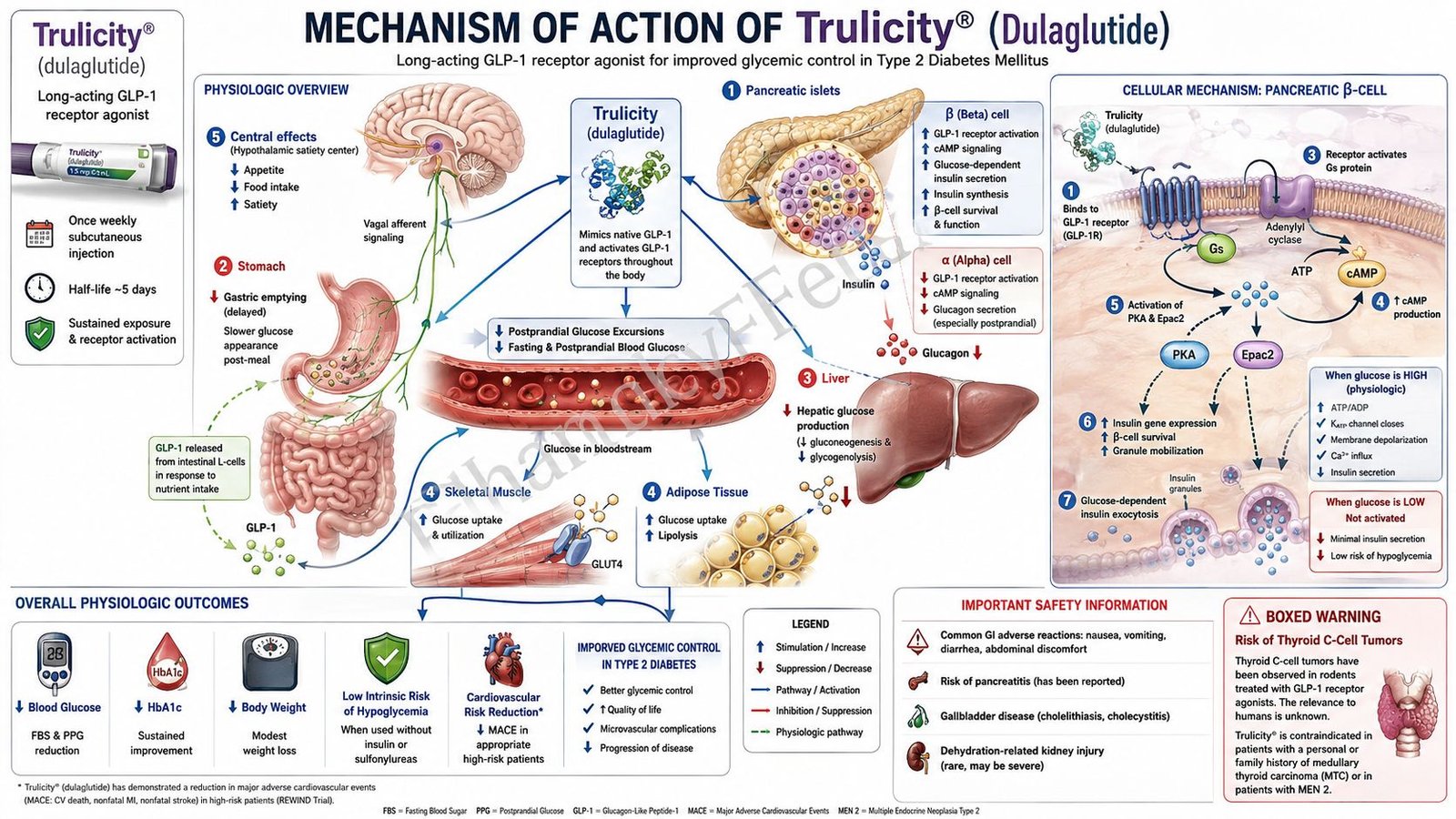
Dulaglutide mimics the activity of endogenous GLP-1. It activates GLP-1 receptors on pancreatic beta cells, increases cyclic AMP, and promotes glucose-dependent insulin secretion. It also reduces glucagon secretion and slows gastric emptying, helping lower fasting and postprandial blood glucose levels. The official label describes dulaglutide as a human GLP-1 receptor agonist with 90% amino acid sequence homology to endogenous human GLP-1.
Trulicity is indicated as an adjunct to diet and exercise to improve glycemic control in adults and pediatric patients 10 years of age and older with type 2 diabetes mellitus. It is also indicated to reduce the risk of major adverse cardiovascular events in adults with type 2 diabetes mellitus who have established cardiovascular disease or multiple cardiovascular risk factors.
For exam purposes, Trulicity should be remembered as a once-weekly GLP-1 receptor agonist that increases glucose-dependent insulin secretion, suppresses glucagon, slows gastric emptying, lowers fasting and postprandial glucose, and provides cardiovascular risk reduction in selected adults with type 2 diabetes.
Mechanism of Action (Step-wise)
Step 1: Food intake stimulates incretin hormone release
After meals, intestinal endocrine cells release incretin hormones, mainly GLP-1 and glucose-dependent insulinotropic polypeptide. These hormones help the pancreas respond appropriately to rising blood glucose after food intake.
Step 2: GLP-1 normally activates pancreatic beta-cell receptors
Endogenous GLP-1 binds to GLP-1 receptors on pancreatic beta cells. These receptors are membrane-bound cell-surface receptors coupled to adenylyl cyclase. Activation of this pathway increases intracellular cyclic AMP, or cAMP.
Step 3: cAMP increases glucose-dependent insulin secretion
Higher cAMP in beta cells enhances insulin secretion when blood glucose is elevated. This is called glucose-dependent insulin secretion. It is important because GLP-1 receptor agonists generally have a lower intrinsic risk of hypoglycemia when used alone compared with insulin or sulfonylureas.
Step 4: Dulaglutide activates GLP-1 receptors
Dulaglutide binds to and activates GLP-1 receptors. It is designed to resist rapid degradation and remain active longer than native GLP-1, allowing once-weekly dosing. The GLP-1 analog portion of dulaglutide is attached to a modified human IgG4 Fc portion, increasing molecular size and prolonging duration of action.
Step 5: Beta-cell insulin release increases
By activating GLP-1 receptors on beta cells, Trulicity increases intracellular cAMP and stimulates insulin release in a glucose-dependent manner. This improves the insulin response after meals and helps lower postprandial glucose.
Step 6: First-phase and second-phase insulin secretion improve
In type 2 diabetes, early insulin response after meals is often impaired. Trulicity improves both first-phase and second-phase insulin secretion compared with placebo, helping improve overall glycemic control.
Step 7: Glucagon secretion decreases
GLP-1 receptor activation also decreases glucagon secretion from pancreatic alpha cells. Glucagon normally increases hepatic glucose production. By reducing glucagon, Trulicity lowers excessive glucose output from the liver.
Step 8: Hepatic glucose production decreases
When glucagon levels fall, the liver produces and releases less glucose. This contributes to lower fasting blood glucose and better overall glycemic control in type 2 diabetes mellitus.
Step 9: Gastric emptying slows
Dulaglutide delays gastric emptying. This means glucose from food enters the small intestine and bloodstream more gradually. The effect is dose-dependent and is greatest after the first dose, then diminishes with subsequent doses.
Step 10: Postprandial glucose spikes decrease
Because gastric emptying is slower and insulin response is improved, post-meal glucose rises are reduced. This helps control postprandial hyperglycemia, which is an important contributor to HbA1c elevation.
Step 11: Appetite and food intake may decrease
GLP-1 receptor signaling can increase satiety and reduce appetite in some patients. Trulicity is not primarily labeled as a weight-loss drug, but decreased appetite and modest weight reduction may occur in many patients with type 2 diabetes.
Step 12: Fasting and postprandial glucose levels improve
The combined effects of increased glucose-dependent insulin secretion, reduced glucagon secretion, delayed gastric emptying, and reduced hepatic glucose output lead to lower fasting and postprandial glucose. Clinical pharmacology data show reductions in fasting glucose and 2-hour postprandial glucose after once-weekly Trulicity treatment.
Step 13: HbA1c decreases over time
As fasting and postprandial glucose improve consistently, HbA1c decreases over weeks to months. HbA1c reflects average blood glucose over approximately 2 to 3 months and is a major marker used to assess diabetes control.
Step 14: Cardiovascular benefit occurs in selected adults
In adults with type 2 diabetes and established cardiovascular disease or multiple cardiovascular risk factors, Trulicity reduces the risk of major adverse cardiovascular events, defined as cardiovascular death, non-fatal myocardial infarction, or non-fatal stroke.
Step 15: Final therapeutic outcome
The final therapeutic effect of Trulicity is improved glycemic control in type 2 diabetes mellitus, with additional cardiovascular risk reduction in appropriate adult patients. It does not cure diabetes, does not replace lifestyle therapy, and is not used for type 1 diabetes or diabetic ketoacidosis.
Pharmacokinetics
Trulicity is administered by subcutaneous injection once weekly. It may be injected into the abdomen, thigh, or upper arm, and injection sites should be rotated. It can be administered any time of day, with or without food.
The recommended adult starting dose is 0.75 mg once weekly. After 4 weeks, the dose may be increased to 1.5 mg once weekly for additional glycemic control. If needed, the dose may be increased in 1.5 mg increments after at least 4 weeks on the current dose, up to a maximum recommended adult dose of 4.5 mg once weekly.
For pediatric patients 10 years of age and older with type 2 diabetes, the recommended starting dose is 0.75 mg once weekly. If additional glycemic control is needed, the dose may be increased to 1.5 mg once weekly after at least 4 weeks.
After subcutaneous administration, dulaglutide is absorbed slowly. At steady state, time to maximum plasma concentration ranges from 24 to 72 hours, with a median of about 48 hours. Steady-state concentrations are reached after approximately 2 to 4 weeks of once-weekly dosing.
The mean absolute bioavailability after subcutaneous administration is about 65% for the 0.75 mg dose and 47% for the 1.5 mg dose. Exposure increases approximately proportionally from 0.75 mg to 4.5 mg.
Dulaglutide is a large recombinant fusion protein. It is not primarily metabolized by cytochrome P450 enzymes. Instead, it is presumed to be degraded into component amino acids through general protein catabolism pathways.
The elimination half-life of dulaglutide is approximately 5 days. This long half-life supports once-weekly dosing and is mainly due to its large molecular structure and Fc-fusion design.
No dose adjustment is recommended in renal impairment, including end-stage renal disease, but renal function should be monitored in patients with renal impairment who develop severe gastrointestinal adverse reactions. In hepatic impairment, no clinically relevant pharmacokinetic change has been observed, but clinical experience is limited, so caution is recommended.
Because dulaglutide slows gastric emptying, it may affect the absorption rate of orally administered medications. This is especially relevant for drugs with a narrow therapeutic index or drugs where timing of absorption is clinically important.
Clinical Uses
Trulicity is used as an adjunct to diet and exercise to improve glycemic control in adults with type 2 diabetes mellitus. It helps reduce fasting glucose, postprandial glucose, and HbA1c through incretin-based mechanisms.
Trulicity is also used in pediatric patients 10 years of age and older with type 2 diabetes mellitus as an adjunct to diet and exercise. Safety and effectiveness have not been established in pediatric patients younger than 10 years.
In adults with type 2 diabetes mellitus who have established cardiovascular disease or multiple cardiovascular risk factors, Trulicity is used to reduce the risk of major adverse cardiovascular events, including cardiovascular death, non-fatal myocardial infarction, and non-fatal stroke.
Trulicity may be used as monotherapy or in combination with other antidiabetic agents such as metformin, sulfonylureas, SGLT2 inhibitors, thiazolidinediones, or insulin, depending on patient needs and clinician judgment.
Trulicity is not indicated for type 1 diabetes mellitus. It is not insulin and should not be used to treat diabetic ketoacidosis. It is also not primarily approved as an obesity drug, even though appetite reduction and weight loss may occur.
Trulicity should not be used in patients with a personal or family history of medullary thyroid carcinoma or in patients with multiple endocrine neoplasia syndrome type 2. It is also contraindicated in patients with serious hypersensitivity to dulaglutide or any product component.
Adverse Effects
The most common adverse effects of Trulicity are gastrointestinal. These include nausea, vomiting, diarrhea, abdominal pain, decreased appetite, dyspepsia, and constipation. Gastrointestinal adverse effects are usually more common during initiation and dose escalation.
The boxed warning is risk of thyroid C-cell tumors. Dulaglutide causes thyroid C-cell tumors in rats, but it is unknown whether Trulicity causes medullary thyroid carcinoma in humans. Trulicity is contraindicated in patients with a personal or family history of medullary thyroid carcinoma and in patients with MEN 2.
Acute pancreatitis is an important warning. GLP-1 receptor agonists, including Trulicity, have been associated with acute pancreatitis. Persistent severe abdominal pain, sometimes radiating to the back and possibly with nausea or vomiting, requires urgent evaluation and discontinuation if pancreatitis is suspected.
Hypoglycemia can occur when Trulicity is used with insulin or insulin secretagogues such as sulfonylureas. Since Trulicity stimulates insulin secretion in a glucose-dependent manner, hypoglycemia risk is usually lower when used alone, but combination with insulin or sulfonylureas increases risk. Dose reduction of insulin or sulfonylurea may be needed.
Serious hypersensitivity reactions, including anaphylaxis and angioedema, have been reported. Trulicity should be discontinued if a serious hypersensitivity reaction occurs.
Acute kidney injury due to volume depletion is another warning. Severe nausea, vomiting, or diarrhea can cause dehydration, which may worsen kidney function, especially in patients with pre-existing renal impairment.
Severe gastrointestinal adverse reactions are now an important labeled warning. Patients with severe or persistent gastrointestinal symptoms should contact their healthcare provider. Trulicity is not recommended in patients with severe gastrointestinal disease, including severe gastroparesis.
Diabetic retinopathy complications have been reported, especially in patients with a history of diabetic retinopathy. Rapid improvement in glucose control can sometimes temporarily worsen diabetic retinopathy, so patients with visual changes should seek medical evaluation.
Acute gallbladder disease, including cholelithiasis and cholecystitis, has been reported with GLP-1 receptor agonists. Symptoms such as right upper abdominal pain, fever, nausea, vomiting, or jaundice require evaluation.
Pulmonary aspiration during general anesthesia or deep sedation is a newer safety concern for GLP-1 receptor agonists because delayed gastric emptying may leave residual gastric contents despite fasting. The Trulicity label includes pulmonary aspiration during general anesthesia or deep sedation as a warning.
Pregnancy data are limited. Trulicity should be used during pregnancy only if the potential benefit justifies the potential risk to the fetus. Breastfeeding decisions should consider maternal need, infant risk, and the benefits of breastfeeding.
Comparative Analysis
Trulicity is commonly compared with other GLP-1 receptor agonists such as semaglutide, liraglutide, exenatide, lixisenatide, and albiglutide.
Compared with semaglutide, Trulicity and semaglutide both activate GLP-1 receptors, increase glucose-dependent insulin secretion, reduce glucagon, slow gastric emptying, and reduce appetite. Semaglutide is available in injectable and oral formulations depending on product, while Trulicity is a once-weekly subcutaneous injection.
Compared with liraglutide, Trulicity has a longer dosing interval. Liraglutide is usually administered once daily, while Trulicity is administered once weekly. Both have cardiovascular outcome data in type 2 diabetes, but their formulations and dosing schedules differ.
Compared with exenatide, dulaglutide is a human GLP-1 receptor agonist fusion protein, while exenatide is exendin-4 based. Exenatide has twice-daily and once-weekly formulations depending on product, while Trulicity is once weekly.
Compared with DPP-4 inhibitors such as sitagliptin, linagliptin, and saxagliptin, Trulicity provides direct GLP-1 receptor activation. DPP-4 inhibitors prolong endogenous incretin hormones by preventing their breakdown. GLP-1 receptor agonists generally produce stronger HbA1c reduction and more weight loss than DPP-4 inhibitors.
Compared with insulin, Trulicity does not directly replace insulin. Insulin lowers glucose by directly increasing peripheral glucose uptake and suppressing hepatic glucose output. Trulicity works by incretin-based mechanisms and has glucose-dependent insulinotropic activity.
Compared with sulfonylureas such as glimepiride and glyburide, Trulicity has a lower risk of hypoglycemia when used alone because its insulin secretion effect is glucose-dependent. Sulfonylureas stimulate insulin release regardless of glucose level and can cause more hypoglycemia and weight gain.
Compared with SGLT2 inhibitors such as empagliflozin and dapagliflozin, Trulicity acts through GLP-1 receptors and pancreatic-gastrointestinal pathways. SGLT2 inhibitors reduce renal glucose reabsorption and increase urinary glucose excretion. Both classes may provide cardiovascular or renal benefits depending on the specific drug and patient population.
Compared with tirzepatide, Trulicity is a GLP-1 receptor agonist only. Tirzepatide is a dual GIP and GLP-1 receptor agonist, which gives it a different incretin profile and often greater effects on body weight and glycemic control in comparative clinical practice discussions.
MCQs
- Trulicity contains which active drug?
a) Semaglutide
b) Dulaglutide
c) Liraglutide
d) Exenatide
Answer: b) Dulaglutide
- Trulicity belongs to which pharmacological class?
a) GLP-1 receptor agonist
b) DPP-4 inhibitor
c) SGLT2 inhibitor
d) Sulfonylurea
Answer: a) GLP-1 receptor agonist
- Dulaglutide mainly activates which receptor?
a) GLP-1 receptor
b) Insulin receptor
c) Beta-1 receptor
d) Dopamine D2 receptor
Answer: a) GLP-1 receptor
- GLP-1 receptor activation in pancreatic beta cells increases:
a) Intracellular cAMP
b) Intracellular sodium only
c) Nuclear DNA damage
d) Acetylcholine breakdown
Answer: a) Intracellular cAMP
- Trulicity increases insulin secretion in which manner?
a) Glucose-dependent manner
b) Glucose-independent manner
c) Only during fasting hypoglycemia
d) Only when insulin receptors are blocked
Answer: a) Glucose-dependent manner
- Trulicity reduces secretion of which hormone?
a) Glucagon
b) Cortisol
c) Thyroxine
d) Aldosterone
Answer: a) Glucagon
- Trulicity slows:
a) Gastric emptying
b) Renal filtration permanently
c) Red blood cell production
d) Bone marrow mitosis
Answer: a) Gastric emptying
- Trulicity is administered by which route?
a) Subcutaneous injection
b) Oral tablet
c) Inhalation
d) Intrathecal injection
Answer: a) Subcutaneous injection
- The usual dosing frequency of Trulicity is:
a) Once weekly
b) Three times daily
c) Once every 6 months
d) Continuous infusion only
Answer: a) Once weekly
- Trulicity is used to improve glycemic control in:
a) Type 2 diabetes mellitus
b) Type 1 diabetes mellitus only
c) Diabetic ketoacidosis
d) Hypoglycemia disorder
Answer: a) Type 2 diabetes mellitus
- Which boxed warning is associated with Trulicity?
a) Risk of thyroid C-cell tumors
b) Severe ototoxicity
c) Irreversible agranulocytosis in all patients
d) Acute opioid withdrawal
Answer: a) Risk of thyroid C-cell tumors
- Trulicity is contraindicated in patients with:
a) Personal or family history of medullary thyroid carcinoma
b) Mild seasonal allergy
c) Controlled hypertension
d) Mild headache
Answer: a) Personal or family history of medullary thyroid carcinoma
- Which serious abdominal adverse effect is an important warning with Trulicity?
a) Acute pancreatitis
b) Acute appendicitis in every patient
c) Bowel perforation after every dose
d) Gastric cancer in all users
Answer: a) Acute pancreatitis
- Hypoglycemia risk increases when Trulicity is combined with:
a) Insulin or sulfonylureas
b) Plain water
c) Fiber supplements only
d) Topical antifungal creams
Answer: a) Insulin or sulfonylureas
- Which statement best describes Trulicity?
a) It activates GLP-1 receptors, increases glucose-dependent insulin secretion, decreases glucagon, and slows gastric emptying
b) It inhibits bacterial cell wall synthesis
c) It blocks dopamine D2 receptors
d) It stimulates soluble guanylate cyclase
Answer: a) It activates GLP-1 receptors, increases glucose-dependent insulin secretion, decreases glucagon, and slows gastric emptying
FAQs
What is the mechanism of action of Trulicity?
Trulicity, or dulaglutide, activates GLP-1 receptors. This increases glucose-dependent insulin secretion, decreases glucagon secretion, slows gastric emptying, lowers fasting and postprandial glucose, and improves HbA1c in type 2 diabetes mellitus.
What is the generic name of Trulicity?
The generic name of Trulicity is dulaglutide.
Is Trulicity insulin?
No. Trulicity is not insulin. It is a GLP-1 receptor agonist that helps the body release insulin in a glucose-dependent manner and reduces glucagon secretion.
Is Trulicity used for type 1 diabetes?
No. Trulicity is not indicated for type 1 diabetes mellitus or diabetic ketoacidosis. It is used for type 2 diabetes mellitus.
Why is Trulicity given once weekly?
Trulicity has a long half-life of approximately 5 days because dulaglutide is a large GLP-1 analog fusion protein. This supports once-weekly subcutaneous dosing.
Does Trulicity cause hypoglycemia?
Trulicity has a low hypoglycemia risk when used alone because insulin secretion is glucose-dependent. However, the risk increases when it is used with insulin or sulfonylureas.
What is the boxed warning of Trulicity?
Trulicity has a boxed warning for risk of thyroid C-cell tumors. It is contraindicated in patients with a personal or family history of medullary thyroid carcinoma or MEN 2.
Does Trulicity help the heart?
In adults with type 2 diabetes who have established cardiovascular disease or multiple cardiovascular risk factors, Trulicity reduces the risk of major adverse cardiovascular events such as cardiovascular death, non-fatal myocardial infarction, and non-fatal stroke.
References
Goodman & Gilman’s The Pharmacological Basis of Therapeutics
Katzung Basic & Clinical Pharmacology
K.D. Tripathi Essentials of Medical Pharmacology
Harrison’s Principles of Internal Medicine