Table of Contents
Introduction
Rybelsus is the brand name of oral semaglutide, a glucagon-like peptide-1 receptor agonist used in the management of type 2 diabetes mellitus. It is pharmacologically important because it is an orally administered GLP-1 receptor agonist, unlike many other GLP-1 receptor agonists that are given by subcutaneous injection.
Rybelsus is used along with diet and exercise to improve glycemic control in adults with type 2 diabetes mellitus. It is also clinically important because semaglutide has beneficial effects on glucose control, body weight, appetite regulation, and cardiovascular risk reduction in suitable patients.
For pharmacy, medical, nursing, and competitive exam students, Rybelsus is an important drug because it represents incretin-based antidiabetic therapy. Its mechanism is commonly tested because it increases glucose-dependent insulin secretion, suppresses glucagon secretion, slows gastric emptying, reduces appetite, and improves postprandial and fasting blood glucose levels.
Rybelsus should not be confused with insulin. It does not directly replace insulin, and it does not usually cause hypoglycemia when used alone. However, the risk of hypoglycemia increases when it is combined with insulin or sulfonylureas.
Mechanism of Action (Step-wise)
- Activation of GLP-1 receptors
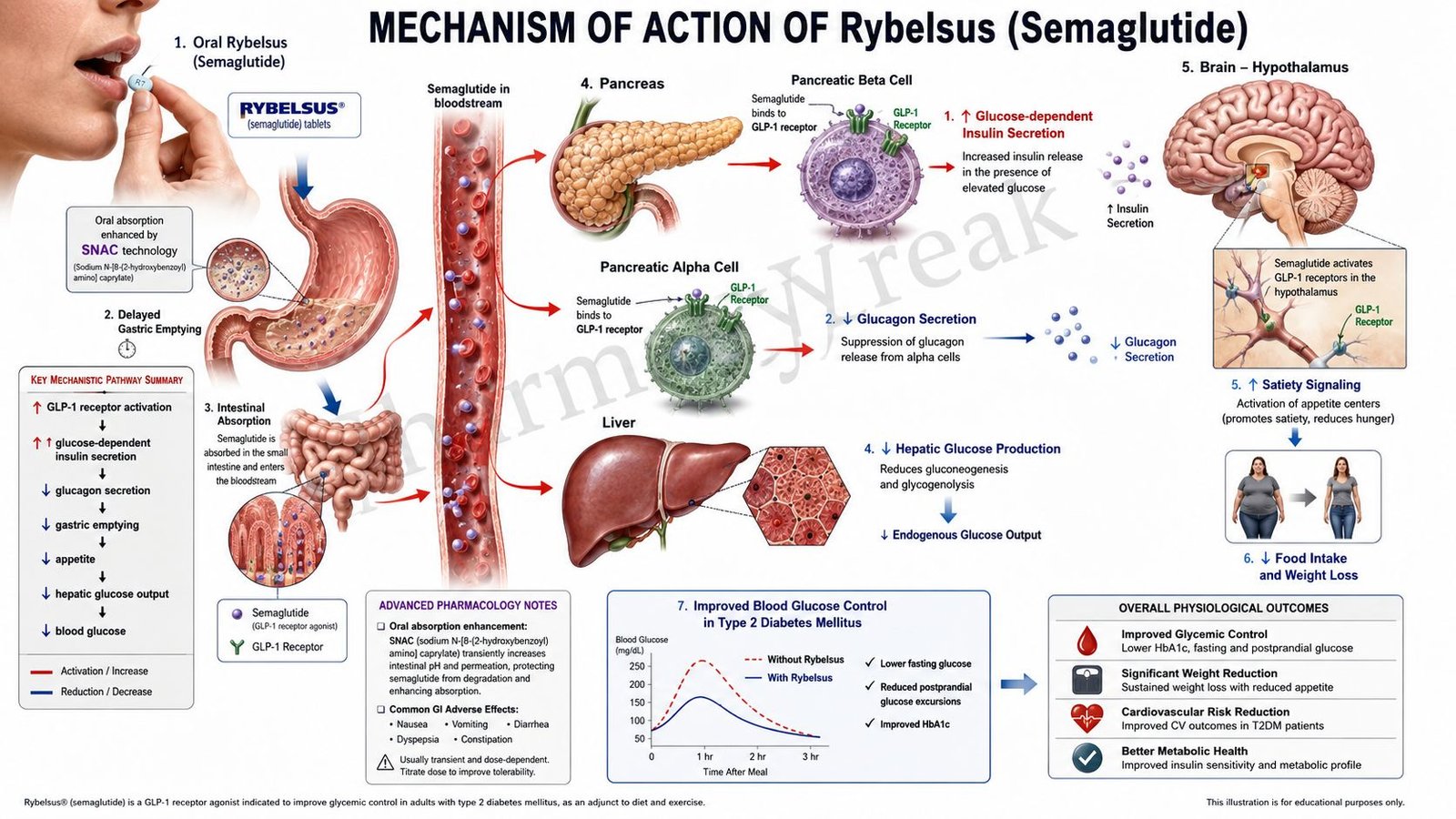
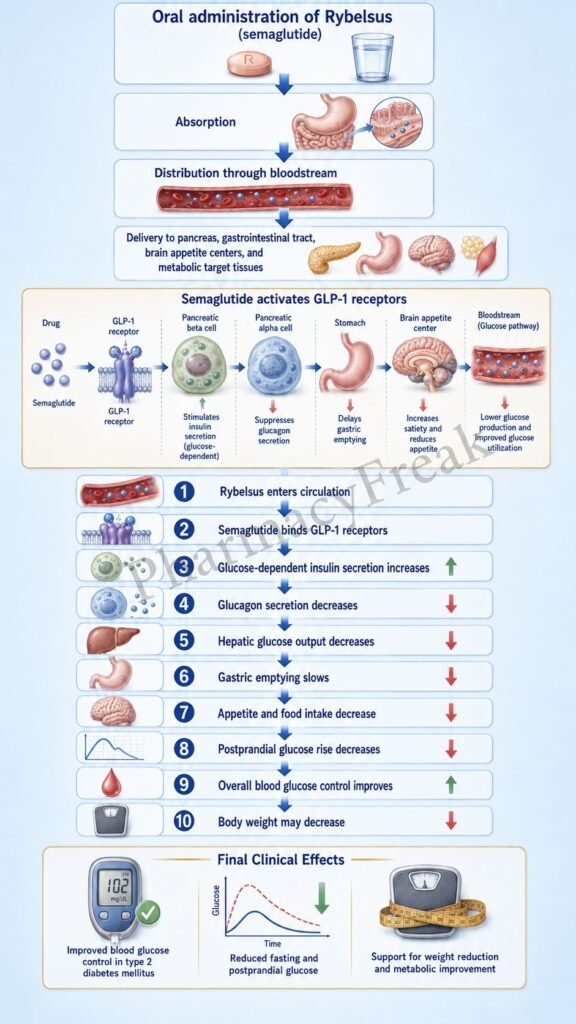
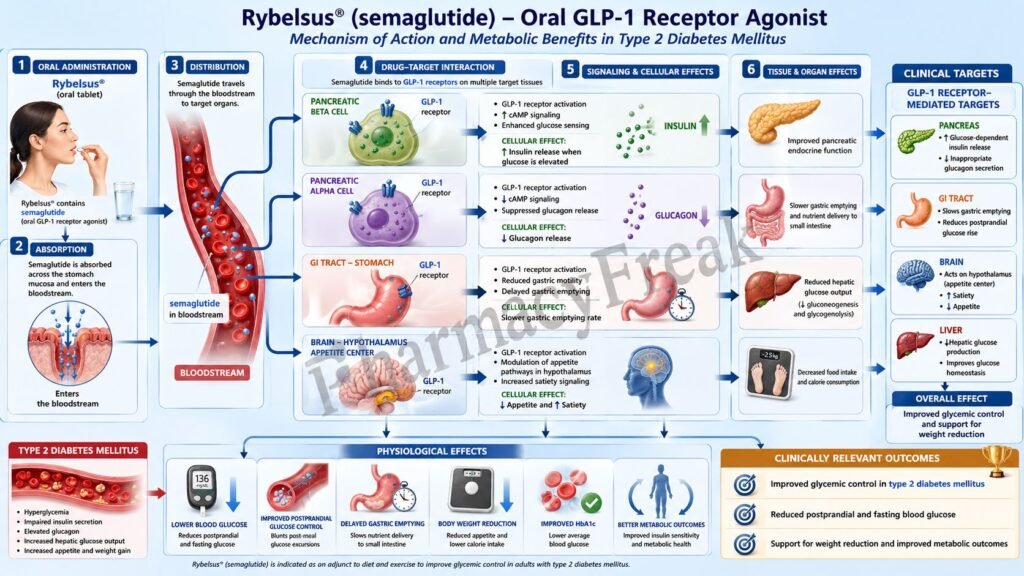
Rybelsus contains semaglutide, which is an agonist of glucagon-like peptide-1 receptors. GLP-1 receptors are present in pancreatic beta cells, pancreatic alpha cells, the gastrointestinal tract, the brain, and other tissues involved in glucose and appetite regulation.
Semaglutide mimics the action of endogenous GLP-1, an incretin hormone released from intestinal L-cells after food intake.
- Glucose-dependent insulin secretion
The most important antidiabetic action of Rybelsus is stimulation of insulin secretion from pancreatic beta cells in a glucose-dependent manner.
This means that semaglutide increases insulin release mainly when blood glucose levels are elevated. Because of this glucose-dependent mechanism, the risk of hypoglycemia is lower than with drugs that stimulate insulin release regardless of glucose level, such as sulfonylureas.
- Suppression of glucagon secretion
Rybelsus suppresses inappropriate glucagon secretion from pancreatic alpha cells. Glucagon normally increases hepatic glucose production by stimulating glycogenolysis and gluconeogenesis.
In type 2 diabetes, glucagon levels may be inappropriately high, contributing to fasting and postprandial hyperglycemia. By reducing glucagon secretion, Rybelsus decreases hepatic glucose output and helps lower blood glucose levels.
- Slowing of gastric emptying
Semaglutide slows gastric emptying, especially after meals. This delays the entry of glucose into the bloodstream after food intake and helps reduce postprandial glucose spikes.
This effect is particularly useful in controlling after-meal hyperglycemia. However, delayed gastric emptying may also contribute to gastrointestinal adverse effects such as nausea, vomiting, abdominal discomfort, and early satiety.
- Central appetite regulation
Rybelsus acts on GLP-1 receptors in appetite-regulating areas of the brain. It increases satiety, reduces hunger, and may decrease overall food intake.
This contributes to weight reduction in many patients with type 2 diabetes. However, Rybelsus should not be described as a primary weight-loss drug unless specifically approved for that purpose in a particular formulation or region.
- Improvement in beta-cell function
By reducing glucotoxicity and improving glucose-dependent insulin secretion, Rybelsus may improve functional beta-cell response. It does not cure diabetes or permanently restore beta-cell mass, but it can support better glycemic control over time.
- Final therapeutic effect
The final therapeutic effect of Rybelsus is reduced fasting blood glucose, reduced postprandial glucose, improved HbA1c, reduced appetite, possible weight reduction, and cardiovascular benefit in selected high-risk patients with type 2 diabetes.
Pharmacokinetics
Rybelsus is given orally as semaglutide tablets. Oral delivery is possible because the formulation contains an absorption enhancer called salcaprozate sodium, also known as SNAC.
Absorption:
Semaglutide is a peptide-like molecule, so oral absorption would normally be very poor because peptides are degraded in the gastrointestinal tract. Rybelsus uses SNAC to enhance absorption through the stomach. It should be taken on an empty stomach with a small amount of water, and the patient should wait before eating, drinking, or taking other oral medicines.
Distribution:
After absorption, semaglutide binds extensively to plasma albumin. This strong albumin binding contributes to its prolonged duration of action and allows once-daily oral dosing.
Metabolism:
Semaglutide is not mainly metabolized by cytochrome P450 enzymes. It undergoes proteolytic cleavage of the peptide backbone and beta-oxidation of the fatty acid side chain.
Excretion:
The metabolites of semaglutide are eliminated through urine and feces. The unchanged drug is not primarily eliminated through a single renal pathway.
Half-life and duration:
Semaglutide has a long elimination half-life of approximately one week. However, Rybelsus is given once daily because of its oral formulation and dosing design.
Special pharmacokinetic point:
Because food, beverages, and other medicines can reduce absorption, correct administration is very important. Rybelsus should be taken exactly as directed to ensure adequate bioavailability.
Clinical Uses
- Type 2 diabetes mellitus:
Rybelsus is used to improve glycemic control in adults with type 2 diabetes mellitus along with diet and exercise. - Reduction of HbA1c:
It reduces HbA1c by improving glucose-dependent insulin secretion, reducing glucagon, and decreasing postprandial glucose rise. - Postprandial hyperglycemia:
By slowing gastric emptying and improving incretin action, Rybelsus helps control after-meal blood glucose levels. - Weight benefit in type 2 diabetes:
Many patients may experience weight reduction due to reduced appetite and increased satiety. - Cardiovascular risk reduction in selected patients:
Rybelsus may reduce the risk of major adverse cardiovascular events in adults with type 2 diabetes who are at high cardiovascular risk. - Alternative to injectable GLP-1 receptor agonists:
Rybelsus is useful for patients who may benefit from GLP-1 receptor agonist therapy but prefer an oral option instead of injections.
Adverse Effects
Common adverse effects of Rybelsus include:
- Nausea
- Vomiting
- Diarrhea
- Constipation
- Abdominal pain
- Decreased appetite
- Dyspepsia
- Flatulence
- Fatigue
- Gastroesophageal reflux symptoms
Important serious or clinically significant adverse effects include:
- Acute pancreatitis
- Gallbladder disease
- Hypoglycemia when combined with insulin or sulfonylureas
- Acute kidney injury due to dehydration from severe vomiting or diarrhea
- Diabetic retinopathy complications in some patients with pre-existing diabetic retinopathy
- Hypersensitivity reactions
- Possible risk of thyroid C-cell tumors based on animal studies
Rybelsus is contraindicated in patients with a personal or family history of medullary thyroid carcinoma and in patients with multiple endocrine neoplasia syndrome type 2. It should be used cautiously in patients with a history of pancreatitis, significant gastrointestinal disease, gallbladder disease, renal impairment, or diabetic retinopathy.
Rybelsus is not used for type 1 diabetes mellitus or diabetic ketoacidosis.
Comparative Analysis
| Feature | Rybelsus | Metformin | Sulfonylureas | Insulin |
|---|---|---|---|---|
| Generic name | Semaglutide | Metformin | Glimepiride, gliclazide, glipizide | Human insulin or insulin analogs |
| Drug class | GLP-1 receptor agonist | Biguanide | Insulin secretagogue | Hormone replacement therapy |
| Main target | GLP-1 receptor | Hepatic glucose production and insulin sensitivity | Pancreatic beta-cell KATP channels | Insulin receptors |
| Main action | Increases glucose-dependent insulin, decreases glucagon, slows gastric emptying | Decreases hepatic gluconeogenesis | Increases insulin secretion | Replaces or supplements insulin |
| Hypoglycemia risk alone | Low | Low | Moderate to high | High |
| Effect on weight | Usually weight loss | Weight neutral or mild loss | Weight gain | Weight gain |
| Route | Oral | Oral | Oral | Injectable |
| Use in type 1 diabetes | No | No | No | Yes |
Rybelsus differs from sulfonylureas because it stimulates insulin secretion in a glucose-dependent manner, producing a lower risk of hypoglycemia when used alone. It differs from metformin because it works through incretin receptor activation rather than primarily reducing hepatic glucose production. It differs from insulin because it does not replace insulin directly but enhances physiological glucose regulation through GLP-1 receptor activation.
MCQs
- Rybelsus contains which active drug?
a) Liraglutide
b) Semaglutide
c) Dulaglutide
d) Exenatide
Answer: b) Semaglutide
- Rybelsus belongs to which drug class?
a) Sulfonylurea
b) Biguanide
c) GLP-1 receptor agonist
d) DPP-4 inhibitor
Answer: c) GLP-1 receptor agonist
- The primary receptor activated by Rybelsus is:
a) GLP-1 receptor
b) Insulin receptor
c) Beta-1 receptor
d) PPAR-gamma receptor
Answer: a) GLP-1 receptor
- Rybelsus increases insulin secretion mainly when:
a) Blood glucose is low
b) Blood glucose is elevated
c) Potassium is elevated
d) Calcium is low
Answer: b) Blood glucose is elevated
- Which hormone secretion is reduced by Rybelsus?
a) Glucagon
b) Thyroxine
c) Cortisol
d) Aldosterone
Answer: a) Glucagon
- Rybelsus helps reduce postprandial glucose partly by:
a) Increasing gastric acid secretion
b) Slowing gastric emptying
c) Blocking sodium channels
d) Increasing glucagon release
Answer: b) Slowing gastric emptying
- Which absorption enhancer is present in Rybelsus?
a) SNAC
b) EDTA only
c) Lactulose
d) Mannitol
Answer: a) SNAC
- Rybelsus is administered by which route?
a) Subcutaneous
b) Intravenous
c) Oral
d) Intramuscular
Answer: c) Oral
- Which adverse effect is common with Rybelsus?
a) Nausea
b) Ototoxicity
c) Severe neutropenia
d) Gingival hyperplasia
Answer: a) Nausea
- Rybelsus has a low risk of hypoglycemia when used alone because:
a) It blocks all insulin secretion
b) Its insulin secretion effect is glucose-dependent
c) It directly destroys alpha cells
d) It inhibits renal glucose filtration completely
Answer: b) Its insulin secretion effect is glucose-dependent
- Rybelsus is contraindicated in patients with:
a) Seasonal allergy
b) Family history of medullary thyroid carcinoma
c) Mild iron deficiency anemia
d) Common cold
Answer: b) Family history of medullary thyroid carcinoma
- Rybelsus should not be used for:
a) Type 2 diabetes mellitus
b) Glycemic control with diet and exercise
c) Diabetic ketoacidosis
d) Reduction of HbA1c
Answer: c) Diabetic ketoacidosis
- Which drug has the highest hypoglycemia risk among the following when used alone?
a) Metformin
b) Rybelsus
c) Sulfonylurea
d) Acarbose
Answer: c) Sulfonylurea
- The appetite-reducing effect of Rybelsus is mainly related to:
a) GLP-1 receptor action in appetite-regulating pathways
b) Direct thyroid hormone stimulation
c) Beta-blockade
d) Histamine release
Answer: a) GLP-1 receptor action in appetite-regulating pathways
- Which statement about Rybelsus is correct?
a) It is an oral GLP-1 receptor agonist
b) It is an injectable insulin analog
c) It is used for type 1 diabetes ketoacidosis
d) It acts by inhibiting bacterial cell wall synthesis
Answer: a) It is an oral GLP-1 receptor agonist
FAQs
- What is Rybelsus used for?
Rybelsus is used in adults with type 2 diabetes mellitus to improve blood glucose control along with diet and exercise. It may also provide cardiovascular benefit in selected high-risk patients.
- What is the mechanism of action of Rybelsus?
Rybelsus activates GLP-1 receptors. It increases glucose-dependent insulin secretion, decreases glucagon secretion, slows gastric emptying, reduces appetite, and improves fasting and postprandial glucose control.
- Is Rybelsus insulin?
No. Rybelsus is not insulin. It is an oral GLP-1 receptor agonist that improves the body’s glucose regulation.
- Why does Rybelsus cause weight loss?
Rybelsus may reduce appetite and increase satiety through GLP-1 receptor activity in the brain. It also slows gastric emptying, which may reduce food intake.
- Can Rybelsus cause hypoglycemia?
Rybelsus has a low risk of hypoglycemia when used alone. However, the risk increases when it is combined with insulin or sulfonylureas.
- Why should Rybelsus be taken on an empty stomach?
Rybelsus has low oral bioavailability, and food or other medicines can reduce its absorption. It should be taken on an empty stomach as directed to ensure proper absorption.
- What is SNAC in Rybelsus?
SNAC stands for salcaprozate sodium. It is an absorption enhancer that helps semaglutide pass through the stomach lining and enter the bloodstream.
- Is Rybelsus used for type 1 diabetes?
No. Rybelsus is not indicated for type 1 diabetes mellitus or diabetic ketoacidosis.
- What are the common side effects of Rybelsus?
Common side effects include nausea, vomiting, diarrhea, constipation, abdominal pain, decreased appetite, and dyspepsia.
References
Goodman & Gilman’s The Pharmacological Basis of Therapeutics
Katzung Basic & Clinical Pharmacology