Table of Contents
Introduction
Alpelisib is an oral targeted anticancer drug that belongs to the class of phosphatidylinositol-3-kinase inhibitors. It is mainly known as a selective PI3K alpha inhibitor and is used in diseases driven by activating mutations in the PIK3CA gene.
In oncology, alpelisib is used in combination with fulvestrant for patients with hormone receptor-positive, HER2-negative, PIK3CA-mutated advanced or metastatic breast cancer after progression on endocrine-based therapy. It is also available as alpelisib for selected patients with PIK3CA-related overgrowth spectrum, where abnormal PI3K pathway activation causes tissue overgrowth.
Alpelisib is important for pharmacy, medical, nursing, and competitive exam students because it represents precision medicine. Its use depends on identifying a molecular abnormality, especially a PIK3CA mutation. Instead of broadly killing rapidly dividing cells like conventional chemotherapy, alpelisib targets a specific signaling pathway involved in cell growth, proliferation, metabolism, angiogenesis, and survival.
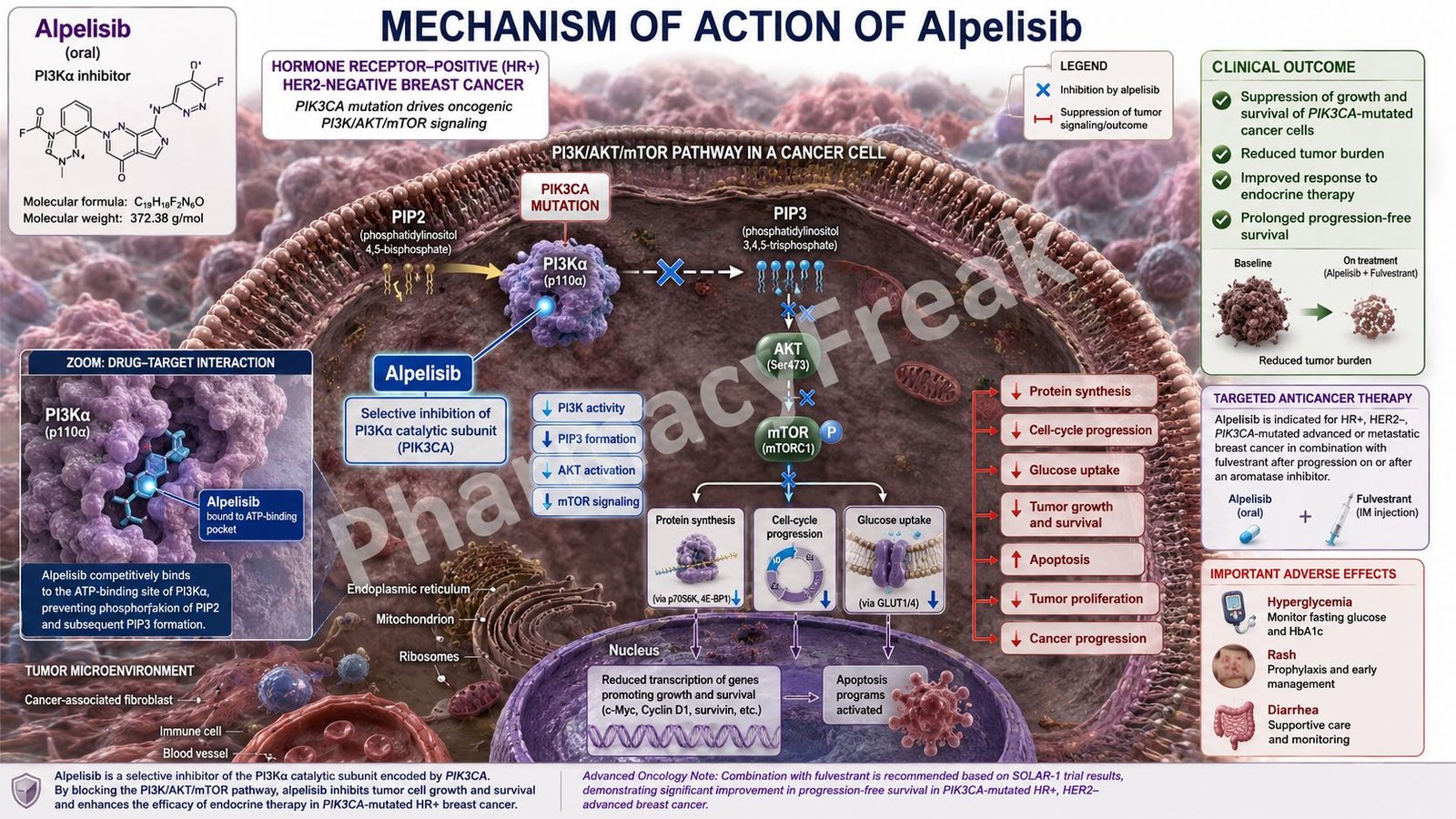
The key pharmacological concept in alpelisib is inhibition of the PI3K/AKT/mTOR pathway. This pathway is commonly activated in breast cancer and several overgrowth disorders. By blocking PI3K alpha activity, alpelisib reduces downstream survival signaling and helps control abnormal cell proliferation.
Mechanism of Action (Step-wise)
- Primary target: PI3K alpha
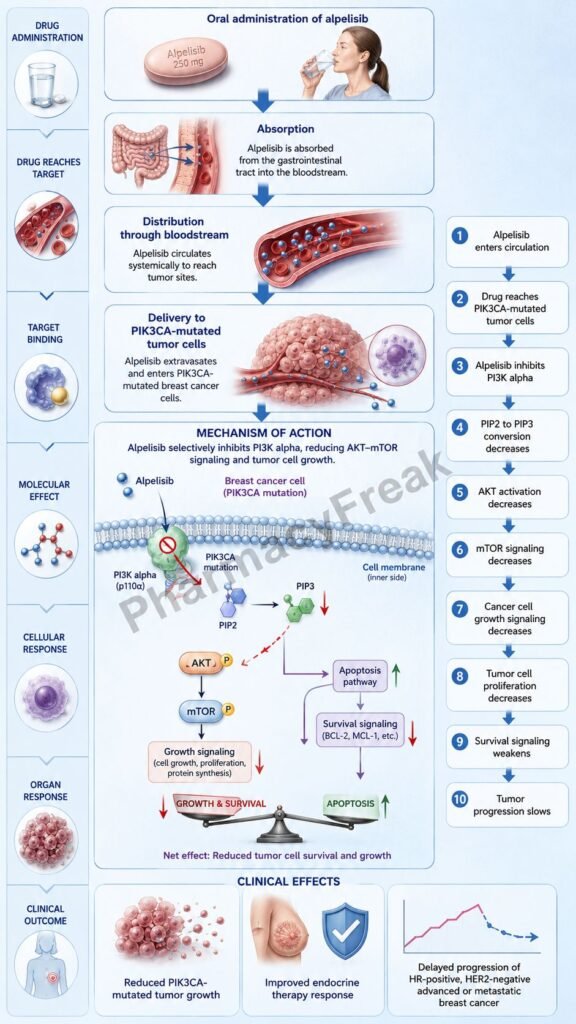
Alpelisib selectively inhibits phosphatidylinositol-3-kinase alpha, especially the p110 alpha catalytic subunit encoded by the PIK3CA gene. PI3K alpha is an important intracellular enzyme involved in growth factor receptor signaling.
- Role of PIK3CA mutation
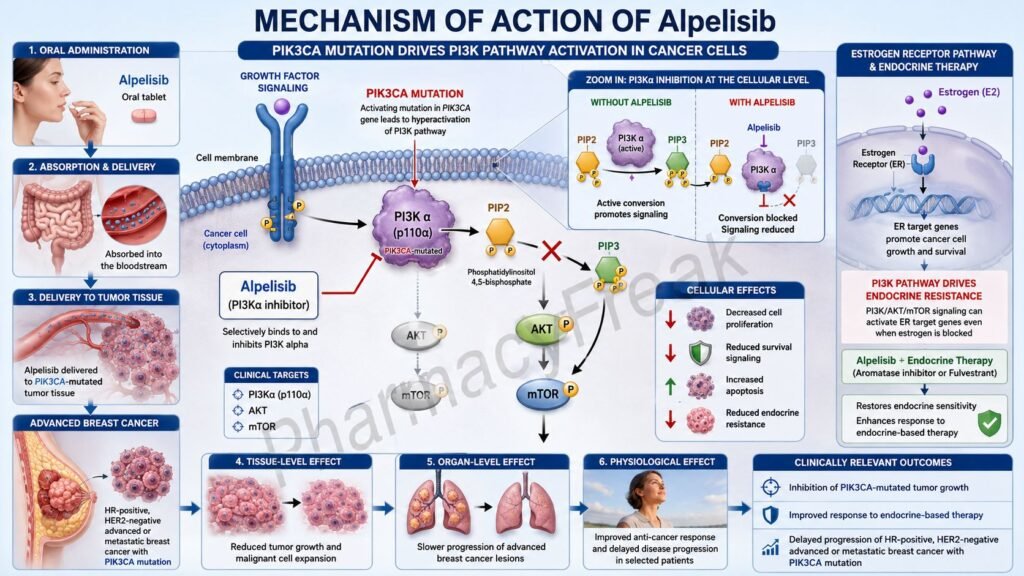
PIK3CA mutations can cause abnormal activation of the PI3K alpha pathway. This leads to increased cell survival, uncontrolled proliferation, metabolic activity, and resistance to apoptosis.
In hormone receptor-positive breast cancer, PIK3CA mutations can also contribute to resistance against endocrine therapy. This is why alpelisib is commonly combined with fulvestrant, an estrogen receptor antagonist.
- Inhibition of PIP3 formation
Normally, activated PI3K converts phosphatidylinositol-4,5-bisphosphate into phosphatidylinositol-3,4,5-trisphosphate. PIP3 acts as a second messenger that activates downstream signaling proteins.
Alpelisib blocks PI3K alpha activity and reduces PIP3 formation. This interrupts the intracellular signaling cascade required for abnormal cancer cell growth and survival.
- Reduction of AKT activation
Reduced PIP3 formation decreases recruitment and activation of AKT, also known as protein kinase B. AKT is a central survival kinase that promotes cell growth, inhibits apoptosis, and supports metabolic adaptation.
By reducing AKT activation, alpelisib weakens cancer cell survival signaling.
- Downstream inhibition of mTOR signaling
AKT normally activates the mTOR pathway, which promotes protein synthesis, cell growth, angiogenesis, and proliferation. By suppressing upstream PI3K alpha signaling, alpelisib decreases downstream AKT/mTOR pathway activity.
- Effect on cancer cells
In PIK3CA-mutated breast cancer cells, alpelisib reduces abnormal proliferative signaling. This may slow tumor growth, increase sensitivity to endocrine therapy, and reduce cancer cell survival.
- Effect in PIK3CA-related overgrowth spectrum
In PIK3CA-related overgrowth spectrum, mosaic activating PIK3CA mutations cause abnormal tissue growth. By inhibiting PI3K alpha signaling, alpelisib targets the underlying pathway responsible for overgrowth.
- Final therapeutic effect
The final therapeutic effect of alpelisib is inhibition of abnormal PI3K/AKT/mTOR signaling, reduced tumor cell growth, improved response to endocrine therapy in selected breast cancer patients, and control of abnormal overgrowth in selected PIK3CA-related disorders.
Pharmacokinetics
Alpelisib is administered orally. In breast cancer therapy, it is generally given once daily with food in combination with fulvestrant. Food increases alpelisib exposure, so administration with food is clinically important.
Absorption:
Alpelisib is absorbed after oral administration. Taking it with food improves absorption and systemic exposure. Patients should take it consistently as prescribed to maintain stable drug levels.
Distribution:
Alpelisib distributes into body tissues and is moderately to highly protein-bound. Because it acts on intracellular signaling pathways, it must enter target cells to inhibit PI3K alpha activity.
Metabolism:
Alpelisib undergoes metabolism mainly through chemical and enzymatic hydrolysis. CYP3A4 plays a relatively minor role compared with hydrolysis pathways. This is an important pharmacokinetic point because alpelisib is not mainly dependent on one major CYP pathway.
Excretion:
Alpelisib and its metabolites are eliminated mainly through feces, with a smaller amount eliminated through urine. This makes hepatobiliary and intestinal elimination clinically relevant.
Half-life and duration:
Alpelisib has a relatively short elimination half-life of about 8 to 9 hours, but once-daily dosing is used due to its pharmacodynamic effect and approved dosing schedule.
Special pharmacokinetic points:
Drug interactions may occur with strong CYP3A inducers and drugs affecting transporters such as BCRP. Blood glucose monitoring is especially important because PI3K alpha inhibition can interfere with insulin signaling and produce hyperglycemia.
Clinical Uses
- PIK3CA-mutated advanced or metastatic breast cancer:
Alpelisib is used with fulvestrant in hormone receptor-positive, HER2-negative, PIK3CA-mutated advanced or metastatic breast cancer after progression on endocrine-based therapy. - Precision oncology:
Alpelisib is used only when a relevant PIK3CA mutation is detected by an appropriate diagnostic test. This makes it an important example of biomarker-guided cancer therapy. - Endocrine therapy resistance:
In HR-positive breast cancer, activation of the PI3K pathway may contribute to endocrine resistance. Combining alpelisib with fulvestrant helps target both estrogen receptor signaling and PI3K-driven survival signaling. - PIK3CA-related overgrowth spectrum:
Alpelisib is also used in selected adult and pediatric patients with severe manifestations of PIK3CA-related overgrowth spectrum who require systemic therapy. - Targeted treatment of PI3K pathway activation:
Alpelisib is useful where abnormal PI3K alpha signaling is a key driver of disease progression.
Adverse Effects
Common adverse effects of alpelisib include:
- Hyperglycemia
- Rash
- Diarrhea
- Nausea
- Vomiting
- Fatigue
- Decreased appetite
- Weight loss
- Stomatitis
- Abdominal pain
- Alopecia
- Increased creatinine
- Decreased lymphocyte count
- Increased liver enzymes
Important serious adverse effects include:
- Severe hyperglycemia
- Diabetic ketoacidosis
- Severe cutaneous adverse reactions
- Stevens-Johnson syndrome
- Toxic epidermal necrolysis
- Drug reaction with eosinophilia and systemic symptoms
- Severe diarrhea or colitis
- Pneumonitis
- Hypersensitivity reactions
- Embryo-fetal toxicity
Hyperglycemia is one of the most exam-important adverse effects of alpelisib. PI3K alpha signaling is involved in insulin action. When PI3K alpha is inhibited, insulin signaling may be impaired, resulting in increased blood glucose. Patients may require glucose monitoring and antidiabetic therapy during treatment.
Rash is another important adverse effect and may require antihistamines, dose interruption, dose reduction, or discontinuation depending on severity.
Comparative Analysis
| Feature | Alpelisib | Everolimus | Fulvestrant | Palbociclib |
|---|---|---|---|---|
| Drug class | PI3K alpha inhibitor | mTOR inhibitor | Estrogen receptor antagonist/downregulator | CDK4/6 inhibitor |
| Main target | PI3K alpha/p110 alpha | mTOR | Estrogen receptor | Cyclin-dependent kinases 4 and 6 |
| Main pathway affected | PI3K/AKT/mTOR pathway | mTOR pathway | Estrogen receptor signaling | Cell cycle progression |
| Biomarker importance | PIK3CA mutation required in breast cancer use | Not specifically PIK3CA-based | Hormone receptor positivity | Hormone receptor positivity |
| Common combination | Fulvestrant | Exemestane or endocrine therapy | Alpelisib or other agents | Aromatase inhibitor or fulvestrant |
| Major adverse effect | Hyperglycemia, rash, diarrhea | Stomatitis, hyperglycemia, pneumonitis | Hot flashes, injection site pain | Neutropenia |
| Route | Oral | Oral | Intramuscular | Oral |
Alpelisib differs from everolimus because it acts upstream at PI3K alpha, while everolimus acts downstream at mTOR. Fulvestrant blocks estrogen receptor signaling and is commonly combined with alpelisib in HR-positive breast cancer. Palbociclib works through cell cycle inhibition rather than direct PI3K pathway inhibition.
MCQs
- Alpelisib primarily inhibits which enzyme?
a) Cyclooxygenase-2
b) PI3K alpha
c) Aromatase
d) DNA topoisomerase II
Answer: b) PI3K alpha
- Alpelisib is especially useful in breast cancer patients with mutation in which gene?
a) BRCA1
b) EGFR
c) PIK3CA
d) BCR-ABL
Answer: c) PIK3CA
- The major signaling pathway inhibited by alpelisib is:
a) PI3K/AKT/mTOR pathway
b) JAK/STAT pathway only
c) Wnt pathway only
d) Cholinergic pathway
Answer: a) PI3K/AKT/mTOR pathway
- In breast cancer therapy, alpelisib is commonly combined with:
a) Fulvestrant
b) Amoxicillin
c) Metformin only
d) Warfarin
Answer: a) Fulvestrant
- The most exam-important metabolic adverse effect of alpelisib is:
a) Hypocalcemia
b) Hyperglycemia
c) Hyperuricemia only
d) Hypothyroidism
Answer: b) Hyperglycemia
- Alpelisib reduces AKT activation by:
a) Blocking PIP3 formation through PI3K alpha inhibition
b) Activating insulin receptors directly
c) Increasing estrogen receptor expression
d) Stimulating glucagon secretion
Answer: a) Blocking PIP3 formation through PI3K alpha inhibition
- Alpelisib is administered by which route?
a) Oral
b) Intravenous
c) Intrathecal
d) Inhalational
Answer: a) Oral
- Which adverse effect is commonly associated with alpelisib?
a) Rash
b) Ototoxicity
c) Gingival hyperplasia
d) Severe bradycardia
Answer: a) Rash
- Alpelisib is best described as:
a) A conventional cytotoxic alkylating agent
b) A targeted PI3K alpha inhibitor
c) A beta-lactam antibiotic
d) A direct insulin analog
Answer: b) A targeted PI3K alpha inhibitor
- Which downstream pathway is reduced after PI3K alpha inhibition by alpelisib?
a) AKT/mTOR signaling
b) GABA signaling
c) Histamine release only
d) Acetylcholine degradation
Answer: a) AKT/mTOR signaling
- Which condition may also be treated with alpelisib in selected patients?
a) PIK3CA-related overgrowth spectrum
b) Acute bacterial meningitis
c) Rheumatic fever
d) Migraine attack
Answer: a) PIK3CA-related overgrowth spectrum
- Which serious skin reaction may occur with alpelisib?
a) Stevens-Johnson syndrome
b) Psoriasis vulgaris only
c) Acne vulgaris only
d) Seborrheic dermatitis only
Answer: a) Stevens-Johnson syndrome
- Why is biomarker testing important before using alpelisib in breast cancer?
a) To detect PIK3CA mutation
b) To measure serum potassium only
c) To confirm bacterial infection
d) To detect lactose intolerance
Answer: a) To detect PIK3CA mutation
- Alpelisib differs from fulvestrant because fulvestrant primarily targets:
a) Estrogen receptor
b) PI3K alpha
c) mTOR directly
d) Bacterial ribosome
Answer: a) Estrogen receptor
- Which statement about alpelisib is correct?
a) It blocks PI3K alpha and reduces AKT/mTOR signaling
b) It directly replaces insulin
c) It is mainly used as an antihistamine
d) It is a rescue drug for asthma
Answer: a) It blocks PI3K alpha and reduces AKT/mTOR signaling
FAQs
- What is alpelisib used for?
Alpelisib is used in selected patients with PIK3CA-mutated, hormone receptor-positive, HER2-negative advanced or metastatic breast cancer in combination with fulvestrant. It is also used in selected patients with PIK3CA-related overgrowth spectrum.
- What is the mechanism of action of alpelisib?
Alpelisib selectively inhibits PI3K alpha. This reduces PIP3 formation, decreases AKT activation, suppresses downstream mTOR signaling, and reduces abnormal cell survival and proliferation.
- Why is PIK3CA mutation important for alpelisib therapy?
PIK3CA mutations activate the PI3K alpha pathway. Alpelisib specifically targets this abnormal signaling pathway, so mutation testing helps identify patients most likely to benefit.
- Why does alpelisib cause hyperglycemia?
PI3K alpha signaling is involved in insulin action. Inhibition of PI3K alpha can impair insulin signaling, leading to increased blood glucose levels.
- Is alpelisib chemotherapy?
Alpelisib is not traditional cytotoxic chemotherapy. It is a targeted anticancer drug that inhibits a specific intracellular signaling pathway.
- Why is alpelisib combined with fulvestrant?
Fulvestrant blocks estrogen receptor signaling, while alpelisib blocks PI3K alpha signaling. The combination targets two important growth pathways in HR-positive, PIK3CA-mutated breast cancer.
- What are the common side effects of alpelisib?
Common side effects include hyperglycemia, rash, diarrhea, nausea, vomiting, fatigue, decreased appetite, weight loss, and stomatitis.
- What are serious adverse effects of alpelisib?
Serious adverse effects include severe hyperglycemia, severe skin reactions, pneumonitis, severe diarrhea or colitis, hypersensitivity reactions, and embryo-fetal toxicity.
- Should blood glucose be monitored during alpelisib therapy?
Yes. Blood glucose should be monitored because hyperglycemia is a common and clinically important adverse effect of alpelisib.
References
Goodman & Gilman’s The Pharmacological Basis of Therapeutics
Katzung Basic & Clinical Pharmacology
K.D. Tripathi Essentials of Medical Pharmacology
Harrison’s Principles of Internal Medicine