Table of Contents
Introduction
Auvelity is a fixed-dose oral combination of dextromethorphan hydrobromide and bupropion hydrochloride. It is used for the treatment of major depressive disorder in adults, and its U.S. use has also expanded to agitation associated with dementia due to Alzheimer’s disease in adults.
Auvelity is pharmacologically important because it combines two drugs with different but complementary actions. Dextromethorphan is mainly associated with modulation of glutamatergic neurotransmission through N-methyl-D-aspartate receptors and sigma-1 receptor activity, while bupropion increases dextromethorphan exposure by inhibiting CYP2D6 and may also contribute noradrenergic and dopaminergic effects.
Unlike traditional antidepressants such as selective serotonin reuptake inhibitors, Auvelity is not primarily a serotonin reuptake inhibitor. Its mechanism is especially important for students because it highlights the role of glutamate signaling, NMDA receptor modulation, sigma-1 receptor activity, norepinephrine-dopamine mechanisms, and pharmacokinetic boosting through CYP2D6 inhibition.
For pharmacy, medical, nursing, and competitive exam students, Auvelity is a useful example of a modern multimodal antidepressant approach. It is also clinically relevant because it shows how one drug in a combination can improve the therapeutic exposure of another drug.
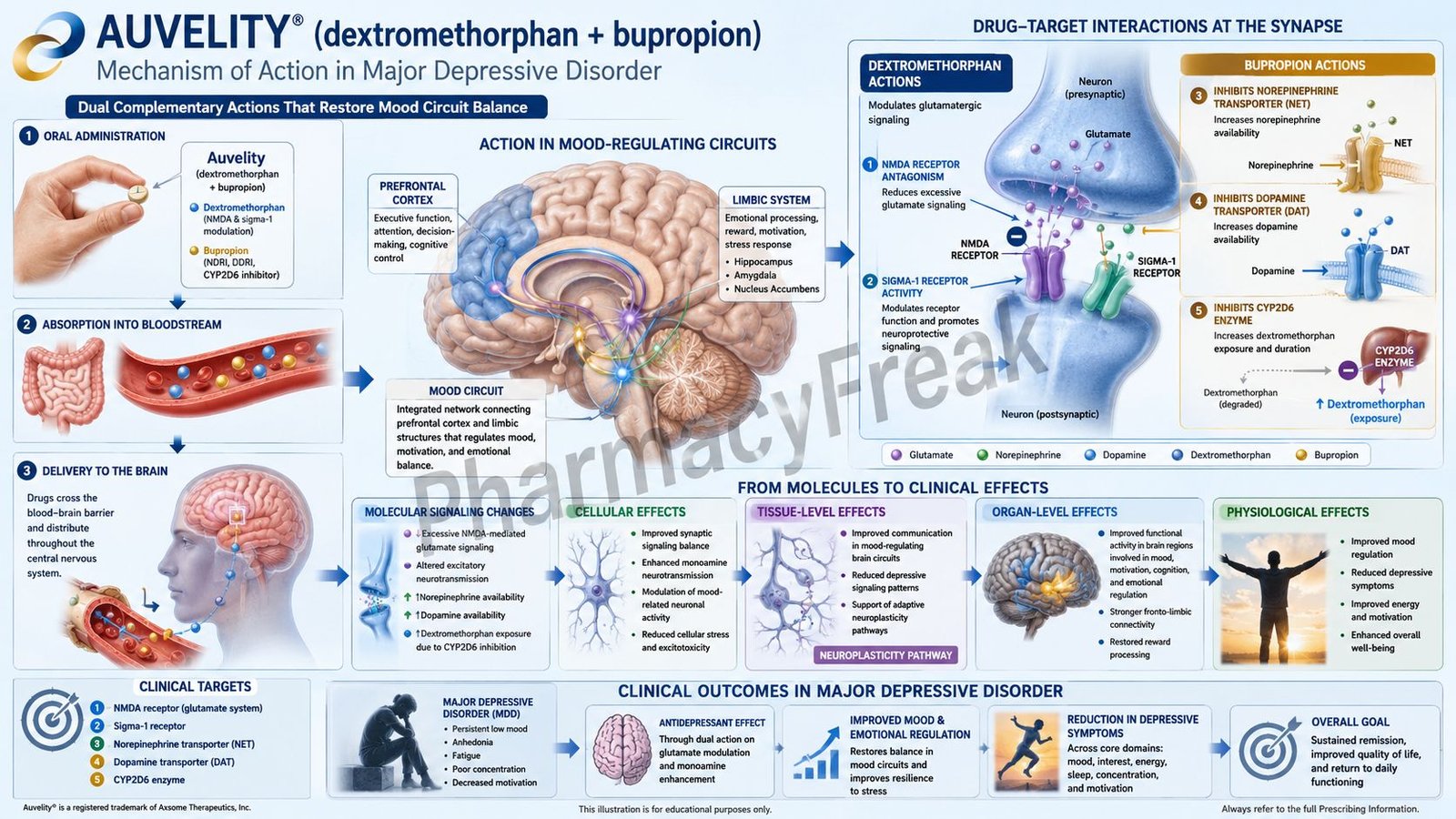
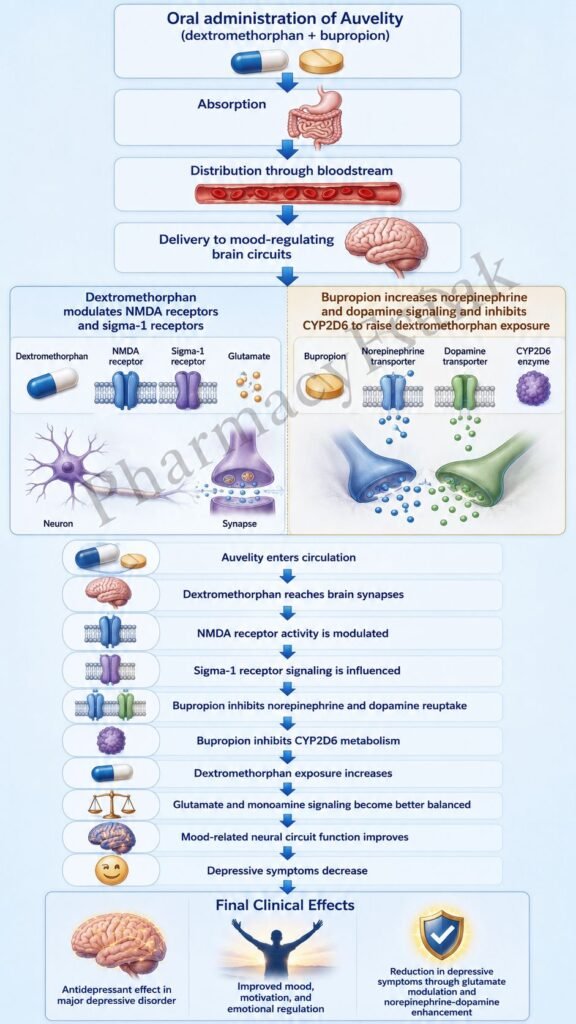
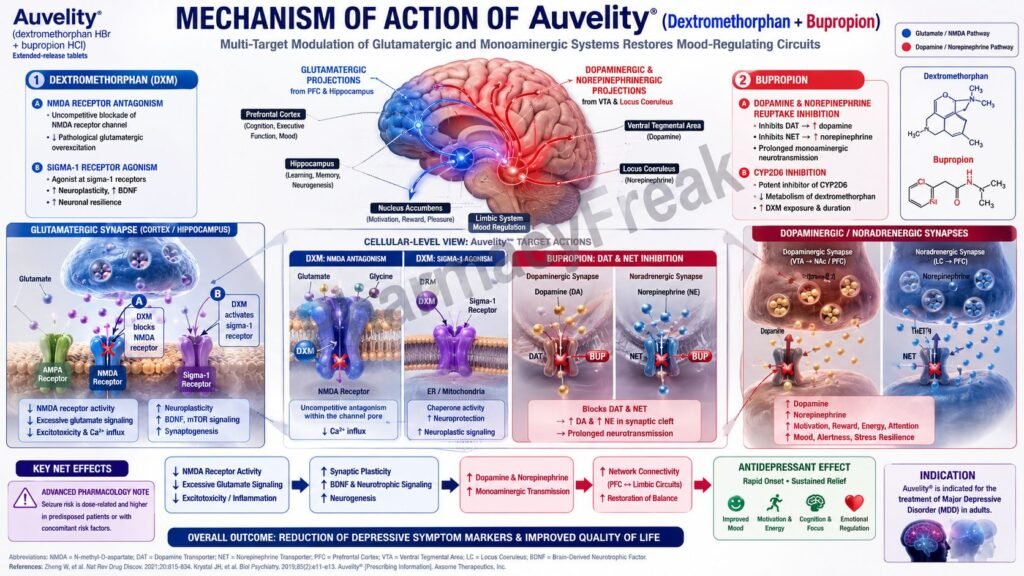
Mechanism of Action (Step-wise)
- Dextromethorphan acts on NMDA receptors
Dextromethorphan, one component of Auvelity, acts as an uncompetitive antagonist of the N-methyl-D-aspartate receptor. NMDA receptors are ionotropic glutamate receptors involved in excitatory neurotransmission, synaptic plasticity, mood regulation, cognition, and neuronal signaling.
By modulating NMDA receptor activity, dextromethorphan may help normalize abnormal glutamatergic neurotransmission involved in depression. However, the exact mechanism by which Auvelity produces antidepressant effects is not completely understood.
- Modulation of glutamate signaling
Glutamate is the major excitatory neurotransmitter in the central nervous system. Dysregulated glutamatergic signaling is believed to contribute to mood disorders, impaired synaptic plasticity, and altered neuronal communication.
Through NMDA receptor modulation, dextromethorphan may influence downstream glutamate pathways, synaptic signaling, and neuroplasticity-related mechanisms. This is one reason Auvelity is considered different from conventional monoamine-only antidepressants.
- Sigma-1 receptor agonist activity
Dextromethorphan also acts as a sigma-1 receptor agonist. Sigma-1 receptors are intracellular chaperone proteins involved in calcium signaling, neuronal survival, neurotransmitter regulation, and stress response pathways.
Activation of sigma-1 receptors may contribute to modulation of mood, cognition, and neuroplasticity. This effect may support the antidepressant activity of dextromethorphan, although the exact clinical contribution remains unclear.
- Bupropion inhibits CYP2D6
Bupropion is included in Auvelity not only for its antidepressant properties but also because it inhibits cytochrome P450 2D6. CYP2D6 is a major enzyme involved in dextromethorphan metabolism.
By inhibiting CYP2D6, bupropion increases plasma concentrations of dextromethorphan. This allows dextromethorphan to remain in the body at therapeutically useful levels for a longer period.
- Bupropion contributes noradrenergic and dopaminergic effects
Bupropion is an aminoketone antidepressant. Its exact antidepressant mechanism is not fully clear, but it is thought to involve noradrenergic and dopaminergic neurotransmission.
Bupropion inhibits the reuptake of norepinephrine and dopamine to some extent, increasing their availability in the synaptic cleft. These neurotransmitters are important for mood, motivation, attention, reward, and energy.
- Combined multimodal antidepressant effect
The combination of dextromethorphan and bupropion provides a multimodal mechanism:
- NMDA receptor modulation
- Sigma-1 receptor activity
- Increased dextromethorphan exposure through CYP2D6 inhibition
- Noradrenergic and dopaminergic contribution from bupropion
- Final therapeutic effect
The final therapeutic effect is improvement in depressive symptoms through modulation of glutamatergic, sigma-1, noradrenergic, and dopaminergic pathways. In agitation associated with Alzheimer’s dementia, the exact mechanism is also not fully established, but the drug may help reduce neuropsychiatric symptoms through central nervous system neurotransmitter modulation.
Pharmacokinetics
Auvelity is administered orally as an extended-release tablet containing dextromethorphan hydrobromide and bupropion hydrochloride.
Absorption:
Auvelity is taken by mouth and can be administered with or without food. The tablet should be swallowed whole and should not be crushed, divided, or chewed.
Distribution:
Both components enter systemic circulation and act centrally. Dextromethorphan produces central nervous system effects, while bupropion also crosses into the brain and contributes to CNS pharmacological activity.
Metabolism:
Dextromethorphan is mainly metabolized by CYP2D6. Bupropion inhibits CYP2D6, thereby increasing dextromethorphan levels. Bupropion itself is metabolized mainly by CYP2B6 to active metabolites such as hydroxybupropion.
Excretion:
The metabolites of dextromethorphan and bupropion are eliminated mainly through renal and hepatic pathways. Dose adjustment or avoidance may be required in significant renal or hepatic impairment.
Half-life and duration:
Dextromethorphan exposure is prolonged because bupropion inhibits CYP2D6-mediated metabolism. Bupropion and its active metabolites also have sustained activity, supporting twice-daily dosing after the initial titration period.
Special pharmacokinetic point:
The inclusion of bupropion is a key pharmacokinetic strategy. It increases dextromethorphan plasma concentration and helps maintain therapeutic exposure, making the combination more effective than dextromethorphan alone for its approved psychiatric uses.
Clinical Uses
- Major depressive disorder:
Auvelity is used in adults with major depressive disorder. It helps improve depressive symptoms through multimodal neurotransmitter modulation. - Depression with need for non-SSRI mechanism:
It may be considered when a drug with a different mechanism from traditional serotonin reuptake inhibitors is clinically appropriate. - Agitation associated with Alzheimer’s dementia:
Auvelity is approved for agitation associated with dementia due to Alzheimer’s disease in adults. It should not be used as an as-needed medicine for this condition. - Patients where glutamate modulation is clinically relevant:
Because dextromethorphan modulates NMDA receptor activity, Auvelity is an important example of glutamatergic involvement in mood disorder pharmacotherapy. - Patients who may benefit from dopaminergic and noradrenergic contribution:
The bupropion component may help support mood, motivation, energy, and attention through norepinephrine and dopamine-related mechanisms.
Adverse Effects
Common adverse effects of Auvelity include:
- Dizziness
- Headache
- Diarrhea
- Somnolence
- Dry mouth
- Nausea
- Excessive sweating
- Sexual dysfunction
- Dyspepsia or stomach upset
- Insomnia
- Anxiety or restlessness
Important serious adverse effects and precautions include:
- Increased risk of suicidal thoughts and behaviors in pediatric and young adult patients taking antidepressants
- Seizures
- Increased blood pressure and hypertension
- Activation of mania or hypomania
- Psychosis or other neuropsychiatric reactions
- Serotonin syndrome, especially with serotonergic drugs
- Angle-closure glaucoma
- Hyponatremia
- Allergic reactions
Auvelity is contraindicated in patients with seizure disorder, current or prior bulimia or anorexia nervosa, abrupt discontinuation of alcohol or sedative drugs, use of monoamine oxidase inhibitors, and known hypersensitivity to its components. The FDA lists common adverse effects such as dizziness, stomach upset, headache, diarrhea, drowsiness, dry mouth, sexual dysfunction, and excessive sweating, and also warns about seizures, hypertension, and mania or hypomania.
Comparative Analysis
| Feature | Auvelity | Bupropion | SSRI Antidepressants | Esketamine |
|---|---|---|---|---|
| Main components | Dextromethorphan + bupropion | Bupropion only | Fluoxetine, sertraline, escitalopram, etc. | Esketamine |
| Main mechanism | NMDA receptor modulation, sigma-1 activity, CYP2D6 inhibition, noradrenergic/dopaminergic effects | Mainly norepinephrine and dopamine reuptake inhibition | Serotonin reuptake inhibition | NMDA receptor antagonism |
| Main neurotransmitter focus | Glutamate, sigma-1, norepinephrine, dopamine | Norepinephrine, dopamine | Serotonin | Glutamate |
| Route | Oral | Oral | Oral | Intranasal |
| Used in MDD | Yes | Yes | Yes | Yes, in selected patients |
| CYP2D6 boosting role | Yes, bupropion boosts dextromethorphan | No combination boosting | No | No |
| Seizure risk concern | Yes, due to bupropion component | Yes | Usually lower than bupropion | Not main concern |
| Abuse/misuse concern | Dextromethorphan-related caution | Lower | Low | Controlled administration required |
Auvelity differs from bupropion alone because it includes dextromethorphan, which adds NMDA receptor and sigma-1 receptor activity. It differs from SSRIs because it is not primarily a serotonin reuptake inhibitor. Esketamine also involves NMDA receptor modulation, but it is administered intranasally under specific clinical supervision, while Auvelity is an oral tablet.
MCQs
- Auvelity contains which two active drugs?
a) Fluoxetine and olanzapine
b) Dextromethorphan and bupropion
c) Sertraline and buspirone
d) Ketamine and lithium
Answer: b) Dextromethorphan and bupropion
- The main receptor modulated by dextromethorphan in Auvelity is:
a) H1 receptor
b) NMDA receptor
c) Beta-2 receptor
d) Muscarinic M3 receptor
Answer: b) NMDA receptor
- Bupropion increases dextromethorphan levels mainly by inhibiting:
a) CYP3A4
b) CYP2C9
c) CYP2D6
d) CYP1A2
Answer: c) CYP2D6
- Auvelity is mainly used for:
a) Hypertension
b) Major depressive disorder
c) Bacterial pneumonia
d) Acute asthma attack
Answer: b) Major depressive disorder
- Dextromethorphan also acts as an agonist at which receptor?
a) Sigma-1 receptor
b) Insulin receptor
c) Angiotensin receptor
d) Nicotinic receptor
Answer: a) Sigma-1 receptor
- Bupropion is pharmacologically associated with which neurotransmitters?
a) Norepinephrine and dopamine
b) Acetylcholine and histamine
c) GABA and glycine
d) Serotonin only
Answer: a) Norepinephrine and dopamine
- Which statement about Auvelity is correct?
a) It is a typical SSRI
b) It is a fixed-dose combination antidepressant
c) It is used as an antibiotic
d) It acts only on histamine receptors
Answer: b) It is a fixed-dose combination antidepressant
- Which adverse effect is especially important with the bupropion component?
a) Seizure risk
b) Ototoxicity
c) Nephrotoxicity
d) Gingival hyperplasia
Answer: a) Seizure risk
- Auvelity should be avoided with which drug class?
a) Antacids
b) Monoamine oxidase inhibitors
c) Proton pump inhibitors
d) Osmotic laxatives
Answer: b) Monoamine oxidase inhibitors
- The pharmacokinetic role of bupropion in Auvelity is to:
a) Decrease dextromethorphan absorption completely
b) Increase dextromethorphan exposure by CYP2D6 inhibition
c) Block renal excretion of sodium
d) Convert dextromethorphan into serotonin
Answer: b) Increase dextromethorphan exposure by CYP2D6 inhibition
- Auvelity differs from SSRIs because it primarily involves:
a) Only serotonin reuptake inhibition
b) Glutamate modulation and noradrenergic/dopaminergic mechanisms
c) Direct dopamine receptor blockade
d) Acetylcholinesterase inhibition
Answer: b) Glutamate modulation and noradrenergic/dopaminergic mechanisms
- Which is a common adverse effect of Auvelity?
a) Dizziness
b) Severe ototoxicity
c) Pulmonary fibrosis
d) Hyperkalemia
Answer: a) Dizziness
- Which condition is a contraindication to Auvelity?
a) Mild headache
b) Seizure disorder
c) Seasonal allergy
d) Iron deficiency anemia
Answer: b) Seizure disorder
- Auvelity is administered by which route?
a) Oral
b) Intravenous
c) Intramuscular
d) Inhalational
Answer: a) Oral
- Which statement best describes Auvelity’s mechanism?
a) It blocks bacterial cell wall synthesis
b) It combines NMDA receptor modulation with CYP2D6 inhibition and monoaminergic effects
c) It directly stimulates insulin secretion
d) It blocks calcium channels in blood vessels
Answer: b) It combines NMDA receptor modulation with CYP2D6 inhibition and monoaminergic effects
FAQs
- What is Auvelity used for?
Auvelity is used for major depressive disorder in adults. It is also approved for agitation associated with dementia due to Alzheimer’s disease in adults.
- What is the mechanism of action of Auvelity?
Auvelity works through a multimodal mechanism. Dextromethorphan modulates NMDA receptors and sigma-1 receptors, while bupropion inhibits CYP2D6 to increase dextromethorphan levels and may contribute noradrenergic and dopaminergic effects.
- Is Auvelity an SSRI?
No. Auvelity is not an SSRI. It does not primarily work by selective serotonin reuptake inhibition. Its mechanism involves glutamate modulation, sigma-1 receptor activity, CYP2D6 inhibition, and norepinephrine-dopamine pathways.
- Why is bupropion added to dextromethorphan in Auvelity?
Bupropion inhibits CYP2D6, the enzyme responsible for major metabolism of dextromethorphan. This increases dextromethorphan plasma levels and helps maintain its therapeutic effect.
- Does Auvelity increase seizure risk?
Yes. Auvelity can increase seizure risk because it contains bupropion. It is contraindicated in patients with seizure disorder and in patients with current or prior bulimia or anorexia nervosa.
- Can Auvelity be used with MAO inhibitors?
No. Auvelity should not be used with MAO inhibitors or within the required washout period because of the risk of serious reactions such as hypertensive crisis and serotonin syndrome.
- What are the common side effects of Auvelity?
Common side effects include dizziness, headache, diarrhea, somnolence, dry mouth, nausea, excessive sweating, sexual dysfunction, and stomach upset.
- Is Auvelity a controlled substance?
Auvelity itself is not generally described like ketamine-based antidepressant therapy, but dextromethorphan has abuse potential at high doses. Patients should take it only as prescribed.
- Does Auvelity work immediately?
Auvelity is not an emergency mood treatment. However, it is considered a relatively rapid-acting oral antidepressant compared with many traditional antidepressants. Clinical response still varies from patient to patient.
References
Goodman & Gilman’s The Pharmacological Basis of Therapeutics
Katzung Basic & Clinical Pharmacology