Table of Contents
Introduction
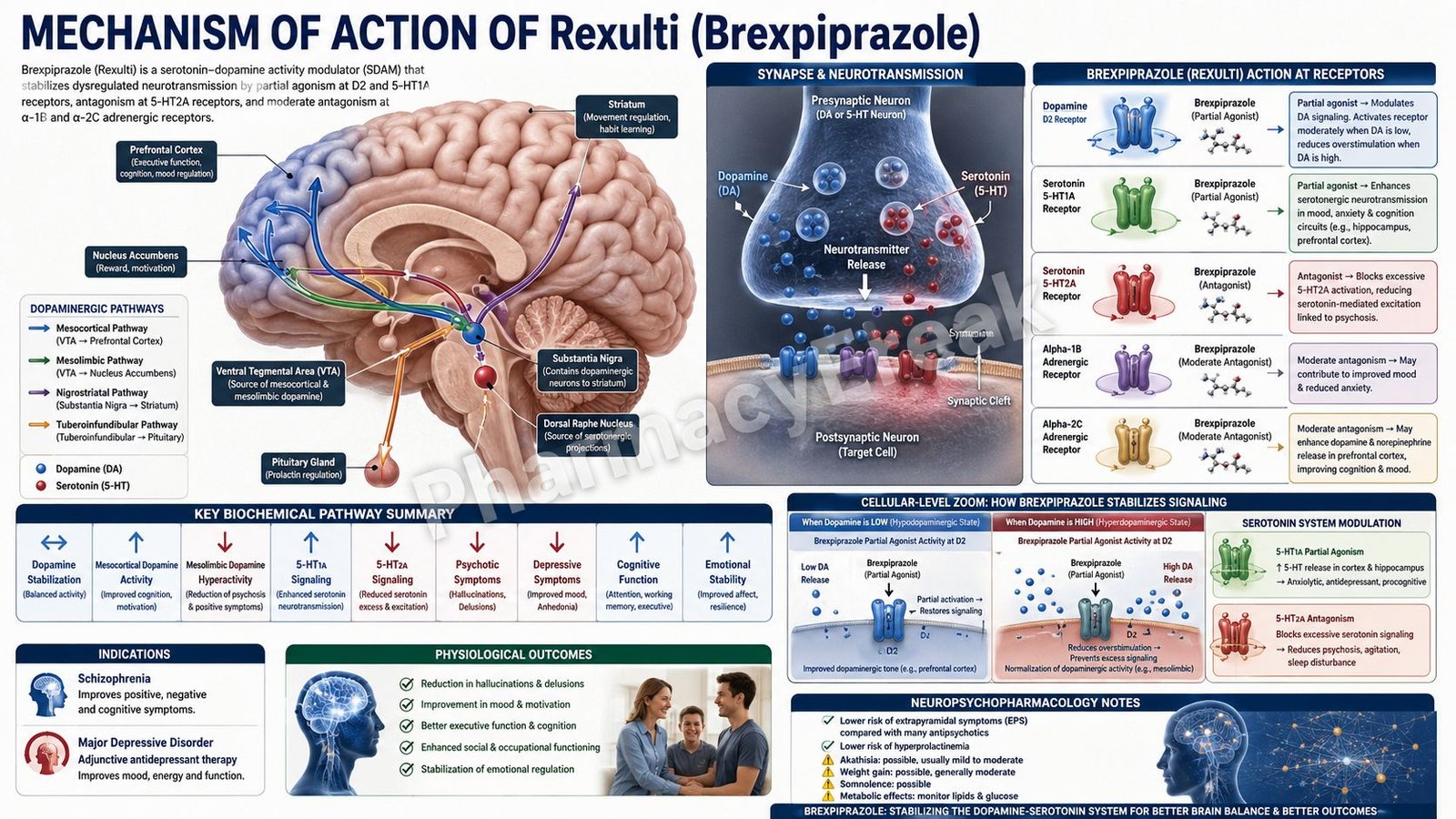
Rexulti is the brand name of brexpiprazole, an oral atypical antipsychotic used in psychiatric and neuropsychiatric conditions. Pharmacologically, brexpiprazole is a serotonin-dopamine activity modulator with partial agonist activity at dopamine D2 and serotonin 5-HT1A receptors, along with antagonist activity at serotonin 5-HT2A receptors.
Rexulti is used as adjunctive therapy with antidepressants for major depressive disorder in adults, for the treatment of schizophrenia in adults and pediatric patients 13 years and older, and for the treatment of agitation associated with dementia due to Alzheimer’s disease. It is not indicated as an as-needed treatment for agitation associated with dementia due to Alzheimer’s disease.
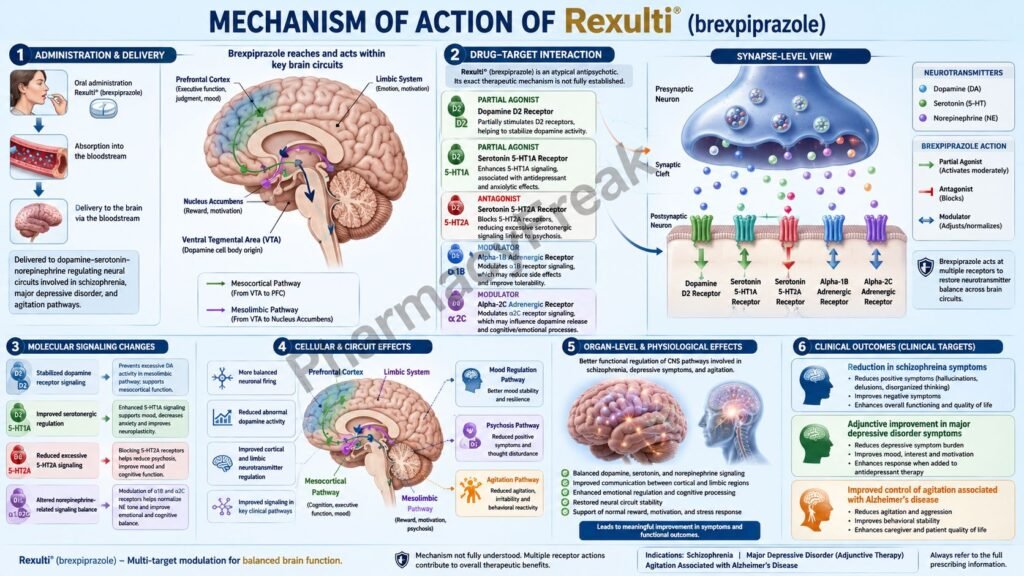
The exact mechanism of action of Rexulti in major depressive disorder, schizophrenia, and agitation associated with dementia due to Alzheimer’s disease is not fully known. However, its clinical effects are believed to result from modulation of dopamine and serotonin neurotransmission. The official label states that efficacy may be mediated through partial agonist activity at serotonin 5-HT1A and dopamine D2 receptors and antagonist activity at serotonin 5-HT2A receptors.
For exam purposes, Rexulti should be remembered as an atypical antipsychotic with dopamine D2 partial agonist activity, serotonin 5-HT1A partial agonist activity, and serotonin 5-HT2A antagonist activity. It is not a pure dopamine blocker like haloperidol and not a simple antidepressant like an SSRI.
Mechanism of Action (Step-wise)
Step 1: Dopamine imbalance contributes to psychotic symptoms
In schizophrenia, excessive dopaminergic activity in the mesolimbic pathway is associated with positive symptoms such as hallucinations, delusions, disorganized thinking, and agitation. Reduced or dysregulated dopamine activity in other brain regions, such as the mesocortical pathway, may contribute to negative symptoms and cognitive dysfunction.
Step 2: Traditional antipsychotics strongly block dopamine D2 receptors
Older antipsychotics such as haloperidol mainly act by strongly antagonizing dopamine D2 receptors. This can reduce positive psychotic symptoms, but strong D2 blockade in the nigrostriatal pathway may cause extrapyramidal symptoms, and blockade in the tuberoinfundibular pathway may increase prolactin.
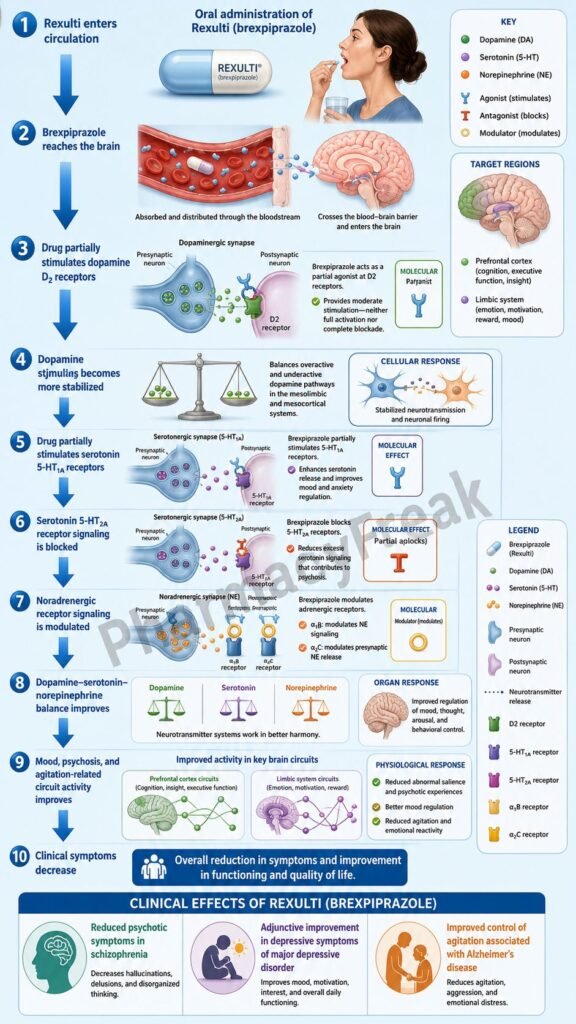
Step 3: Rexulti partially stimulates dopamine D2 receptors
Brexpiprazole acts as a partial agonist at dopamine D2 receptors. A partial agonist does not fully activate the receptor like dopamine, but it does not completely block it either. Instead, it provides moderate receptor activity depending on the amount of endogenous dopamine present.
Step 4: Rexulti stabilizes dopamine signaling
In areas with excessive dopamine activity, brexpiprazole competes with dopamine and reduces overstimulation of D2 receptors. In areas with low dopamine tone, it can provide partial receptor stimulation. This is why Rexulti is often described as a dopamine-serotonin activity modulator rather than a pure dopamine antagonist.
Step 5: Reduction of excessive mesolimbic dopamine improves psychosis
By reducing excessive D2 receptor activation in the mesolimbic pathway, Rexulti helps improve positive symptoms of schizophrenia, including hallucinations, delusions, suspiciousness, and agitation.
Step 6: Serotonin 5-HT2A receptor blockade improves dopamine balance
Brexpiprazole also acts as an antagonist at serotonin 5-HT2A receptors. 5-HT2A antagonism is a key feature of many atypical antipsychotics. Blocking 5-HT2A receptors can increase dopamine release in selected brain pathways, especially the nigrostriatal and mesocortical pathways.
Step 7: 5-HT2A antagonism may reduce extrapyramidal symptoms
Because 5-HT2A blockade can help preserve dopamine tone in the nigrostriatal pathway, Rexulti may produce fewer extrapyramidal symptoms than strong first-generation D2 blockers. However, extrapyramidal symptoms and akathisia can still occur.
Step 8: Rexulti partially activates serotonin 5-HT1A receptors
Brexpiprazole has partial agonist activity at serotonin 5-HT1A receptors. 5-HT1A receptor modulation may contribute to antidepressant, anxiolytic, and mood-stabilizing effects. This is especially relevant when Rexulti is used as adjunctive therapy in major depressive disorder.
Step 9: 5-HT1A activity may support mood improvement
In major depressive disorder, brexpiprazole does not replace antidepressants. Instead, it is added when response to antidepressant therapy is inadequate. By modulating serotonin and dopamine pathways, it may improve mood, motivation, anxiety symptoms, emotional processing, and treatment response.
Step 10: Rexulti also interacts with dopamine D3 receptors
Brexpiprazole has affinity for dopamine D3 receptors and acts as a partial agonist at D3 receptors. D3 receptors are involved in reward, motivation, cognition, and emotional behavior. This may contribute to its broader neuropsychiatric profile, although the exact clinical importance is not fully defined.
Step 11: Rexulti blocks serotonin 5-HT7 receptors
Brexpiprazole also acts as an antagonist at 5-HT7 receptors. 5-HT7 receptors are involved in mood, cognition, circadian rhythm, and emotional regulation. Antagonism at this receptor may contribute to antidepressant and cognitive effects, but this is not the primary labeled mechanism.
Step 12: Rexulti blocks adrenergic alpha receptors
Brexpiprazole has antagonist activity at alpha-1 adrenergic receptors and alpha-2C adrenergic receptors. Alpha-1 blockade may contribute to orthostatic hypotension, dizziness, and syncope. Alpha-2C antagonism may influence norepinephrine and dopamine release, but it can also contribute to side-effect patterns.
Step 13: Rexulti has lower muscarinic activity than many sedating antipsychotics
Brexpiprazole has relatively limited muscarinic M1 receptor activity compared with strongly anticholinergic antipsychotics. Therefore, severe anticholinergic effects such as dry mouth, constipation, urinary retention, and cognitive dulling may be less prominent than with drugs like clozapine or olanzapine, although they can still occur in susceptible patients.
Step 14: Agitation in Alzheimer’s dementia may improve through monoamine modulation
Agitation associated with dementia due to Alzheimer’s disease may involve dysregulation of dopamine, serotonin, norepinephrine, cognition, emotional regulation, and behavioral control. Rexulti may reduce agitation by modulating dopamine and serotonin pathways. However, the exact mechanism for this indication is also not fully established.
Step 15: Final therapeutic outcome
The final therapeutic effect of Rexulti is stabilization of dopamine-serotonin neurotransmission. This can reduce psychotic symptoms in schizophrenia, improve antidepressant response in adults with major depressive disorder, and reduce agitation associated with dementia due to Alzheimer’s disease in approved use.
Pharmacokinetics
Rexulti is administered orally once daily and may be taken with or without food. The tablet strengths include 0.25 mg, 0.5 mg, 1 mg, 2 mg, 3 mg, and 4 mg.
After oral administration, brexpiprazole is well absorbed. Peak plasma concentrations occur within about 4 hours after administration, and the absolute oral bioavailability is approximately 95%. Food does not significantly affect overall exposure, which is why Rexulti can be taken without regard to meals.
Brexpiprazole reaches steady-state concentrations after approximately 10 to 12 days of once-daily dosing. This is clinically important because full pharmacological stabilization may take time, and dose adjustments are usually made gradually.
Brexpiprazole is highly protein bound, greater than 99%, mainly to serum albumin and alpha-1 acid glycoprotein. Because of this high protein binding, hemodialysis is unlikely to be useful in overdose situations.
The drug is metabolized mainly by CYP3A4 and CYP2D6. This is an important exam point. Strong CYP3A4 inhibitors or strong CYP2D6 inhibitors can increase brexpiprazole exposure, while strong CYP3A4 inducers can reduce exposure and may decrease effectiveness. Dosage adjustment is required in several CYP interaction situations and in CYP2D6 poor metabolizers.
The major metabolite, DM-3411, appears in systemic circulation but is not considered to contribute significantly to therapeutic effects. Brexpiprazole has a long terminal elimination half-life of about 91 hours, while its major metabolite has a half-life of about 86 hours.
Because of the long half-life, changes in dose may take several days to fully reflect in plasma concentrations and clinical response. This also means adverse effects may persist for some time after dose reduction or discontinuation.
Dose limits are required in moderate-to-severe hepatic impairment and in renal impairment with creatinine clearance less than 60 mL/minute. The maximum recommended dosage is lower in these patients depending on indication.
Clinical Uses
Rexulti is used as adjunctive therapy to antidepressants for the treatment of major depressive disorder in adults. It is not used as first-line monotherapy for depression. It is added when a patient has an inadequate response to antidepressant therapy alone.
In major depressive disorder, Rexulti may improve symptoms such as persistent low mood, lack of motivation, poor emotional response, anxiety symptoms, impaired functioning, and incomplete antidepressant response. The usual target dose for adjunctive MDD treatment is 2 mg once daily, with a maximum recommended daily dose of 3 mg.
Rexulti is also used for schizophrenia in adults and pediatric patients 13 years of age and older. In schizophrenia, it helps reduce positive symptoms such as hallucinations, delusions, suspiciousness, agitation, and disorganized thought. It may also help with broader functional stability as part of long-term antipsychotic treatment.
For schizophrenia, the recommended adult target dosage is 2 to 4 mg once daily, and the maximum recommended daily dosage is 4 mg. Pediatric patients 13 to 17 years also have a recommended target dosage of 2 to 4 mg once daily, with a maximum of 4 mg once daily.
Rexulti is also indicated for the treatment of agitation associated with dementia due to Alzheimer’s disease. This indication is important because it is not the same as treating dementia-related psychosis in general. The label specifically states that Rexulti is not indicated as an as-needed, or PRN, treatment for agitation associated with dementia due to Alzheimer’s disease.
Rexulti is not approved for pediatric major depressive disorder. The safety and effectiveness of Rexulti for MDD have not been established in pediatric patients, and the boxed warning includes suicidal thoughts and behaviors in pediatric and young adult patients treated with antidepressants.
Rexulti is not approved for irritability associated with autism spectrum disorder. The current label states that effectiveness was not demonstrated in a clinical study for this use.
Adverse Effects
The adverse effects of Rexulti are mainly related to dopamine, serotonin, histamine, adrenergic, metabolic, and central nervous system effects.
The boxed warning includes increased mortality in elderly patients with dementia-related psychosis. Rexulti is not approved for dementia-related psychosis without agitation associated with dementia due to Alzheimer’s disease. The boxed warning also includes suicidal thoughts and behaviors in pediatric and young adult patients treated with antidepressants.
Common adverse reactions in adults receiving Rexulti as adjunctive treatment for major depressive disorder include weight gain, somnolence, and akathisia. Akathisia is a feeling of inner restlessness with a need to move and is an important exam-related adverse effect.
In adults with schizophrenia, weight gain is a common adverse reaction. In pediatric patients 13 to 17 years with schizophrenia, extrapyramidal symptoms excluding akathisia are common. In adults with agitation associated with dementia due to Alzheimer’s disease, nasopharyngitis and dizziness are common adverse reactions.
Metabolic changes are important with atypical antipsychotics, including Rexulti. These may include hyperglycemia, diabetes mellitus, dyslipidemia, and weight gain. Patients should be monitored for blood glucose, lipid changes, body weight, and metabolic risk factors.
Neuroleptic malignant syndrome is a rare but life-threatening adverse effect of antipsychotic drugs. It may present with high fever, muscle rigidity, altered mental status, autonomic instability, elevated creatine kinase, and possible renal injury. Rexulti should be discontinued immediately if NMS is suspected.
Tardive dyskinesia can occur with antipsychotic therapy. It presents as involuntary, repetitive movements, commonly affecting the tongue, face, lips, jaw, trunk, or extremities. The risk increases with longer duration and cumulative exposure, especially in elderly patients.
Pathological gambling and other compulsive behaviors have been reported with Rexulti. Patients may develop new or intense urges such as gambling, binge eating, shopping, or sexual urges. Dose reduction or discontinuation may be considered if these behaviors occur.
Leukopenia, neutropenia, and agranulocytosis can occur. Patients with pre-existing low white blood cell count or a history of drug-induced leukopenia or neutropenia may require complete blood count monitoring.
Orthostatic hypotension and syncope may occur, especially because of alpha-1 adrenergic antagonism. Patients with cardiovascular disease, cerebrovascular disease, dehydration, or hypotension risk require careful monitoring.
Rexulti can cause falls due to somnolence, postural hypotension, motor instability, or sensory impairment. This is especially relevant in older adults.
Seizures may occur rarely. Rexulti should be used cautiously in patients with a seizure history or conditions that lower seizure threshold.
Other important warnings include body temperature dysregulation, dysphagia, and potential for cognitive and motor impairment. Patients should be cautious while driving or operating machinery until they know how the drug affects them.
Hypersensitivity reactions can occur, including rash, facial swelling, urticaria, and anaphylaxis. Rexulti is contraindicated in patients with known hypersensitivity to brexpiprazole or any component.
Pregnancy exposure in the third trimester may cause extrapyramidal or withdrawal symptoms in neonates. These may include agitation, abnormal muscle tone, tremor, somnolence, respiratory distress, and feeding difficulty.
Comparative Analysis
Rexulti is commonly compared with aripiprazole, cariprazine, risperidone, quetiapine, olanzapine, lurasidone, haloperidol, and antidepressant augmentation strategies.
Compared with aripiprazole, Rexulti has a similar dopamine D2 partial agonist concept. Both are dopamine-serotonin activity modulators. However, brexpiprazole has a different receptor-binding profile, including strong serotonin 5-HT1A activity and 5-HT2A antagonism. Clinically, both can cause akathisia, but side-effect intensity may differ from patient to patient.
Compared with cariprazine, Rexulti is less strongly associated with D3-preferring activity. Cariprazine has prominent D3/D2 partial agonist activity and is used in schizophrenia and bipolar disorder-related indications. Rexulti is used for schizophrenia, adjunctive MDD, and agitation associated with dementia due to Alzheimer’s disease.
Compared with risperidone, Rexulti is a D2 partial agonist rather than a stronger D2 antagonist. Risperidone is more likely to increase prolactin because of stronger D2 blockade in the tuberoinfundibular pathway. Rexulti may have lower prolactin liability, but it still requires monitoring for antipsychotic adverse effects.
Compared with quetiapine, Rexulti is usually less sedating because quetiapine has stronger histamine H1 antagonism. Quetiapine is also used in bipolar depression and mania, while Rexulti is not primarily a bipolar disorder drug.
Compared with olanzapine, Rexulti generally has less anticholinergic and sedating activity, but weight gain and metabolic effects can still occur. Olanzapine is strongly associated with weight gain, dyslipidemia, and insulin resistance.
Compared with lurasidone, Rexulti has stronger D2 partial agonist framing, while lurasidone is mainly a D2 and 5-HT2A antagonist with additional 5-HT7 antagonism and 5-HT1A partial agonism. Lurasidone is used in schizophrenia and bipolar depression, while Rexulti has a specific adjunctive MDD indication and an Alzheimer’s agitation indication.
Compared with haloperidol, Rexulti is an atypical antipsychotic with serotonin-dopamine modulation. Haloperidol is a high-potency first-generation antipsychotic with strong D2 antagonism and higher extrapyramidal symptom risk.
Compared with SSRI or SNRI antidepressants, Rexulti does not primarily block serotonin or norepinephrine reuptake. In depression, it is used as add-on therapy to antidepressants, not as a replacement for standard antidepressant treatment.
Compared with benzodiazepines used for acute agitation or anxiety, Rexulti is not an immediate sedative rescue drug. It works through receptor modulation over time and is not indicated for as-needed use in Alzheimer’s-related agitation.
MCQs
- Rexulti contains which active drug?
a) Aripiprazole
b) Brexpiprazole
c) Risperidone
d) Lurasidone
Answer: b) Brexpiprazole
- Rexulti belongs to which pharmacological class?
a) Typical antipsychotic
b) Selective serotonin reuptake inhibitor
c) Atypical antipsychotic
d) Benzodiazepine
Answer: c) Atypical antipsychotic
- The exact therapeutic mechanism of Rexulti is:
a) Completely explained by GABA-A activation
b) Unknown, but likely related to dopamine and serotonin receptor modulation
c) Direct inhibition of acetylcholinesterase
d) Inhibition of monoamine oxidase only
Answer: b) Unknown, but likely related to dopamine and serotonin receptor modulation
- Rexulti acts at dopamine D2 receptors mainly as a:
a) Full antagonist only
b) Full agonist only
c) Partial agonist
d) Irreversible blocker
Answer: c) Partial agonist
- Rexulti acts at serotonin 5-HT1A receptors mainly as a:
a) Partial agonist
b) Full antagonist only
c) Enzyme inhibitor
d) Ion channel blocker
Answer: a) Partial agonist
- Rexulti acts at serotonin 5-HT2A receptors mainly as an:
a) Agonist
b) Antagonist
c) Acetylcholinesterase activator
d) NMDA receptor blocker
Answer: b) Antagonist
- Rexulti is approved as adjunctive therapy for which condition in adults?
a) Major depressive disorder
b) Parkinson’s disease
c) Epilepsy
d) Migraine prophylaxis
Answer: a) Major depressive disorder
- Rexulti is approved for schizophrenia in:
a) Adults only
b) Pediatric patients below 5 years only
c) Adults and pediatric patients 13 years and older
d) Neonates only
Answer: c) Adults and pediatric patients 13 years and older
- Rexulti is also approved for:
a) Agitation associated with dementia due to Alzheimer’s disease
b) Acute bacterial meningitis
c) Type 1 diabetes mellitus
d) Tuberculosis
Answer: a) Agitation associated with dementia due to Alzheimer’s disease
- Rexulti is not indicated for Alzheimer’s agitation as:
a) Once-daily treatment
b) As-needed PRN treatment
c) Oral treatment
d) A scheduled medication
Answer: b) As-needed PRN treatment
- Which adverse effect is common when Rexulti is used as adjunctive therapy for MDD?
a) Akathisia
b) Ototoxicity
c) Severe hypoglycemia
d) Tendon rupture
Answer: a) Akathisia
- Which metabolic adverse effect is important with Rexulti?
a) Weight gain
b) Complete weight loss in all patients
c) Severe hypocalcemia only
d) Permanent vitamin C deficiency
Answer: a) Weight gain
- Rexulti is metabolized mainly by:
a) CYP3A4 and CYP2D6
b) CYP1A2 only
c) Acetylcholinesterase
d) Renal filtration unchanged only
Answer: a) CYP3A4 and CYP2D6
- Which serious antipsychotic adverse effect may occur with Rexulti?
a) Neuroleptic malignant syndrome
b) Acute bacterial sepsis in every patient
c) Irreversible hearing loss
d) Severe insulin overdose
Answer: a) Neuroleptic malignant syndrome
- Which statement best describes Rexulti?
a) It is a dopamine D2 and serotonin 5-HT1A partial agonist with serotonin 5-HT2A antagonist activity
b) It is a pure serotonin reuptake inhibitor
c) It is a cholinesterase inhibitor used to reverse anesthesia
d) It is an antibiotic that blocks bacterial ribosomes
Answer: a) It is a dopamine D2 and serotonin 5-HT1A partial agonist with serotonin 5-HT2A antagonist activity
FAQs
What is the mechanism of action of Rexulti?
Rexulti, or brexpiprazole, works mainly by modulating dopamine and serotonin receptors. It acts as a partial agonist at dopamine D2 and serotonin 5-HT1A receptors and as an antagonist at serotonin 5-HT2A receptors. The exact therapeutic mechanism is not fully known.
What is the generic name of Rexulti?
The generic name of Rexulti is brexpiprazole.
Is Rexulti an antidepressant?
Rexulti is not a standard antidepressant like an SSRI or SNRI. It is an atypical antipsychotic used as adjunctive therapy with antidepressants for major depressive disorder in adults.
Is Rexulti used for schizophrenia?
Yes. Rexulti is used for the treatment of schizophrenia in adults and pediatric patients 13 years of age and older.
Is Rexulti used for Alzheimer’s disease?
Rexulti is used for the treatment of agitation associated with dementia due to Alzheimer’s disease. It is not a cure for Alzheimer’s disease and is not indicated as an as-needed treatment for agitation.
Does Rexulti cause weight gain?
Yes. Weight gain can occur with Rexulti. Patients should be monitored for weight, glucose, lipids, and other metabolic changes during treatment.
Does Rexulti cause akathisia?
Yes. Akathisia can occur, especially when Rexulti is used as adjunctive therapy in major depressive disorder. Patients may feel restless, unable to sit still, or driven to move.
How is Rexulti different from aripiprazole?
Both Rexulti and aripiprazole are dopamine-serotonin activity modulators with D2 partial agonist activity. However, they differ in receptor-binding profile, dosing, approved uses, and side-effect patterns.
References
Goodman & Gilman’s The Pharmacological Basis of Therapeutics
Katzung Basic & Clinical Pharmacology