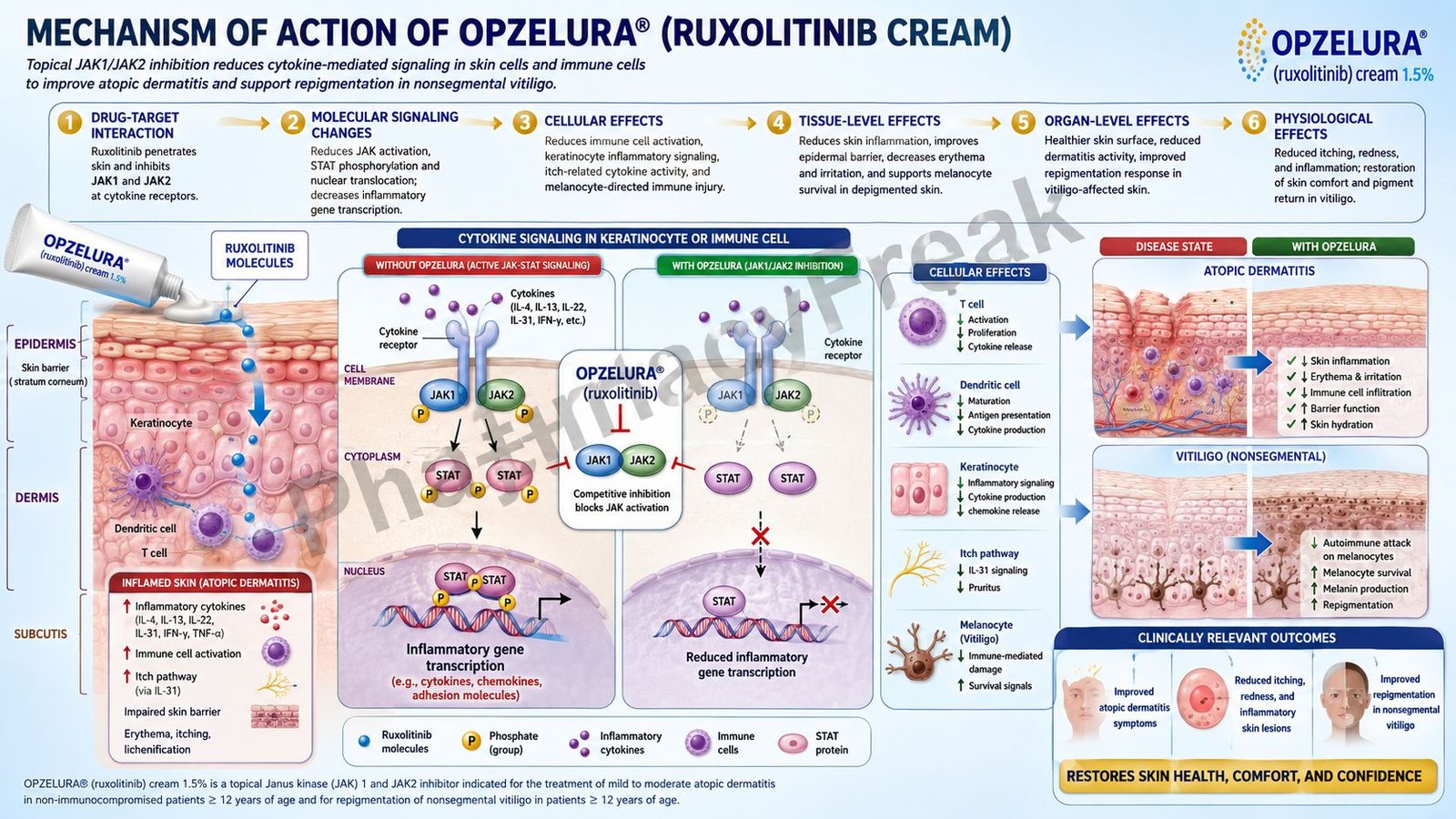
Table of Contents
Introduction
Opzelura is the brand name of ruxolitinib cream, a topical Janus kinase inhibitor used in inflammatory and autoimmune skin diseases. It contains ruxolitinib phosphate and is available as a 1.5% cream for application to affected skin areas.
Opzelura is indicated for the short-term and non-continuous chronic treatment of mild to moderate atopic dermatitis in non-immunocompromised adults and pediatric patients 2 years of age and older whose disease is not adequately controlled with topical prescription therapies or when those therapies are not advisable. It is also indicated for the topical treatment of nonsegmental vitiligo in adults and pediatric patients 12 years of age and older.
Opzelura is pharmacologically important because it is a topical JAK inhibitor. Unlike topical corticosteroids, it does not act through glucocorticoid receptor activation. Instead, ruxolitinib blocks intracellular cytokine signaling through the JAK-STAT pathway. This reduces inflammatory signaling in atopic dermatitis and may help reduce immune-mediated melanocyte destruction in nonsegmental vitiligo.
For pharmacy, medical, nursing, and competitive exam students, Opzelura is important because it connects dermatology with immunology. Its key mechanism is inhibition of JAK1 and JAK2, leading to reduced cytokine-mediated inflammation and immune-cell signaling in the skin.
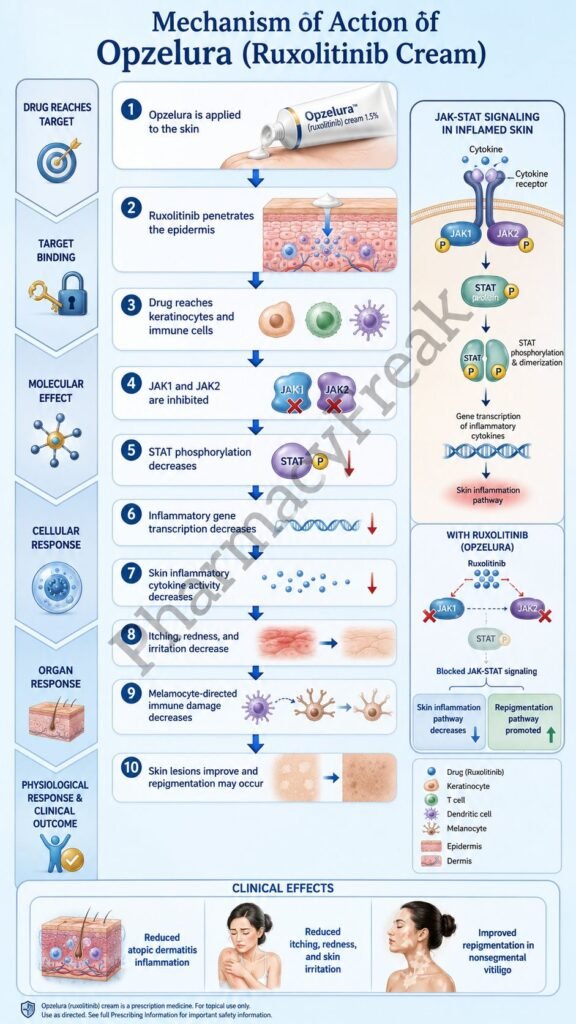
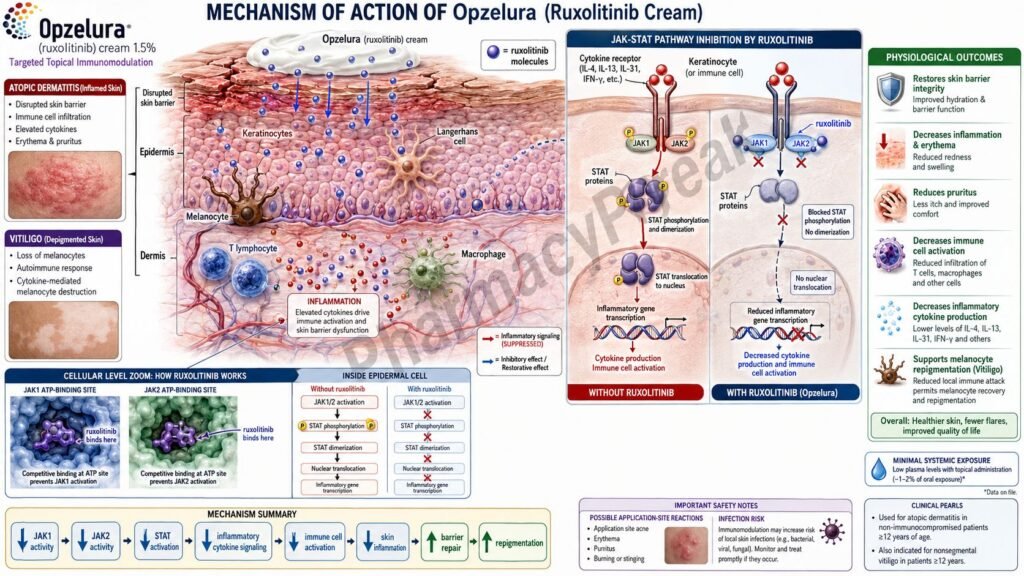
Mechanism of Action (Step-wise)
- Primary target: Janus kinases
Opzelura contains ruxolitinib, which inhibits Janus kinase 1 and Janus kinase 2, commonly called JAK1 and JAK2. These enzymes are intracellular tyrosine kinases that transmit signals from cytokine receptors to the nucleus.
JAK enzymes are important in immune signaling, inflammation, hematopoiesis, and skin immune responses.
- Cytokines activate the JAK-STAT pathway
In inflammatory skin diseases, cytokines bind to receptors on immune cells, keratinocytes, and other skin cells. These receptors use JAK enzymes to transmit signals inside the cell.
After cytokine receptor activation, JAK enzymes phosphorylate signal transducer and activator of transcription proteins, known as STAT proteins.
- STAT proteins regulate inflammatory gene expression
Once phosphorylated, STAT proteins move into the nucleus and regulate gene transcription. This increases the production of inflammatory mediators, chemokines, adhesion molecules, and immune-response proteins.
In atopic dermatitis, this contributes to itching, redness, inflammation, barrier dysfunction, and eczematous skin lesions.
- Ruxolitinib inhibits JAK1/JAK2 signaling
By inhibiting JAK1 and JAK2, Opzelura reduces phosphorylation and activation of STAT proteins. This decreases cytokine-driven gene transcription in the skin.
The final result is reduced inflammatory signaling at the site of application.
- Effect in atopic dermatitis
Atopic dermatitis involves complex immune activation, skin barrier dysfunction, itching, and inflammation. Cytokines involved in atopic dermatitis can signal through JAK-dependent pathways.
By inhibiting JAK signaling locally in the skin, Opzelura reduces inflammatory cytokine activity, decreases itch-related signaling, and helps improve eczema lesions.
- Effect in nonsegmental vitiligo
Nonsegmental vitiligo is an autoimmune depigmenting disorder in which immune mechanisms contribute to melanocyte damage. Interferon-gamma-mediated JAK-STAT signaling is thought to play an important role in recruiting and activating cytotoxic T cells that attack melanocytes.
Opzelura is thought to inhibit interferon-gamma-mediated JAK-STAT signaling, which may reduce CD8-positive T-cell-mediated destruction of melanocytes and support repigmentation over time.
- Local immunomodulatory effect
Because Opzelura is applied topically, its intended effect is mainly local skin immunomodulation. This allows targeted reduction of inflammatory signaling in affected areas while limiting systemic exposure compared with oral JAK inhibitors.
- Final therapeutic effect
The final therapeutic effect of Opzelura is reduced JAK-STAT signaling in skin cells, decreased inflammatory cytokine activity, improvement in atopic dermatitis lesions, reduction in itching and inflammation, and gradual repigmentation in suitable patients with nonsegmental vitiligo.
Pharmacokinetics
Opzelura is administered topically as ruxolitinib cream 1.5%. It is applied to affected skin areas as directed and is not intended for oral, ophthalmic, or intravaginal use.
Absorption:
Ruxolitinib can be absorbed through the skin after topical application. Systemic exposure is much lower than with oral ruxolitinib, but absorption may increase when larger body surface areas are treated, when the skin barrier is damaged, or when excessive amounts are used.
Distribution:
After systemic absorption, ruxolitinib can distribute into the bloodstream and tissues. However, with proper topical use, its main intended action remains local activity in affected skin.
Metabolism:
Ruxolitinib is metabolized mainly by hepatic cytochrome P450 enzymes, especially CYP3A4, with some contribution from CYP2C9. Strong CYP3A4 inhibitors may increase systemic exposure if clinically meaningful absorption occurs.
Excretion:
After metabolism, ruxolitinib metabolites are eliminated through renal and fecal routes. With topical use, systemic elimination is usually less clinically prominent than local skin action.
Half-life and duration:
Topical Opzelura is usually applied twice daily. The clinical duration of effect depends on local JAK inhibition, reduction of inflammatory signaling, and improvement of the underlying skin condition.
Special pharmacokinetic point:
Systemic exposure is generally limited with recommended topical use, but Opzelura should not be used excessively or over body surface areas larger than recommended. Use with therapeutic biologics, other JAK inhibitors, or potent immunosuppressants such as azathioprine or cyclosporine is not recommended.
Clinical Uses
- Mild to moderate atopic dermatitis:
Opzelura is used for short-term and non-continuous chronic treatment of mild to moderate atopic dermatitis in non-immunocompromised adults and pediatric patients 2 years of age and older when topical prescription therapies are inadequate or not advisable. - Nonsegmental vitiligo:
Opzelura is used for topical treatment of nonsegmental vitiligo in adults and pediatric patients 12 years of age and older. - Steroid-free topical option:
Opzelura is useful when a non-steroidal topical therapy is preferred or when long-term topical corticosteroid use is not ideal. - Itch and inflammation reduction in eczema:
By reducing cytokine signaling, Opzelura can help decrease itching, redness, inflammation, and eczematous lesions. - Repigmentation support in vitiligo:
In nonsegmental vitiligo, Opzelura may help repigmentation by reducing immune-mediated melanocyte damage. - Localized immune modulation:
Opzelura is applied directly to affected areas, making it a targeted topical immunomodulatory treatment.
Adverse Effects
Common adverse effects of Opzelura in atopic dermatitis may include:
- Nasopharyngitis
- Diarrhea
- Bronchitis
- Ear infection
- Eosinophil count increased
- Urticaria
- Folliculitis
- Tonsillitis
- Rhinorrhea
- Upper respiratory tract infection
- COVID-19
- Application site reaction
- Fever
- White blood cell count decreased
Common adverse effects in nonsegmental vitiligo may include:
- Application site acne
- Application site itching
- Nasopharyngitis
- Headache
- Urinary tract infection
- Application site redness
- Fever
Reported adverse reactions differ somewhat by indication, and labeling lists common atopic dermatitis reactions such as nasopharyngitis, bronchitis, ear infection, eosinophil count increase, urticaria, diarrhea, folliculitis, tonsillitis, rhinorrhea, upper respiratory tract infection, COVID-19, application site reaction, pyrexia, and white blood cell decrease.
Important serious or clinically significant risks include:
- Serious infections
- Tuberculosis
- Viral reactivation
- Herpes zoster
- Malignancy
- Non-melanoma skin cancer
- Major adverse cardiovascular events
- Thrombosis
- Low blood cell counts
- Lipid abnormalities
- Application site reactions
Although Opzelura is topical, it carries warnings related to the JAK inhibitor class. Patients should use it only as directed and should not combine it with other JAK inhibitors, biologic immunomodulators, or potent immunosuppressants unless specifically directed by a healthcare professional.
Opzelura should not be used in the eyes, mouth, or vagina. Patients should wash hands after application unless the hands are the treated area.
Comparative Analysis
| Feature | Opzelura | Topical Corticosteroids | Tacrolimus Ointment | Vtama |
|---|---|---|---|---|
| Generic name | Ruxolitinib cream | Hydrocortisone, betamethasone, clobetasol, etc. | Tacrolimus | Tapinarof |
| Drug class | Topical JAK inhibitor | Glucocorticoid receptor agonist | Calcineurin inhibitor | AhR agonist |
| Main target | JAK1 and JAK2 | Glucocorticoid receptor | Calcineurin | Aryl hydrocarbon receptor |
| Main action | Reduces JAK-STAT cytokine signaling | Broad anti-inflammatory gene regulation | Reduces T-cell activation | Modulates inflammatory and barrier pathways |
| Steroid status | Non-steroidal | Steroidal | Non-steroidal | Non-steroidal |
| Major uses | Atopic dermatitis, nonsegmental vitiligo | Many inflammatory skin diseases | Atopic dermatitis | Plaque psoriasis, atopic dermatitis |
| Common adverse effects | Application site reactions, folliculitis, acne, infections | Skin thinning, striae, telangiectasia, HPA-axis suppression with potent/prolonged use | Burning, stinging, infection risk | Folliculitis, contact dermatitis, application reactions |
| Route | Topical cream | Topical | Topical ointment | Topical cream |
Opzelura differs from topical corticosteroids because it does not activate glucocorticoid receptors and is considered non-steroidal. It differs from tacrolimus because tacrolimus blocks calcineurin and T-cell activation, while ruxolitinib inhibits JAK1/JAK2-mediated cytokine signaling. Vtama is also non-steroidal, but it works through aryl hydrocarbon receptor activation rather than JAK inhibition.
MCQs
- Opzelura contains which active drug?
a) Tapinarof
b) Ruxolitinib
c) Tacrolimus
d) Crisaborole
Answer: b) Ruxolitinib
- Opzelura belongs to which drug class?
a) Topical JAK inhibitor
b) Topical corticosteroid
c) Antihistamine
d) Calcineurin activator
Answer: a) Topical JAK inhibitor
- The main enzymes inhibited by ruxolitinib are:
a) JAK1 and JAK2
b) COX-1 and COX-2
c) ACE and renin
d) CYP2D6 and CYP3A4
Answer: a) JAK1 and JAK2
- The major intracellular pathway reduced by Opzelura is:
a) JAK-STAT pathway
b) GABA pathway
c) Cholinergic pathway
d) Dopamine pathway
Answer: a) JAK-STAT pathway
- Opzelura is used for mild to moderate atopic dermatitis in non-immunocompromised patients aged:
a) 2 years and older
b) 6 months and older
c) 12 years and older only
d) 18 years and older only
Answer: a) 2 years and older
- Opzelura is used for nonsegmental vitiligo in patients aged:
a) 12 years and older
b) 2 years and older
c) Newborns only
d) 65 years and older only
Answer: a) 12 years and older
- In vitiligo, Opzelura is thought to reduce destruction of:
a) Melanocytes
b) Platelets
c) Red blood cells
d) Neutrophils only
Answer: a) Melanocytes
- Inhibition of JAK signaling reduces activation of:
a) STAT proteins
b) Insulin receptors only
c) Histamine H1 receptors
d) Sodium channels
Answer: a) STAT proteins
- Opzelura is administered by which route?
a) Topical
b) Intravenous
c) Oral
d) Intrathecal
Answer: a) Topical
- Which adverse effect can occur with Opzelura?
a) Application site acne or reaction
b) Severe ototoxicity
c) Gingival hyperplasia
d) Hypocalcemia only
Answer: a) Application site acne or reaction
- Use of Opzelura with which therapy is generally not recommended?
a) Other JAK inhibitors or potent immunosuppressants
b) Plain moisturizer
c) Sunscreen only
d) Normal saline
Answer: a) Other JAK inhibitors or potent immunosuppressants
- Opzelura is not intended for:
a) Oral, ophthalmic, or intravaginal use
b) Skin application
c) Atopic dermatitis treatment
d) Vitiligo treatment
Answer: a) Oral, ophthalmic, or intravaginal use
- Opzelura differs from topical corticosteroids because it:
a) Inhibits JAK1/JAK2 instead of activating glucocorticoid receptors
b) Is a systemic antibiotic
c) Directly replaces insulin
d) Blocks bacterial cell wall synthesis
Answer: a) Inhibits JAK1/JAK2 instead of activating glucocorticoid receptors
- Which cytokine pathway is especially relevant in vitiligo and Opzelura action?
a) Interferon-gamma-mediated JAK-STAT signaling
b) Insulin-mediated glucose uptake only
c) Histamine-only signaling
d) Acetylcholine release
Answer: a) Interferon-gamma-mediated JAK-STAT signaling
- Which statement about Opzelura is correct?
a) It is a topical ruxolitinib cream that reduces JAK-STAT cytokine signaling
b) It is an oral insulin analog
c) It is a topical antibiotic
d) It is a rescue inhaler
Answer: a) It is a topical ruxolitinib cream that reduces JAK-STAT cytokine signaling
FAQs
- What is Opzelura used for?
Opzelura is used for mild to moderate atopic dermatitis in non-immunocompromised adults and children 2 years and older when topical prescription therapies are inadequate or not advisable. It is also used for nonsegmental vitiligo in adults and children 12 years and older.
- What is the mechanism of action of Opzelura?
Opzelura contains ruxolitinib, which inhibits JAK1 and JAK2. This reduces JAK-STAT cytokine signaling, decreases inflammatory gene expression, and helps improve inflammatory skin disease.
- Is Opzelura a steroid?
No. Opzelura is not a corticosteroid. It is a topical JAK inhibitor.
- How does Opzelura help atopic dermatitis?
In atopic dermatitis, cytokine signaling contributes to itching, inflammation, redness, and skin barrier dysfunction. Opzelura inhibits JAK-mediated cytokine signaling and helps reduce these symptoms.
- How does Opzelura help vitiligo?
In nonsegmental vitiligo, immune cells can attack melanocytes. Opzelura is thought to reduce interferon-gamma-mediated JAK-STAT signaling, which may decrease CD8-positive T-cell-mediated melanocyte destruction and support repigmentation.
- Can Opzelura be used with other JAK inhibitors?
Use of Opzelura with other JAK inhibitors, therapeutic biologics, or potent immunosuppressants such as azathioprine or cyclosporine is generally not recommended.
- What are common side effects of Opzelura?
Common side effects include application site reactions, application site acne, itching, nasopharyngitis, bronchitis, folliculitis, diarrhea, headache, fever, and upper respiratory tract infections.
- Is Opzelura safe for the eyes?
No. Opzelura is not for ophthalmic use. It should not be used in the eyes, mouth, or vagina.
- Why does Opzelura have JAK inhibitor warnings if it is topical?
Although systemic exposure is lower with topical use than oral use, ruxolitinib belongs to the JAK inhibitor class. Therefore, warnings related to serious infections, malignancy, cardiovascular events, thrombosis, and blood count abnormalities are included in labeling.
References
Goodman & Gilman’s The Pharmacological Basis of Therapeutics
Katzung Basic & Clinical Pharmacology