Table of Contents
Introduction
Asciminib is an oral targeted anticancer drug marketed under the brand name Scemblix. Pharmacologically, asciminib is an ABL/BCR-ABL1 tyrosine kinase inhibitor used in Philadelphia chromosome-positive chronic myeloid leukemia, commonly abbreviated as Ph+ CML.
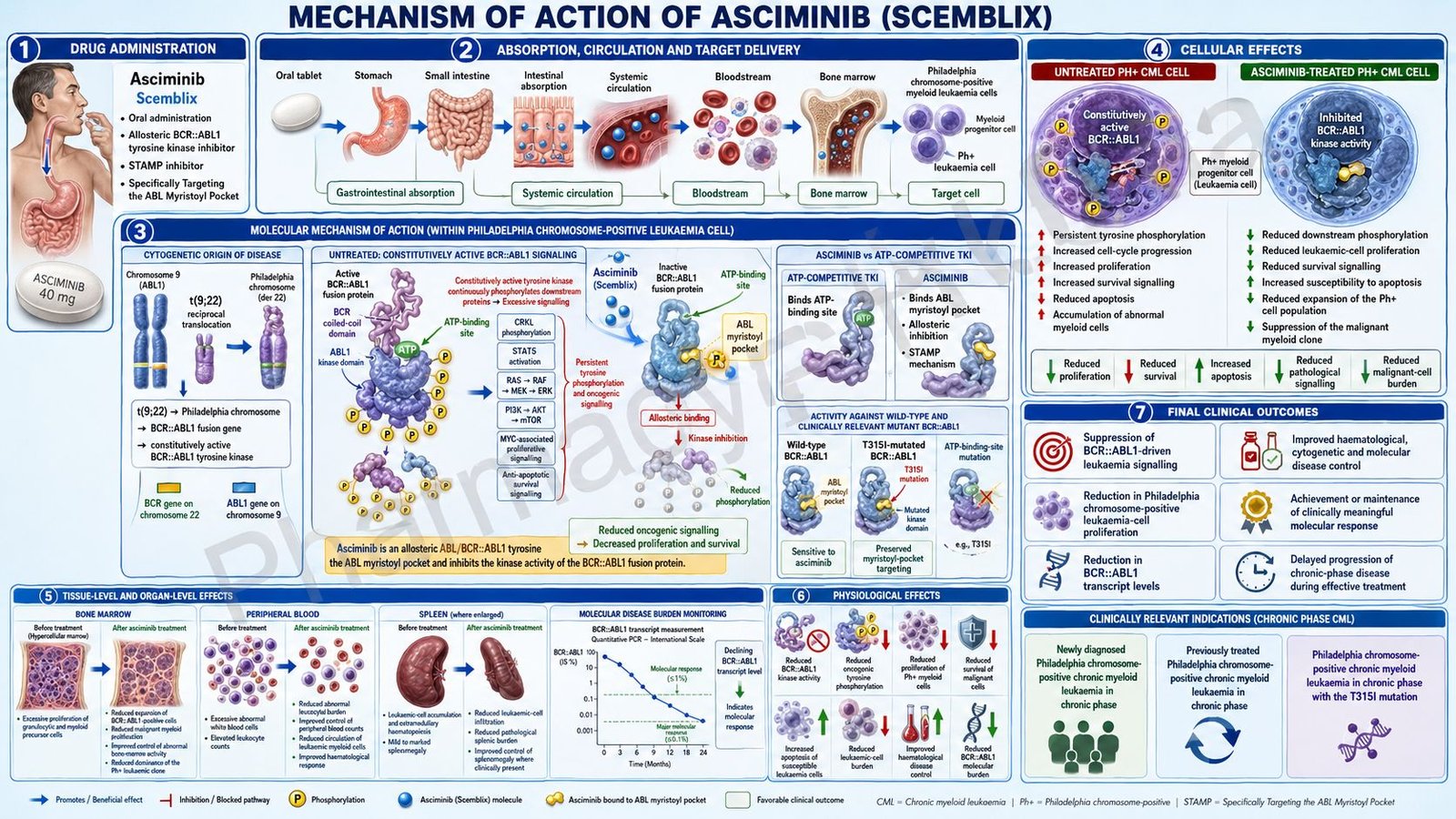
Chronic myeloid leukemia is driven by the Philadelphia chromosome, which forms due to a translocation between chromosomes 9 and 22. This creates the BCR::ABL1 fusion gene. The BCR::ABL1 fusion protein has abnormal tyrosine kinase activity that continuously activates signaling pathways responsible for uncontrolled myeloid cell proliferation, survival, and leukemic expansion.
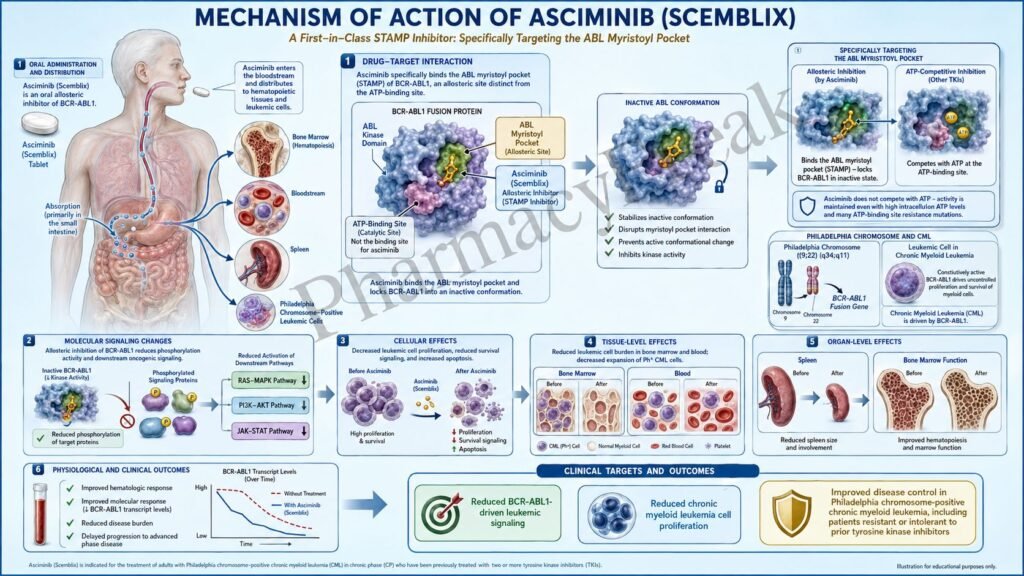
Asciminib is different from many older BCR-ABL tyrosine kinase inhibitors because it does not bind the ATP-binding site in the usual way. Instead, it binds the ABL myristoyl pocket. Because of this unique mechanism, asciminib is often called a STAMP inhibitor, meaning “Specifically Targeting the ABL Myristoyl Pocket.”
The current Scemblix label describes asciminib as an ABL/BCR-ABL1 tyrosine kinase inhibitor that inhibits ABL1 kinase activity of the BCR::ABL1 fusion protein by binding to the ABL myristoyl pocket. It has shown activity against wild-type BCR::ABL1 and several mutant forms, including the T315I mutation.
Scemblix is indicated for adult patients with newly diagnosed Ph+ CML in chronic phase, previously treated Ph+ CML in chronic phase, and Ph+ CML in chronic phase with the T315I mutation. The newly diagnosed indication is approved under accelerated approval based on major molecular response rate.
For exam purposes, asciminib should be remembered as an oral allosteric BCR-ABL1 inhibitor that binds the ABL myristoyl pocket, restores negative regulation of BCR-ABL1 signaling, and suppresses leukemic cell growth in Ph+ CML.
Mechanism of Action (Step-wise)
Step 1: CML is driven by the Philadelphia chromosome
Philadelphia chromosome-positive CML results from the t(9;22) chromosomal translocation. This produces the BCR::ABL1 fusion gene, which encodes a constitutively active tyrosine kinase.
Step 2: BCR::ABL1 continuously activates growth signaling
The abnormal BCR::ABL1 kinase sends persistent signals even without normal growth regulation. These signals activate pathways such as RAS-RAF-MEK-ERK, PI3K-AKT-mTOR, and JAK-STAT. These pathways promote proliferation, survival, and resistance to apoptosis in leukemic myeloid cells.
Step 3: Normal ABL kinase has regulatory control
Normal ABL kinase activity is tightly controlled. One important regulatory region is the myristoyl pocket, which participates in maintaining the inactive conformation of ABL. In BCR::ABL1, this normal autoinhibitory control is disrupted, allowing abnormal kinase activation.
Step 4: Conventional TKIs bind the ATP-binding site
Many older CML drugs, such as imatinib, dasatinib, nilotinib, bosutinib, and ponatinib, inhibit BCR-ABL1 by targeting the ATP-binding site of the kinase domain. This prevents ATP-dependent phosphorylation of downstream substrates.
Step 5: Resistance can occur with ATP-site inhibitors
Resistance to conventional TKIs may occur due to kinase-domain mutations, altered binding affinity, drug efflux, poor adherence, clonal evolution, or activation of alternate pathways. Some mutations interfere with drug binding at or near the ATP-binding region.
Step 6: The T315I mutation is especially important
The T315I gatekeeper mutation can cause resistance to several ATP-competitive BCR-ABL inhibitors. This mutation changes the kinase structure in a way that prevents many TKIs from binding effectively.
Step 7: Asciminib binds the ABL myristoyl pocket
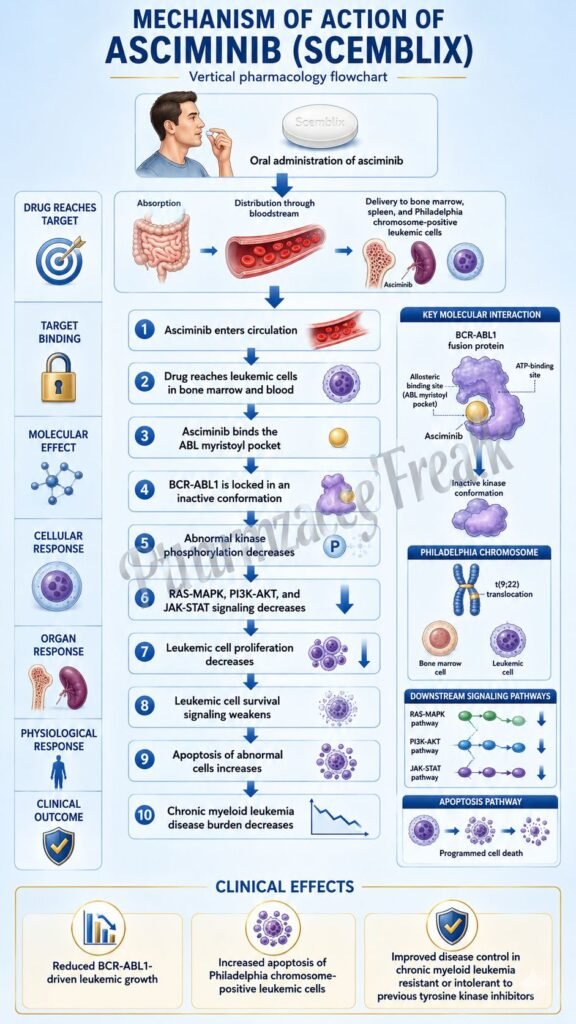
Asciminib binds to the ABL myristoyl pocket rather than primarily binding the ATP-binding site. This is the central molecular mechanism of asciminib and the reason it is called a STAMP inhibitor.
Step 8: Allosteric inhibition of BCR::ABL1 occurs
By binding the myristoyl pocket, asciminib acts allosterically. An allosteric inhibitor binds a regulatory site away from the active ATP-binding site and changes the conformation or activity of the enzyme.
Step 9: ABL1 kinase activity decreases
Asciminib inhibits the ABL1 kinase activity of the BCR::ABL1 fusion protein. When BCR::ABL1 kinase activity decreases, phosphorylation of downstream signaling proteins is reduced.
Step 10: Downstream leukemic signaling decreases
With reduced BCR::ABL1 kinase activity, signaling through growth and survival pathways decreases. This reduces activation of pathways such as MAPK, PI3K-AKT, and JAK-STAT.
Step 11: Leukemic myeloid cell proliferation decreases
Reduced downstream signaling slows abnormal proliferation of leukemic cells. This helps decrease the burden of Philadelphia chromosome-positive myeloid cells in chronic phase CML.
Step 12: Apoptosis of leukemic cells may increase
When BCR::ABL1 survival signaling is inhibited, leukemic cells become less protected from programmed cell death. This can contribute to reduction in leukemic cell burden over time.
Step 13: BCR::ABL1 transcript levels decrease
Clinically, response to CML therapy is monitored by measuring BCR::ABL1 transcript levels. Effective therapy lowers BCR::ABL1 levels and may produce a major molecular response.
Step 14: Activity against mutant BCR::ABL1 is clinically useful
Asciminib has shown activity against wild-type BCR::ABL1 and several mutant forms of the kinase, including T315I. This makes it important in selected patients with resistant or mutation-positive Ph+ CML in chronic phase.
Step 15: Final therapeutic outcome
The final therapeutic effect of asciminib is suppression of abnormal BCR::ABL1-driven leukemic signaling. This helps reduce leukemic cell proliferation, improve molecular response, and control Ph+ CML in appropriate adult patients.
Pharmacokinetics
Asciminib is administered orally as Scemblix tablets. For newly diagnosed or previously treated Ph+ CML in chronic phase, the recommended dose is 80 mg once daily or 40 mg twice daily. For Ph+ CML in chronic phase with the T315I mutation, the recommended dose is 200 mg twice daily. Scemblix should be taken without food, avoiding food for at least 2 hours before and 1 hour after the dose.
Scemblix tablets should be swallowed whole and should not be broken, crushed, or chewed. Available strengths include 20 mg, 40 mg, and 100 mg film-coated tablets.
Asciminib reaches median peak plasma concentration at about 2.5 hours. Steady state is achieved within approximately 3 days. Its exposure increases slightly more than dose proportionally across studied dose ranges.
Food significantly reduces asciminib exposure. A high-fat meal decreased asciminib AUC and Cmax by 62% and 68%, respectively, while a low-fat meal decreased AUC and Cmax by 30% and 35%, respectively. This explains why Scemblix must be taken without food.
Asciminib is highly protein bound, about 97%. Its apparent volume of distribution at steady state is approximately 151 L, indicating distribution beyond the plasma compartment.
Asciminib is metabolized mainly by CYP3A4-mediated oxidation and UGT2B7- and UGT2B17-mediated glucuronidation. It is eliminated largely through feces, with about 80% of a dose recovered in feces and 11% in urine after radiolabeled dosing.
The terminal elimination half-life is about 5.5 hours at the 40 mg twice-daily or 80 mg once-daily dose, and about 9 hours at the 200 mg twice-daily dose.
Drug interactions are important. Asciminib is affected by some CYP3A modulators and can affect other drugs, including CYP3A4 substrates, CYP2C9 substrates, P-gp substrates, and BCRP substrates. The label advises avoiding certain CYP2C9 substrates and avoiding rosuvastatin with Scemblix because of BCRP substrate interaction concerns.
Clinical Uses
Asciminib is used for adult patients with newly diagnosed Philadelphia chromosome-positive chronic myeloid leukemia in chronic phase. This indication is approved under accelerated approval based on major molecular response rate, with continued approval potentially depending on confirmatory clinical benefit.
Asciminib is also used for adult patients with previously treated Ph+ CML in chronic phase. This makes it important for patients who have already received other tyrosine kinase inhibitors and require another targeted option.
Asciminib is used in adult patients with Ph+ CML in chronic phase with the T315I mutation. This is an important exam point because T315I is a clinically significant resistance mutation for many BCR-ABL inhibitors.
Asciminib is not conventional chemotherapy. It does not primarily kill rapidly dividing cells by damaging DNA like alkylating agents or antimetabolites. It is a targeted kinase inhibitor aimed at the BCR::ABL1 oncogenic driver.
Asciminib is not used for Philadelphia chromosome-negative leukemias, acute myeloid leukemia, or non-CML cancers unless part of a specific clinical study or future approved indication.
Scemblix is not approved for pediatric patients. The label states that safety and effectiveness have not been established in pediatric patients.
Adverse Effects
The major adverse effects of asciminib include myelosuppression, pancreatic toxicity, hypertension, hypersensitivity, cardiovascular toxicity, and embryo-fetal toxicity.
Myelosuppression is one of the most important warnings. Thrombocytopenia, neutropenia, and anemia have occurred with Scemblix. The label recommends complete blood counts every 2 weeks for the first 3 months of treatment and monthly thereafter, or as clinically indicated.
Thrombocytopenia can increase bleeding risk, neutropenia can increase infection risk, and anemia can cause fatigue, weakness, dizziness, and shortness of breath. Severe cytopenias may require dose interruption, dose reduction, or discontinuation.
Pancreatic toxicity is another important warning. Pancreatitis and elevations in serum lipase and amylase have occurred with Scemblix. The label recommends checking lipase and amylase monthly during treatment or as clinically indicated, with more frequent monitoring in patients with a history of pancreatitis.
Hypertension can occur during asciminib therapy. Blood pressure should be monitored and managed with standard antihypertensive treatment when needed. Grade 3 or higher hypertension may require interruption, dose reduction, or discontinuation.
Hypersensitivity reactions can occur and may include rash, edema, and bronchospasm. Patients should be monitored for allergic symptoms, and clinically significant reactions may require treatment interruption or discontinuation.
Cardiovascular toxicity is an important warning. Reported events include ischemic cardiac conditions, central nervous system ischemic conditions, arterial thrombotic or embolic events, cardiac failure, arrhythmia, and QTc prolongation. Patients with cardiovascular risk factors need careful monitoring.
Common adverse reactions reported in patients receiving Scemblix include musculoskeletal pain, rash, fatigue, upper respiratory tract infection, headache, abdominal pain, arthralgia, and diarrhea. Common laboratory abnormalities include decreased blood cell counts, increased lipase, increased cholesterol, increased uric acid, increased liver enzymes, and increased triglycerides.
Embryo-fetal toxicity is important. Based on animal findings and mechanism of action, Scemblix can cause fetal harm when administered during pregnancy. Females of reproductive potential should use effective contraception during treatment and for 1 week after the last dose.
Breastfeeding is not recommended during treatment because of potential risk to the infant.
Comparative Analysis
Asciminib is commonly compared with imatinib, dasatinib, nilotinib, bosutinib, and ponatinib.
Compared with imatinib, asciminib has a different binding site. Imatinib is an ATP-competitive BCR-ABL inhibitor, while asciminib binds the ABL myristoyl pocket and acts allosterically.
Compared with dasatinib, asciminib is more specifically known for STAMP inhibition. Dasatinib inhibits BCR-ABL and SRC-family kinases, while asciminib targets the ABL myristoyl pocket of BCR::ABL1.
Compared with nilotinib, asciminib differs by mechanism and safety profile. Nilotinib is an ATP-site BCR-ABL inhibitor and is strongly associated with metabolic and cardiovascular monitoring concerns. Asciminib also has cardiovascular warnings but works through allosteric inhibition.
Compared with bosutinib, asciminib has a different target interaction. Bosutinib inhibits BCR-ABL and SRC-family kinases and is commonly associated with gastrointestinal and hepatic adverse effects. Asciminib is notable for pancreatic enzyme monitoring, myelosuppression, and myristoyl-pocket binding.
Compared with ponatinib, asciminib is important because both have relevance in T315I-mutated CML. Ponatinib is an ATP-competitive TKI designed to inhibit T315I-mutant BCR-ABL, while asciminib inhibits BCR::ABL1 allosterically through the myristoyl pocket.
Compared with chemotherapy, asciminib is more targeted. Chemotherapy broadly attacks rapidly dividing cells, while asciminib suppresses a specific oncogenic kinase driver in Ph+ CML.
Compared with interferon alfa, asciminib provides direct targeted kinase inhibition. Interferon alfa has immunomodulatory and antiproliferative effects but does not specifically bind BCR::ABL1.
Compared with hematopoietic stem cell transplantation, asciminib is a medical targeted therapy. Transplantation may be curative in selected CML patients but carries significant risks and is generally reserved for specific high-risk or resistant situations.
MCQs
- Asciminib is marketed under which brand name?
a) Sprycel
b) Scemblix
c) Tasigna
d) Bosulif
Answer: b) Scemblix
- Asciminib belongs to which pharmacological class?
a) ABL/BCR-ABL1 tyrosine kinase inhibitor
b) CD20 monoclonal antibody
c) VEGFR tyrosine kinase inhibitor
d) DNA alkylating agent
Answer: a) ABL/BCR-ABL1 tyrosine kinase inhibitor
- Asciminib is commonly called a STAMP inhibitor because it targets:
a) ABL myristoyl pocket
b) ATP-binding site only
c) HER2 receptor dimerization domain
d) CD20 extracellular loop
Answer: a) ABL myristoyl pocket
- The main oncogenic fusion protein in Ph+ CML is:
a) BCR::ABL1
b) PML::RARA
c) EML4::ALK
d) TMPRSS2::ERG
Answer: a) BCR::ABL1
- BCR::ABL1 causes leukemia mainly through:
a) Constitutive tyrosine kinase signaling
b) Direct insulin receptor stimulation
c) Bacterial DNA replication
d) Acetylcholine receptor blockade
Answer: a) Constitutive tyrosine kinase signaling
- Asciminib inhibits ABL1 kinase activity by:
a) Binding the ABL myristoyl pocket
b) Binding estrogen receptors
c) Depleting CD20-positive B cells
d) Blocking dopamine receptors
Answer: a) Binding the ABL myristoyl pocket
- Asciminib is used in which disease?
a) Philadelphia chromosome-positive chronic myeloid leukemia in chronic phase
b) Acute bacterial meningitis
c) Parkinson’s disease
d) Type 2 diabetes mellitus
Answer: a) Philadelphia chromosome-positive chronic myeloid leukemia in chronic phase
- Asciminib has activity against which important BCR::ABL1 mutation?
a) T315I
b) EGFR L858R
c) BRAF V600E
d) KRAS G12C
Answer: a) T315I
- The recommended dose for newly diagnosed or previously treated Ph+ CML-CP is:
a) 80 mg once daily or 40 mg twice daily
b) 500 mg twice daily
c) 1 mg monthly injection
d) 600 mg IV every 6 months
Answer: a) 80 mg once daily or 40 mg twice daily
- The recommended dose for Ph+ CML-CP with T315I mutation is:
a) 200 mg twice daily
b) 5 mg once daily
c) 40 mg once weekly
d) 10 mg every month
Answer: a) 200 mg twice daily
- Scemblix should be taken:
a) Without food
b) Only with a high-fat meal
c) Only with grapefruit juice
d) Only after crushing the tablet
Answer: a) Without food
- Which monitoring is important during asciminib therapy?
a) Complete blood counts, pancreatic enzymes, and blood pressure
b) Only blood group
c) Only audiometry
d) Only serum calcium every hour
Answer: a) Complete blood counts, pancreatic enzymes, and blood pressure
- Which pancreatic adverse effect is important with asciminib?
a) Pancreatitis and increased lipase/amylase
b) Permanent insulin secretion in every patient
c) Acute pancreatic cancer in every patient
d) Complete pancreatic enzyme suppression
Answer: a) Pancreatitis and increased lipase/amylase
- Which cardiovascular concern is associated with asciminib?
a) Ischemic events, arterial thrombotic events, cardiac failure, and arrhythmia
b) Complete prevention of hypertension
c) Mandatory severe bradycardia in all patients
d) Permanent QT shortening
Answer: a) Ischemic events, arterial thrombotic events, cardiac failure, and arrhythmia
- Which statement best describes asciminib?
a) It allosterically inhibits BCR::ABL1 by binding the ABL myristoyl pocket
b) It blocks CD20 and depletes B cells
c) It inhibits VEGFR and reduces angiogenesis
d) It irreversibly blocks KRAS G12C
Answer: a) It allosterically inhibits BCR::ABL1 by binding the ABL myristoyl pocket
FAQs
What is the mechanism of action of asciminib?
Asciminib inhibits the ABL1 kinase activity of the BCR::ABL1 fusion protein by binding to the ABL myristoyl pocket. This allosteric inhibition reduces abnormal BCR::ABL1 signaling and suppresses leukemic cell growth in Ph+ CML.
What is the brand name of asciminib?
The brand name of asciminib is Scemblix.
What does STAMP inhibitor mean?
STAMP means “Specifically Targeting the ABL Myristoyl Pocket.” Asciminib is called a STAMP inhibitor because it binds the ABL myristoyl pocket rather than primarily blocking the ATP-binding site.
What is asciminib used for?
Asciminib is used in adult patients with newly diagnosed Ph+ CML in chronic phase, previously treated Ph+ CML in chronic phase, and Ph+ CML in chronic phase with the T315I mutation.
How is asciminib different from imatinib?
Imatinib is an ATP-competitive BCR-ABL inhibitor. Asciminib is an allosteric inhibitor that binds the ABL myristoyl pocket. Both inhibit BCR-ABL signaling, but they bind different regulatory sites.
Is asciminib chemotherapy?
No. Asciminib is not traditional cytotoxic chemotherapy. It is an oral targeted tyrosine kinase inhibitor used in Philadelphia chromosome-positive CML.
Why should asciminib be taken without food?
Food significantly reduces asciminib exposure. Therefore, Scemblix should be taken without food, avoiding food for at least 2 hours before and 1 hour after the dose.
What are important adverse effects of asciminib?
Important adverse effects include myelosuppression, pancreatic toxicity, hypertension, hypersensitivity, cardiovascular toxicity, fatigue, rash, musculoskeletal pain, abdominal pain, headache, diarrhea, and laboratory abnormalities.
References
Goodman & Gilman’s The Pharmacological Basis of Therapeutics
Katzung Basic & Clinical Pharmacology
K.D. Tripathi Essentials of Medical Pharmacology
Harrison’s Principles of Internal Medicine