Table of Contents
Introduction
Trametinib is an oral targeted anticancer drug marketed under the brand name Mekinist. Pharmacologically, trametinib belongs to the mitogen-activated extracellular signal-regulated kinase inhibitor class, commonly called MEK inhibitors.
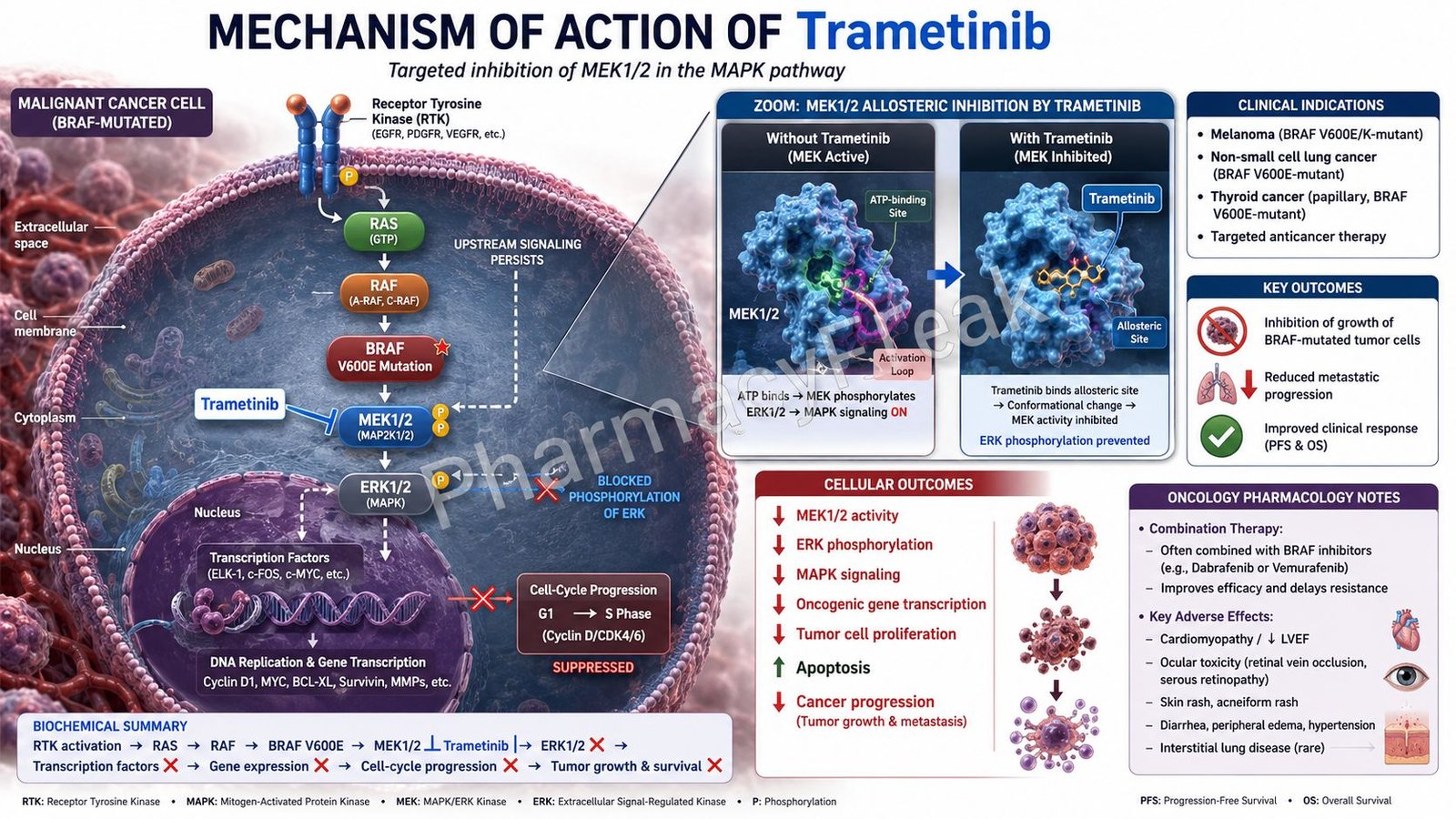
MEK1 and MEK2 are important kinases in the RAS-RAF-MEK-ERK signaling pathway. This pathway regulates cell growth, proliferation, survival, differentiation, and migration. In several cancers, mutations in BRAF, especially BRAF V600E and BRAF V600K, cause abnormal activation of this pathway. When the MAPK pathway remains continuously active, cancer cells receive persistent growth and survival signals.
Trametinib works by inhibiting MEK1 and MEK2. By blocking MEK activity, it reduces phosphorylation and activation of ERK, which is the downstream signaling protein responsible for many growth-promoting effects. This leads to decreased tumor cell proliferation and increased control of cancers driven by BRAF V600 mutations.
Trametinib is used alone in selected BRAF inhibitor-naive melanoma and more commonly in combination with dabrafenib, a BRAF inhibitor. Current approved uses include selected BRAF V600 mutation-positive melanoma, non-small cell lung cancer, anaplastic thyroid cancer, solid tumors, and pediatric low-grade glioma, depending on mutation status, age, prior treatment, and clinical setting.
For exam purposes, trametinib should be remembered as a MEK1/2 inhibitor that blocks the RAF-MEK-ERK pathway downstream of BRAF and is especially important in BRAF V600-mutated cancers.
Mechanism of Action (Step-wise)
Step 1: The MAPK pathway controls cell growth
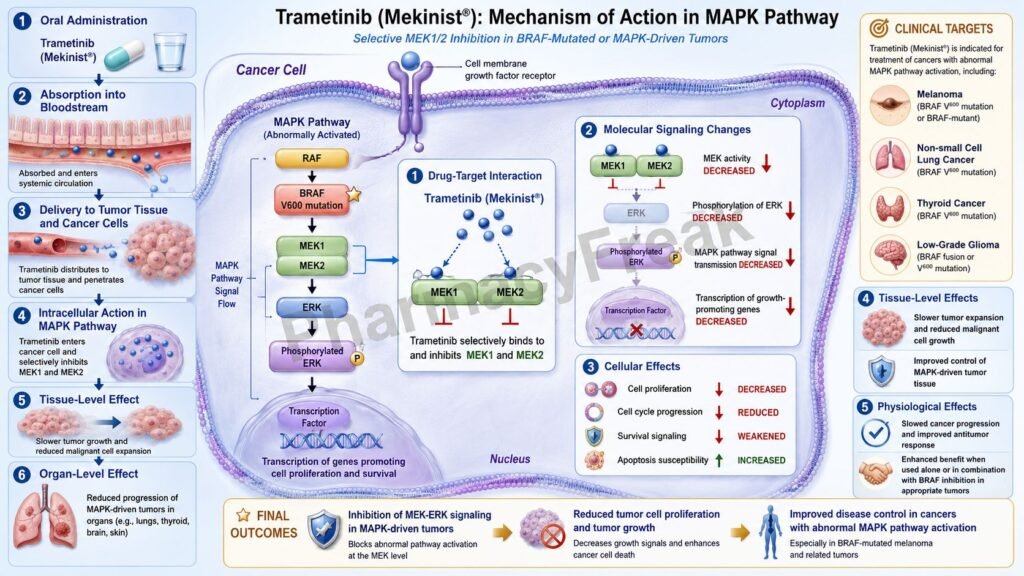
The RAS-RAF-MEK-ERK pathway, also called the MAPK pathway, is one of the most important intracellular signaling pathways controlling cell proliferation and survival. It normally becomes activated after growth factors bind to receptor tyrosine kinases on the cell surface.
Step 2: RAS activates RAF kinases
After receptor stimulation, RAS becomes activated. Activated RAS stimulates RAF kinases, including ARAF, BRAF, and CRAF. RAF proteins then phosphorylate and activate MEK1 and MEK2.
Step 3: MEK activates ERK
MEK1 and MEK2 are dual-specificity kinases. Their main role is to phosphorylate ERK1 and ERK2. Activated ERK enters the nucleus and regulates transcription factors that promote cell-cycle progression, proliferation, survival, and differentiation.
Step 4: BRAF V600 mutations cause pathway overactivation
BRAF V600E and BRAF V600K mutations make BRAF kinase abnormally active. This causes continuous activation of MEK and ERK, even without normal growth factor control. The result is uncontrolled tumor cell signaling.
Step 5: Cancer cells become dependent on MAPK signaling
Many BRAF-mutated cancers depend strongly on the RAF-MEK-ERK pathway for growth. This is called oncogene addiction. Blocking a key component of this pathway can therefore slow tumor growth.
Step 6: Trametinib inhibits MEK1 and MEK2
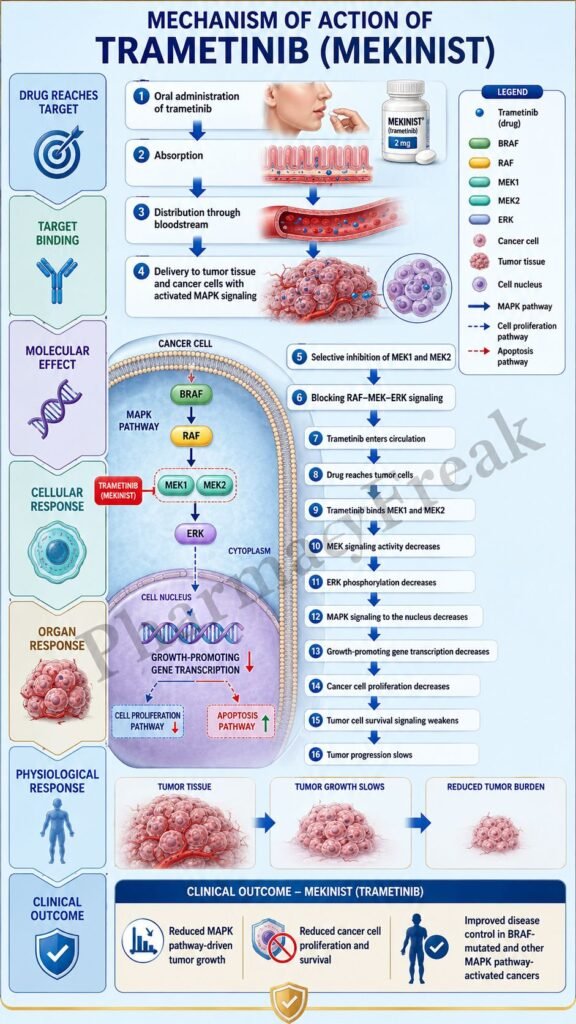
Trametinib selectively inhibits MEK1 and MEK2. It binds to MEK and prevents its kinase activity. Since MEK is directly downstream of BRAF, trametinib blocks signaling even when BRAF is abnormally activated.
Step 7: ERK phosphorylation decreases
When MEK is inhibited, ERK1 and ERK2 are not efficiently phosphorylated. This reduces downstream transcription of genes involved in cancer cell growth and survival.
Step 8: Cell-cycle progression is reduced
Reduced ERK signaling decreases expression of growth-promoting proteins such as cyclin D and other cell-cycle regulators. This slows progression through the cell cycle and reduces tumor cell proliferation.
Step 9: Tumor cell survival signaling decreases
The MAPK pathway also supports survival signals that help cancer cells resist apoptosis. By blocking MEK, trametinib weakens these survival signals and may increase susceptibility to tumor cell death.
Step 10: Combination with dabrafenib improves pathway blockade
Dabrafenib inhibits mutant BRAF, while trametinib inhibits MEK downstream. Combining a BRAF inhibitor with a MEK inhibitor produces more complete MAPK pathway suppression than BRAF inhibition alone.
Step 11: Combination therapy helps delay resistance
BRAF inhibitor monotherapy can lead to pathway reactivation through several resistance mechanisms. Adding trametinib reduces downstream MEK signaling and helps delay emergence of resistance in BRAF V600-mutated tumors.
Step 12: Combination therapy reduces paradoxical MAPK activation
BRAF inhibitors alone can paradoxically activate MAPK signaling in cells with wild-type BRAF, contributing to cutaneous squamous cell carcinomas and other skin lesions. MEK inhibition with trametinib reduces this downstream paradoxical signaling.
Step 13: Final therapeutic outcome
The final therapeutic effect is reduced growth and survival of BRAF V600 mutation-driven cancer cells. Clinically, this can improve tumor response, delay progression, and improve outcomes in selected mutation-positive cancers.
Pharmacokinetics
Trametinib is administered orally as tablets or oral solution depending on patient needs and formulation availability. It is usually taken once daily. Tablets should generally be taken on an empty stomach, at least 1 hour before or 2 hours after a meal.
After oral administration, trametinib is absorbed slowly. It has a relatively long elimination half-life, which supports once-daily dosing. Steady-state exposure is reached after repeated dosing.
Trametinib is highly protein bound in plasma. It distributes into tissues and produces sustained MEK inhibition over time.
Trametinib is not mainly cleared by the classic CYP450 oxidative pathway. It undergoes deacetylation and other metabolic processes, with elimination mainly through feces and a smaller amount through urine. Because CYP metabolism is not the dominant pathway, trametinib has fewer classic CYP-mediated interactions than many oral anticancer drugs.
However, drug interaction assessment is still important, especially because trametinib is commonly used with dabrafenib. Dabrafenib can induce several drug-metabolizing enzymes and may interact with hormonal contraceptives, anticoagulants, and other medications.
Dose interruption, dose reduction, or discontinuation may be required for serious adverse effects such as cardiomyopathy, ocular toxicity, interstitial lung disease, severe skin toxicity, severe fever reactions, serious bleeding, or other clinically significant toxicities.
Clinical Uses
Trametinib is used in cancers driven by BRAF V600 mutations. Mutation testing is essential before treatment because the drug is not intended for cancers without relevant BRAF mutations.
As monotherapy, trametinib is used for BRAF inhibitor treatment-naive adult patients with unresectable or metastatic melanoma with BRAF V600E or V600K mutations.
In combination with dabrafenib, trametinib is used for unresectable or metastatic melanoma with BRAF V600E or V600K mutations. It is also used as adjuvant therapy after complete resection of melanoma with BRAF V600E or V600K mutation and lymph node involvement.
Trametinib plus dabrafenib is used in metastatic non-small cell lung cancer with BRAF V600E mutation. It is also used in locally advanced or metastatic anaplastic thyroid cancer with BRAF V600E mutation when there are no satisfactory locoregional treatment options.
The combination is also used for unresectable or metastatic solid tumors with BRAF V600E mutation in adult and pediatric patients who have progressed after prior treatment and have no satisfactory alternative treatment options. This tumor-agnostic indication does not apply to colorectal cancer because BRAF inhibition has limited activity in that setting due to known feedback mechanisms.
Trametinib plus dabrafenib is also used in pediatric patients 1 year of age and older with low-grade glioma with BRAF V600E mutation who require systemic therapy.
Adverse Effects
The adverse effects of trametinib are closely related to MEK pathway inhibition and its use in combination with dabrafenib.
Cardiomyopathy is an important adverse effect. Trametinib can reduce left ventricular ejection fraction and may cause heart failure. Cardiac function should be assessed before treatment and monitored during therapy, especially in patients with cardiac risk factors.
Ocular toxicity is a major safety concern. Trametinib can cause retinal pigment epithelial detachment, retinal vein occlusion, blurred vision, visual disturbance, and other eye problems. New visual symptoms require prompt ophthalmologic evaluation.
Interstitial lung disease and pneumonitis can occur. Patients with new or worsening cough, dyspnea, fever, or hypoxia should be evaluated, and treatment may need to be interrupted or discontinued.
Skin toxicity is common. Rash, acneiform dermatitis, dry skin, pruritus, and palmar-plantar erythrodysesthesia may occur. Serious skin reactions can also occur, especially in combination regimens.
Hemorrhage is an important warning, especially when trametinib is used with dabrafenib. Serious and fatal bleeding events have been reported. Symptoms such as severe headache, gastrointestinal bleeding, hemoptysis, or unexplained bruising require urgent evaluation.
Venous thromboembolism may occur, including deep vein thrombosis and pulmonary embolism. Patients should report leg swelling, chest pain, shortness of breath, or sudden unexplained respiratory symptoms.
Fever reactions are especially common with the dabrafenib-trametinib combination. Pyrexia can be complicated by dehydration, hypotension, renal dysfunction, or chills. Temporary interruption and supportive care may be needed.
Other adverse effects include diarrhea, nausea, vomiting, fatigue, peripheral edema, hypertension, abdominal pain, constipation, headache, arthralgia, myalgia, cough, and decreased appetite.
Trametinib can cause embryo-fetal toxicity. Females of reproductive potential should use effective contraception during treatment and for the recommended period after the last dose. Because dabrafenib can reduce effectiveness of hormonal contraceptives, non-hormonal contraception may be needed when the combination is used.
Comparative Analysis
Trametinib is commonly compared with other MEK inhibitors such as cobimetinib, binimetinib, and selumetinib.
Trametinib, cobimetinib, and binimetinib all inhibit MEK1 and MEK2. They are commonly used in combination with BRAF inhibitors in BRAF-mutated cancers. Trametinib is paired with dabrafenib, cobimetinib is paired with vemurafenib, and binimetinib is paired with encorafenib in melanoma regimens.
Compared with BRAF inhibitors such as dabrafenib, vemurafenib, and encorafenib, trametinib acts one step downstream. BRAF inhibitors block mutant BRAF kinase, while trametinib blocks MEK1/2. Combining both levels of inhibition produces stronger pathway suppression.
Compared with EGFR inhibitors, trametinib targets an intracellular MAPK pathway kinase rather than a cell-surface receptor tyrosine kinase. EGFR inhibitors are useful in cancers driven by EGFR mutations or overactivity, while trametinib is mainly used in BRAF V600-driven cancers.
Compared with cytotoxic chemotherapy, trametinib is a targeted therapy. It does not directly damage DNA like platinum drugs or alkylating agents. Instead, it blocks abnormal signaling that cancer cells depend on. However, targeted therapy can still cause serious cardiac, ocular, pulmonary, skin, bleeding, and reproductive toxicities.
Compared with immune checkpoint inhibitors such as pembrolizumab, nivolumab, or ipilimumab, trametinib directly inhibits tumor signaling rather than activating antitumor immunity. In melanoma, both targeted therapy and immunotherapy may be used depending on disease features, mutation status, urgency of response, and patient factors.
Compared with selumetinib, trametinib has broader oncology indications in BRAF V600-mutated cancers. Selumetinib is also a MEK inhibitor but is especially known for use in pediatric neurofibromatosis type 1-associated plexiform neurofibromas.
MCQs
- Trametinib belongs to which pharmacological class?
a) MEK inhibitor
b) BRAF inhibitor
c) EGFR inhibitor
d) PARP inhibitor
Answer: a) MEK inhibitor
- The brand name of trametinib is:
a) Mekinist
b) Tafinlar
c) Zelboraf
d) Keytruda
Answer: a) Mekinist
- Trametinib mainly inhibits:
a) MEK1 and MEK2
b) BRAF only
c) EGFR only
d) VEGF-A only
Answer: a) MEK1 and MEK2
- MEK is part of which signaling pathway?
a) RAS-RAF-MEK-ERK pathway
b) Renin-angiotensin pathway
c) Coagulation cascade
d) Cholinergic pathway
Answer: a) RAS-RAF-MEK-ERK pathway
- The main downstream protein activated by MEK is:
a) ERK
b) Albumin
c) Hemoglobin
d) Acetylcholinesterase
Answer: a) ERK
- BRAF V600 mutations cause:
a) Constitutive MAPK pathway activation
b) Complete shutdown of cell growth signaling
c) Increased insulin secretion only
d) Dopamine receptor blockade
Answer: a) Constitutive MAPK pathway activation
- Trametinib is commonly combined with which BRAF inhibitor?
a) Dabrafenib
b) Erlotinib
c) Olaparib
d) Rituximab
Answer: a) Dabrafenib
- Why is trametinib combined with dabrafenib?
a) To inhibit the MAPK pathway at both BRAF and MEK levels
b) To increase bacterial killing
c) To directly dissolve blood clots
d) To block estrogen receptors only
Answer: a) To inhibit the MAPK pathway at both BRAF and MEK levels
- Which cancer mutation is commonly required for trametinib-based targeted therapy?
a) BRAF V600 mutation
b) BRCA1 mutation only
c) ALK translocation only
d) HER2 amplification only
Answer: a) BRAF V600 mutation
- Which serious cardiac adverse effect is associated with trametinib?
a) Cardiomyopathy
b) Complete protection from heart failure
c) Severe bradycardia in all patients
d) Mandatory myocardial infarction after first dose
Answer: a) Cardiomyopathy
- Which ocular toxicity is associated with trametinib?
a) Retinal pigment epithelial detachment
b) Cataract cure
c) Acute bacterial conjunctivitis only
d) Permanent myopia reversal
Answer: a) Retinal pigment epithelial detachment
- Which pulmonary adverse effect can occur with trametinib?
a) Interstitial lung disease or pneumonitis
b) Acute asthma cure
c) Mandatory tuberculosis
d) Complete bronchodilation only
Answer: a) Interstitial lung disease or pneumonitis
- Which adverse effect is especially common with dabrafenib plus trametinib?
a) Pyrexia
b) Severe hypoglycemia
c) Ototoxicity in all patients
d) Gingival hyperplasia
Answer: a) Pyrexia
- Which statement best describes trametinib?
a) It blocks MEK1/2 and reduces ERK phosphorylation
b) It inhibits PARP-dependent DNA repair
c) It blocks CD20-positive B cells
d) It stimulates soluble guanylate cyclase
Answer: a) It blocks MEK1/2 and reduces ERK phosphorylation
- Which drug is another MEK inhibitor?
a) Cobimetinib
b) Dabrafenib
c) Vemurafenib
d) Osimertinib
Answer: a) Cobimetinib
FAQs
What is the mechanism of action of trametinib?
Trametinib inhibits MEK1 and MEK2 in the RAS-RAF-MEK-ERK pathway. This reduces ERK phosphorylation, decreases growth-promoting gene transcription, slows tumor cell proliferation, and helps control BRAF V600 mutation-driven cancers.
What is the brand name of trametinib?
The brand name of trametinib is Mekinist.
Is trametinib a BRAF inhibitor?
No. Trametinib is a MEK inhibitor. It acts downstream of BRAF. Dabrafenib is the BRAF inhibitor commonly combined with trametinib.
Why is trametinib combined with dabrafenib?
Dabrafenib blocks mutant BRAF, while trametinib blocks MEK downstream. The combination gives stronger MAPK pathway inhibition, improves antitumor activity, and helps reduce some resistance and paradoxical pathway activation.
Which cancers is trametinib used for?
Trametinib is used in selected BRAF V600 mutation-positive cancers, including melanoma, non-small cell lung cancer, anaplastic thyroid cancer, certain solid tumors, and pediatric low-grade glioma, depending on the clinical setting and mutation status.
What is the most important adverse effect of trametinib?
Important adverse effects include cardiomyopathy, ocular toxicity, interstitial lung disease or pneumonitis, hemorrhage, venous thromboembolism, skin toxicity, diarrhea, and pyrexia when combined with dabrafenib.
Does trametinib require mutation testing?
Yes. Trametinib-based therapy is generally used when an appropriate BRAF V600 mutation is confirmed by validated testing.
Can trametinib be used during pregnancy?
Trametinib can cause fetal harm and should generally be avoided during pregnancy. Effective contraception is required according to product guidance.
References
Goodman & Gilman’s The Pharmacological Basis of Therapeutics
Katzung Basic & Clinical Pharmacology