Trusted by 50K+ Pharmacy StudentsHigh Quality Notes, MCQs, Mock Tests & Study ResourcesGo Premium (Ads Free)
Pharmacy Freak

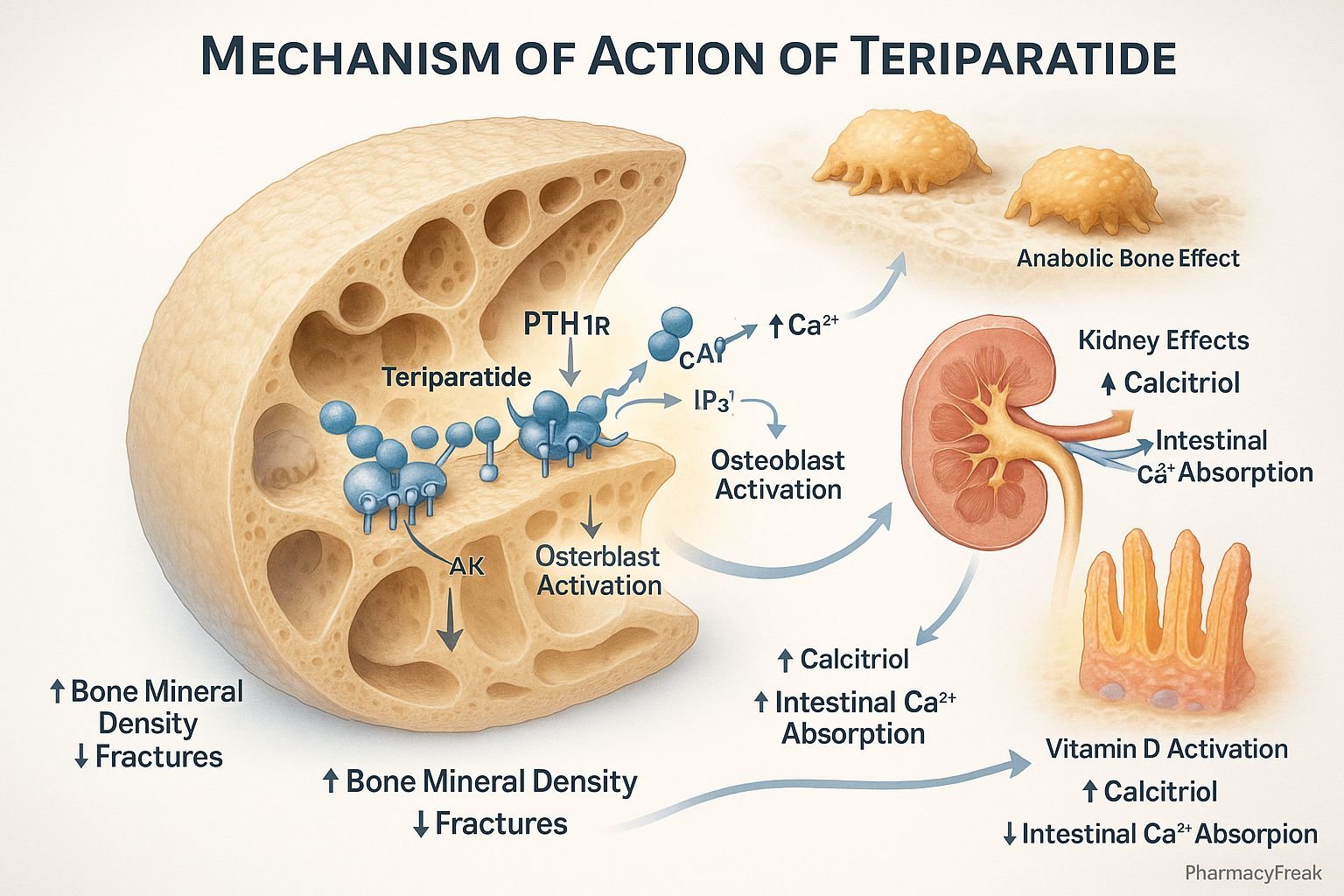
Mechanism of Action of Teriparatide

mechanism of action of teriparatide

Introduction Teriparatide is a recombinant form of the first 34 amino acids of human parathyroid hormone (PTH 1-34), which represents the biologically active portion of the hormone. It is used primarily as an anabolic agent in the treatment of osteoporosis. Teriparatide is unique among osteoporosis therapies because it stimulates new bone formation rather than merely … Read more

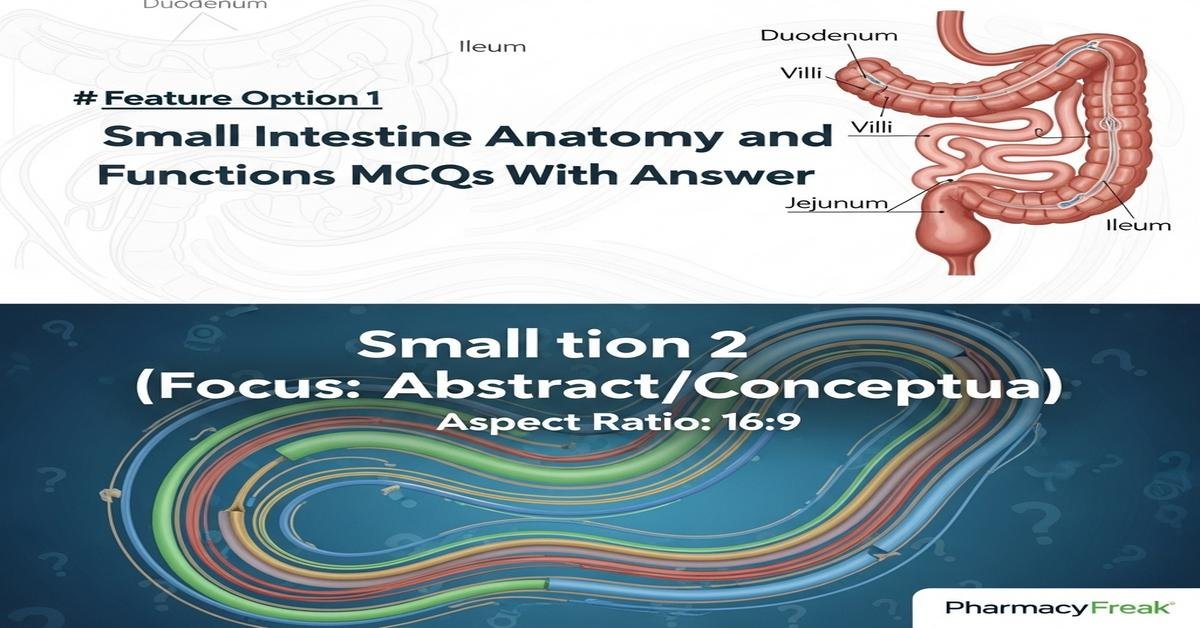
Small intestine anatomy and functions MCQs With Answer

Small intestine anatomy and functions MCQs With Answer The small intestine anatomy and functions are central to B. Pharm curricula, covering nutrient and drug absorption, villi and microvilli structure, brush border enzymes, and regional specializations of duodenum, jejunum, and ileum. This Student-friendly guide emphasizes key terms like small intestine anatomy, functions, drug absorption, enterocytes, Peyer’s … Read more

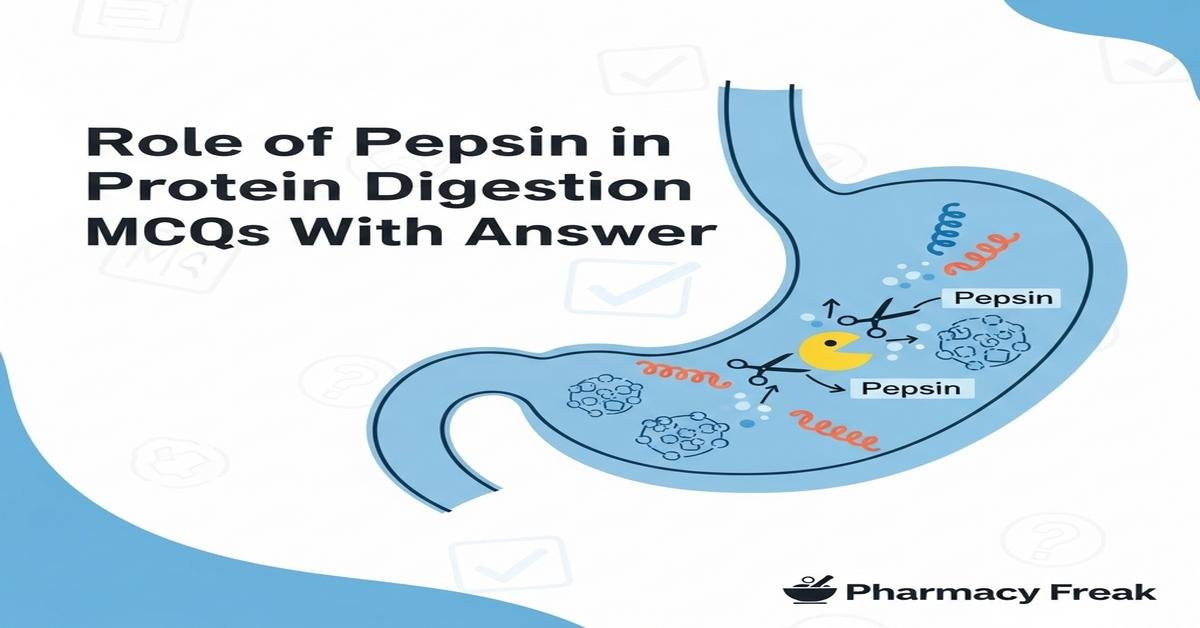
Role of pepsin in protein digestion MCQs With Answer

Role of pepsin in protein digestion MCQs With Answer Pepsin is a key gastric enzyme that initiates protein digestion by cleaving peptide bonds in the acidic environment of the stomach. For B. Pharm students, understanding pepsin’s origin as pepsinogen from chief cells, activation by low pH, specificity for aromatic amino acids, and inhibition by pepstatin … Read more

Regulation of acid production (parasympathetic system) MCQs With Answer

Regulation of acid production (parasympathetic system) MCQs With Answer The parasympathetic regulation of gastric acid is a key topic for B. Pharm students, linking physiology and pharmacology. This introduction reviews how the vagus nerve and acetylcholine acting on M3 muscarinic receptors stimulate parietal cells, enterochromaffin-like (ECL) cells and gastrin release to activate H+/K+ ATPase. Understanding … Read more

Acid production in the stomach MCQs With Answer

Acid production in the stomach MCQs With Answer Understanding stomach acid production is essential for B. Pharm students studying pharmacology, gastroenterology, and drug design. This introduction covers gastric acid secretion mechanisms, parietal cell physiology, key regulators like gastrin, histamine (H2), and acetylcholine (M3), and clinical relevance including H. pylori, NSAID-related mucosal injury, and therapies such … Read more

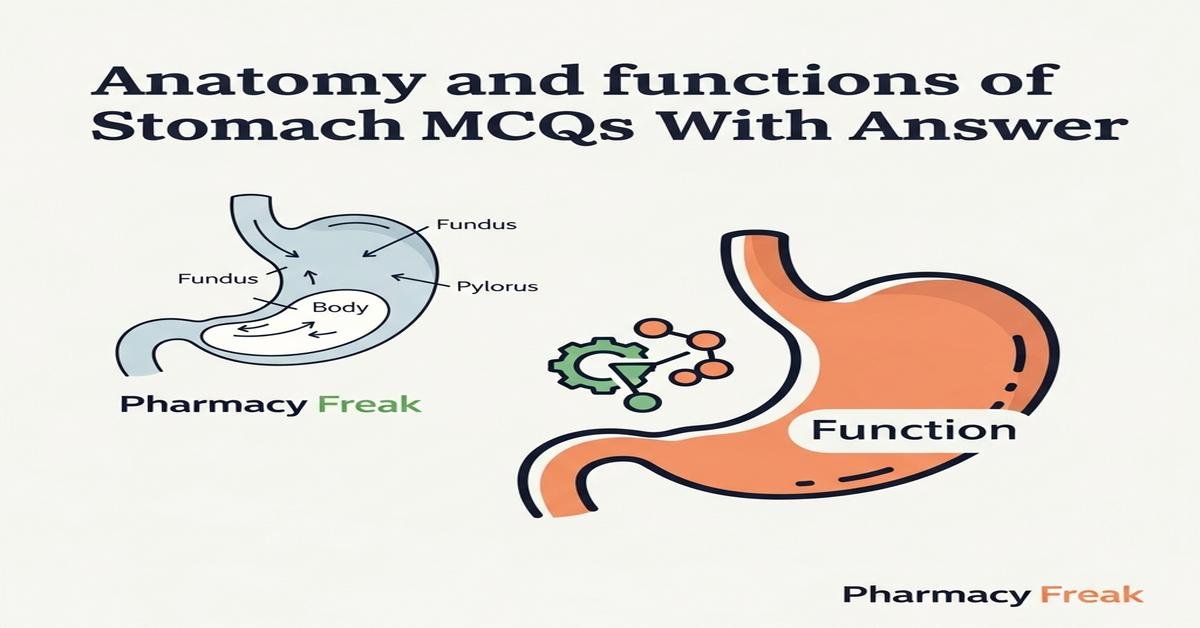
Anatomy and functions of stomach MCQs With Answer

Introduction: The anatomy and functions of stomach MCQs with answer provide B. Pharm students a focused review of gastric structure, cellular composition, secretion, motility and clinical correlations. This concise, exam-oriented guide covers stomach anatomy, histology (parietal, chief, G and D cells), gastric acid physiology, regulation by gastrin, vagal and histaminergic pathways, intrinsic factor and B12 … Read more

Anatomy of GI tract MCQs With Answer

Anatomy of GI tract MCQs With Answer is a targeted study aid for B. Pharm students preparing for anatomy, pharmacology, and clinical exams. This concise, exam-oriented introduction emphasizes GI tract anatomy MCQs with answers covering macroscopic and microscopic structure, arterial and venous supply, lymphatic drainage, enteric and autonomic innervation, and functional zones relevant to drug … Read more

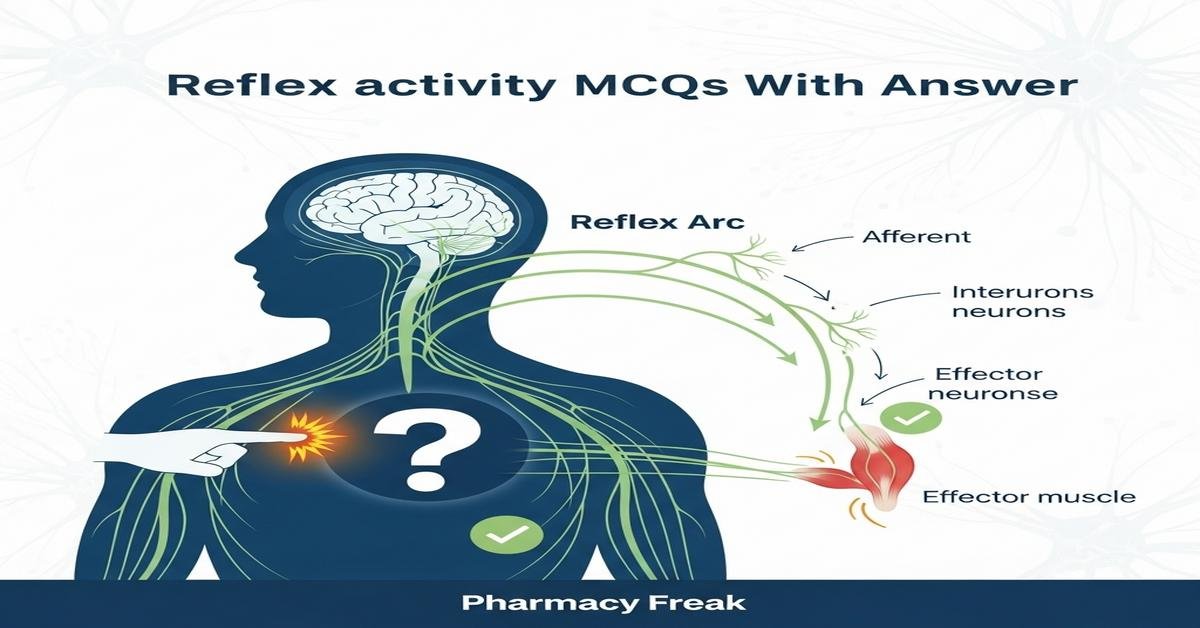
Reflex activity MCQs With Answer

Reflex activity MCQs With Answer offers B.Pharm students a focused, exam-oriented review of reflex physiology and pharmacology. This Student-friendly post covers reflex arc components, afferent and efferent pathways, monosynaptic and polysynaptic reflexes, autonomic reflexes (baroreceptor, cough, gag, pupillary), and drug effects on reflexes. Emphasis on clinical relevance, neurotransmitters, and drug interactions helps students link neurophysiology … Read more

Functions of afferent nerve tracts MCQs With Answer

Functions of afferent nerve tracts MCQs With Answer This concise introduction explains afferent nerve tracts for B. Pharm students, focusing on sensory pathways, physiological roles, and clinical relevance. Afferent tracts—dorsal column–medial lemniscus, spinothalamic, spinocerebellar and trigeminothalamic pathways—convey fine touch, vibration, proprioception, pain and temperature to higher centers. Understanding first-, second- and third-order neurons, decussation points, … Read more

Spinal cord – gross structure MCQs With Answer

The spinal cord – gross structure MCQs With Answer provides B. Pharm students a concise, clinically relevant review of spinal cord anatomy. This introduction highlights key concepts such as segments, cervical and lumbar enlargements, gray and white matter organization, meninges, spinal nerves, blood supply (including the artery of Adamkiewicz), and clinically important regions like the … Read more

PRO
Ad-Free Access
$3.99 / month
  • No Interruptions
  • Faster Page Loads
  • Support Content Creators