Trusted by 50K+ Pharmacy StudentsHigh Quality Notes, MCQs, Mock Tests & Study ResourcesGo Premium (Ads Free)
Pharmacy Freak

Granulation methods in tablet manufacturing MCQs With Answer
Granulation methods in tablet manufacturing MCQs With Answer

Introduction: Granulation methods in tablet manufacturing are essential processes that convert fine powders into free-flowing, compressible granules. For B.Pharm students, understanding wet granulation, dry granulation (roller compaction and slugging), and advanced techniques like fluid bed and high-shear granulation is vital. Key concepts include binders, plastic and brittle deformation, granule size distribution, moisture control, drying, and … Read more
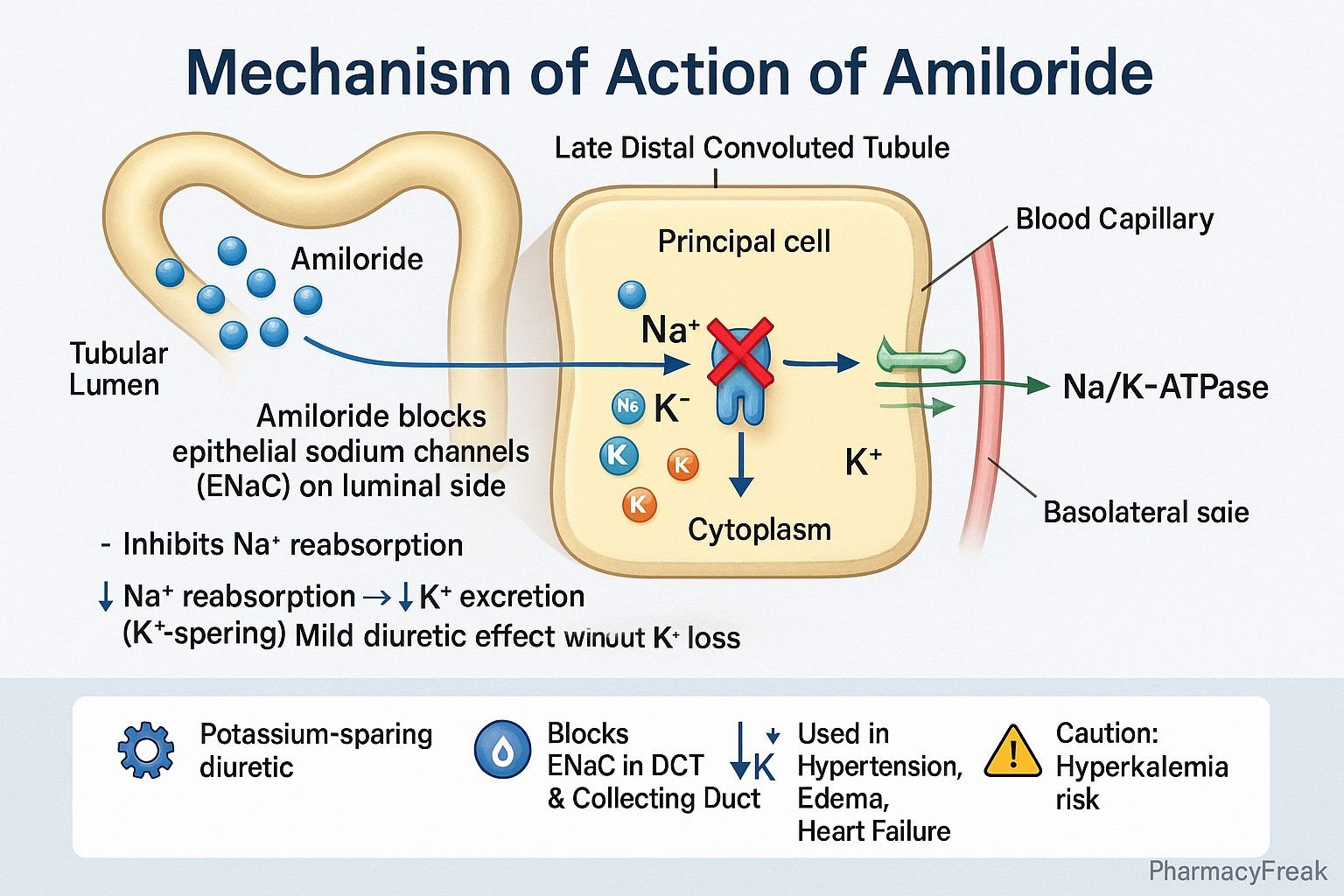
Mechanism of Action of Amiloride

MOA of Amiloride

Introduction Amiloride is a potassium-sparing diuretic that acts on the distal nephron of the kidney to promote sodium excretion while conserving potassium. Mechanism of Action of Amiloride involves direct inhibition of epithelial sodium channels (ENaC) in the late distal tubule and collecting duct, leading to decreased sodium reabsorption and reduced potassium excretion. Unlike aldosterone antagonists … Read more

Formulation of tablets MCQs With Answer

Formulation of tablets MCQs With Answer

Understanding the formulation of tablets is essential for B.Pharm students focusing on pharmaceutical technology, dosage form design, and quality assurance. This concise guide covers core concepts such as preformulation, selection of active pharmaceutical ingredients (APIs) and excipients, granulation (wet and dry), compression parameters, tablet coating, dissolution, bioavailability, stability testing, and regulatory quality control. Emphasis on … Read more

Excipients used in tablet formulation MCQs With Answer

Excipients used in tablet formulation MCQs With Answer

Introduction: Excipients used in tablet formulation are inert substances that play critical roles in manufacturability, stability, and drug performance. B. Pharm students must understand types—diluents/fillers, binders, disintegrants, lubricants, glidants, coatings, plasticizers and surfactants—and their effects on compression, dissolution, bioavailability and shelf life. Selection depends on chemical compatibility, particle size, moisture sensitivity, flow properties and intended … Read more

Mechanism of Action of Amikacin

MOA of Amikacin

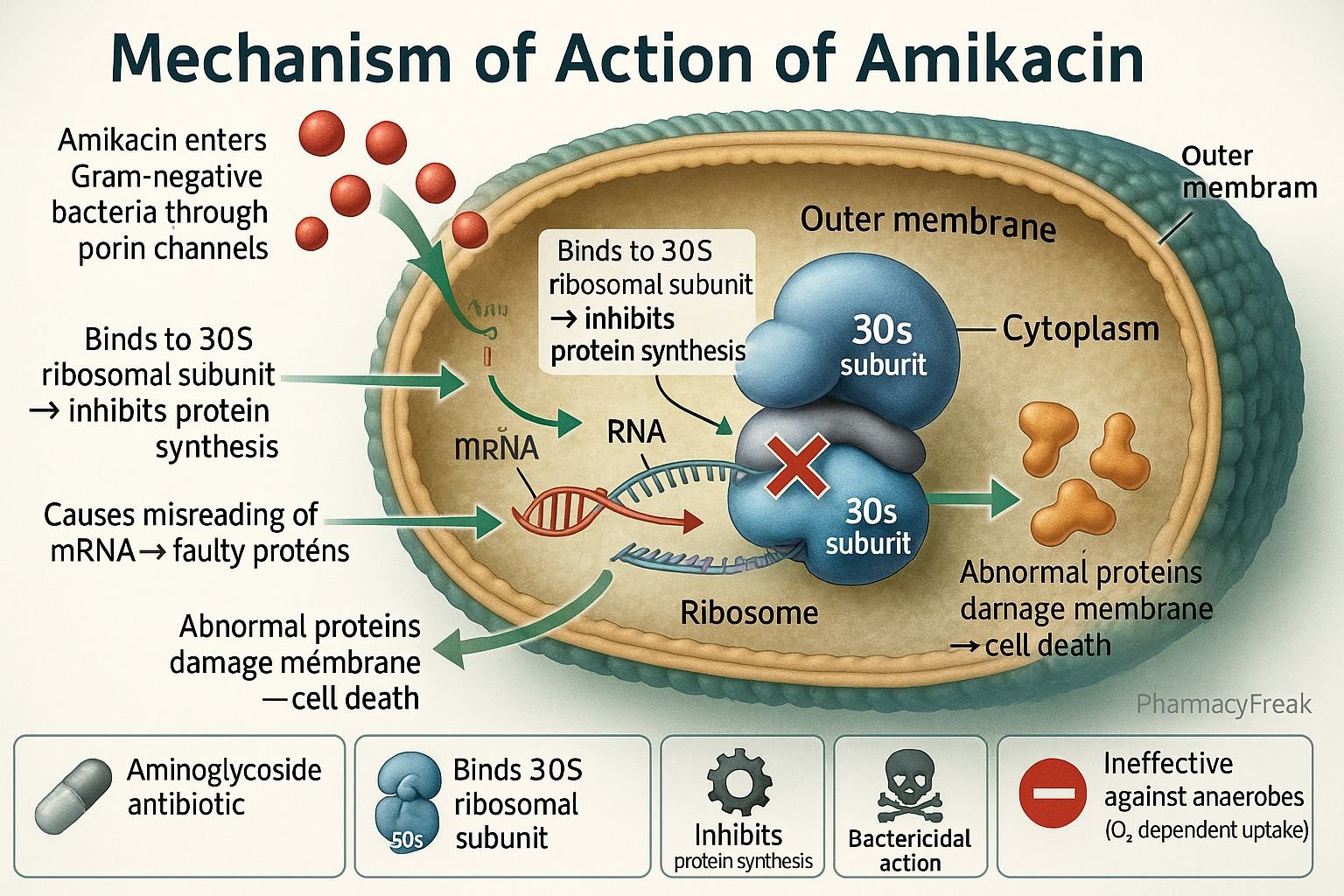
Introduction Amikacin is a broad-spectrum aminoglycoside antibiotic primarily used to treat severe Gram-negative bacterial infections, including those resistant to other aminoglycosides. Mechanism of Action of Amikacin involves irreversible inhibition of bacterial protein synthesis by binding to the 30S ribosomal subunit, leading to misreading of mRNA and defective protein formation. Because of its stability against many … Read more

How to Get a Pharmacy Job in the US: Your Indian B.Pharm Degree Isn’t Enough, This Is What US Employers Are Really Looking For.

How to Get a Pharmacy Job in the US: Your Indian B.Pharm Degree Isn't Enough, This Is What US Employers Are Really Looking For.

Moving from an Indian B.Pharm to a pharmacy job in the US is not a straight line. Your four-year degree gives you science fundamentals, but US employers and state boards expect proof that you can deliver safe care under US laws, systems, and standards. This article explains what your B.Pharm does and doesn’t qualify you … Read more

Classification of tablets MCQs With Answer

Classification of tablets MCQs With Answer

Classification of tablets MCQs With Answer provides B.Pharm students a focused, exam-oriented review of tablet types, formulation principles, manufacturing methods, and quality-control considerations. This concise guide emphasizes tablet classification by release profile (immediate, delayed, sustained, controlled), physical form (compressed, sugar-coated, film-coated, enteric-coated), and special-category tablets (buccal, sublingual, chewable, effervescent, dispersible). Key topics include excipients, compression … Read more

Ideal characteristics of tablets MCQs With Answer

Ideal characteristics of tablets MCQs With Answer

Understanding the ideal characteristics of tablets is essential for B.Pharm students focused on pharmaceutical formulation and quality control. This topic examines critical tablet evaluation parameters—hardness, friability, disintegration, dissolution, content uniformity, weight variation, stability, drug release, bioavailability, and excipient compatibility—that determine therapeutic performance, patient compliance, and regulatory acceptance. Learning in vitro test procedures, pharmacopoeial limits, instrumental … Read more

Introduction to tablets MCQs With Answer

Introduction to tablets MCQs With Answer

Introduction to tablets MCQs With Answer This concise introduction covers tablet fundamentals tailored for B.Pharm students: tablet formulation, excipients (diluents, binders, disintegrants, lubricants, glidants), compression principles, granulation techniques (wet, dry, direct compression), coating, disintegration and dissolution testing, and critical quality attributes such as hardness, friability, content uniformity and stability. Emphasis is placed on manufacturing parameters, … Read more

Impact of preformulation on stability MCQs With Answer

Impact of preformulation on stability MCQs With Answer

Preformulation studies lay the foundation for drug development by characterizing physicochemical properties that influence stability and formulation design. Key preformulation assessments—solubility, pKa, partition coefficient (log P), polymorphism, hygroscopicity, thermal behavior (DSC/TGA), and drug–excipient compatibility—predict chemical and physical degradation pathways such as hydrolysis, oxidation, photodegradation, and polymorphic transitions. Understanding moisture sensitivity, pH-rate profiles, salt selection, and … Read more

PRO
Ad-Free Access
$3.99 / month
  • ✓ No Interruptions
  • ✓ Faster Page Loads
  • ✓ Support Content Creators