Table of Contents
Introduction
Tadalafil is a phosphodiesterase type 5 (PDE5) inhibitor used primarily for erectile dysfunction (ED), benign prostatic hyperplasia (BPH), and pulmonary arterial hypertension (PAH). It enhances the effects of nitric oxide-mediated vasodilation by preventing degradation of cyclic guanosine monophosphate (cGMP). Tadalafil is distinguished from other PDE5 inhibitors by its long duration of action, earning it the nickname “weekend pill.”
Mechanism of Action (Step-wise)
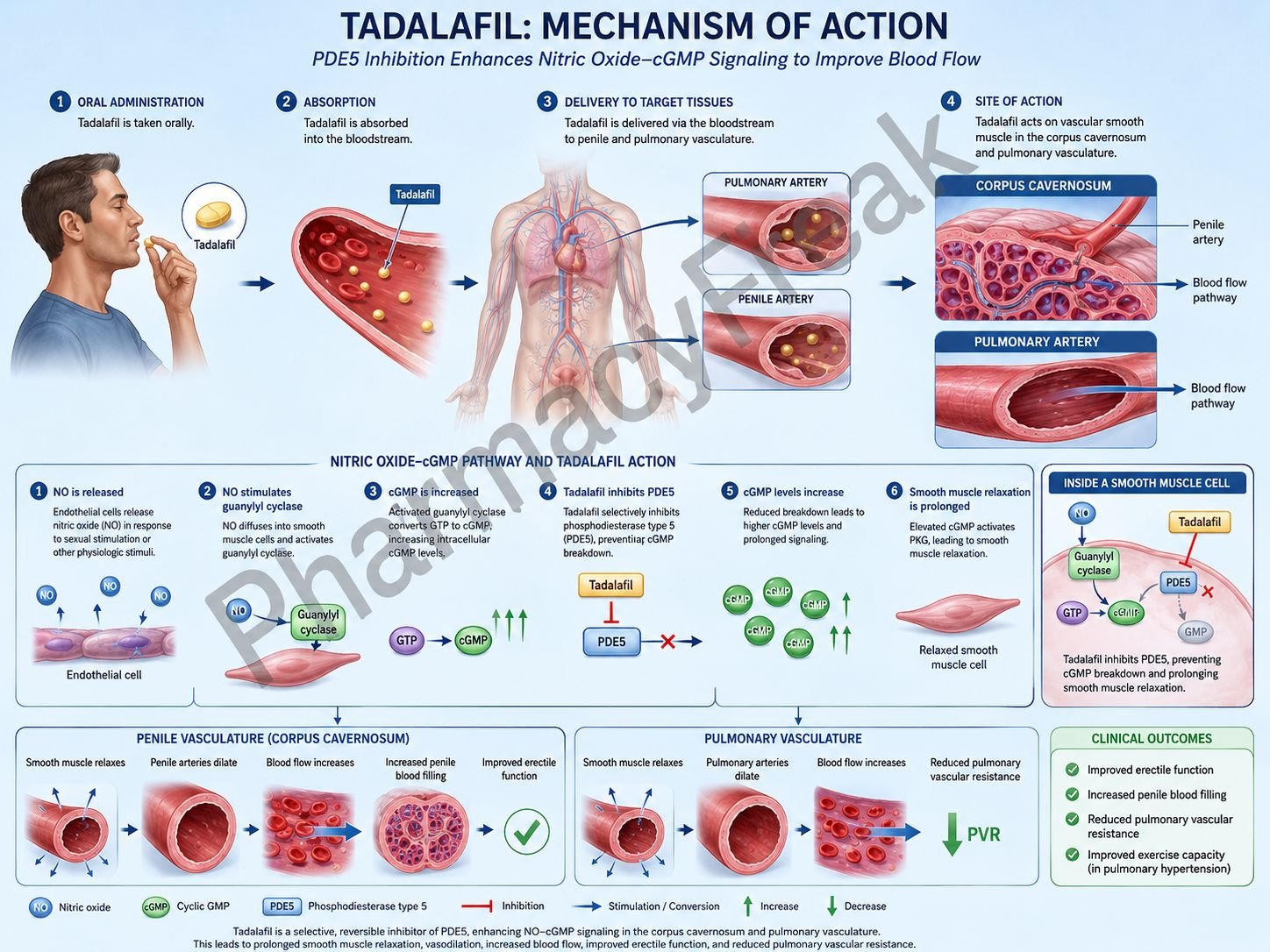
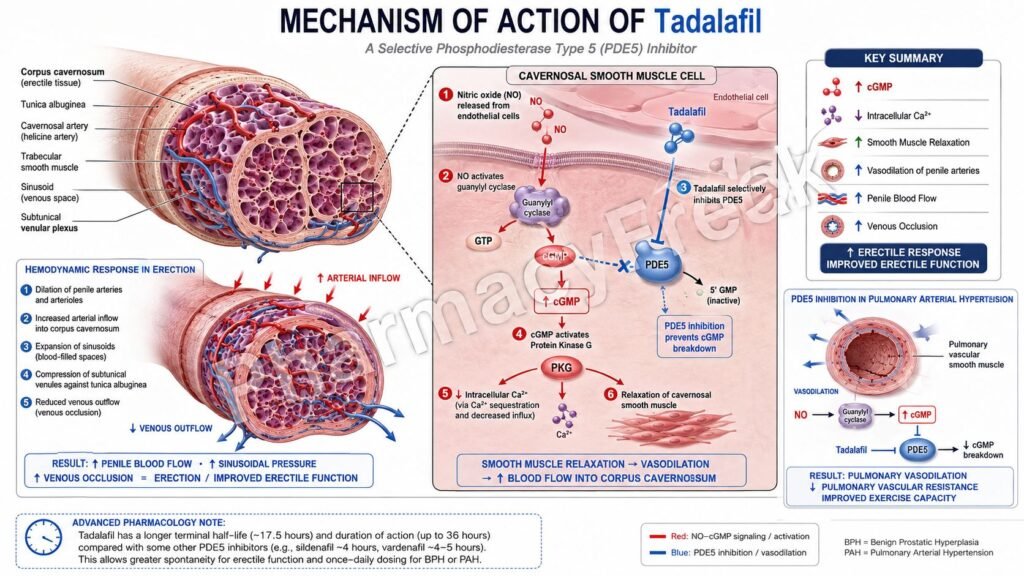
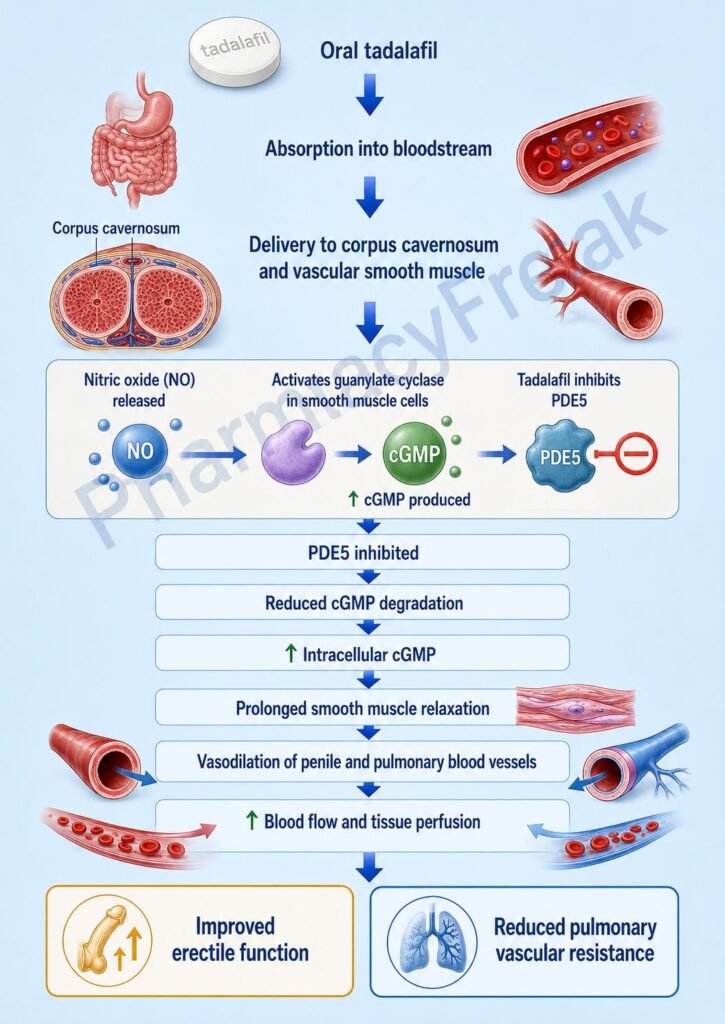
- Sexual stimulation triggers release of nitric oxide (NO) from parasympathetic nerves and endothelial cells.
- Nitric oxide activates guanylyl cyclase in smooth muscle cells.
- Guanylyl cyclase converts GTP into cyclic guanosine monophosphate (cGMP).
- Increased cGMP reduces intracellular calcium levels.
- Reduced calcium causes relaxation of smooth muscle.
- In the corpus cavernosum, smooth muscle relaxation increases arterial blood flow.
- Increased blood filling of erectile tissue produces penile erection.
- Normally, phosphodiesterase type 5 (PDE5) degrades cGMP.
- Tadalafil selectively inhibits PDE5.
- Breakdown of cGMP is reduced.
- Intracellular cGMP levels remain elevated for longer periods.
- Vasodilation and smooth muscle relaxation are prolonged.
- In pulmonary arteries, this causes reduced pulmonary vascular resistance.
- In the prostate and bladder neck, smooth muscle relaxation improves urinary symptoms associated with BPH.
- The overall effect is improved erectile function, reduced pulmonary arterial pressure, and relief of lower urinary tract symptoms.
A key exam point is that tadalafil inhibits PDE5, preventing cGMP breakdown and enhancing nitric oxide-mediated smooth muscle relaxation.
Pharmacokinetics
Tadalafil is administered orally and has excellent bioavailability. It has a long half-life of approximately 17.5 hours, allowing effects to persist up to 36 hours. The drug is metabolized mainly by CYP3A4 and eliminated through feces and urine.
Clinical Uses
Tadalafil is used in:
- Erectile dysfunction (ED)
- Benign prostatic hyperplasia (BPH)
- Erectile dysfunction with BPH
- Pulmonary arterial hypertension (PAH)
Adverse Effects
Common adverse effects include:
- Headache
- Flushing
- Dyspepsia
- Nasal congestion
- Dizziness
- Back pain
- Myalgia
Serious adverse effects include:
- Severe hypotension
- Priapism
- Sudden vision changes (rare)
- Sudden hearing loss (rare)
Concurrent use with nitrates is contraindicated due to the risk of profound hypotension.
Comparative Analysis
| Feature | Tadalafil | Sildenafil | Vardenafil |
|---|---|---|---|
| Drug class | PDE5 inhibitor | PDE5 inhibitor | PDE5 inhibitor |
| Half-life | ~17.5 hours | ~4 hours | ~4–5 hours |
| Duration of action | Up to 36 hours | 4–6 hours | 4–6 hours |
| Pulmonary hypertension use | Yes | Yes | Limited |
| BPH indication | Yes | No | No |
| Food effect | Minimal | Present | Present |
Tadalafil differs from sildenafil and vardenafil because of its significantly longer duration of action and approved use in benign prostatic hyperplasia.
MCQs
1. Tadalafil belongs to which drug class?
a) α1 blockers
b) PDE5 inhibitors
c) Calcium channel blockers
d) Nitrates
Answer: b) PDE5 inhibitors
2. Tadalafil inhibits:
a) PDE3
b) PDE4
c) PDE5
d) PDE6
Answer: c) PDE5
3. PDE5 normally degrades:
a) cAMP
b) cGMP
c) ATP
d) GTP
Answer: b) cGMP
4. Nitric oxide activates:
a) Adenylyl cyclase
b) Guanylyl cyclase
c) Phospholipase C
d) Calcineurin
Answer: b) Guanylyl cyclase
5. Increased cGMP causes:
a) Smooth muscle contraction
b) Smooth muscle relaxation
c) Histamine release
d) Platelet activation
Answer: b) Smooth muscle relaxation
6. Tadalafil is commonly used in:
a) Erectile dysfunction
b) Asthma
c) Diabetes mellitus
d) Epilepsy
Answer: a) Erectile dysfunction
7. Tadalafil can also treat:
a) Pulmonary arterial hypertension
b) Hyperthyroidism
c) Parkinson disease
d) Peptic ulcer disease
Answer: a) Pulmonary arterial hypertension
8. A common adverse effect is:
a) Headache
b) Hypercalcemia
c) Bradycardia
d) Cataracts
Answer: a) Headache
9. Tadalafil is contraindicated with:
a) ACE inhibitors
b) Nitrates
c) Diuretics
d) Antacids
Answer: b) Nitrates
10. Tadalafil has a duration of action of approximately:
a) 2 hours
b) 6 hours
c) 12 hours
d) Up to 36 hours
Answer: d) Up to 36 hours
11. Tadalafil improves urinary symptoms in BPH by:
a) Increasing urine production
b) Relaxing smooth muscle in the prostate and bladder neck
c) Blocking aldosterone
d) Stimulating β1 receptors
Answer: b) Relaxing smooth muscle in the prostate and bladder neck
12. The primary mediator enhanced by tadalafil is:
a) cGMP
b) Dopamine
c) Histamine
d) Acetylcholine
Answer: a) cGMP
FAQs
What is the mechanism of action of tadalafil?
Tadalafil inhibits PDE5, preventing breakdown of cGMP and enhancing nitric oxide-mediated smooth muscle relaxation.
Why is tadalafil used for erectile dysfunction?
It increases blood flow to the corpus cavernosum by prolonging cGMP-mediated vasodilation.
How does tadalafil help in pulmonary arterial hypertension?
It relaxes pulmonary vascular smooth muscle, reducing pulmonary artery pressure.
What makes tadalafil different from sildenafil?
Tadalafil has a much longer half-life and duration of action, lasting up to 36 hours.
What are common side effects of tadalafil?
Headache, flushing, dyspepsia, back pain, and nasal congestion.
Why should tadalafil not be taken with nitrates?
Because the combination can cause severe, potentially life-threatening hypotension.
References
Goodman & Gilman’s The Pharmacological Basis of Therapeutics
https://accessmedicine.mhmedical.com/book.aspx?bookid=3191
Katzung’s Basic and Clinical Pharmacology
https://accessmedicine.mhmedical.com/content.aspx?bookid=3382
Tripathi KD. Essentials of Medical Pharmacology
https://www.jaypeedigital.com
Harrison’s Principles of Internal Medicine
https://accessmedicine.mhmedical.com