Table of Contents
Introduction
Theophylline is a methylxanthine bronchodilator used in the management of asthma and chronic obstructive pulmonary disease (COPD). It relaxes bronchial smooth muscle, improves diaphragmatic contractility, and exerts mild anti-inflammatory effects. Although its use has declined because of its narrow therapeutic index and potential toxicity, it remains an important drug in respiratory pharmacology.
Mechanism of Action (Step-wise)
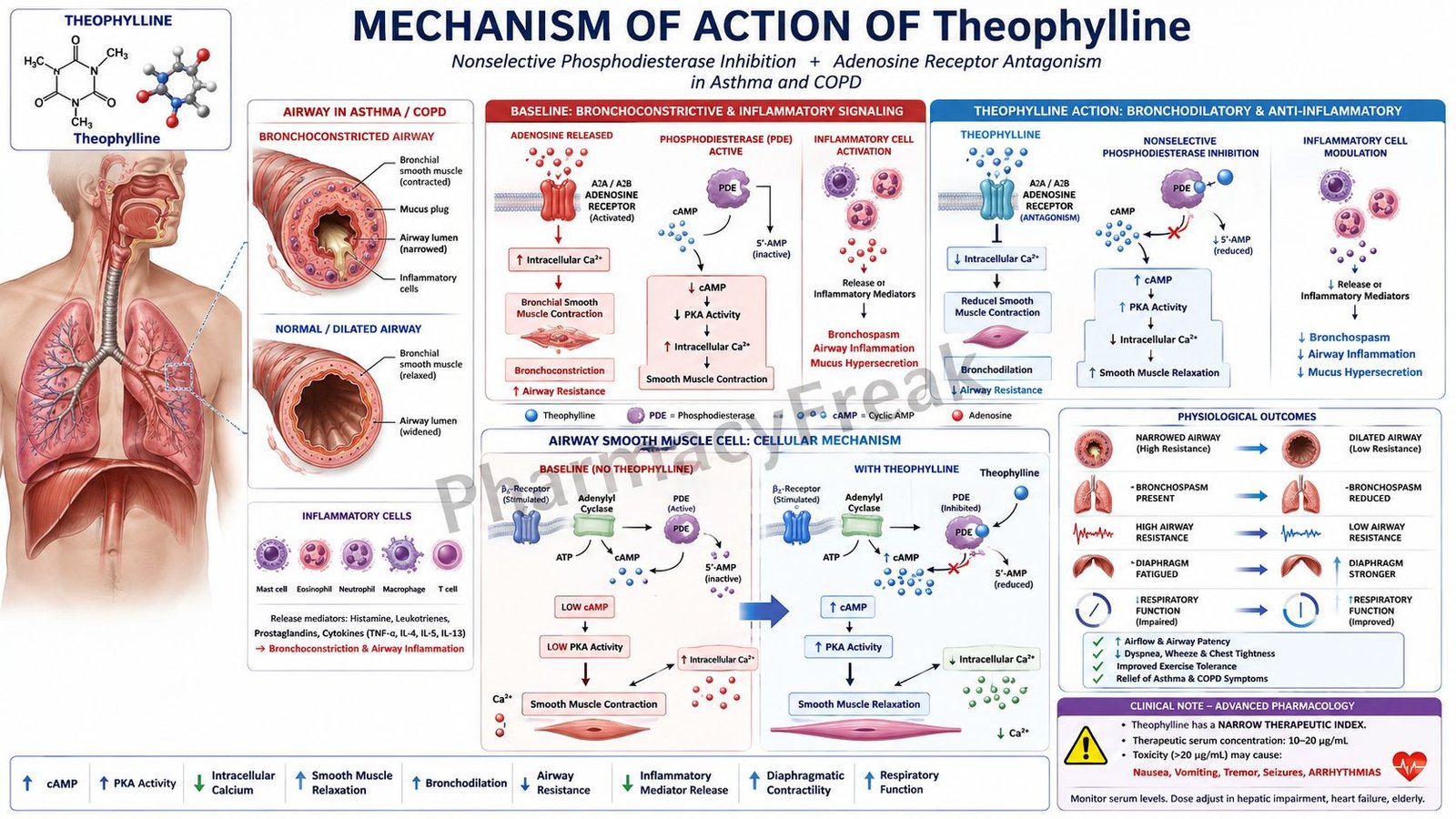
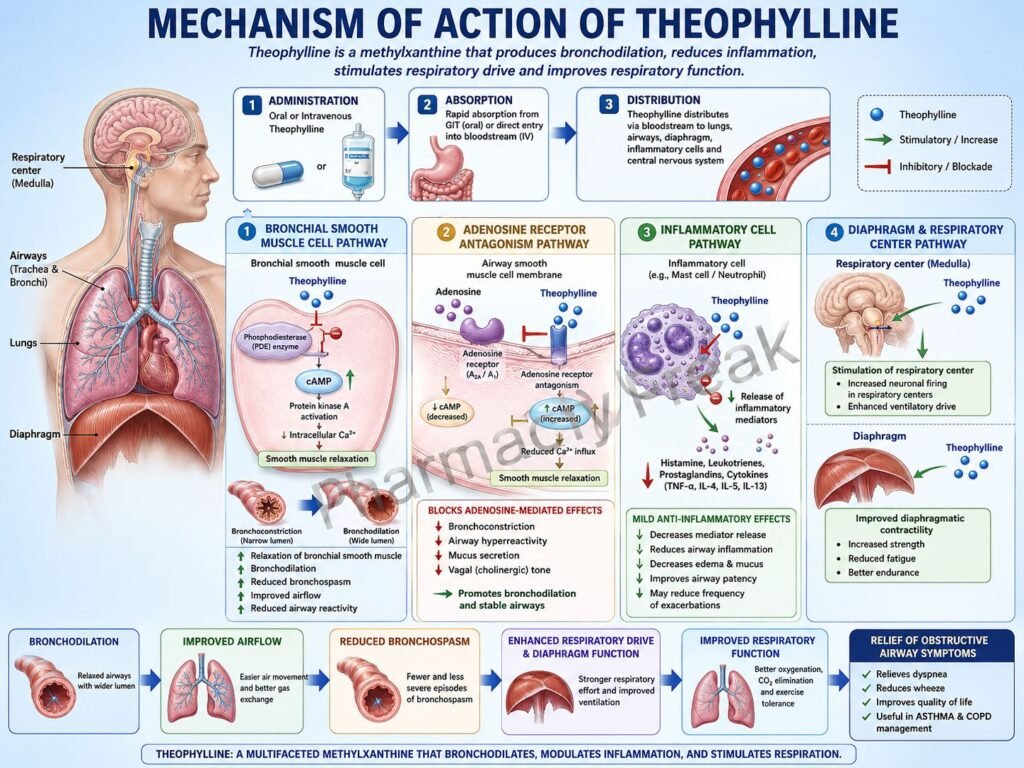
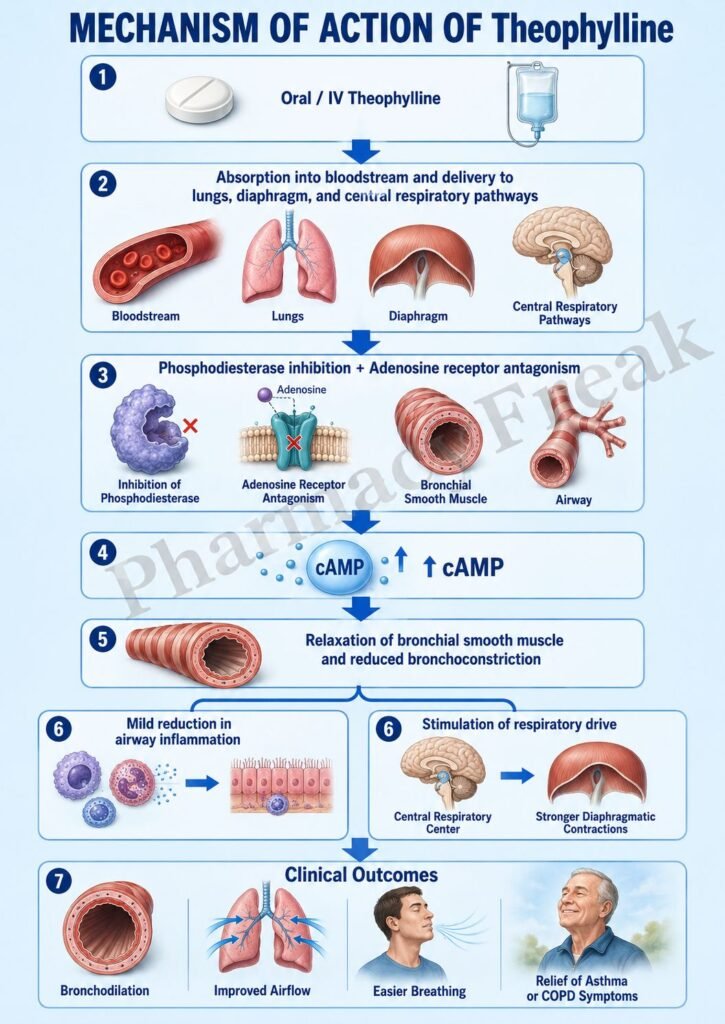
- Theophylline enters airway smooth muscle cells after systemic absorption.
- It inhibits phosphodiesterase (PDE) enzymes, particularly PDE3 and PDE4.
- Phosphodiesterases normally degrade cyclic adenosine monophosphate (cAMP).
- PDE inhibition increases intracellular cAMP concentrations.
- Elevated cAMP activates protein kinase A (PKA).
- PKA reduces intracellular calcium availability in smooth muscle cells.
- Reduced intracellular calcium causes relaxation of bronchial smooth muscle.
- Bronchial airways dilate, improving airflow.
- Theophylline also antagonizes adenosine receptors (A1 and A2).
- Adenosine receptor blockade reduces bronchoconstriction and mediator release from inflammatory cells.
- Histamine and other bronchoconstrictor mediator release decreases.
- Theophylline enhances diaphragmatic contractility and respiratory muscle function.
- Mild anti-inflammatory effects occur through modulation of inflammatory cell activity.
- The overall effect is bronchodilation, improved respiratory function, and enhanced airflow.
A key exam point is that theophylline inhibits phosphodiesterase, increasing cAMP and producing bronchodilation.
Pharmacokinetics
Theophylline is administered orally or intravenously. It is well absorbed and widely distributed throughout the body. The drug is metabolized primarily in the liver by CYP1A2. It has a narrow therapeutic index, and serum concentration monitoring is often required. Elimination occurs mainly through the kidneys as metabolites.
Clinical Uses
Theophylline is used in:
- Asthma
- Chronic obstructive pulmonary disease (COPD)
- Nocturnal asthma
- Apnea of prematurity (related methylxanthines are more commonly used)
Adverse Effects
Common adverse effects include:
- Nausea
- Vomiting
- Headache
- Tremors
- Insomnia
Serious adverse effects include:
- Cardiac arrhythmias
- Seizures
- Severe tachycardia
- Theophylline toxicity
Because of its narrow therapeutic window, drug interactions and dose monitoring are important.
Comparative Analysis
| Feature | Theophylline | Salbutamol | Ipratropium |
|---|---|---|---|
| Drug class | Methylxanthine | β2 agonist | Antimuscarinic |
| Main mechanism | PDE inhibition | β2 receptor stimulation | Muscarinic blockade |
| cAMP increase | Yes | Yes | No |
| Adenosine antagonism | Yes | No | No |
| Route | Oral/IV | Inhaled | Inhaled |
| Toxicity risk | Higher | Lower | Lower |
Theophylline differs from β2 agonists because it increases cAMP by inhibiting phosphodiesterase rather than stimulating β2 receptors. Unlike antimuscarinic drugs, it also antagonizes adenosine receptors and improves respiratory muscle performance.
MCQs
1. Theophylline belongs to which drug class?
a) β blockers
b) Methylxanthines
c) Antihistamines
d) Corticosteroids
Answer: b) Methylxanthines
2. Theophylline primarily inhibits:
a) Acetylcholinesterase
b) Phosphodiesterase
c) Cyclooxygenase
d) Monoamine oxidase
Answer: b) Phosphodiesterase
3. Phosphodiesterase inhibition increases:
a) cAMP
b) Histamine
c) Acetylcholine
d) Dopamine
Answer: a) cAMP
4. Increased cAMP causes:
a) Bronchoconstriction
b) Bronchodilation
c) Histamine release
d) Airway edema
Answer: b) Bronchodilation
5. Theophylline also blocks:
a) Histamine receptors
b) Adenosine receptors
c) Dopamine receptors
d) Serotonin receptors
Answer: b) Adenosine receptors
6. Theophylline is mainly used in:
a) Asthma
b) Hypertension
c) Diabetes mellitus
d) Parkinson disease
Answer: a) Asthma
7. Theophylline improves:
a) Diaphragmatic contractility
b) Bone density
c) Thyroid function
d) Renal filtration
Answer: a) Diaphragmatic contractility
8. A common adverse effect is:
a) Nausea
b) Hypercalcemia
c) Cataracts
d) Hypoglycemia
Answer: a) Nausea
9. A serious toxicity associated with theophylline is:
a) Seizures
b) Hyperthyroidism
c) Polycythemia
d) Glaucoma
Answer: a) Seizures
10. Theophylline is metabolized mainly by:
a) CYP3A4 only
b) CYP1A2
c) MAO
d) Xanthine oxidase
Answer: b) CYP1A2
11. Theophylline has a:
a) Wide therapeutic index
b) Narrow therapeutic index
c) No toxicity risk
d) Zero drug interactions
Answer: b) Narrow therapeutic index
12. The bronchodilator effect of theophylline is primarily due to:
a) Increased cAMP levels
b) Histamine release
c) Sodium channel blockade
d) Calcium supplementation
Answer: a) Increased cAMP levels
FAQs
What is the mechanism of action of theophylline?
Theophylline inhibits phosphodiesterase enzymes, increasing cAMP levels and causing bronchodilation.
Why does theophylline cause bronchodilation?
Increased cAMP relaxes bronchial smooth muscle and improves airflow.
What additional action does theophylline have besides PDE inhibition?
It antagonizes adenosine receptors, reducing bronchoconstriction and inflammatory mediator release.
What are common side effects of theophylline?
Nausea, vomiting, headache, tremors, and insomnia.
Why is therapeutic drug monitoring important with theophylline?
Because it has a narrow therapeutic index and toxicity can occur at relatively small increases in concentration.
What serious adverse effects can occur with theophylline toxicity?
Cardiac arrhythmias and seizures.
References
Goodman & Gilman’s The Pharmacological Basis of Therapeutics
https://accessmedicine.mhmedical.com/book.aspx?bookid=3191
Katzung’s Basic and Clinical Pharmacology
https://accessmedicine.mhmedical.com/content.aspx?bookid=3382
Tripathi KD. Essentials of Medical Pharmacology
https://www.jaypeedigital.com
Harrison’s Principles of Internal Medicine
https://accessmedicine.mhmedical.com