Trusted by 50K+ Pharmacy StudentsHigh Quality Notes, MCQs, Mock Tests & Study ResourcesGo Premium (Ads Free)
Pharmacy Freak

Mechanism of Action of Duloxetine
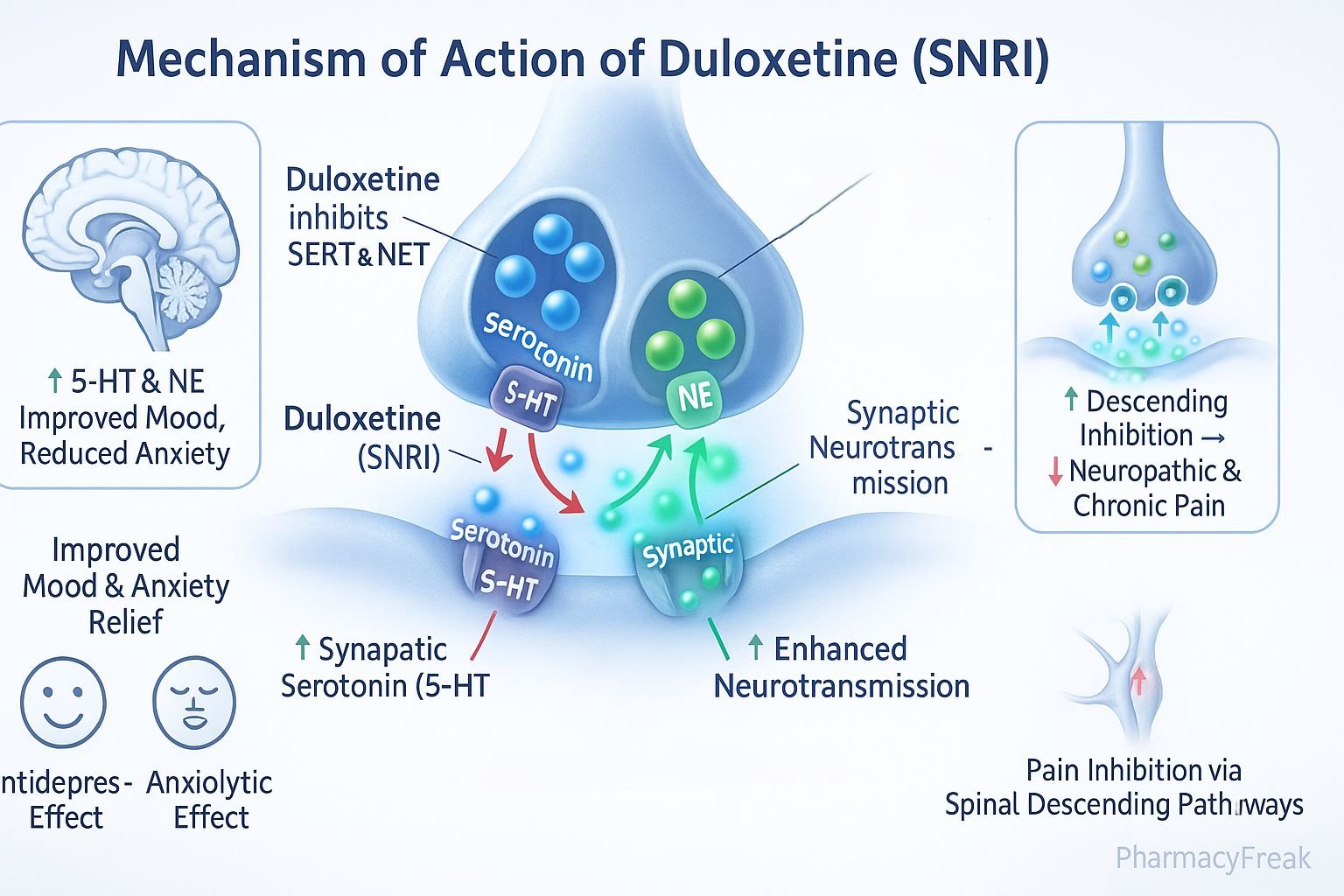
MOA of Duloxetine

Introduction Duloxetine is a serotonin-norepinephrine reuptake inhibitor (SNRI) widely used in psychiatry and neurology. It is prescribed for major depressive disorder, generalized anxiety disorder, neuropathic pain, fibromyalgia, and chronic musculoskeletal pain. Mechanism of Action of Duloxetine centers on its ability to modulate central monoaminergic neurotransmission by inhibiting reuptake of serotonin and norepinephrine. This dual mechanism … Read more
Alphabetical classification of drugs MCQs With Answer

Alphabetical classification of drugs MCQs With Answer

Alphabetical classification of drugs MCQs With Answer is a concise, practical approach for B. Pharm students to locate drug information quickly by generic names. This system emphasizes standardized nomenclature (INN), generic versus brand names, and listing drugs in A–Z order for rapid reference during dispensing, inventory, and exam preparation. Understanding strengths and limitations—such as ease … Read more

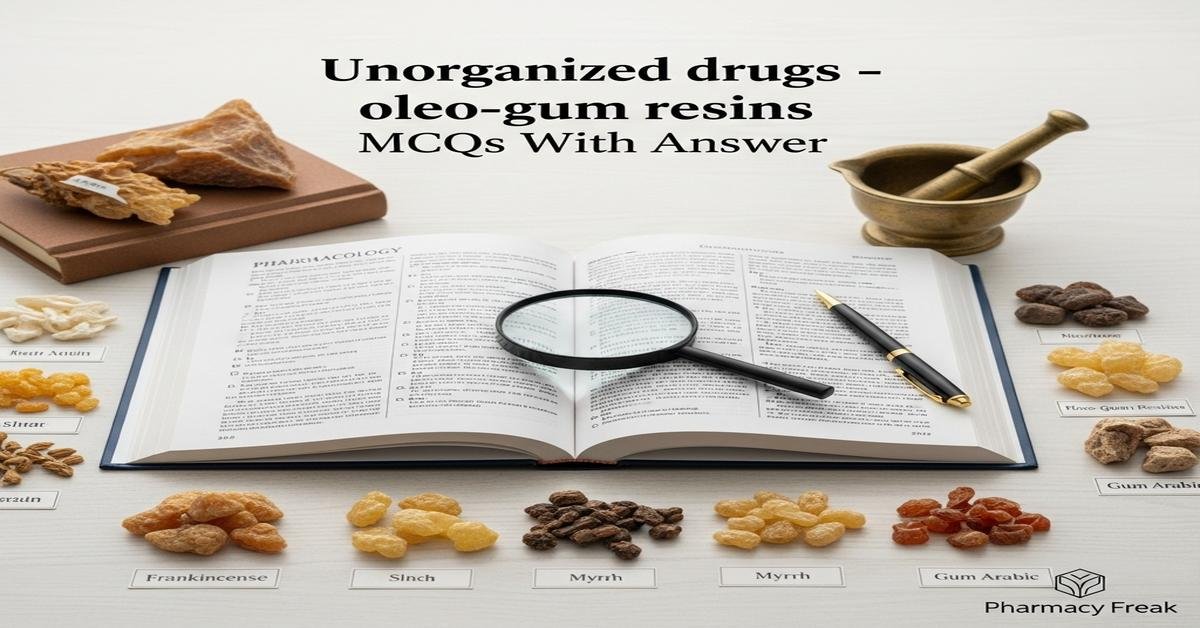
Unorganized drugs – oleo-gum resins MCQs With Answer

Unorganized drugs – oleo-gum resins MCQs With Answer

Introduction: Unorganized drugs — oleo-gum resins are a vital group in pharmacognosy studied by B.Pharm students. These complex natural products contain resinous matter, gummy polysaccharides, and volatile oils; common examples include asafoetida, myrrh, galbanum, and ammoniacum. Understanding their botanical sources, physicochemical properties, extraction methods, identification tests, chromatographic profiles, therapeutic uses, and common adulterants is essential … Read more

Unorganized drugs – oleoresins MCQs With Answer

Unorganized drugs – oleoresins MCQs With Answer

Unorganized drugs such as oleoresins are concentrated plant extracts widely studied in pharmacognosy and applied in pharmaceutical formulations. Oleoresins combine a volatile oil and a non‑volatile resinous fraction, offering concentrated flavor, aroma, and bioactive compounds from spices (pepper, ginger, capsicum, paprika). B.Pharm students must master their definitions, extraction methods (solvent extraction, solvent recovery, vacuum concentration), … Read more

Unorganized drugs – gums and mucilages MCQs With Answer

Unorganized drugs – gums and mucilages MCQs With Answer

Unorganized drugs – gums and mucilages MCQs With Answer Unorganized drugs — gums and mucilages — are natural, plant-derived polysaccharides essential in pharmacy. These hydrophilic colloids provide viscosity, swelling, mucoadhesion, emulsification, suspension stability and film-forming properties, making them key pharmaceutical excipients for B.Pharm students. Important examples include acacia (gum arabic), tragacanth, guar gum, agar, pectin … Read more

Unorganized drugs – dried extracts MCQs With Answer

Unorganized drugs – dried extracts MCQs With Answer

Introduction: Unorganized drugs, especially dried extracts, are vital in pharmacognosy and herbal drug development for B.Pharm students. Dried extracts are concentrated phytoconstituent preparations obtained by solvent extraction and subsequent drying (spray-drying, lyophilization, or oven-drying). Understanding extraction techniques, solvent selection, yield calculation, marker-based standardization, quality control tests (moisture content, ash values, TLC/HPTLC fingerprinting), and stability implications … Read more

Unorganized drugs – dried juices MCQs With Answer

Unorganized drugs – dried juices MCQs With Answer

Unorganized drugs — dried juices are concentrated, dehydrated botanical extracts produced by reducing fresh plant sap or decoctions to a stable powder. For B.Pharm students, understanding dried juices covers extraction methods (maceration, percolation, decoction), concentration and drying techniques (tray, spray, freeze drying), physico‑chemical properties, quality control tests (moisture content, ash values, microbial limits, assay, TLC/HPLC … Read more

Unorganized drugs – dried latex MCQs With Answer

Unorganized drugs – dried latex MCQs With Answer

Unorganized drugs – dried latex MCQs With Answer This concise introduction covers dried latex as an important group of unorganized drugs in pharmacognosy for B.Pharm students. It explains origins, characteristic constituents (alkaloids, polyisoprene, resins, proteins), common examples (opium, natural rubber, gutta-percha, chicle), key identification features, pharmaceutical processing, storage and common uses in medicines and dentistry. … Read more

Organized drugs MCQs With Answer

Organized drugs MCQs With Answer

Organized Drugs MCQs With Answer is a focused collection designed for B.Pharm students to master drug classification, pharmacology, and therapeutic application. This resource emphasizes drug classes, mechanism of action, pharmacokinetics, pharmacodynamics, dosage forms, side effects, drug interactions and monitoring strategies. Questions probe deeper concepts like prodrugs, CYP-mediated interactions, narrow therapeutic index drugs, biosimilars and IV … Read more

Sources of drugs – tissue culture MCQs With Answer

Sources of drugs – tissue culture MCQs With Answer

Sources of drugs – tissue culture MCQs With Answer Sources of drugs obtained via tissue culture are essential for B.Pharm students exploring pharmacognosy and biopharmaceutical biotechnology. Tissue culture methods—callus culture, suspension culture, organ and hairy root culture—enable in vitro production of secondary metabolites, recombinant proteins, and rare phytochemicals. Key concepts include media formulation (e.g., MS … Read more

PRO
Ad-Free Access
$3.99 / month
  • ✓ No Interruptions
  • ✓ Faster Page Loads
  • ✓ Support Content Creators