Table of Contents
Introduction
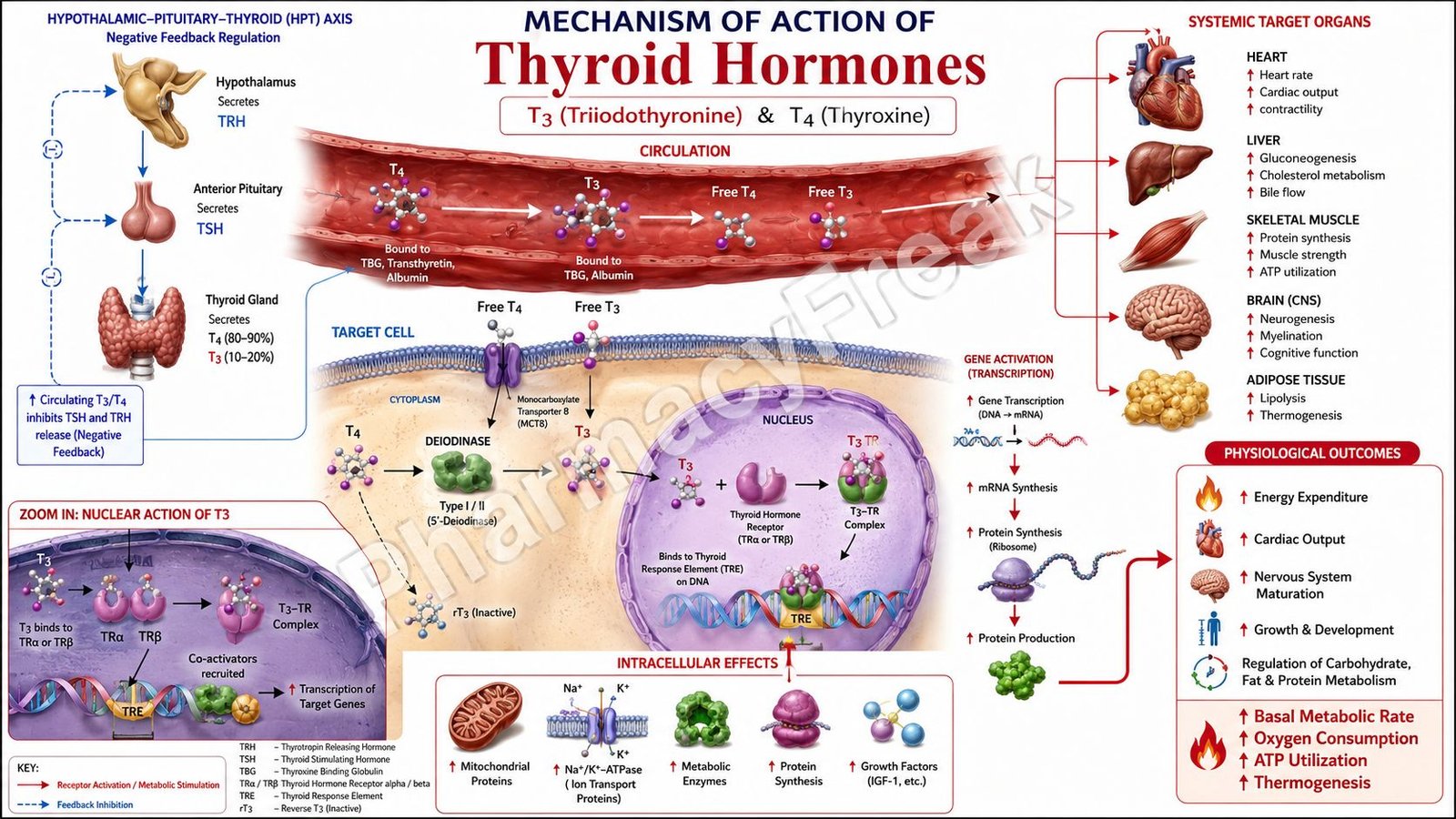
Thyroid hormones, primarily triiodothyronine (T3) and thyroxine (T4), regulate metabolism, growth, development, and energy utilization throughout the body. T4 is the major hormone secreted by the thyroid gland, while T3 is the more biologically active form. Most circulating T4 is converted to T3 in peripheral tissues. Thyroid hormones exert their effects mainly through nuclear receptors that regulate gene transcription.
Mechanism of Action (Step-wise)
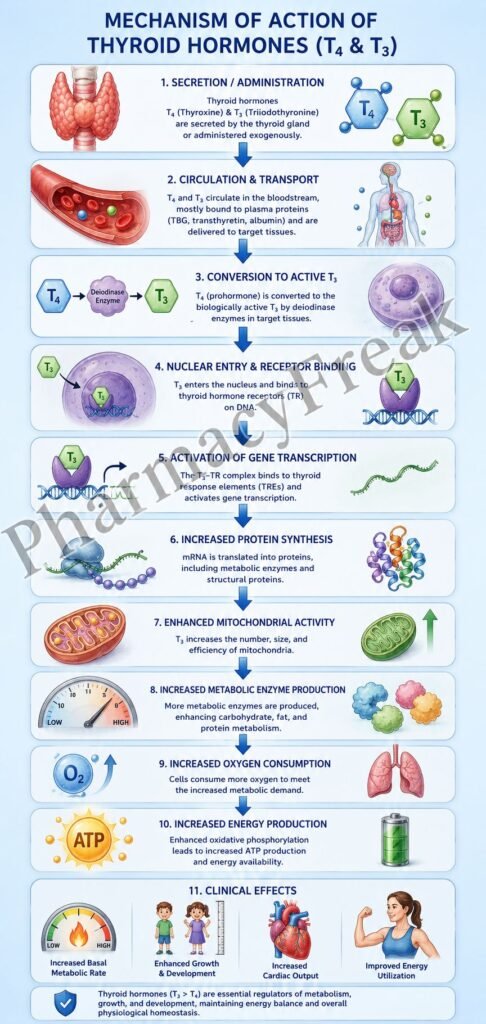
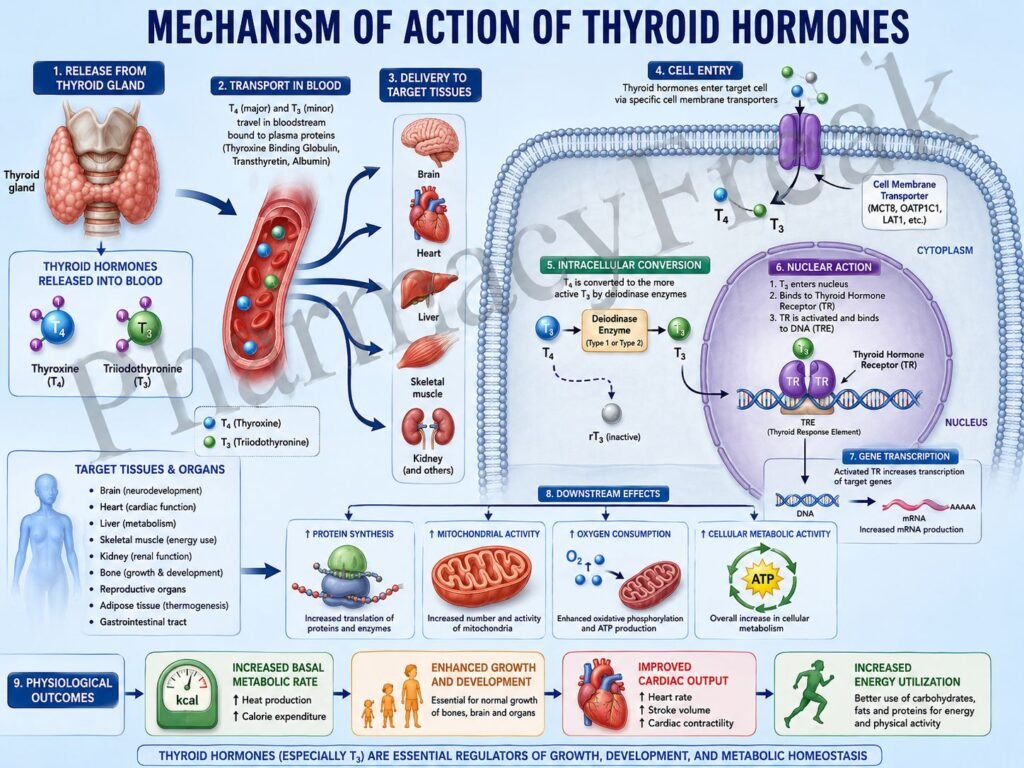
- The thyroid gland secretes thyroxine (T4) and smaller amounts of triiodothyronine (T3).
- In peripheral tissues, especially the liver and kidneys, T4 is converted to the more active hormone T3 by deiodinase enzymes.
- T3 enters target cells through specific membrane transporters.
- Inside the cell, T3 moves into the nucleus.
- T3 binds to thyroid hormone receptors (TRα and TRβ), which are nuclear receptors.
- Thyroid hormone receptors are attached to thyroid hormone response elements (TREs) on DNA.
- Binding of T3 activates transcription of specific genes.
- Synthesis of proteins involved in metabolism, growth, and cellular function increases.
- Mitochondrial activity and oxygen consumption rise.
- Basal metabolic rate (BMR) increases.
- Carbohydrate metabolism, lipid metabolism, and protein turnover are enhanced.
- Expression of β-adrenergic receptors increases, making tissues more responsive to catecholamines.
- Cardiac output, heart rate, and myocardial contractility increase.
- Growth and development of the brain, skeleton, and other tissues are promoted.
- The overall effect is increased metabolic activity, growth, and physiological responsiveness throughout the body.
A key exam point is that T3 binds nuclear thyroid hormone receptors and alters gene transcription, leading to increased metabolic activity.
Pharmacokinetics
T4 (levothyroxine) is well absorbed orally and has a long half-life of approximately 7 days. T3 (liothyronine) has a shorter half-life and more rapid onset of action. Thyroid hormones are highly protein-bound in plasma and undergo hepatic metabolism followed by biliary and renal elimination.
Clinical Uses
Thyroid hormones are used in:
- Hypothyroidism
- Congenital hypothyroidism (cretinism prevention)
- Myxedema coma
- Thyroid hormone replacement therapy
- TSH suppression therapy in thyroid cancer
Adverse Effects
Excessive thyroid hormone therapy may cause:
- Tachycardia
- Palpitations
- Nervousness
- Tremors
- Heat intolerance
- Weight loss
- Insomnia
Severe toxicity may lead to:
- Arrhythmias
- Angina
- Heart failure
- Thyrotoxicosis
Comparative Analysis
| Feature | T3 (Liothyronine) | T4 (Levothyroxine) | Antithyroid Drugs |
|---|---|---|---|
| Activity | More active | Prohormone | Inhibit hormone synthesis |
| Onset | Rapid | Slower | Slow |
| Half-life | ~1 day | ~7 days | Variable |
| Main clinical use | Special situations | Standard replacement therapy | Hyperthyroidism |
| Gene transcription effects | Yes | After conversion to T3 | Opposes thyroid hormone production |
| Duration of action | Short | Long | Variable |
T4 is the preferred replacement therapy because of its long half-life and stable hormone levels. T3 acts more rapidly but has a shorter duration. Unlike thyroid hormones, antithyroid drugs decrease hormone production rather than activating thyroid hormone receptors.
MCQs
1. The biologically most active thyroid hormone is:
a) T4
b) T3
c) TSH
d) Calcitonin
Answer: b) T3
2. T4 is converted to T3 by:
a) Cyclooxygenase
b) Deiodinase enzymes
c) Acetylcholinesterase
d) Monoamine oxidase
Answer: b) Deiodinase enzymes
3. Thyroid hormones primarily act through:
a) Cell surface receptors
b) G-protein coupled receptors
c) Nuclear receptors
d) Ion channels
Answer: c) Nuclear receptors
4. T3 binds to:
a) Thyroid hormone receptors
b) Insulin receptors
c) Histamine receptors
d) Dopamine receptors
Answer: a) Thyroid hormone receptors
5. Thyroid hormones increase:
a) Basal metabolic rate
b) Histamine release
c) Potassium retention
d) Acetylcholine degradation
Answer: a) Basal metabolic rate
6. Thyroid hormones increase expression of:
a) β-adrenergic receptors
b) Muscarinic receptors
c) GABA receptors
d) Opioid receptors
Answer: a) β-adrenergic receptors
7. The most commonly used thyroid replacement drug is:
a) Liothyronine
b) Levothyroxine
c) Methimazole
d) Propylthiouracil
Answer: b) Levothyroxine
8. Excess thyroid hormone may cause:
a) Bradycardia
b) Tachycardia
c) Hypothermia
d) Weight gain
Answer: b) Tachycardia
9. Thyroid hormones promote:
a) Growth and development
b) Bone marrow suppression
c) Histamine release
d) Bronchoconstriction
Answer: a) Growth and development
10. Levothyroxine corresponds to:
a) T3
b) T4
c) TSH
d) TRH
Answer: b) T4
11. The half-life of levothyroxine is approximately:
a) 1 hour
b) 1 day
c) 7 days
d) 30 days
Answer: c) 7 days
12. The primary molecular effect of thyroid hormones is:
a) Alteration of gene transcription
b) Sodium channel blockade
c) Histamine inhibition
d) Acetylcholine release
Answer: a) Alteration of gene transcription
FAQs
What is the mechanism of action of thyroid hormones?
Thyroid hormones bind nuclear thyroid hormone receptors and regulate gene transcription, increasing metabolic activity and growth.
Why is T3 more active than T4?
T3 has a higher affinity for thyroid hormone receptors and produces stronger biological effects.
Why is levothyroxine preferred for hypothyroidism?
Because it has a long half-life and provides stable physiological hormone replacement.
How do thyroid hormones affect metabolism?
They increase oxygen consumption, mitochondrial activity, and basal metabolic rate.
What are common symptoms of excessive thyroid hormone therapy?
Palpitations, tremors, heat intolerance, weight loss, and insomnia.
How do thyroid hormones affect the cardiovascular system?
They increase heart rate, contractility, and cardiac output by enhancing β-adrenergic receptor expression.
References
Goodman & Gilman’s The Pharmacological Basis of Therapeutics
https://accessmedicine.mhmedical.com/book.aspx?bookid=3191
Katzung’s Basic and Clinical Pharmacology
https://accessmedicine.mhmedical.com/content.aspx?bookid=3382
Tripathi KD. Essentials of Medical Pharmacology
https://www.jaypeedigital.com
Harrison’s Principles of Internal Medicine
https://accessmedicine.mhmedical.com