Table of Contents
Introduction
Selegiline is a selective monoamine oxidase-B (MAO-B) inhibitor primarily used in Parkinson disease. It increases dopamine availability in the central nervous system by inhibiting dopamine metabolism. At higher doses, selectivity for MAO-B decreases and inhibition of MAO-A may also occur. Selegiline helps improve motor symptoms and may reduce fluctuations in Parkinson disease.
Mechanism of Action (Step-wise)
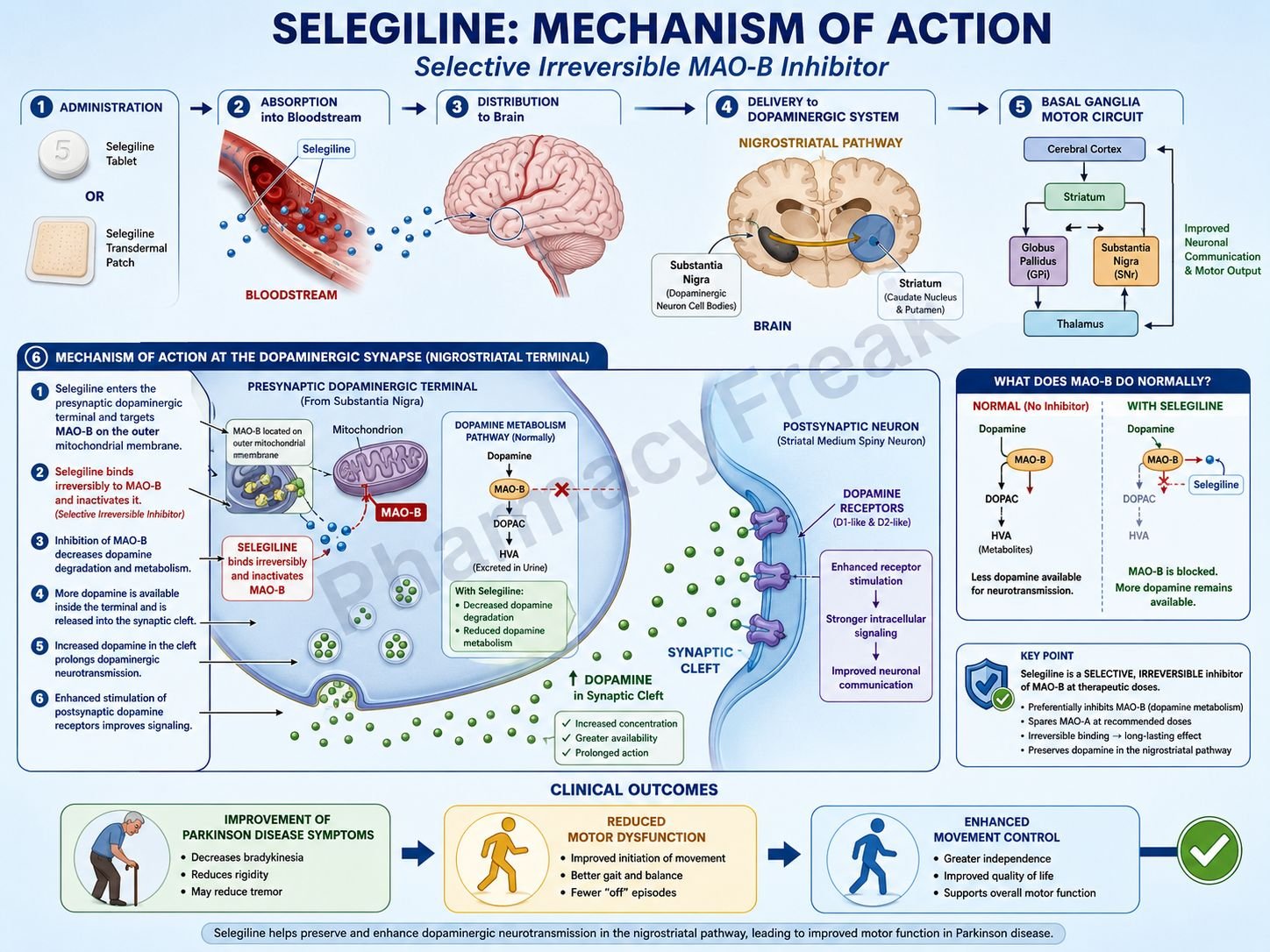
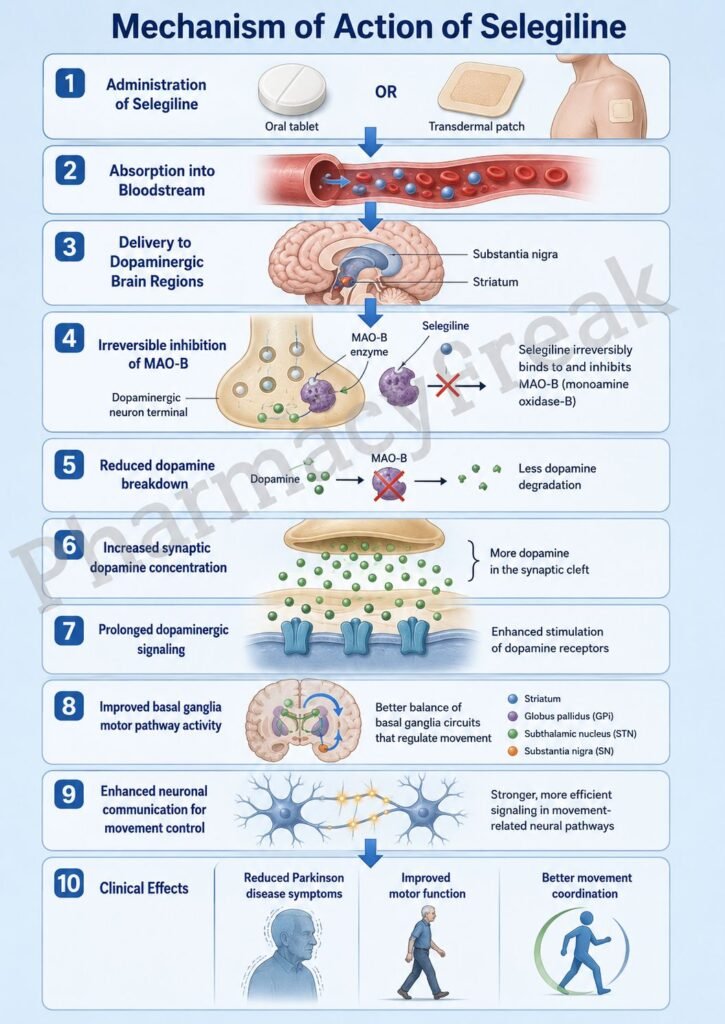
- Dopamine in the brain is normally metabolized by monoamine oxidase enzymes.
- Monoamine oxidase exists in two forms: MAO-A and MAO-B.
- MAO-B is the predominant enzyme responsible for dopamine breakdown in the basal ganglia.
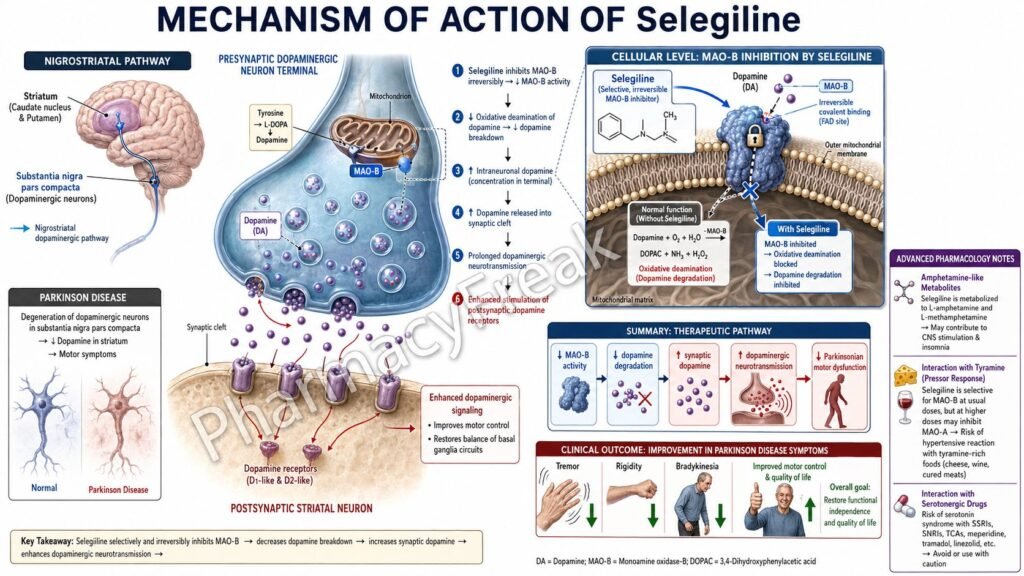
- Selegiline selectively and irreversibly inhibits MAO-B at therapeutic doses.
- Inhibition of MAO-B decreases dopamine metabolism in presynaptic neurons and glial cells.
- Dopamine concentration increases in the striatum and other dopaminergic pathways.
- Enhanced dopaminergic neurotransmission improves motor control in Parkinson disease.
- Increased dopamine activity reduces bradykinesia, rigidity, and tremors.
- Selegiline may also reduce formation of free radicals generated during dopamine metabolism.
- At higher doses, MAO-A inhibition may occur, increasing levels of serotonin and norepinephrine as well.
- The overall effect is improved dopaminergic activity and symptomatic relief in Parkinson disease.
A key exam point is that selegiline selectively inhibits MAO-B, reducing dopamine breakdown in the CNS.
Pharmacokinetics
Selegiline is administered orally or as a transdermal preparation. It is well absorbed and undergoes hepatic metabolism. The drug has active metabolites including amphetamine derivatives, which may contribute to stimulant-like effects. Elimination occurs mainly through urine.
Clinical Uses
Selegiline is mainly used in Parkinson disease, either alone in early disease or combined with levodopa in advanced disease. Transdermal formulations may also be used in depression.
Adverse Effects
Common adverse effects include insomnia, nausea, dizziness, and dry mouth. When combined with levodopa, dyskinesias and hallucinations may increase. High doses may increase risk of hypertensive crisis or serotonin syndrome when combined with serotonergic drugs.
Comparative Analysis
| Feature | Selegiline | Levodopa | Entacapone |
|---|---|---|---|
| Drug class | MAO-B inhibitor | Dopamine precursor | COMT inhibitor |
| Main mechanism | Decreases dopamine breakdown | Increases dopamine synthesis | Decreases peripheral dopamine metabolism |
| Main site of action | CNS | CNS | Peripheral tissues |
| Parkinson use | Yes | Yes | Adjunct therapy |
| Dyskinesia risk | Moderate with levodopa | High | Moderate |
| Insomnia risk | Present | Mild | Rare |
Selegiline differs from levodopa because it prevents dopamine degradation rather than supplying dopamine precursor. Compared with entacapone, selegiline acts mainly within the CNS.
MCQs
- Selegiline primarily inhibits which enzyme?
a) COMT
b) MAO-B
c) Acetylcholinesterase
d) Cyclooxygenase
Answer: b) MAO-B
- Selegiline is mainly used in:
a) Asthma
b) Parkinson disease
c) Hypertension
d) Diabetes mellitus
Answer: b) Parkinson disease
- MAO-B normally metabolizes:
a) Acetylcholine
b) Dopamine
c) Histamine
d) GABA
Answer: b) Dopamine
- Selegiline increases levels of:
a) Dopamine
b) Histamine
c) Acetylcholine
d) Cortisol
Answer: a) Dopamine
- Increased dopamine activity improves:
a) Bradykinesia
b) Hyperglycemia
c) Hypocalcemia
d) Bronchospasm
Answer: a) Bradykinesia
- Selegiline mainly acts in the:
a) Peripheral nervous system
b) Central nervous system
c) Kidneys
d) Liver only
Answer: b) Central nervous system
- At therapeutic doses, selegiline selectively inhibits:
a) MAO-A
b) MAO-B
c) COMT only
d) Dopamine receptors
Answer: b) MAO-B
- A common adverse effect is:
a) Insomnia
b) Severe hypotension
c) Hypercalcemia
d) Cataracts
Answer: a) Insomnia
- Selegiline may increase dyskinesias when combined with:
a) Insulin
b) Levodopa
c) Propranolol
d) Digoxin
Answer: b) Levodopa
- High doses of selegiline may increase risk of:
a) Serotonin syndrome
b) Hypoglycemia
c) Hypernatremia
d) Bone marrow suppression
Answer: a) Serotonin syndrome
- Compared with levodopa, selegiline mainly:
a) Replaces dopamine precursor
b) Prevents dopamine breakdown
c) Blocks dopamine receptors
d) Stimulates acetylcholine release
Answer: b) Prevents dopamine breakdown
- Selegiline belongs to which drug class?
a) Dopamine agonists
b) MAO-B inhibitors
c) Anticholinergics
d) NMDA antagonists
Answer: b) MAO-B inhibitors
FAQs
What is the mechanism of action of selegiline?
Selegiline selectively inhibits MAO-B, decreasing dopamine breakdown in the brain.
Why is selegiline used in Parkinson disease?
Because it increases dopamine availability and improves motor symptoms.
What neurotransmitter is mainly affected by selegiline?
Dopamine.
What are common side effects of selegiline?
Insomnia, nausea, dizziness, and dry mouth.
Why can selegiline cause serotonin syndrome at high doses?
Because higher doses may also inhibit MAO-A, increasing serotonin levels.
How does selegiline differ from levodopa?
Selegiline prevents dopamine degradation, whereas levodopa acts as a dopamine precursor.
References
Goodman & Gilman’s The Pharmacological Basis of Therapeutics – Drugs Used in Parkinsonism
https://accessmedicine.mhmedical.com/book.aspx?bookid=3191
Katzung: Basic and Clinical Pharmacology – Drugs Used in Parkinson Disease
https://accessmedicine.mhmedical.com/content.aspx?bookid=3382
Tripathi: Essentials of Medical Pharmacology – Antiparkinsonian Drugs
https://www.jaypeedigital.com
Harrison’s Principles of Internal Medicine – Parkinson Disease
https://accessmedicine.mhmedical.com