
Trusted by 50K+ Pharmacy StudentsHigh Quality Notes, MCQs, Mock Tests & Study ResourcesGo Premium (Ads Free)
Pharmacy Freak

Steroids and steroidal sapogenins: hecogenin, guggulosterone, withanolides MCQs With Answer
Steroids and steroidal sapogenins: hecogenin, guggulosterone, withanolides MCQs With Answer

Steroids and steroidal sapogenins: hecogenin, guggulosterone, withanolides MCQs With Answer This quiz collection is designed for M.Pharm students preparing for advanced phytochemistry examinations. It focuses on steroidal compounds and sapogenins—especially hecogenin, guggulosterone (guggulsterones) and withanolides—covering their natural sources, structural classes, biosynthetic origins, isolation techniques, analytical identification, chemical transformations and pharmacological actions. Questions emphasize mechanistic understanding, … Read more
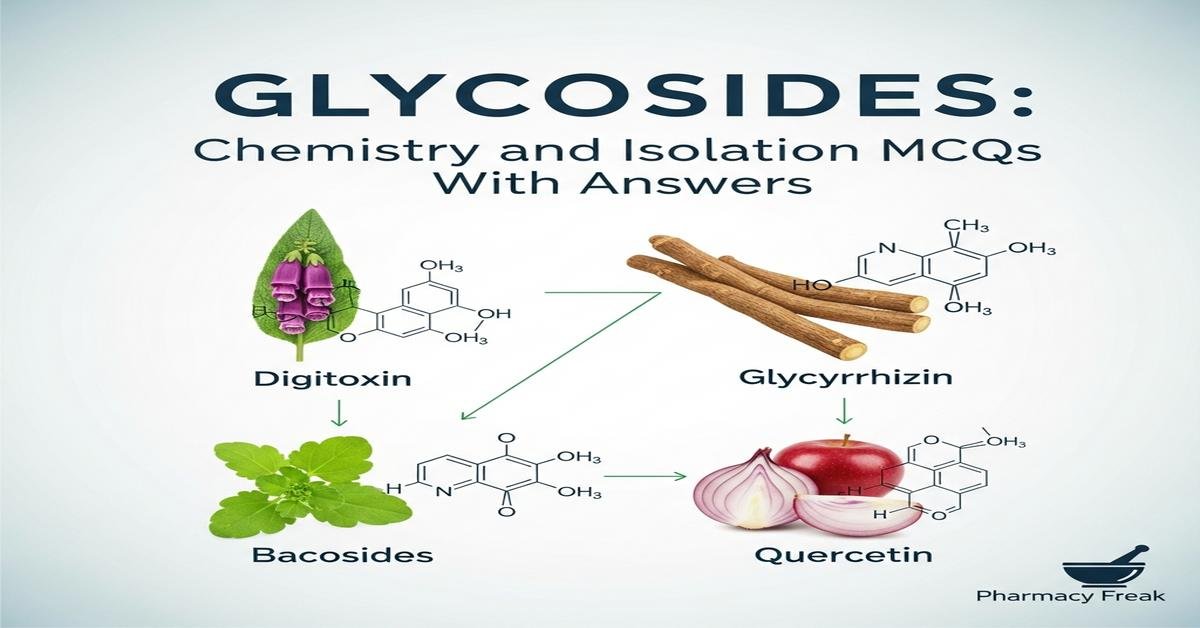
Glycosides: digitoxin, glycyrrhizin, bacosides, quercetin – chemistry and isolation MCQs With Answer

Glycosides: digitoxin, glycyrrhizin, bacosides, quercetin – chemistry and isolation MCQs With Answer

Glycosides: digitoxin, glycyrrhizin, bacosides, quercetin – chemistry and isolation MCQs With Answer This quiz set focuses on important plant glycosides encountered in M.Pharm phytochemistry: digitoxin (a cardiac glycoside), glycyrrhizin (sweet triterpenoid glycoside), bacosides (triterpenoid saponins from Bacopa), and quercetin (a flavonol aglycone). Questions emphasize chemical structures, characteristic functional groups, sugar moieties, key chemical tests, hydrolysis … Read more

Alkaloids: biosynthesis, isolation and structure (ephedrine, quinine, strychnine, piperine, berberine, vincristine/vinblastine) MCQs With Answer

Alkaloids: biosynthesis, isolation and structure (ephedrine, quinine, strychnine, piperine, berberine, vincristine/vinblastine) MCQs With Answer

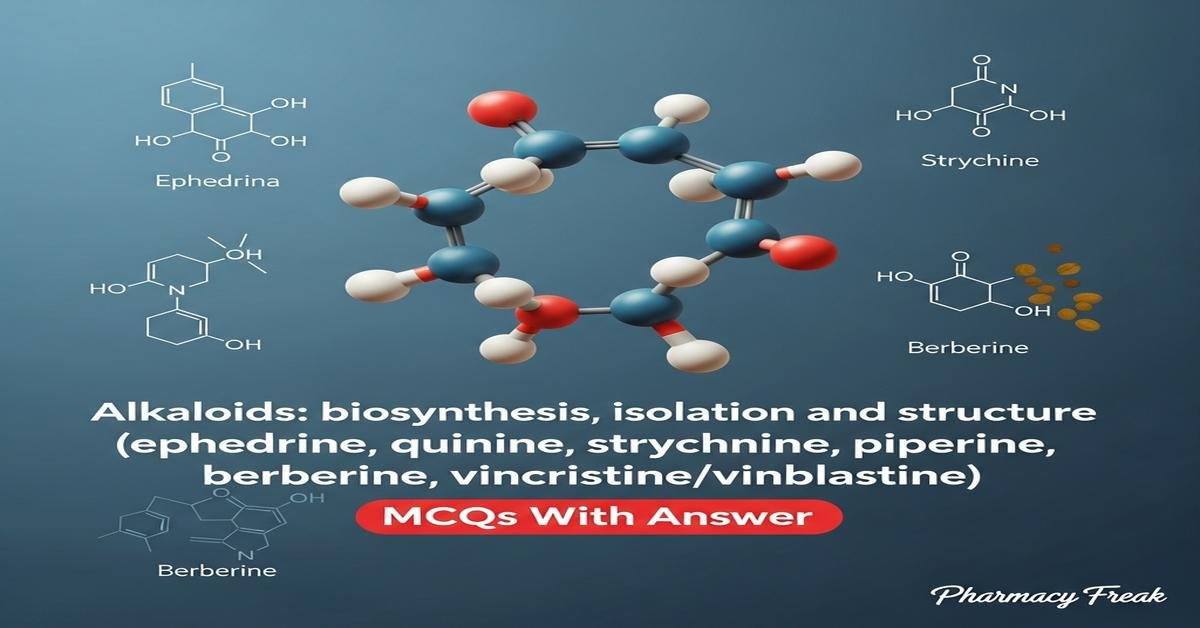
Introduction Alkaloids are a diverse group of nitrogen-containing natural products with significant pharmacological importance. This quiz set focuses on the biosynthesis, isolation and structures of key alkaloids—ephedrine, quinine, strychnine, piperine, berberine and the vinca alkaloids (vincristine/vinblastine)—topics essential for M.Pharm students studying phytochemistry. Questions cover amino-acid precursors, signature biosynthetic enzymes (e.g., norcoclaurine synthase, strictosidine synthase), isolation … Read more

Shikimic, acetate and amino acid pathways and radio-tracing techniques MCQs With Answer

Shikimic, acetate and amino acid pathways and radio-tracing techniques MCQs With Answer

Introduction This quiz set focuses on the shikimic, acetate and amino acid biosynthetic pathways and practical radio-tracing techniques — core areas in phytochemistry for M.Pharm students. Questions emphasize biochemical steps, key enzymes, branch points, and how plant secondary metabolites (alkaloids, phenylpropanoids, polyphenols, polyketides) arise from these pathways. The radio-tracing portion explores isotopic labeling strategies (14C, … Read more

Biosynthetic pathways of major phytoconstituent classes MCQs With Answer

Biosynthetic pathways of major phytoconstituent classes MCQs With Answer

Biosynthetic pathways of major phytoconstituent classes MCQs With Answer This quiz collection is designed for M.Pharm students to deepen understanding of the biosynthetic logic behind major plant secondary metabolite classes. It emphasizes enzymology, subcellular localization, precursor–product relationships and branching points in pathways such as shikimate, phenylpropanoid, mevalonate (MVA), MEP (non-mevalonate), polyketide and terpenoid biosynthesis. The … Read more

Herb–drug and herb–food interactions: examples and management MCQs With Answer

Herb–drug and herb–food interactions: examples and management MCQs With Answer

Introduction This MCQ set on Herb–drug and herb–food interactions: examples and management is designed for M.Pharm students preparing for Advanced Pharmacognosy I (MPG 102T). The questions emphasize clinically relevant mechanisms (CYP enzymes, transporters, platelet function, vitamin K effects), representative herb and food examples, and practical management strategies such as therapeutic drug monitoring, dose adjustment, and … Read more

Spontaneous reporting and monitoring of adverse reactions to herbal medicines MCQs With Answer

Spontaneous reporting and monitoring of adverse reactions to herbal medicines MCQs With Answer

Spontaneous reporting and monitoring of adverse reactions to herbal medicines MCQs With Answer This blog provides M.Pharm students with a focused set of multiple-choice questions on spontaneous reporting and pharmacovigilance specific to herbal medicines. It covers fundamentals—definitions, reporting systems, causality assessment, signal detection and regulatory actions—plus herbal-specific challenges such as adulteration, complex mixtures and herb–drug … Read more

Pharmacovigilance for natural products: WHO and AYUSH guidelines MCQs With Answer

Pharmacovigilance for natural products: WHO and AYUSH guidelines MCQs With Answer

Pharmacovigilance for natural products: WHO and AYUSH guidelines MCQs With Answer This quiz collection focuses on pharmacovigilance for natural products, tailored for M.Pharm students studying Advanced Pharmacognosy I. It integrates core concepts from WHO guidance and AYUSH initiatives, covering adverse event reporting, causality assessment, signal detection, databases like VigiBase, coding standards, and special considerations for … Read more

Andrographolide, glycolipids, gugulipids, taxol and miscellaneous phytoconstituents MCQs With Answer

Andrographolide, glycolipids, gugulipids, taxol and miscellaneous phytoconstituents MCQs With Answer

Introduction: This quiz compilation focuses on Andrographolide, glycolipids, gugulipids, taxol (paclitaxel) and selected miscellaneous phytoconstituents — topics central to Advanced Pharmacognosy I (MPG 102T) for M.Pharm students. The questions probe chemistry, biosynthesis, analytical methods, pharmacology, mechanisms of action, formulation challenges, standardization and safety considerations. Each MCQ is designed to reinforce core concepts and encourage deeper … Read more

Mechanism of Action of Cyclophosphamide

MOA of cyclophosphamide

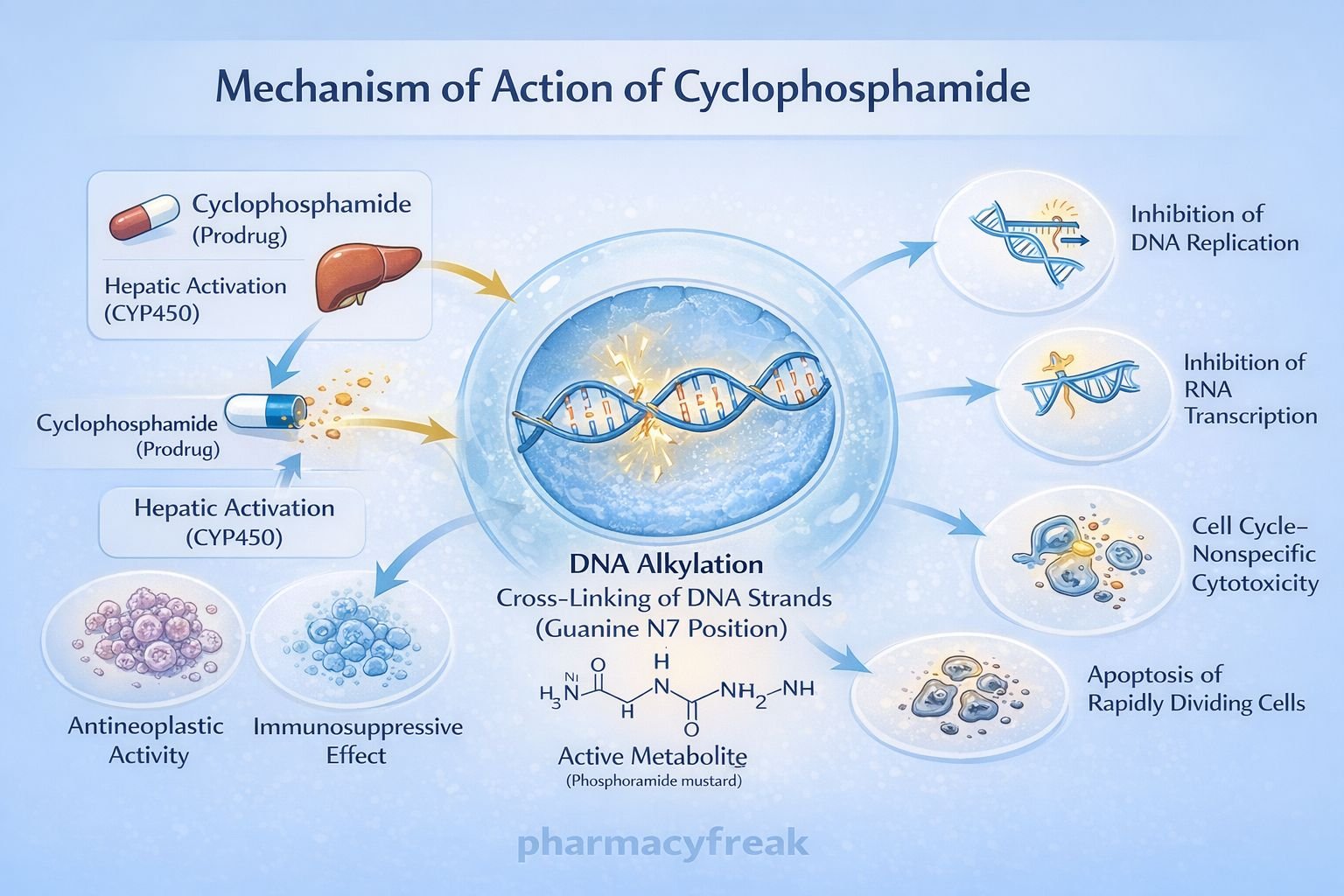
Introduction Cyclophosphamide is a nitrogen mustard–derived alkylating agent widely used in oncology and immunosuppressive therapy. It is classified as a cell cycle–nonspecific cytotoxic drug and is used in the treatment of a broad spectrum of malignancies, as well as autoimmune and inflammatory disorders. Cyclophosphamide is a prodrug that requires hepatic activation, and its DNA-alkylating mechanism … Read more

PRO
Ad-Free Access
$3.99 / month
  • ✓ No Interruptions
  • ✓ Faster Page Loads
  • ✓ Support Content Creators