Trusted by 50K+ Pharmacy StudentsHigh Quality Notes, MCQs, Mock Tests & Study ResourcesGo Premium (Ads Free)
Pharmacy Freak

Structure and function of the eye MCQs With Answer
Structure and function of the eye MCQs With Answer

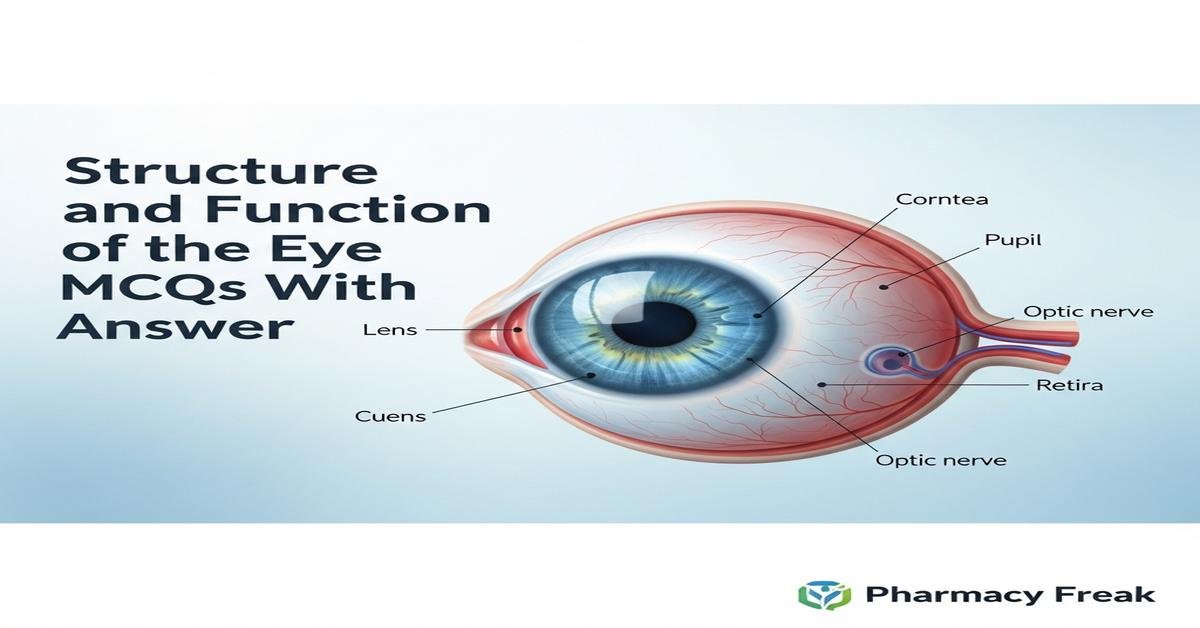
Structure and function of the eye MCQs With Answer The structure and function of the eye are fundamental topics for B. Pharm students, linking ocular anatomy, physiology, and pharmacology. This introduction covers the cornea, lens, aqueous and vitreous humors, retina, photoreceptors (rods and cones), macula, optic nerve, and visual pathways, as well as processes like … Read more
Origin and functions of cranial nerves MCQs With Answer

Origin and functions of cranial nerves MCQs With Answer

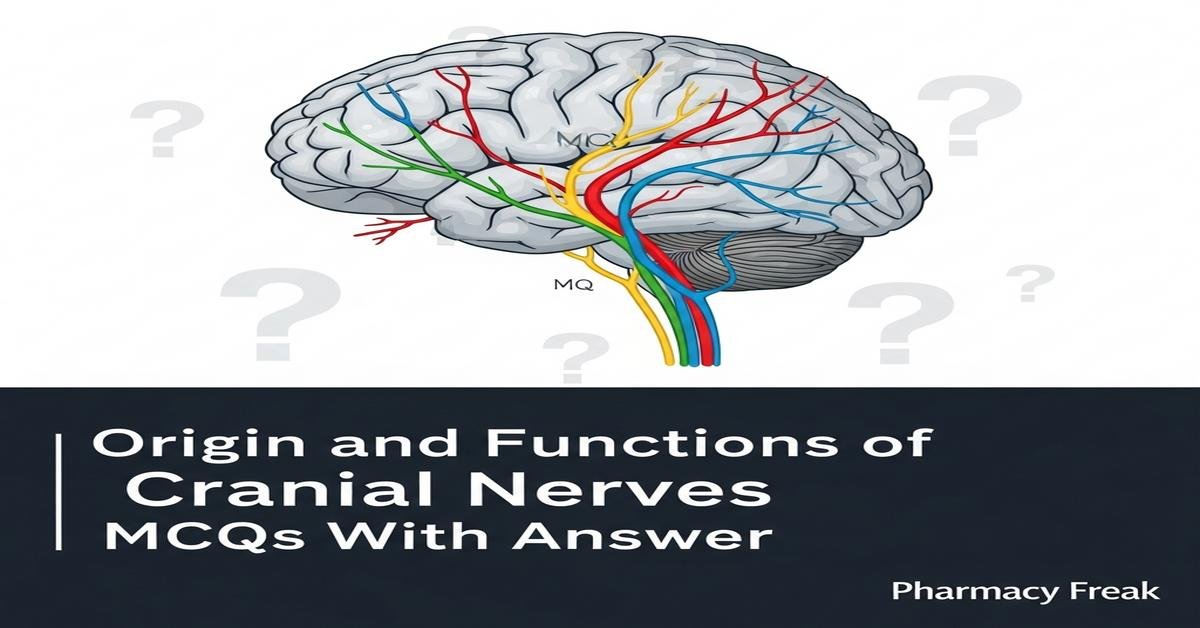
Introduction: The topic “Origin and functions of cranial nerves MCQs With Answer” is essential for B. Pharm students studying neuroanatomy, neurophysiology and clinical pharmacology. This concise, keyword-rich introduction covers cranial nerve origins (forebrain, brainstem nuclei, placodes, neural crest), functional modalities (sensory, motor, special senses, GSA, GSE, GVE, SVA, SSA), and clinical-pharmacological relevance (autonomic control, reflexes, … Read more

Origin and functions of spinal nerves MCQs With Answer

Origin and functions of spinal nerves MCQs With Answer

Understanding the origin and functions of spinal nerves is essential for B. Pharm students, linking anatomy to pharmacology and clinical practice. Spinal nerves arise from spinal cord segments via dorsal (sensory) and ventral (motor) roots, forming mixed nerves that give off dorsal and ventral rami and rami communicantes carrying somatic and autonomic fibers. Key concepts … Read more

Structure and function of the parasympathetic nervous system MCQs With Answer

Structure and function of the parasympathetic nervous system MCQs With Answer

Understanding the structure and function of the parasympathetic nervous system is essential for B. Pharm students studying pharmacology and therapeutics. This craniosacral division of the autonomic nervous system uses acetylcholine at pre- and postganglionic synapses, acting on nicotinic (Nn/Nm) and muscarinic (M1–M5) receptors to regulate heart rate, glandular secretion, smooth muscle motility, and ocular responses. … Read more

Structure and function of the sympathetic nervous system MCQs With Answer

Structure and function of the sympathetic nervous system MCQs With Answer

Understanding the structure and function of the sympathetic nervous system is essential for B. Pharm students learning pharmacology, therapeutics and drug action. This pathway, originating in the thoracolumbar spinal cord, uses cholinergic preganglionic neurons and mainly adrenergic postganglionic neurons to mediate the fight-or-flight response. Key elements include sympathetic chain and prevertebral ganglia, adrenal medulla secretion … Read more

Classification of the peripheral nervous system MCQs With Answer

Classification of the peripheral nervous system MCQs With Answer

Understanding the classification of the peripheral nervous system (PNS) is essential for B. Pharm students studying neuropharmacology, autonomic drugs and clinical therapeutics. The PNS comprises sensory (afferent) and motor (efferent) divisions; motor is divided into somatic and autonomic systems, while autonomic splits into sympathetic, parasympathetic and enteric branches. Key concepts include peripheral nerves, ganglia, cranial … Read more

Functions of the lymphatic system MCQs With Answer

Functions of the lymphatic system MCQs With Answer

Introduction: The lymphatic system is a vital network that maintains fluid balance, absorbs dietary lipids via lacteals, and coordinates immune surveillance—key concepts for B. Pharm students studying pharmacology and pathophysiology. Understanding lymph formation, lymphatic vessels, lymph nodes, spleen, thymus, and mucosa-associated lymphoid tissue (MALT) clarifies mechanisms of antigen presentation, immune cell trafficking, metastasis, lymphedema, and … Read more

Lymphatic vessels and lymph circulation MCQs With Answer

Lymphatic vessels and lymph circulation MCQs With Answer

Introduction: The lymphatic vessels and lymph circulation form a vital network that maintains fluid balance, transports dietary lipids, and supports immune surveillance. B. Pharm students should understand lymphatic anatomy (capillaries, collecting vessels, thoracic duct), physiology (lymph formation, valves, lymphangion contractility), and clinical relevance (lymphedema, metastasis, lymphatic drug absorption). Key keywords include lymphatic system, lymph nodes, … Read more

Structure and functions of lymphatic organs and tissues MCQs With Answer

Structure and functions of lymphatic organs and tissues MCQs With Answer

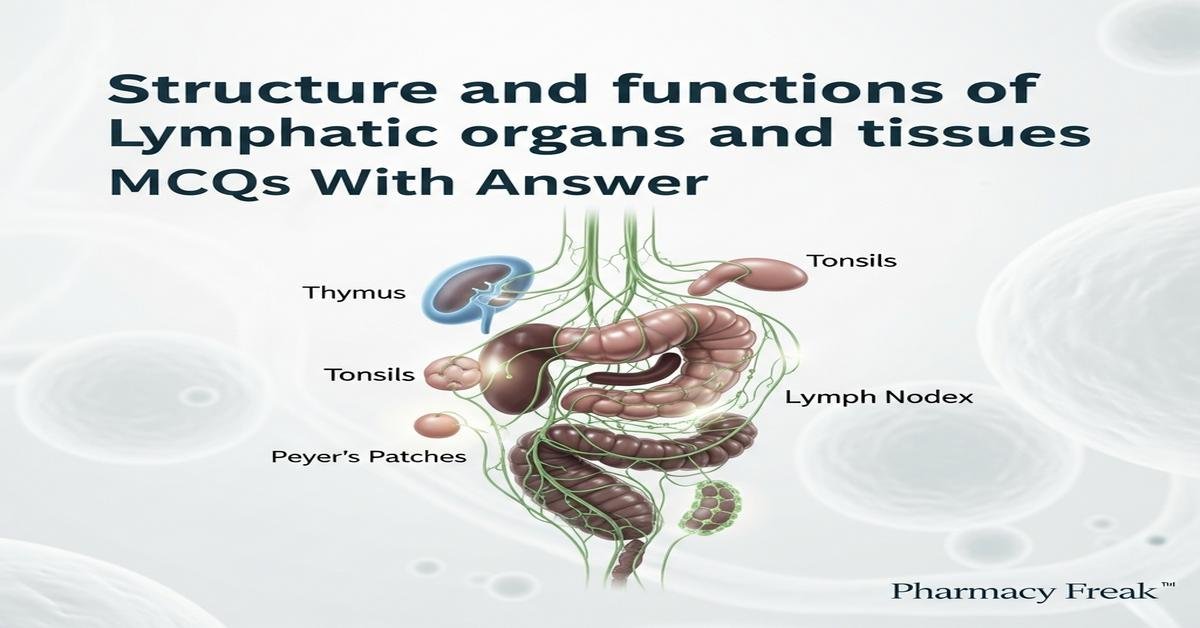
In B.Pharm training, a clear grasp of the structure and functions of lymphatic organs and tissues is essential. This topic covers lymph node architecture, spleen compartments (red and white pulp), thymus and bone marrow as primary lymphoid organs, and mucosa-associated lymphoid tissue (MALT) including Peyer’s patches and tonsils. You will study lymphatic circulation, lymph formation, … Read more

Reticuloendothelial system MCQs With Answer

Reticuloendothelial system MCQs With Answer

The reticuloendothelial system (RES), now largely termed the mononuclear phagocyte system (MPS), comprises macrophages and related phagocytic cells in organs such as liver (Kupffer cells), spleen, lymph nodes and bone marrow. For B. Pharm students, understanding RES structure, cellular markers (CD68), phagocytosis mechanisms, opsonization, antigen presentation, cytokine-mediated activation (IFN-γ, M-CSF), and pharmacological implications like nanoparticle … Read more

PRO
Ad-Free Access
$3.99 / month
  • No Interruptions
  • Faster Page Loads
  • Support Content Creators