Trusted by 50K+ Pharmacy StudentsHigh Quality Notes, MCQs, Mock Tests & Study ResourcesGo Premium (Ads Free)
Pharmacy Freak

Advantages, disadvantages and pharmaceutical applications of TLC MCQs With Answer
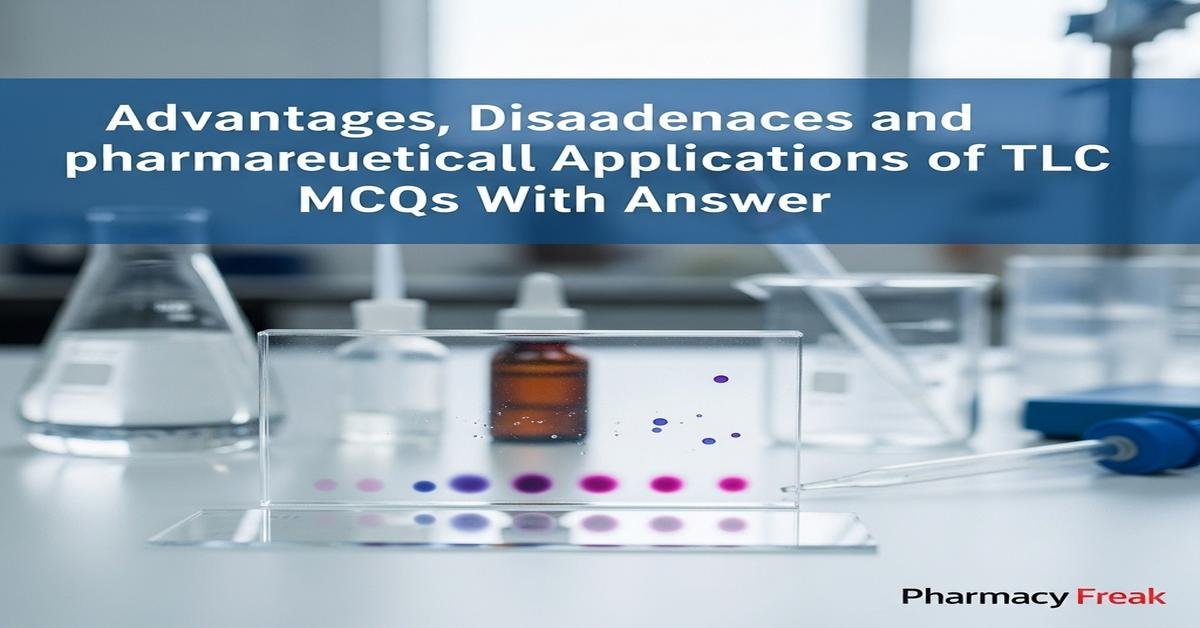
Advantages, disadvantages and pharmaceutical applications of TLC MCQs With Answer

Introduction: Thin Layer Chromatography (TLC) is a rapid, cost-effective analytical tool widely used in pharmaceutical analysis for qualitative screening, impurity profiling, assay development, and monitoring reaction progress. B.Pharm students should master TLC concepts such as stationary phase, mobile phase selection, Rf value interpretation, visualization techniques, and densitometry quantification. Understand advantages like simplicity, low solvent use, … Read more
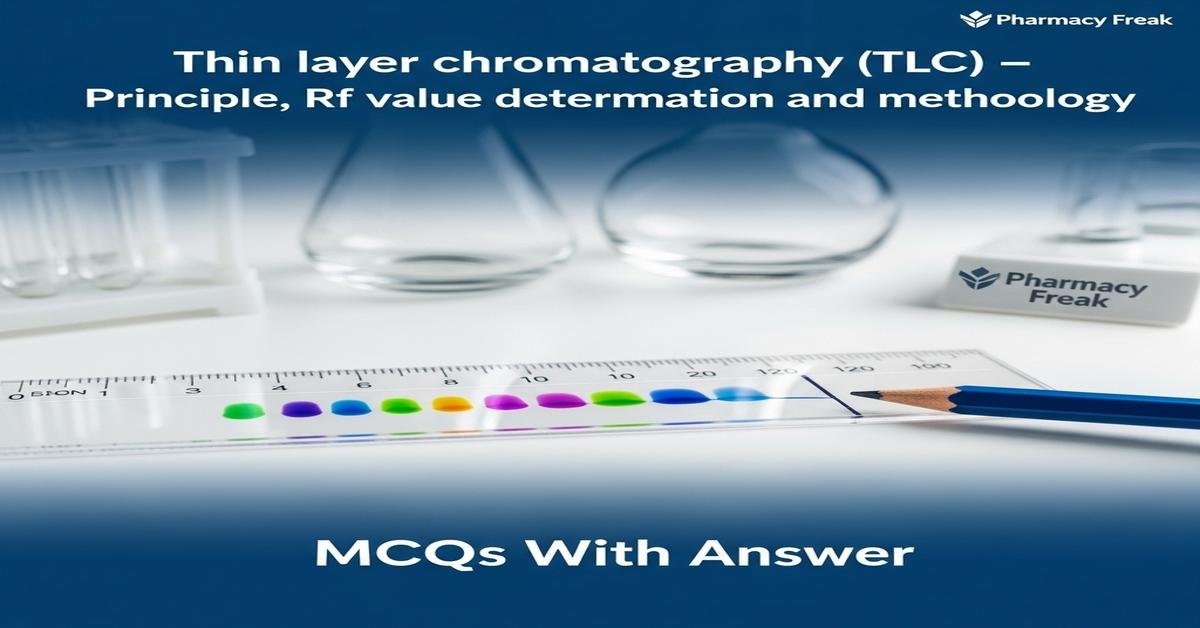
Thin layer chromatography (TLC) – principle, Rf value determination and methodology MCQs With Answer

Thin layer chromatography (TLC) – principle, Rf value determination and methodology MCQs With Answer

Thin layer chromatography (TLC) is a rapid, cost-effective analytical technique widely used in pharmaceutical analysis for separation, identification and purity testing. Based on adsorption and partition principles, TLC employs a thin stationary phase (e.g., silica gel) and a mobile phase solvent system to resolve compounds. Key concepts include Rf value determination, solvent polarity, plate activation, … Read more

Partition column chromatography – principles and applications MCQs With Answer

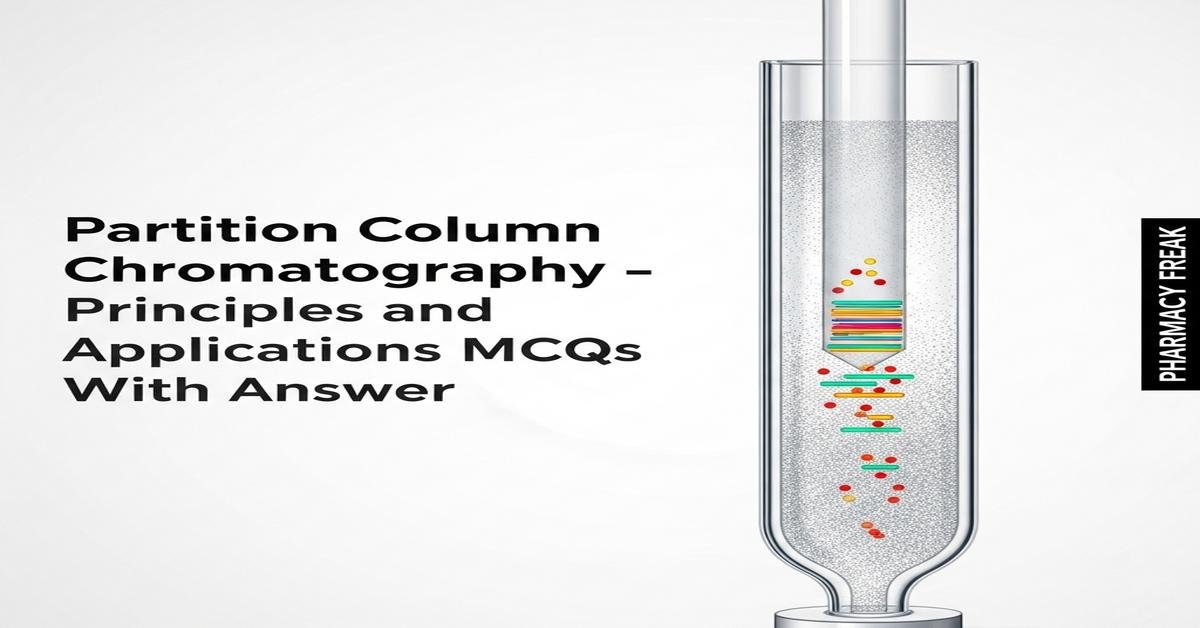
Partition column chromatography – principles and applications MCQs With Answer

Introduction Partition column chromatography is a liquid–liquid separation technique that separates solutes based on their differing partition coefficients between a liquid stationary phase and a liquid mobile phase. Common formats include paper, column partition, and countercurrent chromatography used in pharmaceutical analysis. Key concepts for B.Pharm students include partition coefficient (K), distribution ratio, stationary/mobile phase selection, … Read more

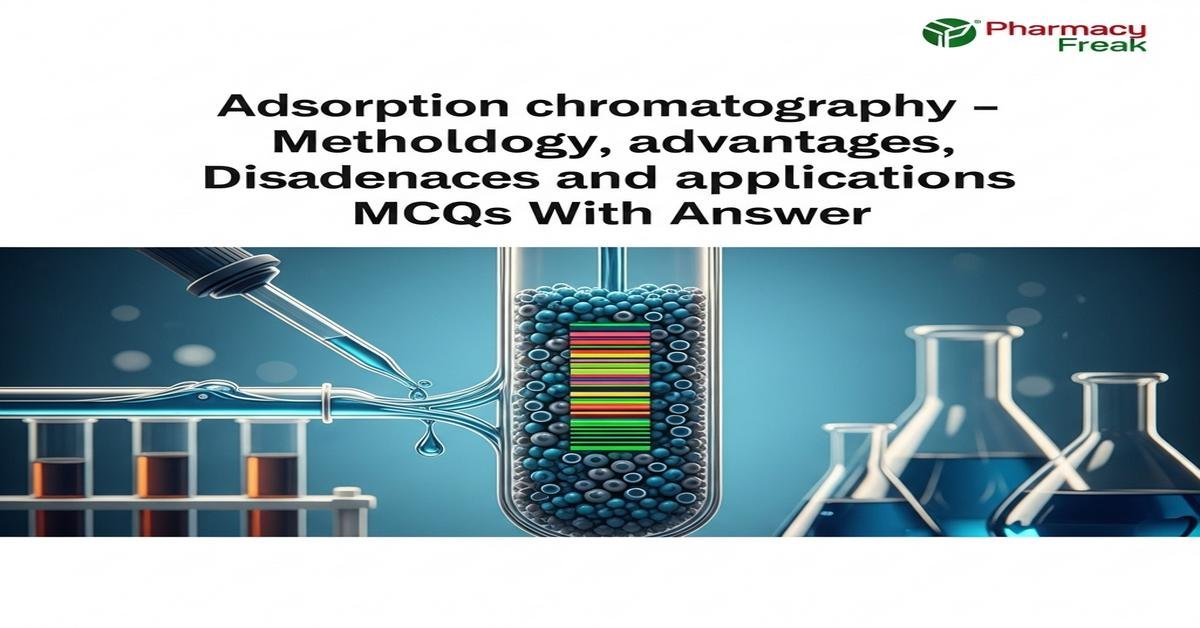
Adsorption chromatography – methodology, advantages, disadvantages and applications MCQs With Answer

Adsorption chromatography – methodology, advantages, disadvantages and applications MCQs With Answer

Adsorption chromatography is a core separation technique in pharmaceutical analysis that relies on the interaction between analytes and a solid adsorbent stationary phase such as silica or alumina. B.Pharm students should understand methodology elements—adsorbent selection, mobile phase polarity, column packing, elution techniques, and adsorption isotherms (Langmuir, Freundlich)—along with performance metrics like retention, selectivity, and efficiency. … Read more

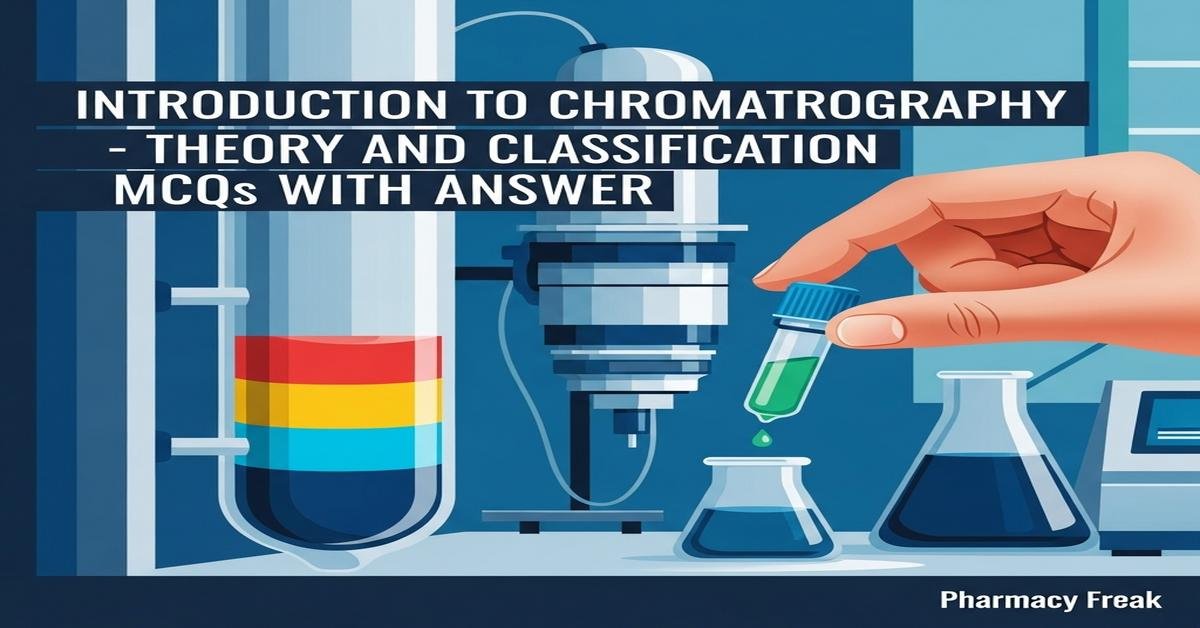
Introduction to Chromatography – theory and classification MCQs With Answer

Introduction to Chromatography – theory and classification MCQs With Answer

Chromatography is a fundamental separation technique in pharmaceutical analysis, combining theory and practical classification to resolve complex mixtures. This introduction covers chromatographic mechanisms—adsorption, partition, ion-exchange, size-exclusion and affinity—along with common systems such as TLC, HPLC, and GC. Key concepts like stationary phase, mobile phase, retention time, Rf, resolution, theoretical plates, van Deemter equation, and detector … Read more

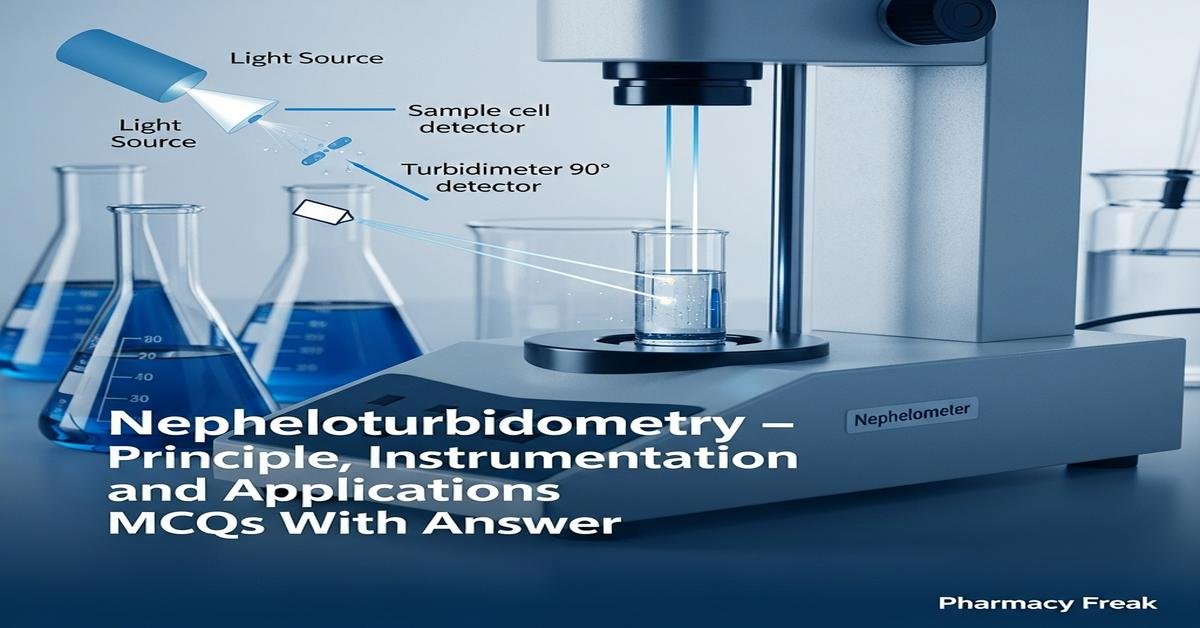
Nepheloturbidometry – principle, instrumentation and applications MCQs With Answer

Nepheloturbidometry – principle, instrumentation and applications MCQs With Answer

Nepheloturbidometry combines nephelometry and turbidimetry to quantify suspended particles by measuring light scattering and loss of transmitted light. The principle relies on light scattering phenomena (Rayleigh and Mie regimes) where particle size, concentration, refractive index, wavelength and measurement angle influence signal. Instrumentation includes a stable light source, sample cell, optics, angle-specific detectors (often 90° for … Read more

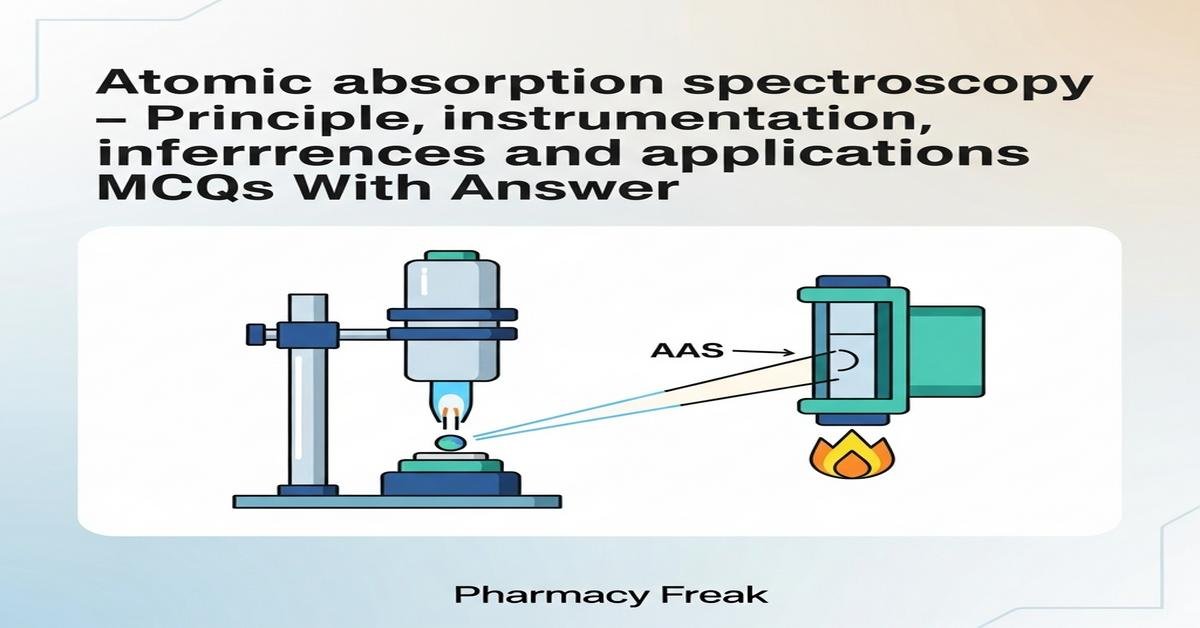
Atomic absorption spectroscopy – principle, instrumentation, interferences and applications MCQs With Answer

Atomic absorption spectroscopy – principle, instrumentation, interferences and applications MCQs With Answer

Atomic absorption spectroscopy (AAS) is a sensitive analytical technique widely used in pharmaceutical analysis for trace metal determination. This introduction covers the AAS principle — generation of free ground‑state atoms and element‑specific light absorption — and key instrumentation: hollow cathode lamps, nebulizers, burners, graphite furnaces, monochromators, and photomultiplier detectors. It explains common interferences (spectral overlap, … Read more

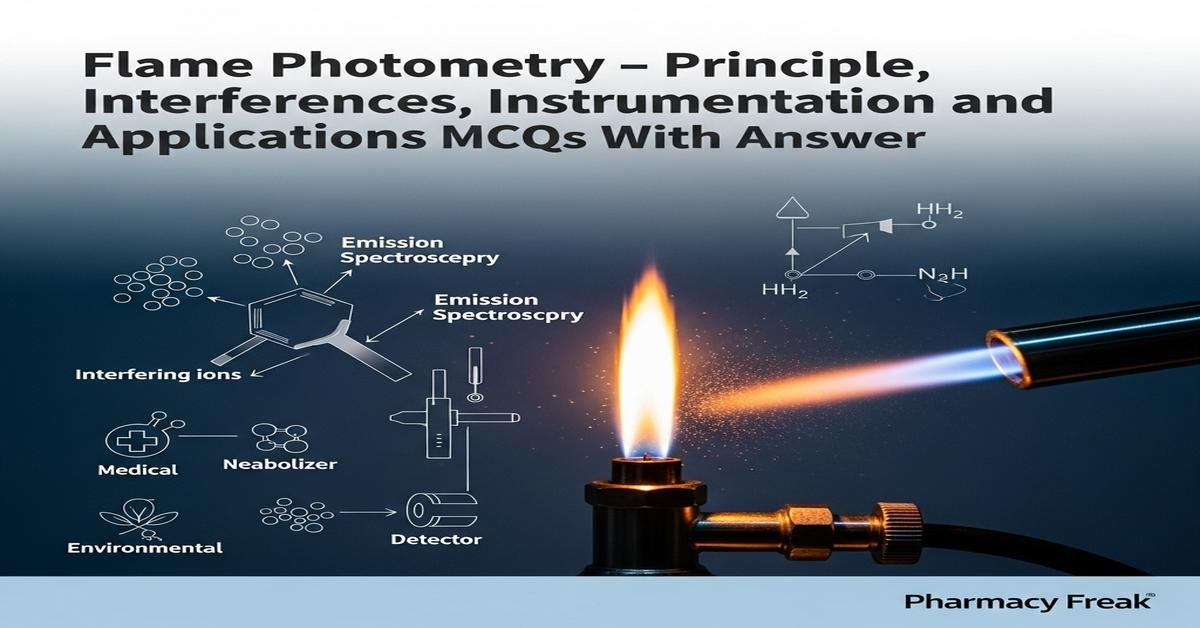
Flame photometry – principle, interferences, instrumentation and applications MCQs With Answer

Flame photometry – principle, interferences, instrumentation and applications MCQs With Answer

Flame photometry is a vital, simple analytical technique used in pharmaceutical analysis for the quantitative determination of alkali and alkaline earth metals. B. Pharm students should understand the core principle—excited atoms emit characteristic radiation in a flame—and common instrumentation components such as the burner, nebulizer, monochromator/filters and photodetector. Important practical topics include interferences (spectral, chemical, … Read more

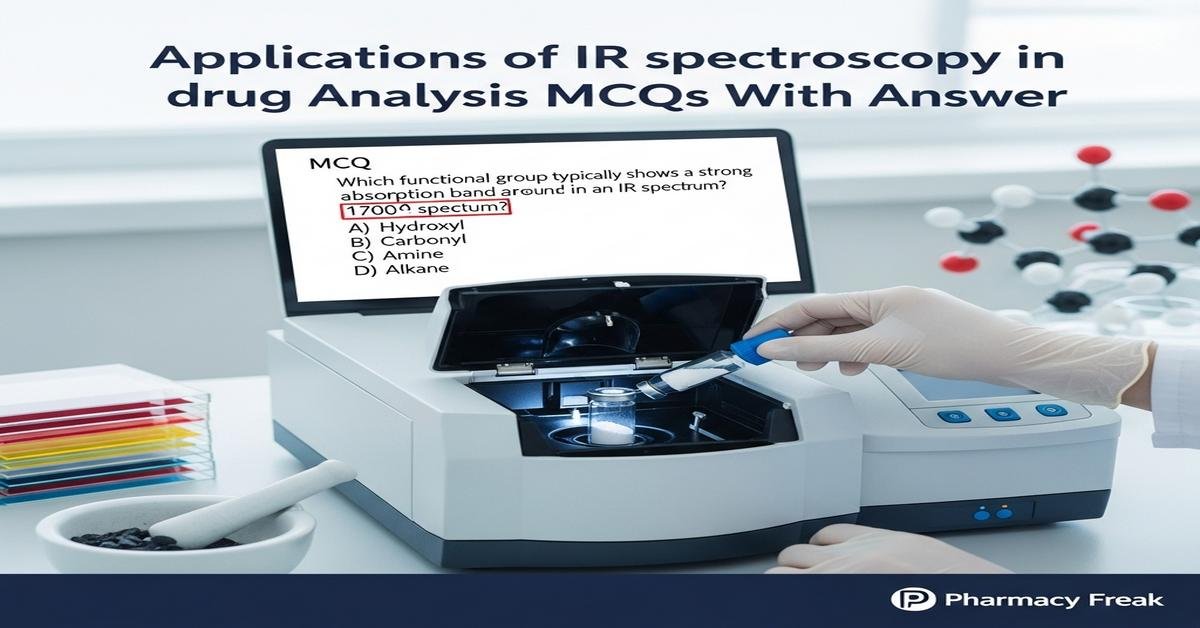
Applications of IR spectroscopy in drug analysis MCQs With Answer

Applications of IR spectroscopy in drug analysis MCQs With Answer

Introduction: Infrared (IR) spectroscopy is a core analytical technique in pharmaceutical analysis, essential for B.Pharm students studying drug identification, structural elucidation and quality control. IR (including FTIR and ATR) detects molecular vibrational modes and characteristic functional group absorptions—such as carbonyl (~1700 cm−1), O–H, N–H and C≡N—allowing fingerprint matching, polymorph differentiation, impurity profiling and salt form … Read more

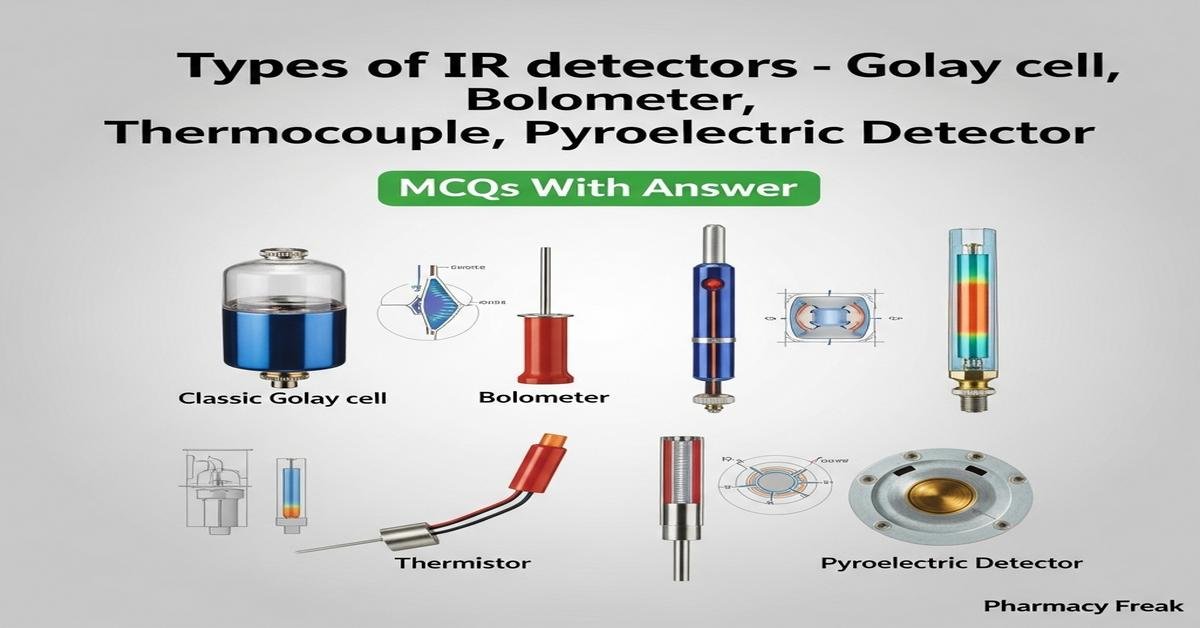
Types of IR detectors – Golay cell, Bolometer, Thermocouple, Thermistor, Pyroelectric detector MCQs With Answer

Types of IR detectors – Golay cell, Bolometer, Thermocouple, Thermistor, Pyroelectric detector MCQs With Answer

Introduction: Infrared (IR) detectors convert infrared radiation into measurable electrical signals and are essential in pharmaceutical analysis, instrumental spectroscopy, and quality control. This overview compares main thermal and pyroelectric detector types — Golay cell, bolometer, thermocouple, thermistor and pyroelectric detector — describing principles, materials, sensitivity, response time, noise-equivalent power (NEP) and spectral range. B. Pharm … Read more

PRO
Ad-Free Access
$3.99 / month
  • ✓ No Interruptions
  • ✓ Faster Page Loads
  • ✓ Support Content Creators