Trusted by 50K+ Pharmacy StudentsHigh Quality Notes, MCQs, Mock Tests & Study ResourcesGo Premium (Ads Free)
Pharmacy Freak

Mechanisms of drug-induced toxicity and idiosyncrasy MCQs With Answer
Mechanisms of drug-induced toxicity and idiosyncrasy MCQs With Answer

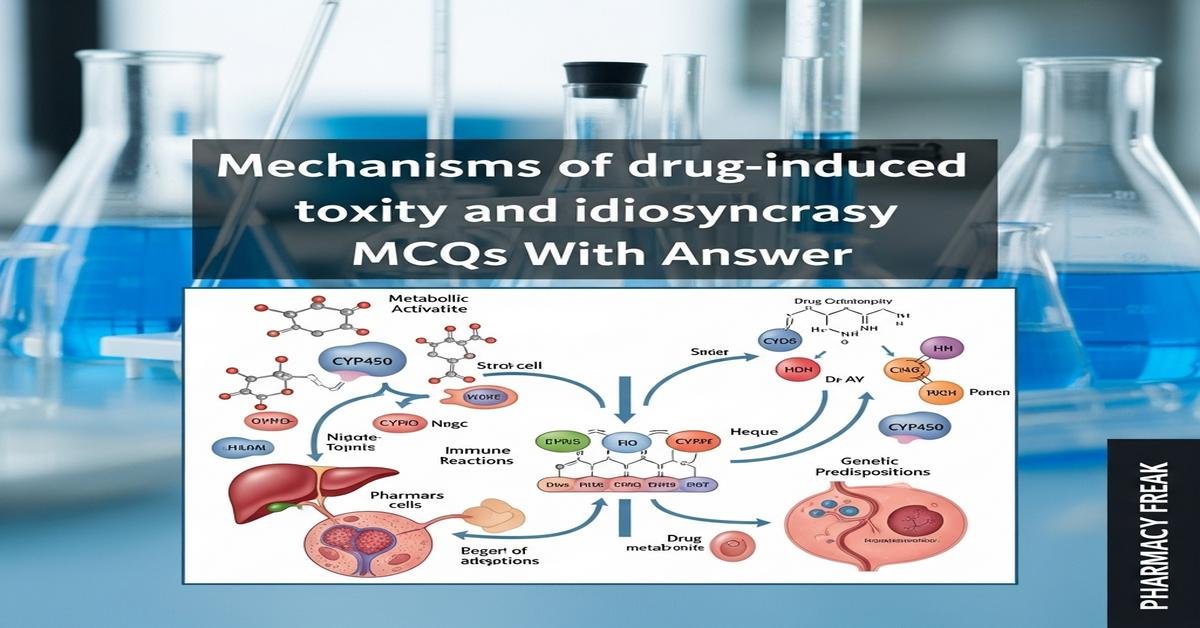
Introduction: Mechanisms of drug-induced toxicity and idiosyncrasy explore how drugs cause harmful effects through predictable dose-dependent pathways and unpredictable immune or genetic reactions. Key concepts include bioactivation to reactive metabolites, oxidative stress, mitochondrial dysfunction, cholestasis, transporter inhibition, hapten formation, the p-i concept, and pharmacogenomics (CYP polymorphisms, HLA alleles). Understanding organ-specific toxicities—hepatotoxicity, nephrotoxicity, cardiotoxicity—and clinical biomarkers … Read more

Classification and types of adverse drug reactions MCQs With Answer

Classification and types of adverse drug reactions MCQs With Answer

Understanding the classification and types of adverse drug reactions (ADRs) is essential for B. Pharm students preparing for exams and clinical practice. This concise guide focuses on pharmacovigilance concepts, including Type A (dose-related, predictable) and Type B (non-dose-related, idiosyncratic or allergic) reactions, plus less common categories such as Types C, D, E, and F. Emphasis … Read more

Responsibilities and functions of hospital pharmacist MCQs With Answer

Responsibilities and functions of hospital pharmacist MCQs With Answer

The role of a hospital pharmacist is central to safe, effective patient care. This introduction summarizes key responsibilities and functions of hospital pharmacists for B. Pharm students, emphasizing clinical pharmacy services, medication management, formulary management, pharmacovigilance, therapeutic drug monitoring, antimicrobial stewardship, medication reconciliation, patient counseling, sterile compounding, procurement, inventory control, and interdisciplinary collaboration. Understanding legal, … Read more

Organization, layout and staffing pattern of hospital pharmacy MCQs With Answer

Organization, layout and staffing pattern of hospital pharmacy MCQs With Answer

Understanding the organization, layout and staffing pattern of hospital pharmacy MCQs With Answer is essential for B.Pharm students preparing for clinical and administrative roles. This topic covers physical organization, functional zones (dispensing, compounding, cleanroom), workflow design, safety and security, inventory control, regulatory compliance, and optimal staffing models including pharmacist-to-bed ratios and technician roles. Mastery helps … Read more

Definition and functions of hospital pharmacy MCQs With Answer

Definition and functions of hospital pharmacy MCQs With Answer

Definition and functions of hospital pharmacy MCQs With Answer provide B.Pharm students a focused review of the hospital pharmacy role, including definition, drug procurement, storage, dispensing, compounding, clinical pharmacy services, therapeutic drug monitoring, medication safety, inventory management, formulary and pharmacovigilance. This concise introduction highlights core functions such as aseptic preparation, unit-dose distribution, controlled drug management, … Read more

Hospital organization structure and functions of medical staff MCQs With Answer

Hospital organization structure and functions of medical staff MCQs With Answer

Hospital organization structure and functions of medical staff MCQs With Answer Understanding hospital organization structure and functions of medical staff is essential for B. Pharm students preparing for clinical, administrative, and regulatory roles. This introduction outlines core concepts—hospital hierarchy, departmental divisions (clinical, surgical, pharmacy, nursing), roles of medical staff (consultants, residents, attending physicians), committees, credentialing, … Read more

Primary, secondary and tertiary hospitals – differences and organization MCQs With Answer

Primary, secondary and tertiary hospitals – differences and organization MCQs With Answer

Introduction: Primary, secondary and tertiary hospitals form the three-tier healthcare delivery system that shapes patient care, referral pathways, resource allocation and pharmacy services. For B.Pharm students, understanding differences in scope, infrastructure, clinical services, diagnostic capacity, staffing and medication management is essential. Primary hospitals focus on basic outpatient care, preventive services and essential medicines; secondary hospitals … Read more

Definition and classification of hospitals MCQs With Answer

Definition and classification of hospitals MCQs With Answer

Definition and classification of hospitals MCQs With Answer is an essential topic for B.Pharm students to understand healthcare infrastructure, hospital types, and their roles in patient care. This introduction covers the definition of a hospital, core functions, and major classification criteria such as level of care (primary, secondary, tertiary), ownership (public, private, charitable), specialty (general, … Read more

Approval procedures and documentation for new drug applications MCQs With Answer

Approval procedures and documentation for new drug applications MCQs With Answer

Approval procedures and documentation for new drug applications introduce B. Pharm students to the regulatory framework, dossier structure, and evidence required to gain market authorization. This topic covers NDA/ANDA/505(b)(2) pathways, IND filings, CTD/eCTD format, CMC (Chemistry, Manufacturing & Controls), nonclinical and clinical data, bioavailability/bioequivalence studies, stability, GMP, pharmacovigilance and risk management plans. Understanding regulatory authorities … Read more

Regulatory requirements for new drug approval in India MCQs With Answer

Regulatory requirements for new drug approval in India MCQs With Answer

Introduction: Regulatory requirements for new drug approval in India cover legal frameworks, clinical trial approvals, documentation, and post‑marketing surveillance. B. Pharm students must understand key terms and authorities such as CDSCO, DCGI, NDCTR‑2019, Schedule Y, CTRI, GCP, CTD dossier, GMP certification, stability studies, bioavailability/bioequivalence, ethics committee approval, informed consent, and pharmacovigilance. Practical knowledge includes clinical … Read more

PRO
Ad-Free Access
$3.99 / month
  • ✓ No Interruptions
  • ✓ Faster Page Loads
  • ✓ Support Content Creators