Trusted by 50K+ Pharmacy StudentsHigh Quality Notes, MCQs, Mock Tests & Study ResourcesGo Premium (Ads Free)
Pharmacy Freak

Classification of sulfonamides MCQs With Answer

Classification of sulfonamides MCQs With Answer

Classification of sulfonamides is a vital topic for B. Pharm students that covers chemical and pharmacological grouping of sulfonamide antibacterial agents. This concise introduction explains classification by chemical structure (simple aryl, heterocyclic, long‑acting, topical), by pharmacokinetics and clinical use (systemic, topical, long‑acting), and by structure‑activity relationships (para‑amino benzene sulfonamide moiety). Emphasis on mechanism of action, … Read more
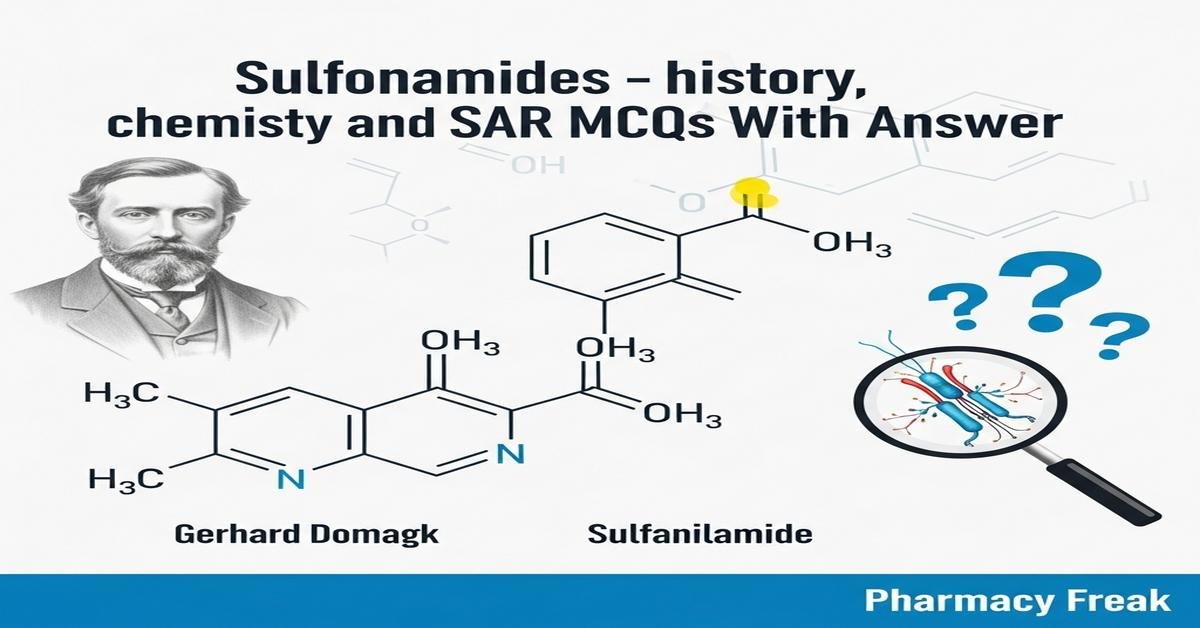
Sulfonamides – history, chemistry and SAR MCQs With Answer

Sulfonamides – history, chemistry and SAR MCQs With Answer

Sulfonamides – history, chemistry and SAR MCQs With Answer Sulfonamides, the first widely used synthetic antibacterial agents, revolutionized therapy after Gerhard Domagk’s discovery of Prontosil in the 1930s. For B. Pharm students, understanding sulfonamide chemistry, mechanism as PABA analogues that inhibit dihydropteroate synthase, and key SAR (para‑amino benzene sulfonamide scaffold, N‑substitutions, pKa effects) is essential. … Read more

Niclosamide, Oxamniquine, Praziquantel, Ivermectin MCQs With Answer

Niclosamide, Oxamniquine, Praziquantel, Ivermectin MCQs With Answer

Niclosamide, Oxamniquine, Praziquantel, Ivermectin MCQs With Answer This concise guide introduces four important anthelmintics—Niclosamide, Oxamniquine, Praziquantel and Ivermectin—for B.Pharm students. It covers spectrum of activity (cestodes, trematodes, nematodes), mechanisms of action (mitochondrial uncoupling, tegument disruption, Ca2+ influx, glutamate‑gated chloride channel modulation), pharmacokinetics, clinical uses, adverse effects and key drug interactions. Emphasis is on features relevant … Read more

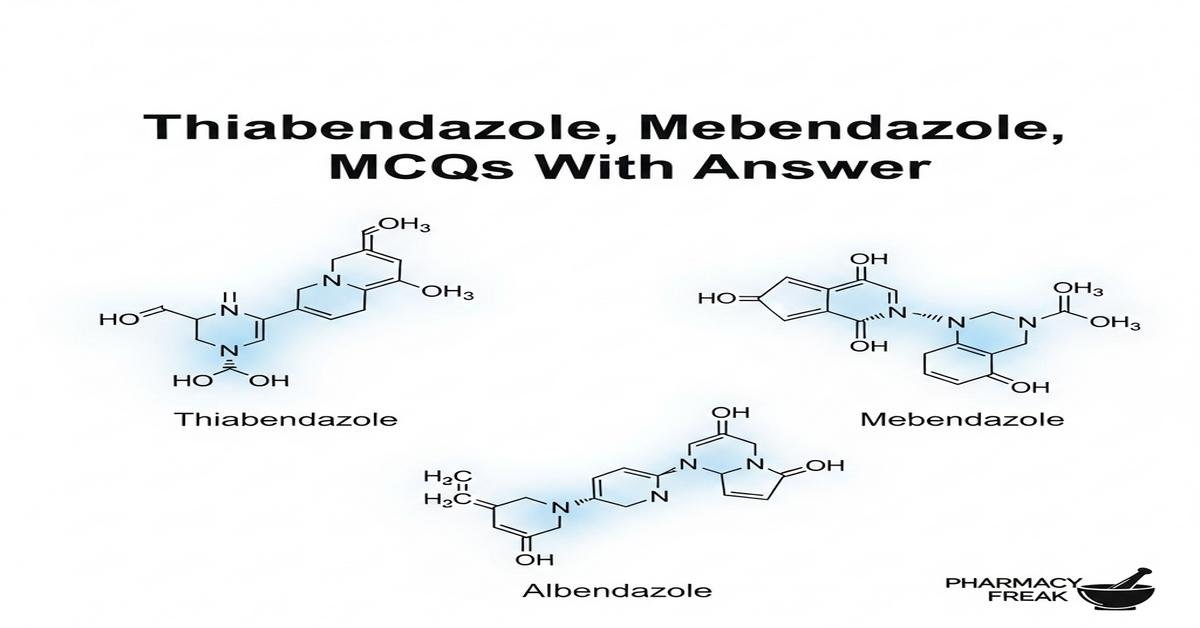
Thiabendazole, Mebendazole, Albendazole MCQs With Answer

Thiabendazole, Mebendazole, Albendazole MCQs With Answer

This concise MCQ collection on Thiabendazole, Mebendazole, and Albendazole is designed for B. Pharm students to deepen understanding of benzimidazole anthelmintics. Questions focus on mechanism of action, pharmacokinetics, clinical indications, dosing principles, adverse effects, drug interactions, contraindications, resistance mechanisms, and monitoring. Emphasis on drug chemistry, absorption, metabolism to active metabolites, safety profiles, and therapeutic use … Read more

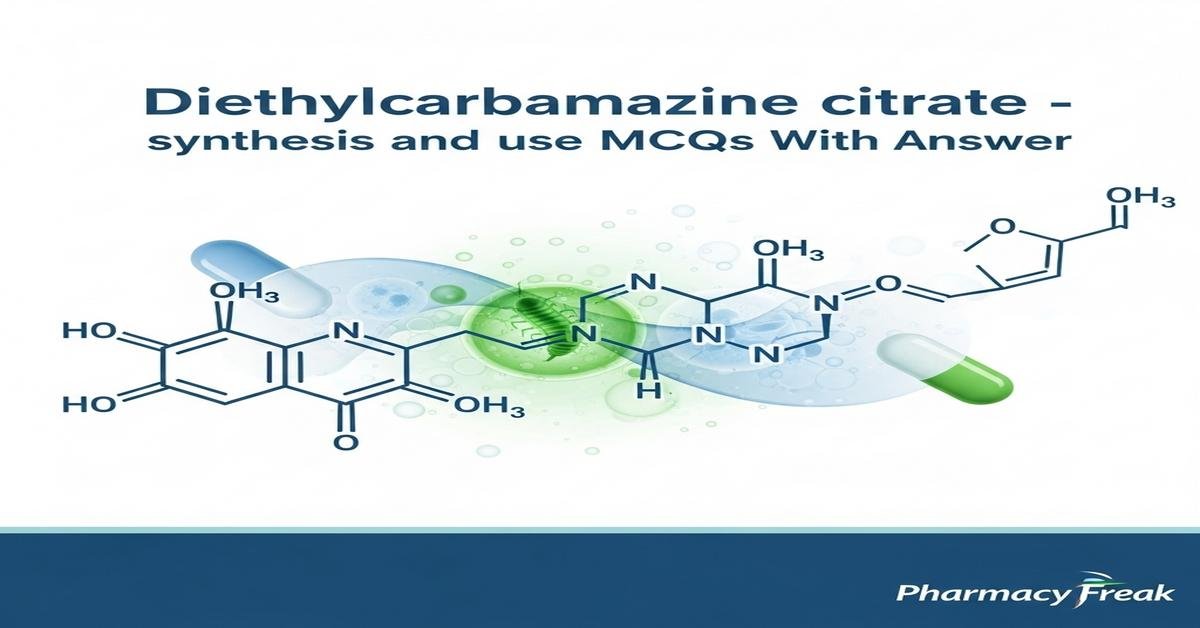
Diethylcarbamazine citrate – synthesis and use MCQs With Answer

Diethylcarbamazine citrate – synthesis and use MCQs With Answer

Diethylcarbamazine citrate is an important antifilarial agent studied in pharmaceutics and clinical pharmacy for its role in treating lymphatic filariasis and related parasitic infections. This introduction covers synthesis (conversion of the free base to the citrate salt), formulation advantages, mechanism of action (microfilarial surface alteration and host immune clearance), pharmacokinetics, adverse effects such as Mazzotti … Read more

Anthelmintics – classification and mechanism MCQs With Answer

Anthelmintics – classification and mechanism MCQs With Answer

Anthelmintics – classification and mechanism MCQs With Answer Anthelmintics are drugs used to treat helminthic infections; understanding their classification, mechanisms, spectra, pharmacokinetics and resistance is essential for B. Pharm students. This concise, keyword-rich introduction covers major classes—benzimidazoles, macrocyclic lactones, praziquantel, imidazothiazoles, tetrahydropyrimidines and salicylanilides—and explains mechanisms such as β-tubulin binding, glutamate-gated chloride channel activation, nicotinic … Read more

Leishmaniasis drugs – Pentamidine, Atovaquone, Eflornithine MCQs With Answer

Leishmaniasis drugs – Pentamidine, Atovaquone, Eflornithine MCQs With Answer

Introduction Leishmaniasis drugs – Pentamidine, Atovaquone, Eflornithine MCQs With Answer Leishmaniasis is a complex protozoal infection requiring targeted antileishmanial therapy. This concise introduction reviews three important agents — Pentamidine, Atovaquone, and Eflornithine — addressing mechanisms of action, pharmacokinetics, clinical indications, adverse effects, resistance, and combination therapy. Pentamidine acts on nucleic acids and mitochondrial function; Atovaquone … Read more

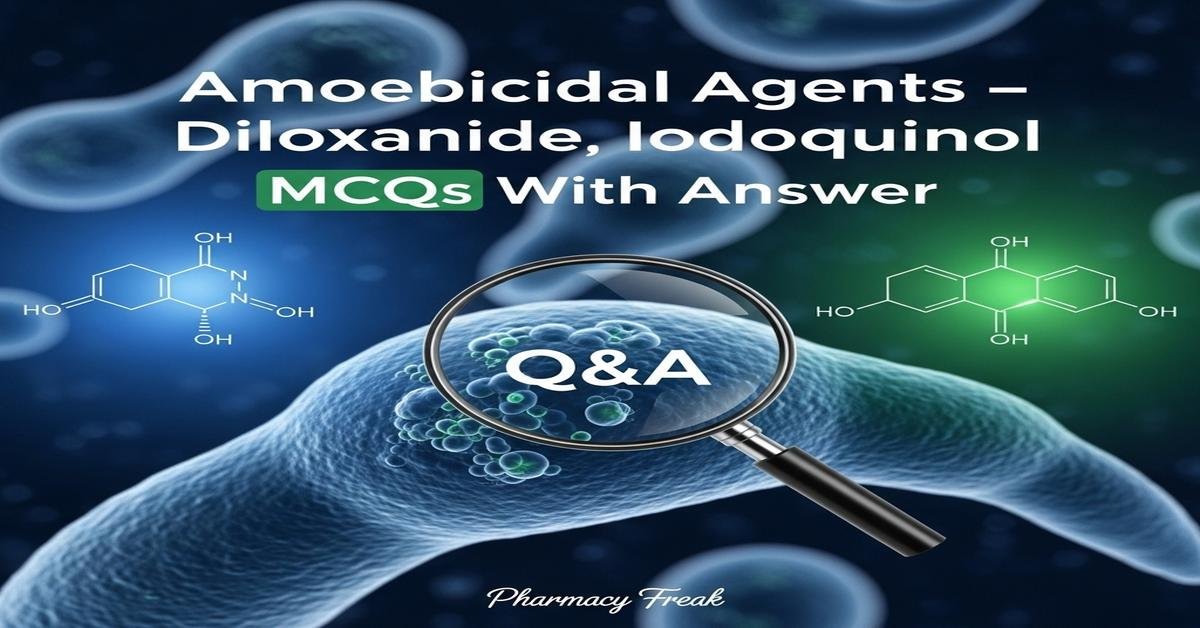
Amoebicidal agents – Diloxanide, Iodoquinol MCQs With Answer

Amoebicidal agents – Diloxanide, Iodoquinol MCQs With Answer

Amoebicidal agents – Diloxanide, Iodoquinol MCQs With Answer Amoebicidal agents, particularly Diloxanide and Iodoquinol, are key luminal therapies for intestinal amoebiasis and carrier eradication. This concise, B. Pharm-focused overview covers mechanisms, pharmacokinetics, dosage forms, clinical uses, adverse effects, contraindications, drug interactions and monitoring essentials. Students will learn distinctions between luminal and tissue amoebicides, rationale for … Read more

Anti-protozoal agents – Metronidazole, Tinidazole, Ornidazole MCQs With Answer

Anti-protozoal agents – Metronidazole, Tinidazole, Ornidazole MCQs With Answer

Anti-protozoal agents like metronidazole, tinidazole and ornidazole are essential nitroimidazole drugs encountered in B.Pharm curriculum and pharmacy practice. This concise, keyword-focused introduction outlines their mechanism of action (nitro‑group reduction to reactive intermediates causing DNA damage), pharmacokinetics (absorption, hepatic metabolism, half‑life differences), clinical uses (amoebiasis, giardiasis, trichomoniasis, anaerobic infections), major adverse effects (metallic taste, GI upset, … Read more

Tolnaftate and Naftifine hydrochloride MCQs With Answer

Tolnaftate and Naftifine hydrochloride MCQs With Answer

Tolnaftate and Naftifine Hydrochloride MCQs With Answer Tolnaftate and naftifine hydrochloride are important topical antifungal agents in the B.Pharm curriculum. This concise review introduces chemical classes, mechanisms of action, pharmacology, formulations, therapeutic uses and safety profiles relevant to dermatophyte infections such as tinea pedis, corporis and cruris. Tolnaftate (a thiocarbamate) and naftifine hydrochloride (an allylamine) … Read more

PRO
Ad-Free Access
$3.99 / month
  • ✓ No Interruptions
  • ✓ Faster Page Loads
  • ✓ Support Content Creators