WHO and ICH guidelines for evaluation of herbal drugs MCQs With Answer
The World Health Organization (WHO) and International Council for Harmonisation (ICH) guidelines provide essential frameworks for the evaluation … Read more
The World Health Organization (WHO) and International Council for Harmonisation (ICH) guidelines provide essential frameworks for the evaluation … Read more
Introduction Novel herbal dosage forms such as phytosomes and other advanced systems are transforming herbal drug delivery by … Read more
Conventional herbal formulations — syrups, mixtures and tablets — form the backbone of phytopharmaceutical practice taught in B.Pharm … Read more
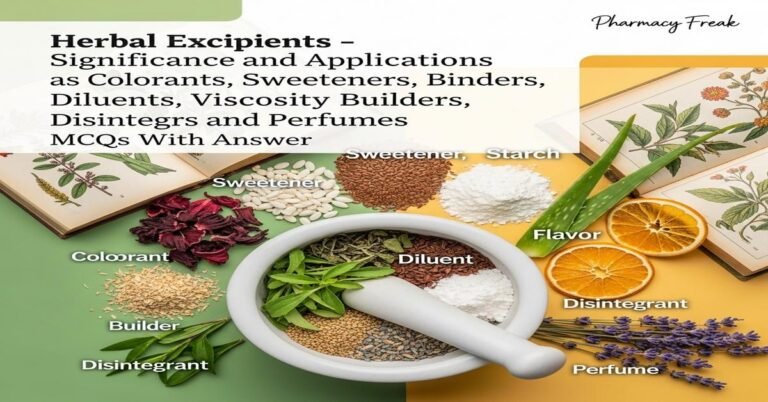
Herbal excipients are plant-derived substances widely used in pharmaceutics as colorants, sweeteners, binders, diluents, viscosity builders, disintegrants, flavors … Read more
Herbal cosmetics combine traditional botanicals with modern formulation science to create safe, effective skin-care, hair-care and oral-hygiene products. … Read more
Herbal raw materials for cosmetics — including oils, waxes, gums, natural colors, perfumes and antioxidants — form a … Read more
Introduction: Herbal medicines such as Hypericum (St. John’s wort), Kava‑kava, Ginkgo biloba, Ginseng, Garlic, black Pepper (piperine) and … Read more
Herb–drug and herb–food interactions – classification and importance is a crucial topic for B. Pharm students, linking pharmacokinetics, … Read more
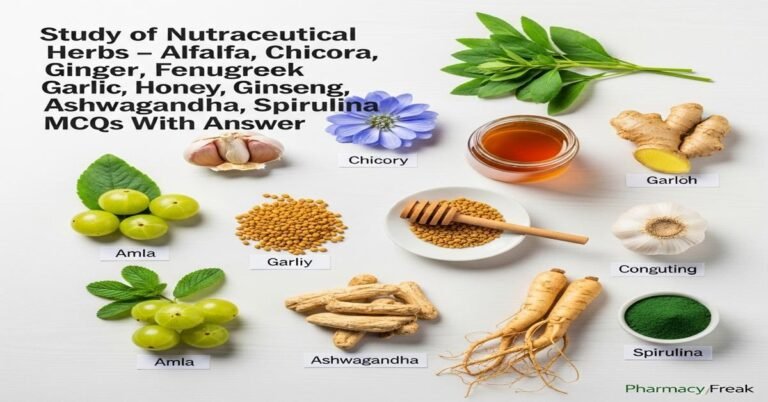
Study of nutraceutical herbs – Alfalfa, Chicory, Ginger, Fenugreek, Garlic, Honey, Amla, Ginseng, Ashwagandha, Spirulina MCQs With Answer … Read more
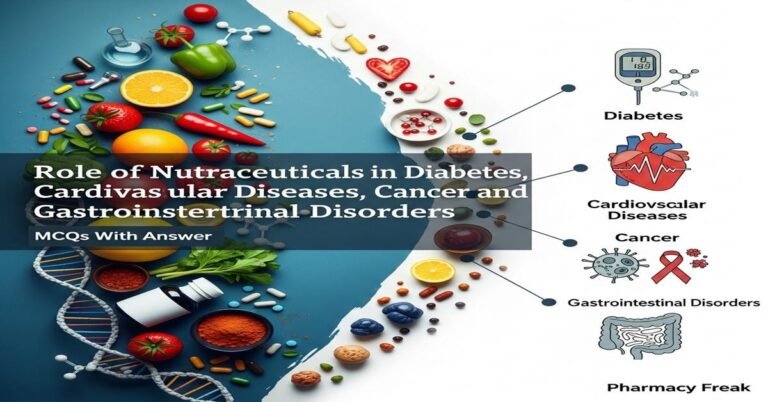
Introduction: Nutraceuticals—bioactive compounds derived from foods and herbs—play an expanding role in prevention and adjunctive management of chronic … Read more