Nepheloturbidometry – principle, instrumentation and applications MCQs With Answer
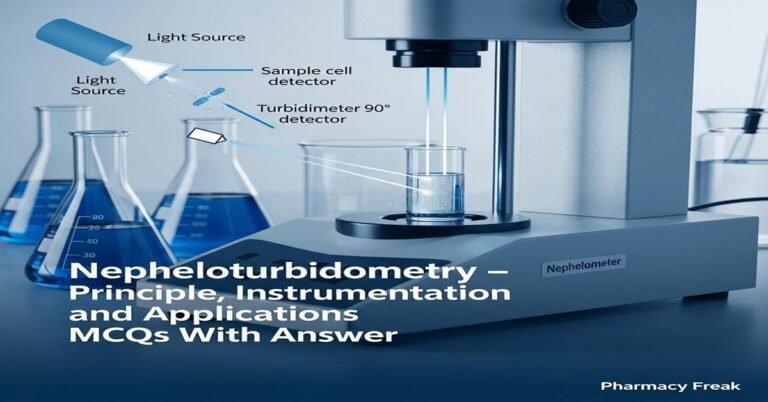
Nepheloturbidometry combines nephelometry and turbidimetry to quantify suspended particles by measuring light scattering and loss of transmitted light. … Read more
Nepheloturbidometry combines nephelometry and turbidimetry to quantify suspended particles by measuring light scattering and loss of transmitted light. … Read more
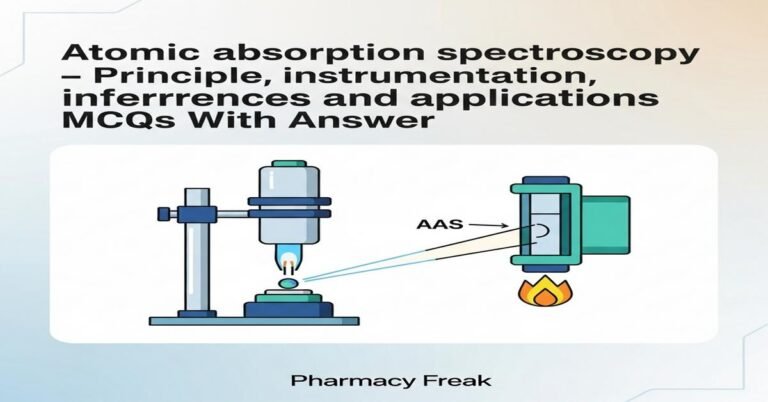
Atomic absorption spectroscopy (AAS) is a sensitive analytical technique widely used in pharmaceutical analysis for trace metal determination. … Read more
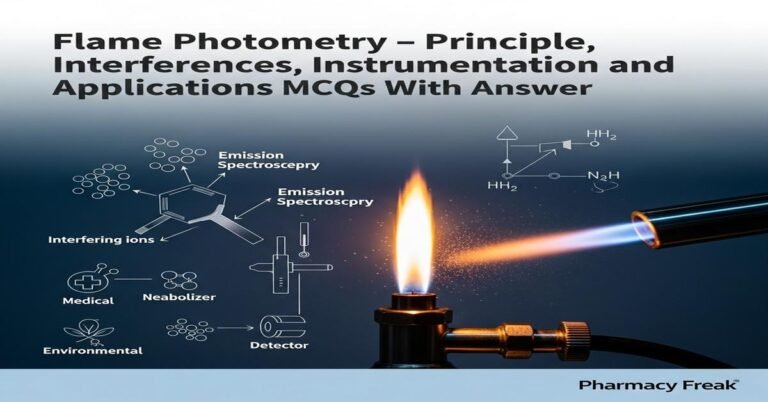
Flame photometry is a vital, simple analytical technique used in pharmaceutical analysis for the quantitative determination of alkali … Read more
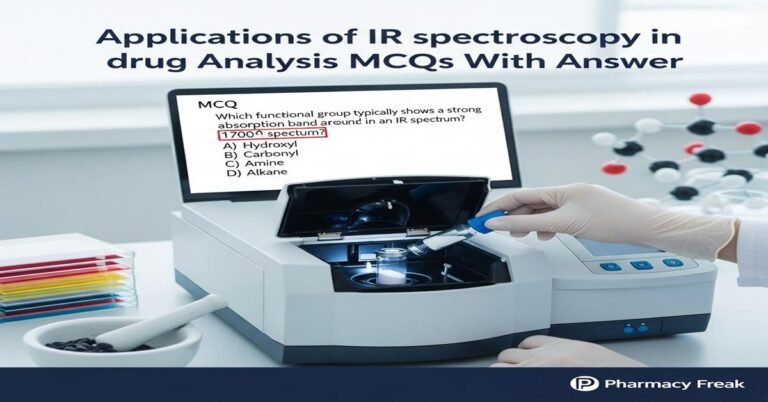
Introduction: Infrared (IR) spectroscopy is a core analytical technique in pharmaceutical analysis, essential for B.Pharm students studying drug … Read more
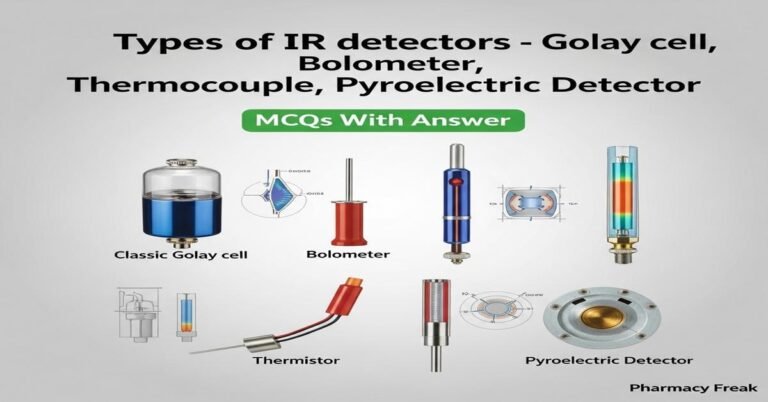
Introduction: Infrared (IR) detectors convert infrared radiation into measurable electrical signals and are essential in pharmaceutical analysis, instrumental … Read more
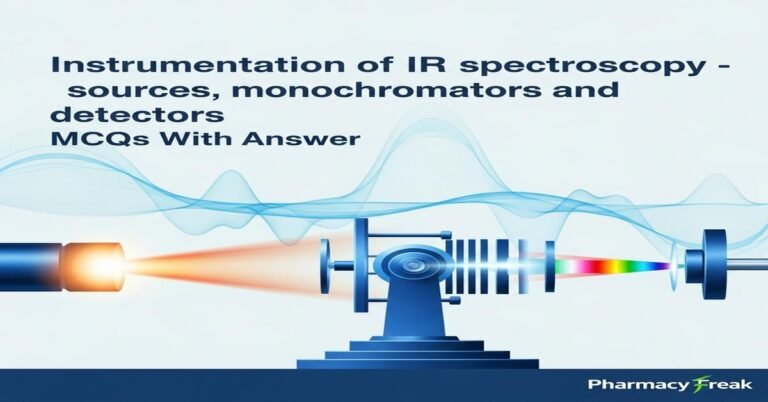
Introduction Instrumentation of IR spectroscopy covers the essential components that determine spectral quality: IR sources, monochromators and detectors. … Read more

Introduction: Vibrational frequency and absorption are central concepts in infrared (IR) spectroscopy, crucial for B.Pharm students analyzing drug … Read more
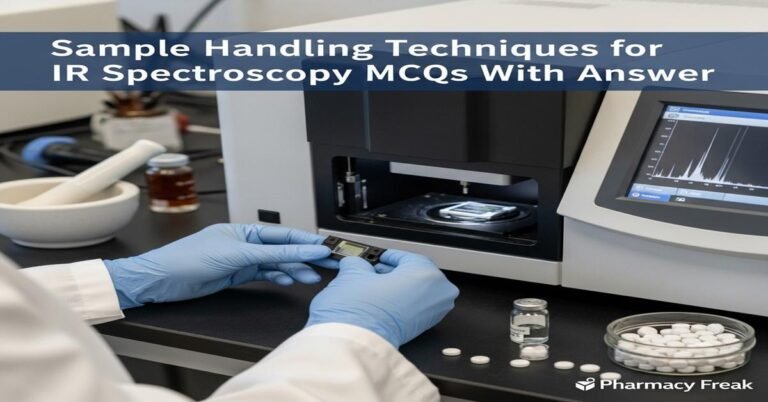
Sample handling techniques for IR spectroscopy are essential for accurate spectral interpretation in pharmaceutical analysis. This introduction reviews … Read more
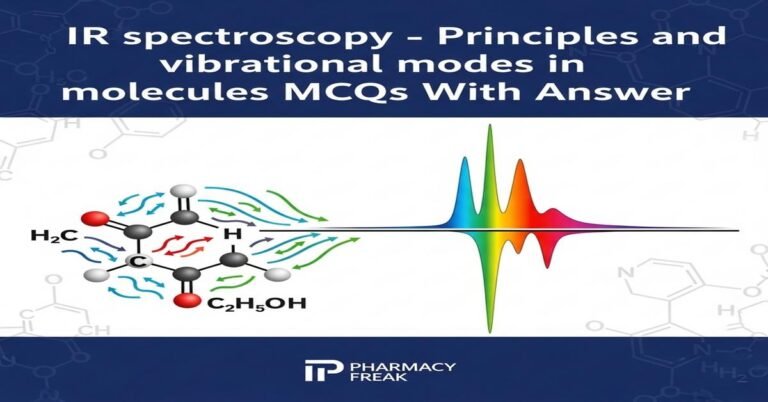
Infrared (IR) spectroscopy is a fundamental analytical technique for B.Pharm students that probes molecular vibrations to identify functional … Read more
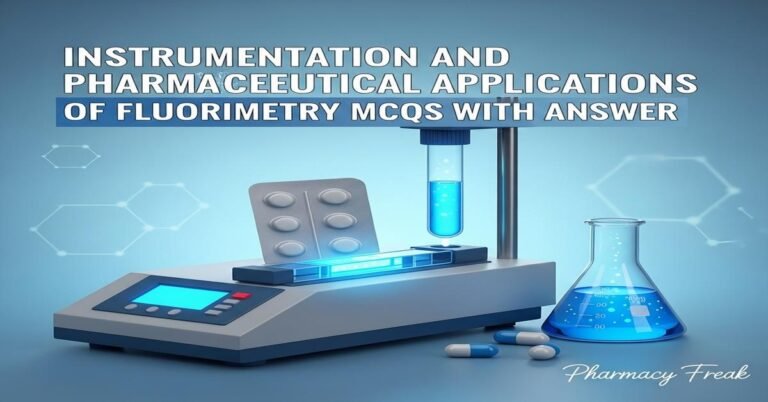
Introduction: Fluorimetry, or fluorescence spectroscopy, is a powerful analytical technique widely used in pharmaceutical analysis for sensitive and … Read more