Trusted by 50K+ Pharmacy StudentsHigh Quality Notes, MCQs, Mock Tests & Study ResourcesGo Premium (Ads Free)
Pharmacy Freak

Synthetic evidences for structure of benzene MCQs With Answer

Synthetic evidences for structure of benzene MCQs With Answer

Synthetic evidences for structure of benzene MCQs With Answer offers B. Pharm students a focused review of the experimental and synthetic data that established benzene’s unique aromatic structure. This introduction connects important keywords—benzene structure, Kekulé model, resonance stabilization, electrophilic aromatic substitution, hydrogenation enthalpy, and isomer counts—with practical synthetic observations and reaction patterns. It emphasizes how … Read more

Analytical evidences for structure of benzene MCQs With Answer

Analytical evidences for structure of benzene MCQs With Answer

Analytical evidences for structure of benzene MCQs With Answer provide B. Pharm students a focused, exam-ready review of how spectroscopy and thermochemistry confirm benzene’s aromaticity. This introduction highlights key analytical techniques—NMR, IR, mass spectrometry, UV-Vis, X-ray crystallography and heats of hydrogenation—and links them to core concepts like equal bond lengths, resonance energy and π-electron delocalization. … Read more

Soil pollution MCQs With Answer

Soil pollution MCQs With Answer

Soil pollution MCQs With Answer are essential for B. Pharm students to understand how soil contamination affects drug safety, public health, and environmental pharmacology. This concise, Student-friendly post covers key concepts like sources of soil pollution, heavy metals, pesticides, pharmaceutical residues, antibiotic resistance, bioaccumulation, analytical detection (AAS, GC-MS, ICP-MS), and remediation strategies (bioremediation, phytoremediation). Mastery … Read more

Water pollution MCQs With Answer

Water pollution MCQs With Answer

Water pollution MCQs With Answer tailored for B. Pharm students provide focused practice on water quality, contaminants, toxicology, and treatment processes relevant to pharmaceutical sciences. This concise, Student-friendly post highlights key topics such as organic and inorganic contaminants, microbial hazards, pharmaceutical residues, water quality parameters (BOD, COD, DO, pH, turbidity), analytical methods, and remediation technologies. … Read more

Air pollution MCQs With Answer

Air pollution MCQs With Answer

Air pollution MCQs With Answer provide B. Pharm students a focused, exam-ready review of key concepts in atmospheric contaminants, toxicology, and control strategies. This concise resource covers air pollutants such as PM2.5, PM10, NOx, SO2, O3, CO, and VOCs; mechanisms of respiratory and systemic toxicity; pharmacokinetic considerations; monitoring techniques; and regulatory standards including AQI and … Read more

Aquatic ecosystems – estuaries MCQs With Answer

Aquatic ecosystems – estuaries MCQs With Answer

Understanding aquatic ecosystems, especially estuaries, is essential for B. Pharm students studying pharmacology, ecotoxicology, and environmental safety. Estuaries are dynamic coastal zones where freshwater meets seawater, creating unique salinity gradients, high productivity, and complex biogeochemical cycles. Knowledge of estuarine processes — nutrient cycling, sediment dynamics, pollutant fate (including pharmaceutical contamination), bioaccumulation, and monitoring techniques — … Read more

Aquatic ecosystems – oceans MCQs With Answer

Aquatic ecosystems – oceans MCQs With Answer

Aquatic ecosystems – oceans MCQs With Answer are essential for B. Pharm students to understand marine biodiversity, environmental chemistry, and pharmacological potential of marine organisms. This concise, informative set covers ocean zones, salinity, primary productivity, marine toxins, bioaccumulation, algal blooms, and marine-derived drugs and extraction techniques. Emphasis is placed on how ocean health, pollutants, and … Read more

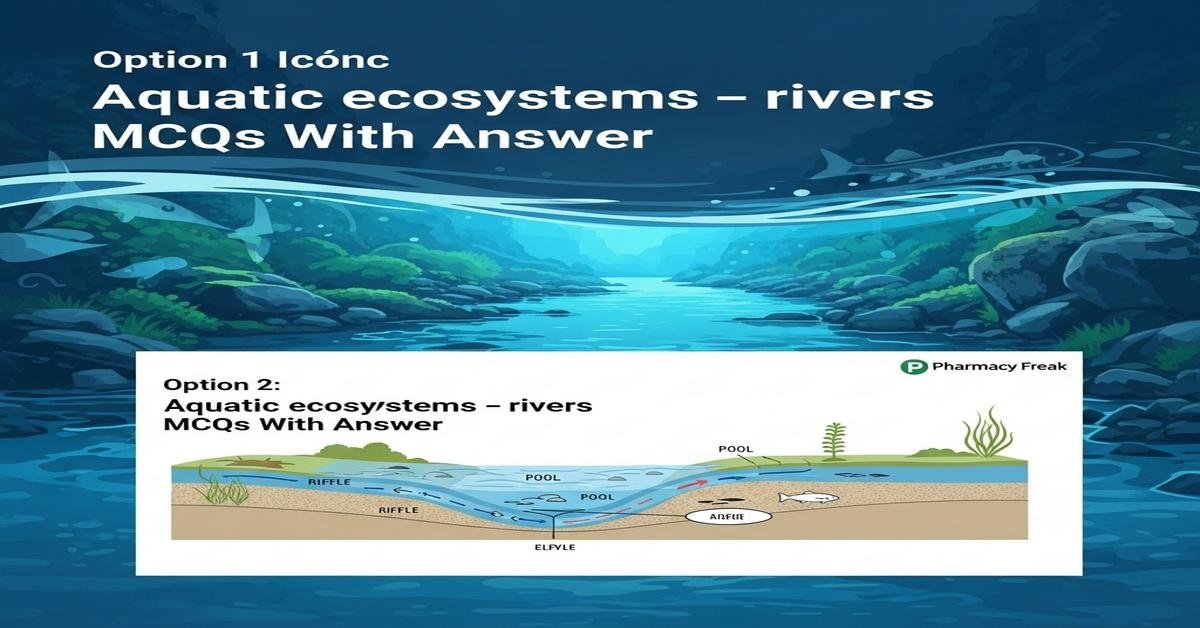
Aquatic ecosystems – rivers MCQs With Answer

Aquatic ecosystems – rivers MCQs With Answer

Aquatic ecosystems – rivers MCQs With Answer Rivers are dynamic aquatic ecosystems essential for water supply, biodiversity, and pollutant transport. This Student-friendly post covers riverine ecology, water quality parameters (dissolved oxygen, BOD, COD), nutrient cycling, pharmaceutical contaminants, bioaccumulation, eutrophication, and aquatic toxicology—topics crucial for B. Pharm students studying environmental pharmacology and public health. Understanding how … Read more

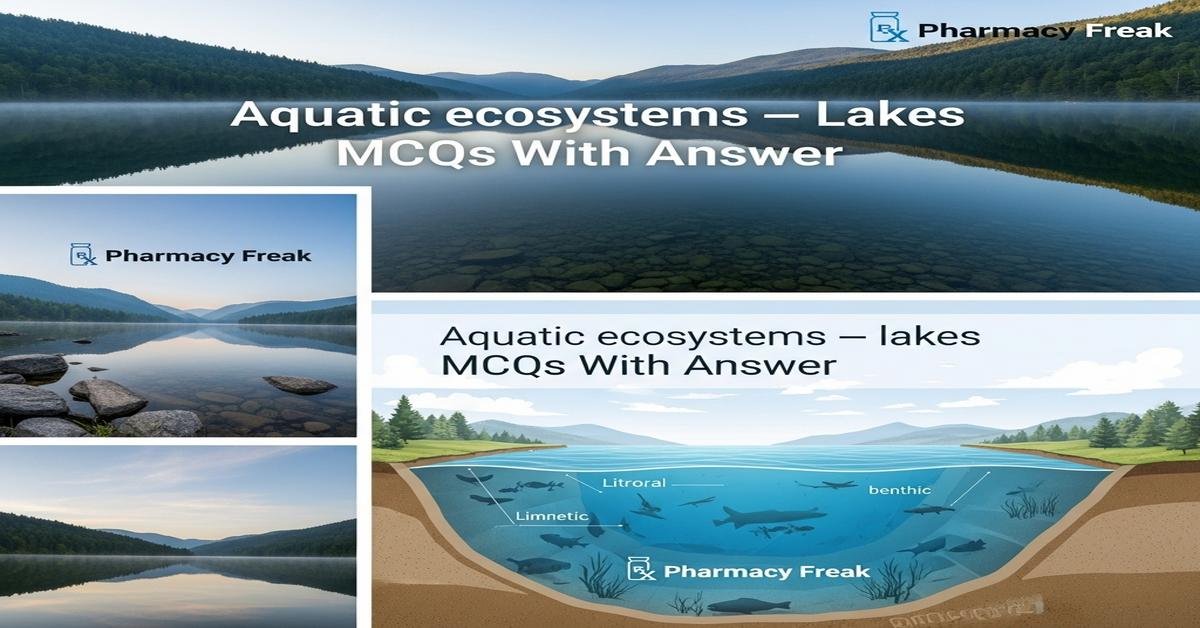
Aquatic ecosystems – lakes MCQs With Answer

Aquatic ecosystems – lakes MCQs With Answer

Aquatic ecosystems – lakes MCQs With Answer Understanding lake ecology is essential for B.Pharm students studying environmental pharmacology, ecotoxicology, and water quality. This introduction covers limnology basics, lake stratification, trophic states, nutrient cycling, eutrophication, and the fate of pharmaceuticals and personal care products (PPCPs) in freshwater systems. Emphasis is on water quality parameters, bioaccumulation, algal … Read more

Aquatic ecosystems – streams MCQs With Answer

Aquatic ecosystems – streams MCQs With Answer

Aquatic ecosystems – streams MCQs With Answer Understanding aquatic ecosystems, especially streams, is vital for B. Pharm students studying environmental pharmacology, drug fate, and ecotoxicology. Streams are dynamic lotic systems where flow, dissolved oxygen, temperature, pH, nutrients, and microbial communities influence the transport, transformation, and bioavailability of pharmaceuticals and contaminants. This concise, targeted set of … Read more

PRO
Ad-Free Access
$3.99 / month
  • No Interruptions
  • Faster Page Loads
  • Support Content Creators