Trusted by 50K+ Pharmacy StudentsHigh Quality Notes, MCQs, Mock Tests & Study ResourcesGo Premium (Ads Free)
Pharmacy Freak

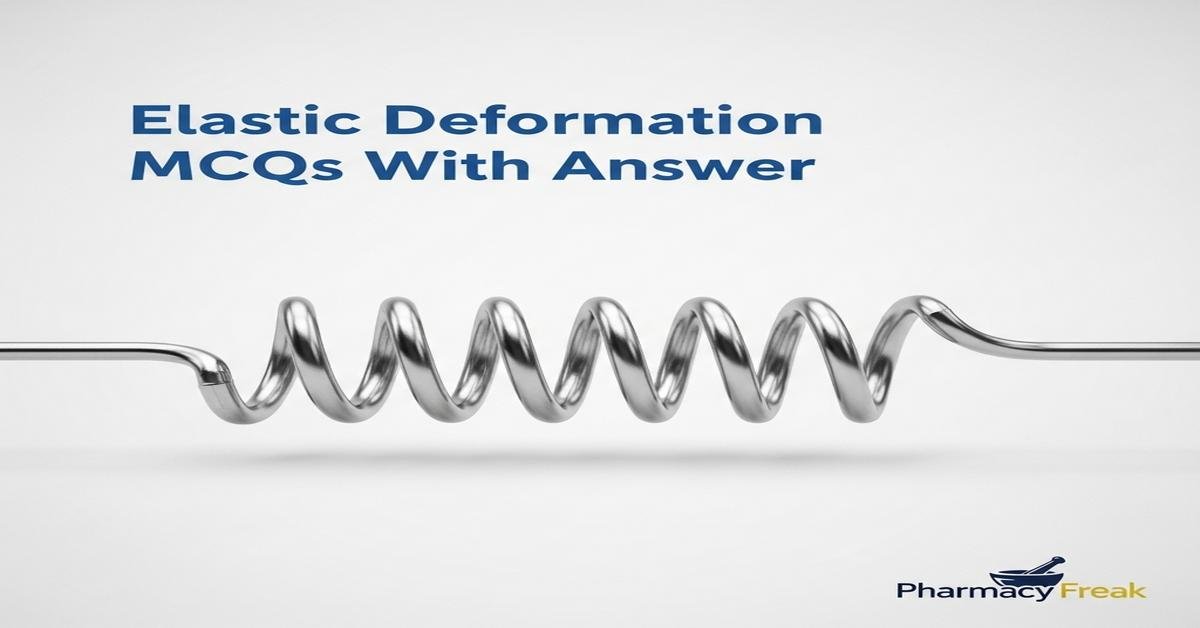
Elastic deformation MCQs With Answer

Elastic deformation MCQs With Answer

Elastic deformation MCQs With Answer are essential revision tools for B. Pharm students studying material behavior in pharmaceutical formulations. This concise, Student-friendly post covers key concepts like elastic deformation, Hooke’s law, stress and strain, Young’s modulus, elastic limit, viscoelasticity, and implications for tablet compression and polymeric excipients. Understanding elastic vs plastic deformation and elastic recovery … Read more

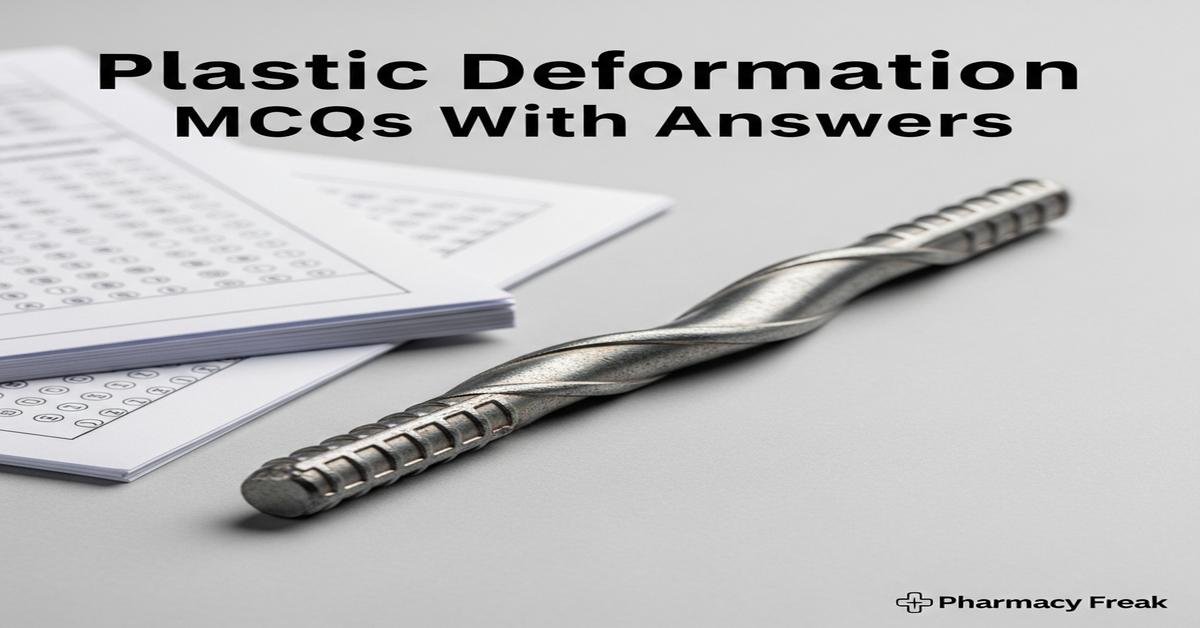
Plastic deformation MCQs With Answer

Plastic deformation MCQs With Answer

Introduction: Plastic deformation MCQs With Answer are essential for B. Pharm students studying mechanical behavior of pharmaceutical solids. Understanding plastic deformation helps explain tablet compaction, powder consolidation, and material failure during processing. This concise guide emphasizes key concepts—yield strength, ductility, work hardening, dislocation motion, slip systems, and the role of temperature and strain rate—in a … Read more

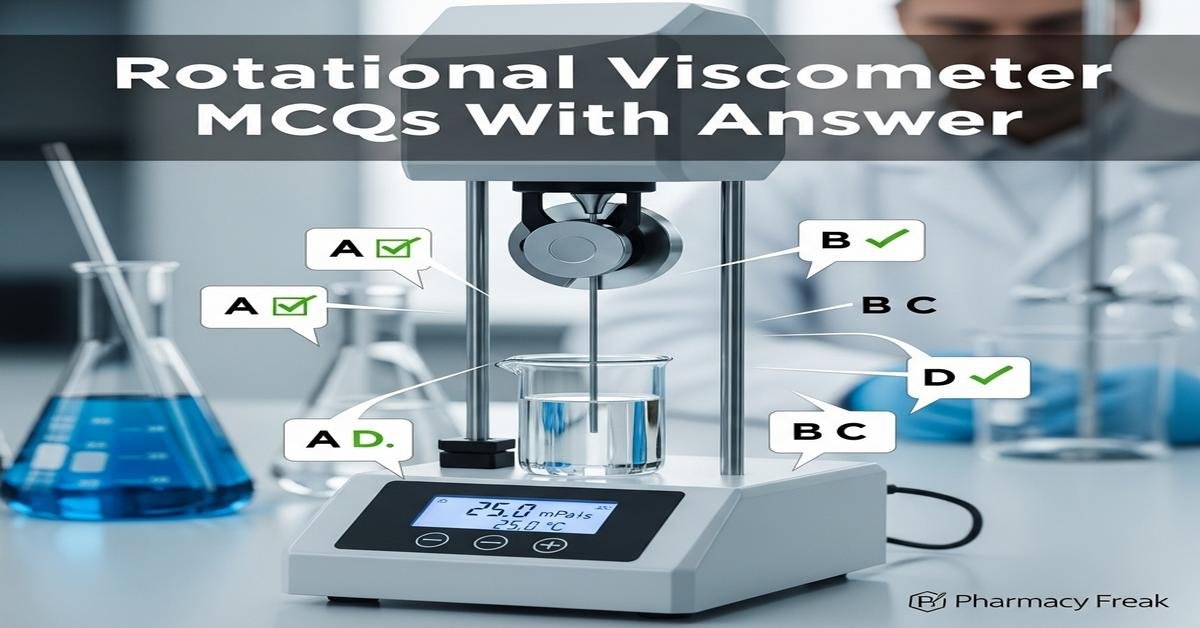
Rotational viscometer MCQs With Answer

Rotational viscometer MCQs With Answer

Rotational viscometer MCQs With Answer Rotational viscometer MCQs with answer are essential for B.Pharm students studying viscosity measurement, rheology, and pharmaceutical formulations. This concise, Student-friendly post covers key concepts like rotational viscometer types (Brookfield, cone-and-plate, cup-and-bob), torque, shear rate, Newtonian vs non-Newtonian behavior, temperature control, calibration, and application in suspensions, emulsions, and semisolids. These MCQs … Read more

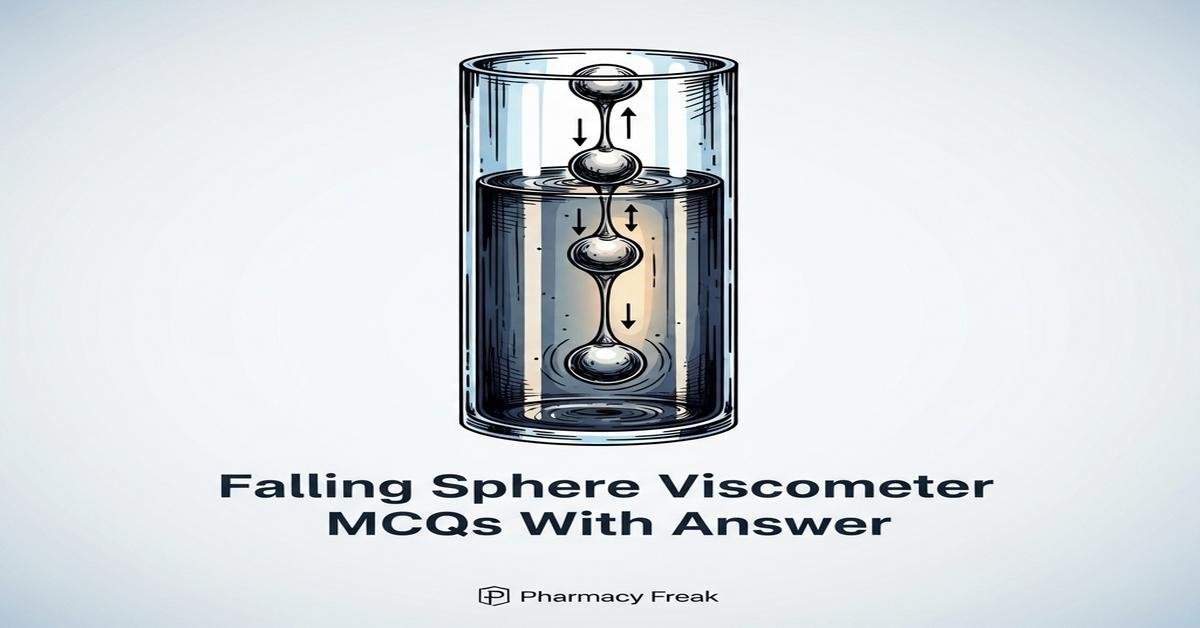
Falling sphere viscometer MCQs With Answer

Falling sphere viscometer MCQs With Answer

Introduction: The falling sphere viscometer MCQs with answer collection helps B. Pharm students master viscosity measurement using the falling (or falling ball) viscometer, a key tool in pharmaceutical formulation and quality control. This concise, Student-friendly post covers principles like Stokes’ law, terminal velocity, Reynolds number, wall-correction factors, and practical considerations for suspensions, syrups, and non-Newtonian … Read more

Capillary viscometer MCQs With Answer

Capillary viscometer MCQs With Answer

Capillary viscometer MCQs With Answer is a focused review designed for B. Pharm students preparing for exams and practicals in pharmaceutics and physical pharmacy. This concise guide covers capillary viscometer principles, types (Ostwald, Ubbelohde, Cannon-Fenske), Poiseuille’s law, kinematic and dynamic viscosity, calibration constants, temperature control, and data analysis including relative, specific and intrinsic viscosity. Emphasis … Read more

Viscosity determination methods MCQs With Answer

Viscosity determination methods MCQs With Answer

Viscosity determination methods MCQs With Answer Understanding viscosity determination methods is essential for B.Pharm students involved in formulation, quality control, and rheological analysis of pharmaceutical products. This concise, informative introduction covers capillary viscometers (Ostwald, Ubbelohde), rotational viscometers (Brookfield), falling ball and Stokes’ law approaches, kinematic vs dynamic viscosity, and rheological behavior of Newtonian and non-Newtonian … Read more

Thixotropy in formulations MCQs With Answer

Thixotropy in formulations MCQs With Answer

Thixotropy in formulations MCQs With Answer Thixotropy is a key rheological property in pharmaceutics describing time-dependent shear thinning where viscosity decreases under shear and recovers at rest. B. Pharm students must understand thixotropy for designing stable suspensions, gels, creams and injectables, and for selecting excipients like xanthan gum, carbomers or HPMC. This introduction covers mechanisms, … Read more

Thixotropy MCQs With Answer

Thixotropy MCQs With Answer

Thixotropy MCQs With Answer are essential study material for B.Pharm students studying pharmaceutics and rheology. This introduction covers thixotropy definition, mechanisms, measurement techniques, and pharmaceutical relevance — highlighting keywords such as thixotropy, rheology, viscosity, time-dependent shear thinning, gels, suspensions, and rheometers. Understanding thixotropic behavior helps formulators predict spreadability, stability, and syringeability of topical and parenteral … Read more

Plastic systems MCQs With Answer

Plastic systems MCQs With Answer

Plastic systems MCQs With Answer provide B. Pharm students a focused review of polymers used in pharmaceutical formulations, packaging, and medical devices. This introduction covers polymer classification, mechanical and barrier properties, additives (plasticizers, stabilizers), analytical methods (DSC, TGA, FTIR, GPC), sterilization effects, leachables/extractables, and regulatory considerations. Understanding polymer behavior—glass transition, crystallinity, permeability, and processing methods … Read more

Dilatant systems MCQs With Answer

Dilatant systems MCQs With Answer

Introduction: Dilatant systems MCQs With Answer are essential study tools for B. Pharm students preparing for pharmaceutics and rheology exams. This collection focuses on dilatant (shear-thickening) behavior, viscosity changes under stress, measurement techniques such as viscometry and rheometry, formulation factors like particle size, concentration, and medium, and practical applications in suspensions and topical products. Questions … Read more

PRO
Ad-Free Access
$3.99 / month
  • No Interruptions
  • Faster Page Loads
  • Support Content Creators