Trusted by 50K+ Pharmacy StudentsHigh Quality Notes, MCQs, Mock Tests & Study ResourcesGo Premium (Ads Free)
Pharmacy Freak

Use of permeation enhancers in transdermal formulations MCQs With Answer
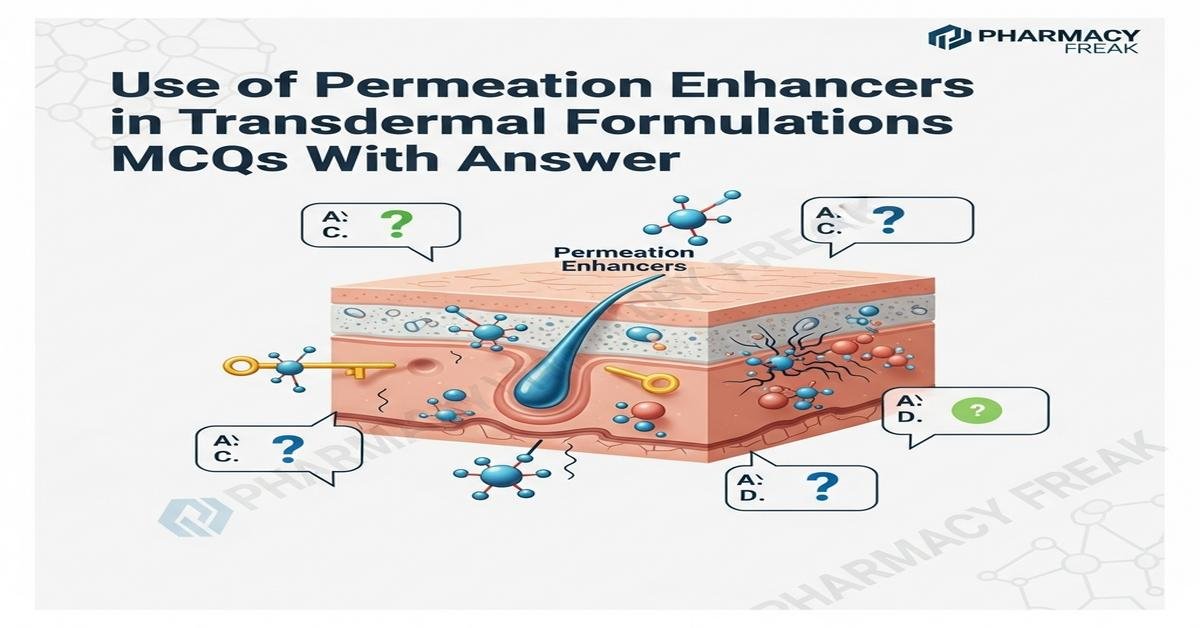
Use of permeation enhancers in transdermal formulations MCQs With Answer

Introduction: The use of permeation enhancers in transdermal formulations is a key topic for B.Pharm students studying drug delivery. Permeation enhancers (chemical penetration enhancers) increase skin permeation by reversible modification of the stratum corneum structure, improving drug partitioning and diffusion. Important keywords include transdermal delivery, skin permeation, stratum corneum, penetration enhancers, flux, lag time, bioavailability, … Read more
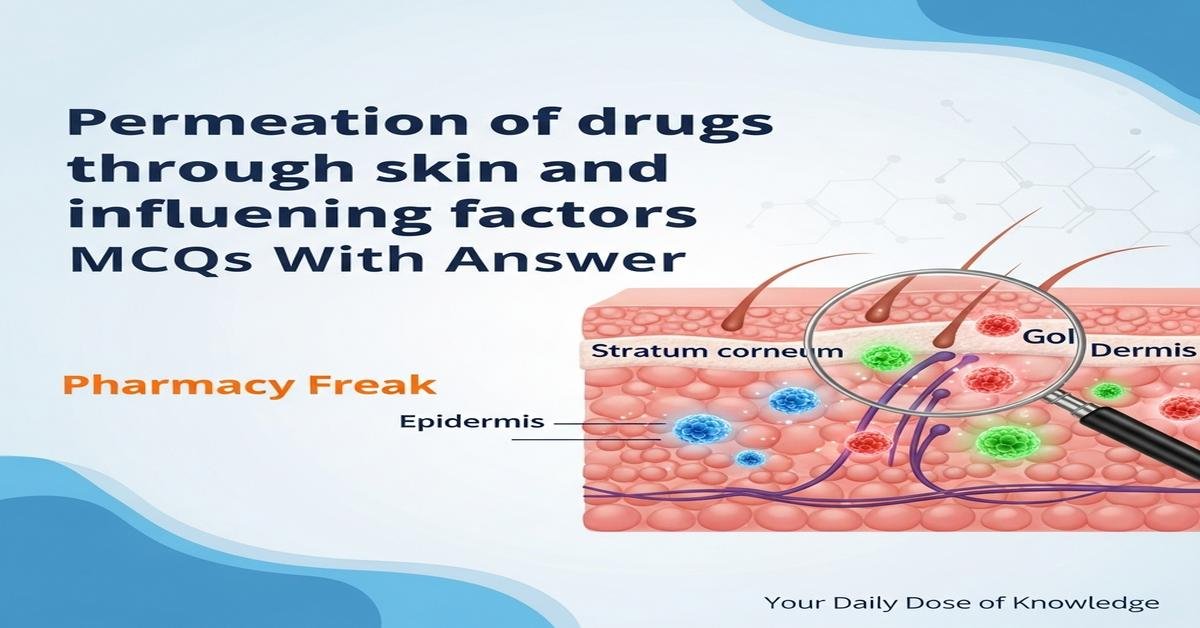
Permeation of drugs through skin and influencing factors MCQs With Answer

Permeation of drugs through skin and influencing factors MCQs With Answer

Introduction Permeation of drugs through skin is a key topic in transdermal delivery and topical therapy for B. Pharm students. Understanding mechanisms—stratum corneum barrier, diffusion, partitioning, and skin appendage pathways—helps predict drug flux, permeability coefficient, lag time, and bioavailability. Influencing factors include molecular weight, lipophilicity (log P), ionization, vehicle composition, skin hydration, occlusion, chemical enhancers, … Read more

Transdermal drug delivery systems – introduction and principles MCQs With Answer

Transdermal drug delivery systems – introduction and principles MCQs With Answer

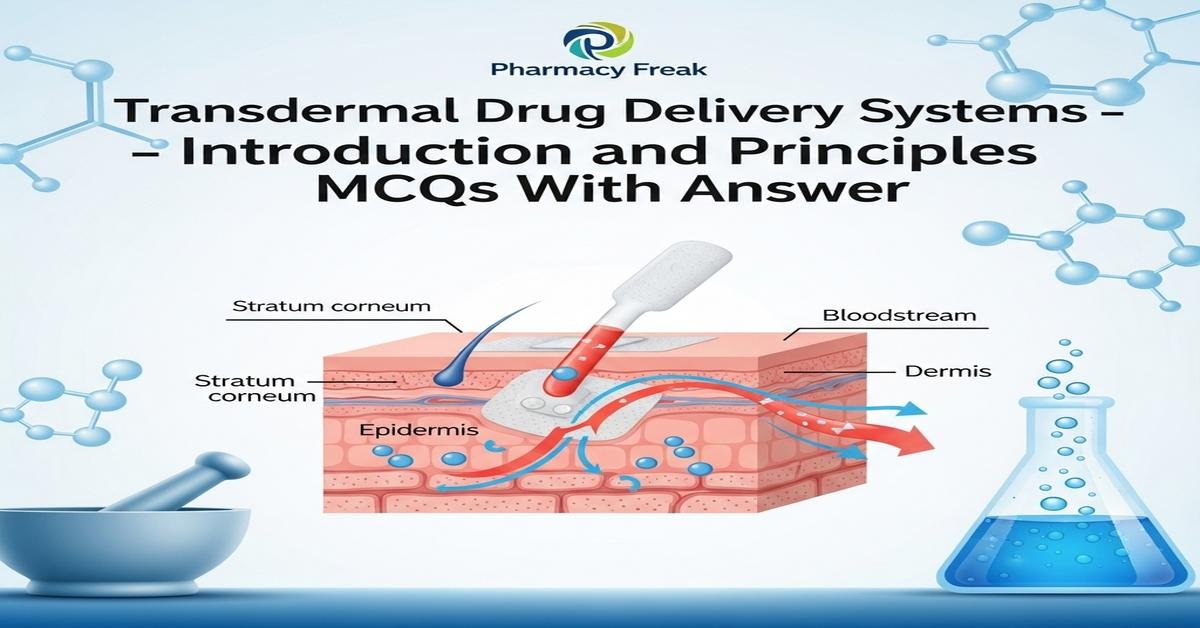
Transdermal drug delivery systems (TDD) provide controlled, non-invasive drug administration through the skin to achieve systemic or local effects. This introduction covers principles like percutaneous absorption, stratum corneum barrier function, Fick’s law of diffusion, partition coefficient, molecular weight limits, and rate-controlling membranes. You will learn formulation types (matrix, reservoir, drug-in-adhesive), role of polymers, permeation enhancers, … Read more

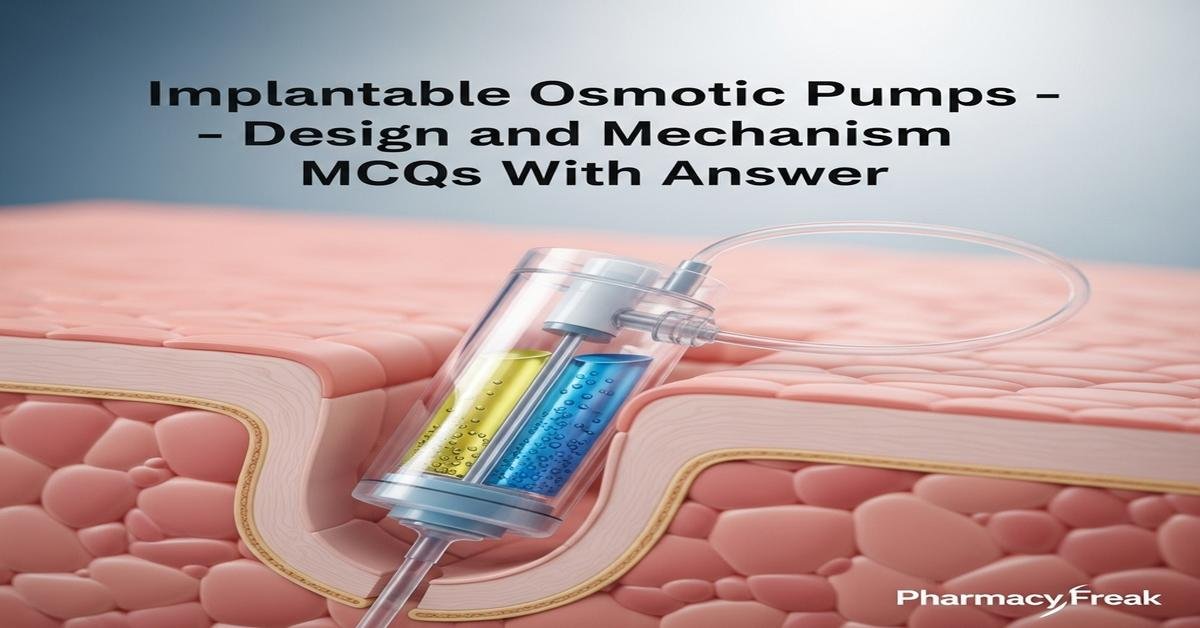
Implantable osmotic pumps – design and mechanism MCQs With Answer

Implantable osmotic pumps – design and mechanism MCQs With Answer

Implantable osmotic pumps are small, controlled-drug delivery devices widely studied in B.Pharm curricula. They rely on an osmotic engine and a semipermeable membrane to generate a constant infusion rate, enabling zero-order release of small molecules, peptides, and hormones over days to months. Key design elements include the drug reservoir, semipermeable membrane, osmotic agent, and flow … Read more

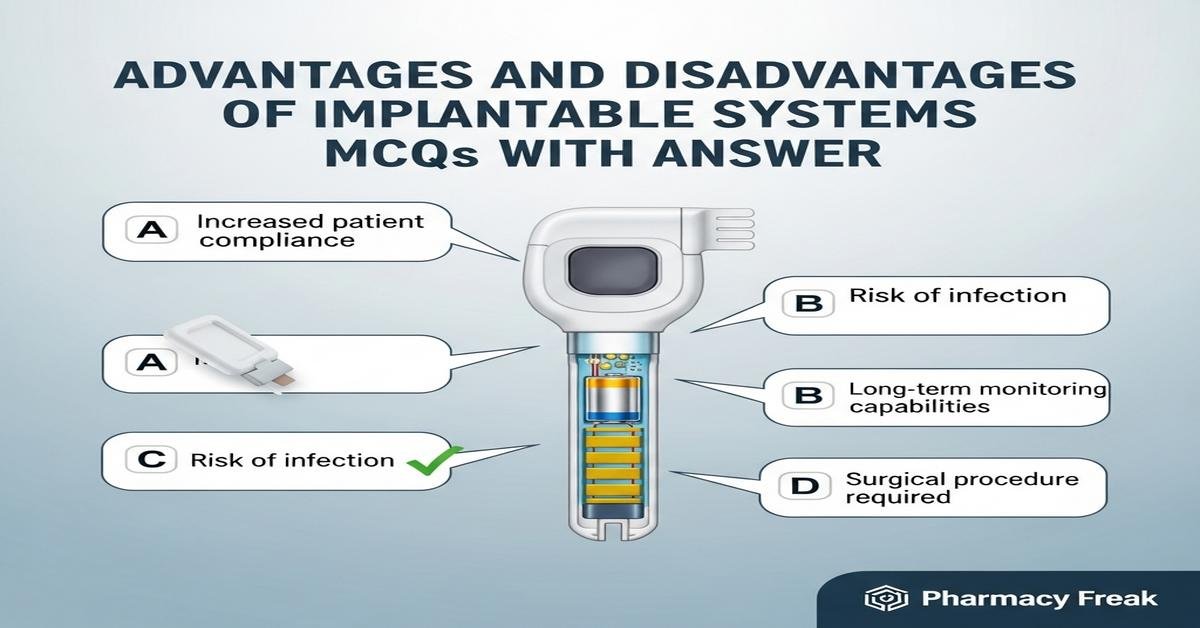
Advantages and disadvantages of implantable systems MCQs With Answer

Advantages and disadvantages of implantable systems MCQs With Answer

Advantages and disadvantages of implantable systems MCQs With Answer Implantable systems are medical devices placed inside the body to provide targeted drug delivery, electrical stimulation, or monitoring. For B. Pharm students, understanding implantable systems requires knowledge of drug delivery mechanisms, controlled release kinetics, biocompatibility, materials science, infection risk, device failure modes, and regulatory considerations. Key … Read more

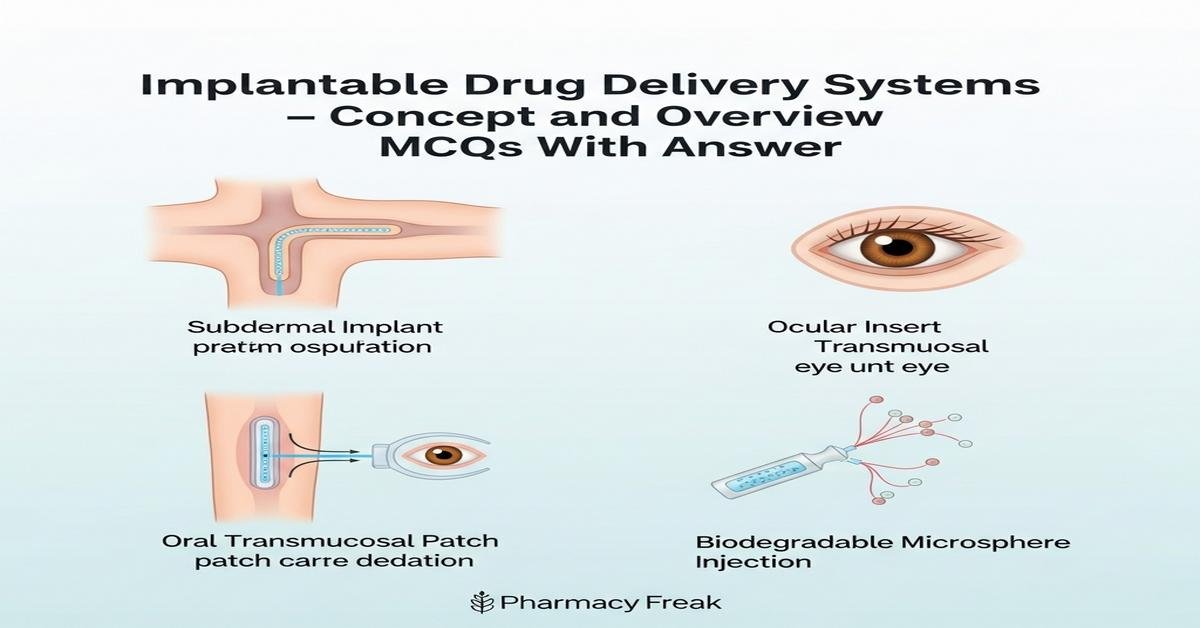
Implantable drug delivery systems – concept and overview MCQs With Answer

Implantable drug delivery systems – concept and overview MCQs With Answer

Introduction: Implantable drug delivery systems are advanced therapeutic devices designed to deliver drugs at controlled rates directly at the target site for prolonged periods. Key concepts include controlled release, biodegradable implants, polymeric implants, osmotic pumps, and reservoir versus matrix systems. Important considerations for B.Pharm students are biocompatibility, release kinetics (diffusion, erosion, osmotic), material selection (PLGA, … Read more

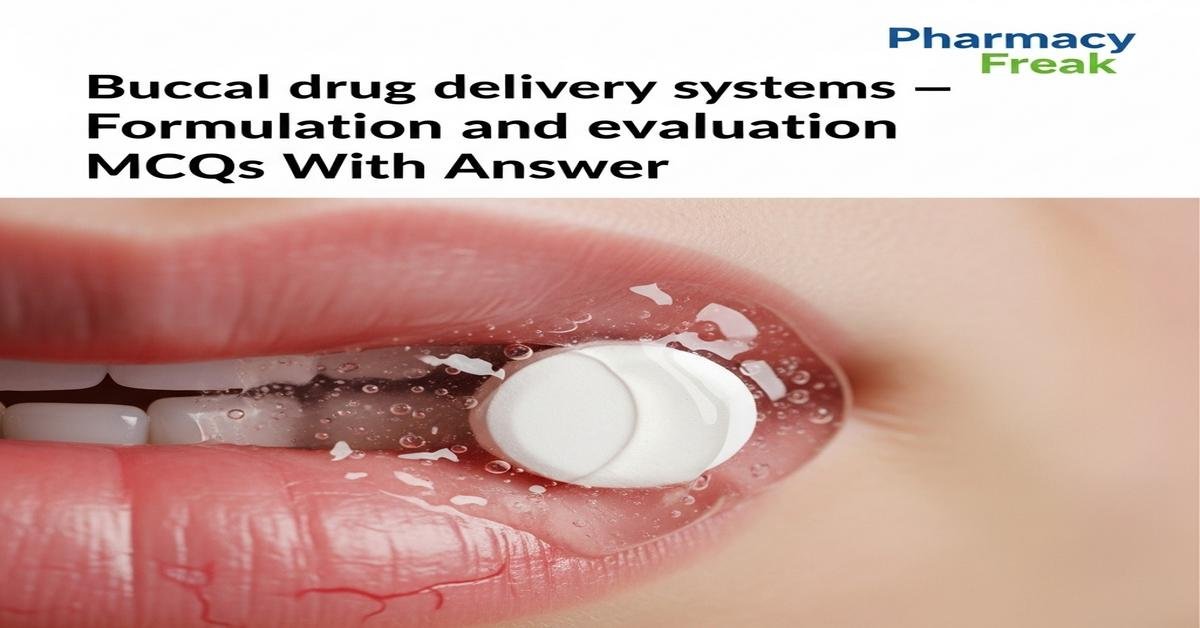
Buccal drug delivery systems – formulation and evaluation MCQs With Answer

Buccal drug delivery systems – formulation and evaluation MCQs With Answer

Buccal drug delivery systems provide a promising transmucosal route that bypasses hepatic first‑pass metabolism and enhances systemic bioavailability. For B.Pharm students, understanding formulation of buccal tablets, mucoadhesive films and patches, and gels is vital—covering mucoadhesive polymers (chitosan, carbopol, HPMC), plasticizers, permeation enhancers, and controlled‑release strategies. Practical evaluation techniques such as in vitro release, ex vivo … Read more

Transmucosal permeability and formulation factors MCQs With Answer

Transmucosal permeability and formulation factors MCQs With Answer

Transmucosal permeability and formulation factors is a vital topic for B. Pharm students focusing on mucosal absorption, drug delivery and bioavailability. This introduction explains how mucosal barriers, epithelial structure, paracellular and transcellular routes, and enzymatic degradation influence permeation. Key formulation factors — pH, drug ionization, molecular size, lipophilicity, partition coefficient, mucoadhesive polymers, permeation enhancers, and … Read more

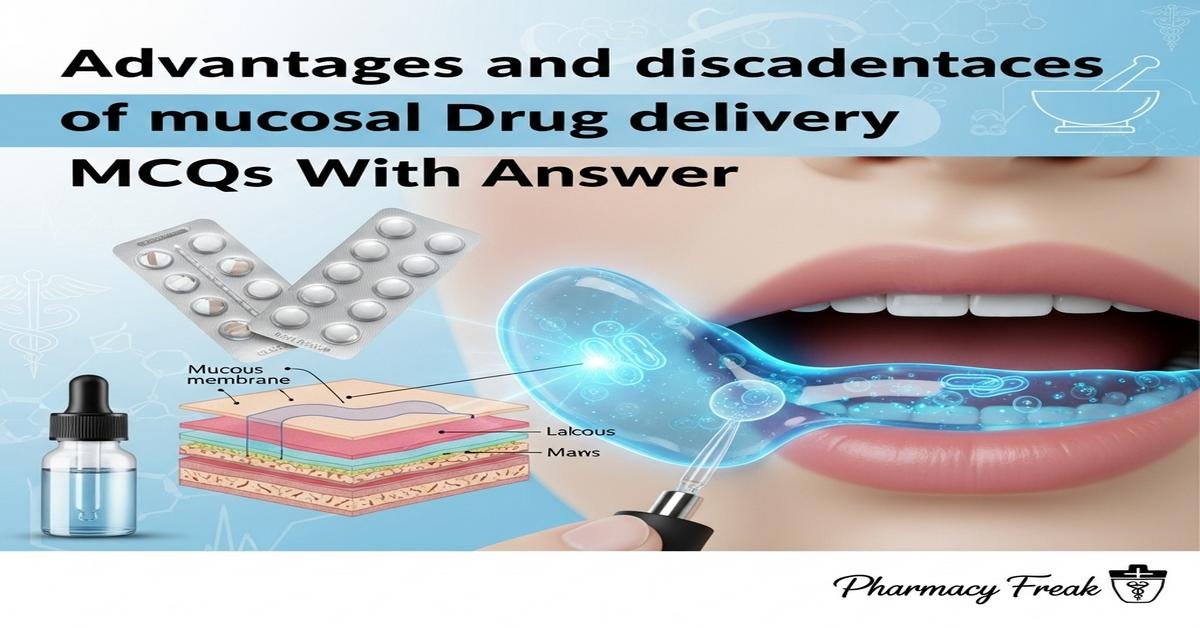
Advantages and disadvantages of mucosal drug delivery MCQs With Answer

Advantages and disadvantages of mucosal drug delivery MCQs With Answer

Advantages and disadvantages of mucosal drug delivery MCQs With Answer This concise introduction reviews transmucosal drug delivery routes—buccal, sublingual, nasal, rectal, vaginal and ocular—highlighting key advantages such as rapid onset, improved bioavailability, avoidance of first‑pass metabolism, local and systemic action, and enhanced patient compliance. It also covers major challenges: enzymatic degradation, mucus and epithelial barriers, … Read more

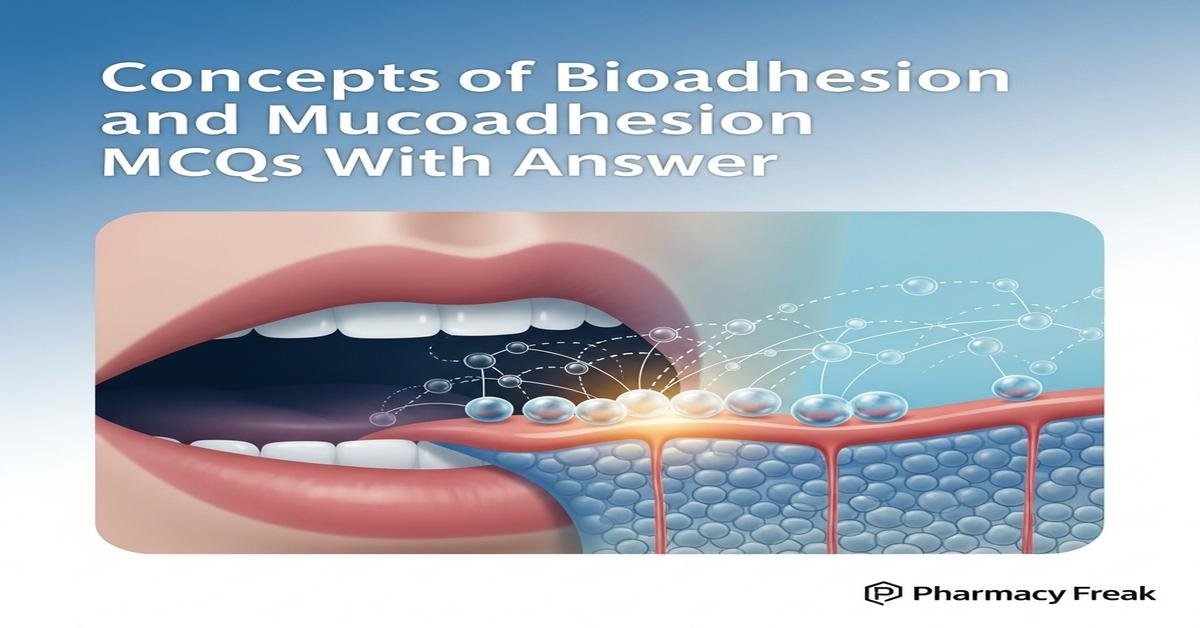
Concepts of bioadhesion and mucoadhesion MCQs With Answer

Concepts of bioadhesion and mucoadhesion MCQs With Answer

Introduction: The concepts of bioadhesion and mucoadhesion form the foundation of modern mucoadhesive drug delivery design. B. Pharm students must understand mucoadhesive polymers, mucin–polymer interactions, mechanisms (wetting, adsorption, diffusion, electronic, fracture), and formulation strategies to enhance residence time and drug absorption at buccal, nasal, ocular, vaginal, and gastrointestinal sites. Key considerations include polymer functional groups, … Read more

PRO
Ad-Free Access
$3.99 / month
  • ✓ No Interruptions
  • ✓ Faster Page Loads
  • ✓ Support Content Creators