Trusted by 50K+ Pharmacy StudentsHigh Quality Notes, MCQs, Mock Tests & Study ResourcesGo Premium (Ads Free)
Pharmacy Freak

Rationale for selection of animal species and sex for preclinical studies MCQs With Answer

Rationale for selection of animal species and sex for preclinical studies MCQs With Answer

Introduction The rationale for selection of animal species and sex in preclinical studies guides reliable toxicology and pharmacology data generation for B. Pharm students. Key considerations include physiological similarity to humans, pharmacokinetics, metabolic enzymes, reproductive status, strain differences, route of administration, and regulatory guidelines (ICH, OECD). Ethical principles and the 3Rs (Replacement, Reduction, Refinement) also … Read more
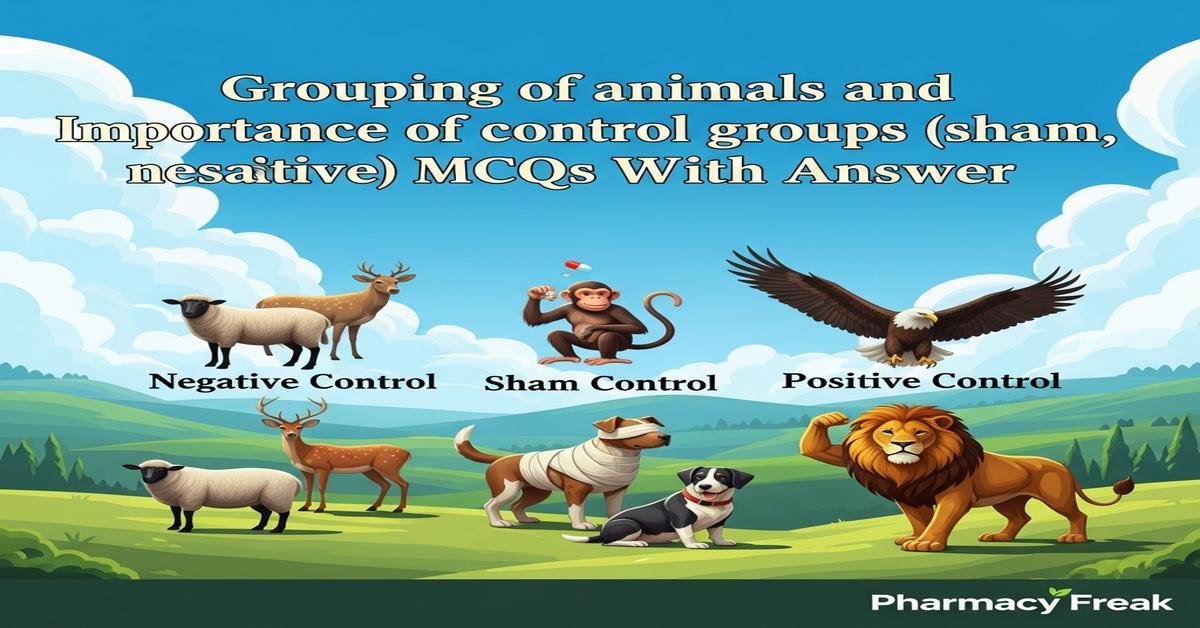
Grouping of animals and importance of control groups (sham, negative, positive) MCQs With Answer

Grouping of animals and importance of control groups (sham, negative, positive) MCQs With Answer

Grouping of animals and proper use of control groups (sham, negative, positive) are essential in preclinical pharmacology and toxicology. For B.Pharm students, understanding group allocation, randomization, blinding, and ethical reduction of numbers ensures valid, reproducible results and humane practice. Sham controls mimic procedural stress without active treatment, negative controls receive vehicle or placebo to define … Read more

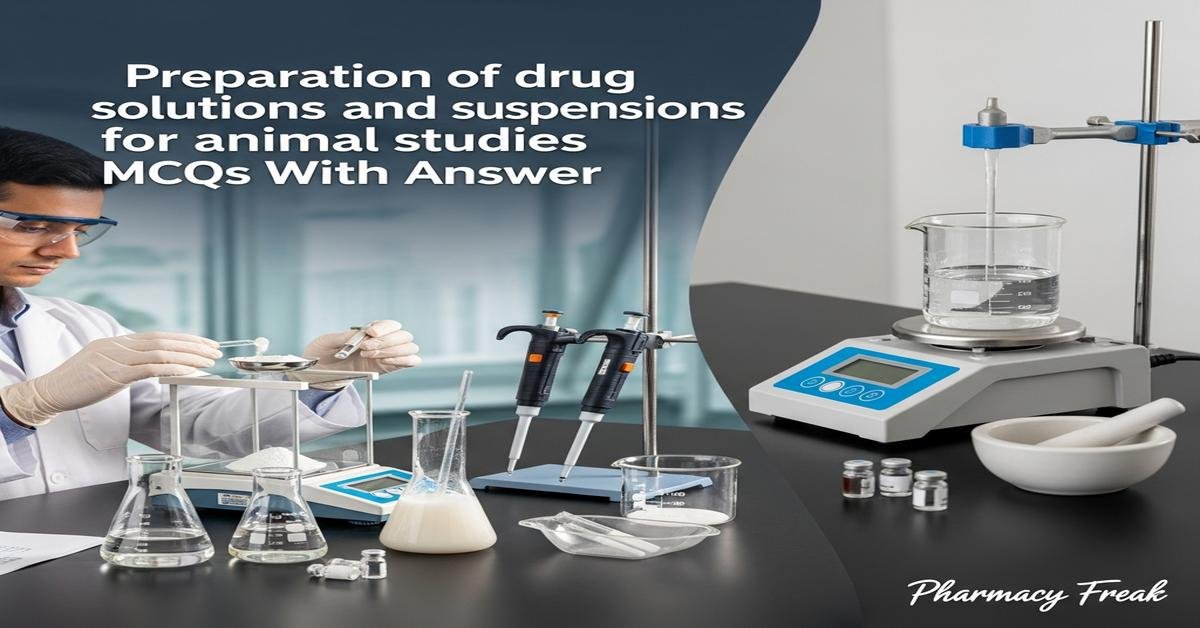
Preparation of drug solutions and suspensions for animal studies MCQs With Answer

Preparation of drug solutions and suspensions for animal studies MCQs With Answer

Preparing drug solutions and suspensions for animal studies is a core skill for B.Pharm students, combining formulation science, pharmacology, and lab technique. This topic covers dose calculation, vehicle selection, sterilization, pH and osmolarity adjustment, suspending agents, particle size control, wetting agents, and stability testing to ensure safe, effective dosing in preclinical models. Students learn compounding … Read more

Dose selection, calculation, and conversion methods MCQs With Answer

Dose selection, calculation, and conversion methods MCQs With Answer

Introduction: Dose selection, calculation, and conversion are essential competencies for B. Pharm students involved in safe medication use. This topic covers principles of dose determination (mg/kg, mg/m2), pharmacokinetic concepts (Vd, CL, bioavailability), practical calculations (C1V1, percent to mg/mL, mL/hr, gtt/min), pediatric and geriatric adjustments, reconstitution and dilution techniques, and unit conversions (µg↔mg, mL↔% w/v). Mastery … Read more

Methods of euthanasia in experimental animals MCQs With Answer

Methods of euthanasia in experimental animals MCQs With Answer

Introduction: Euthanasia of experimental animals is the humane ending of life to prevent pain or distress, following ethical and legal guidelines. B.Pharm students must understand methods of euthanasia in experimental animals, including chemical methods (barbiturate overdose, inhalational agents like CO2 or isoflurane), physical methods (cervical dislocation, decapitation, captive bolt), species-specific considerations, routes and dosages, and … Read more

Common routes of drug administration in animals MCQs With Answer

Common routes of drug administration in animals MCQs With Answer

Introduction: Understanding common routes of drug administration in animals is essential for B.Pharm students studying veterinary pharmacology, dosage forms, and pharmacokinetics. This topic covers oral, parenteral (intravenous, intramuscular, subcutaneous), topical, inhalational, rectal, intraocular, intranasal, and intraperitoneal routes, with emphasis on bioavailability, first‑pass effect, absorption rates, and formulation considerations. Knowledge of species differences, site selection, aseptic … Read more

Techniques of blood collection in laboratory animals MCQs With Answer

Techniques of blood collection in laboratory animals MCQs With Answer

Blood collection in laboratory animals is a core competency for B.Pharm students focused on pharmacology, toxicology and pharmacokinetics. This concise guide covers techniques such as tail and saphenous venipuncture, lateral tail vein, submandibular, retro‑orbital/retrobulbar, jugular, ear and cardiac puncture, plus equipment selection, anticoagulants, sample handling, volumes, anesthesia, analgesia and ethical considerations. Emphasis is placed on … Read more

Popular transgenic and mutant animals used in pharmacology MCQs With Answer

Popular transgenic and mutant animals used in pharmacology MCQs With Answer

Introduction: Transgenic and mutant animals — including knockout, knock‑in, conditional, humanized and reporter models — are indispensable in pharmacology for studying drug targets, pharmacodynamics, pharmacokinetics and disease mechanisms. B.Pharm students must understand common models such as ApoE-/-, LDLR-/-, ob/ob, db/db, APP/PS1, NSG and hACE2 mice, zebrafish mutants and Drosophila models, plus technologies like CRISPR/Cas9, Cre‑LoxP, … Read more

Common laboratory animals – species, strains, and their applications MCQs With Answer

Common laboratory animals – species, strains, and their applications MCQs With Answer

This concise guide covers common laboratory animals — species, strains, and their applications — tailored for B. Pharm students. It explains key concepts such as laboratory animals, inbred and outbred strains, transgenic and knockout models, and practical uses in pharmacology, toxicology, ADME and drug efficacy testing. The introduction emphasizes strain selection, ethical considerations, welfare practices, … Read more

OECD guidelines for animal experimentation MCQs With Answer

OECD guidelines for animal experimentation MCQs With Answer

OECD guidelines for animal experimentation MCQs With Answer is a focused, practical resource for B.Pharm students studying pharmacology, toxicology and preclinical safety. These OECD Test Guidelines and GLP (Good Laboratory Practice) principles define standardized toxicity testing methods, study design, dosing strategies, endpoints, data reporting, and regulatory compliance. Key keywords include OECD Test Guidelines, GLP, 3Rs … Read more

PRO
Ad-Free Access
$3.99 / month
  • No Interruptions
  • Faster Page Loads
  • Support Content Creators