Trusted by 50K+ Pharmacy StudentsHigh Quality Notes, MCQs, Mock Tests & Study ResourcesGo Premium (Ads Free)
Pharmacy Freak

Limit test for Arsenic MCQs With Answer
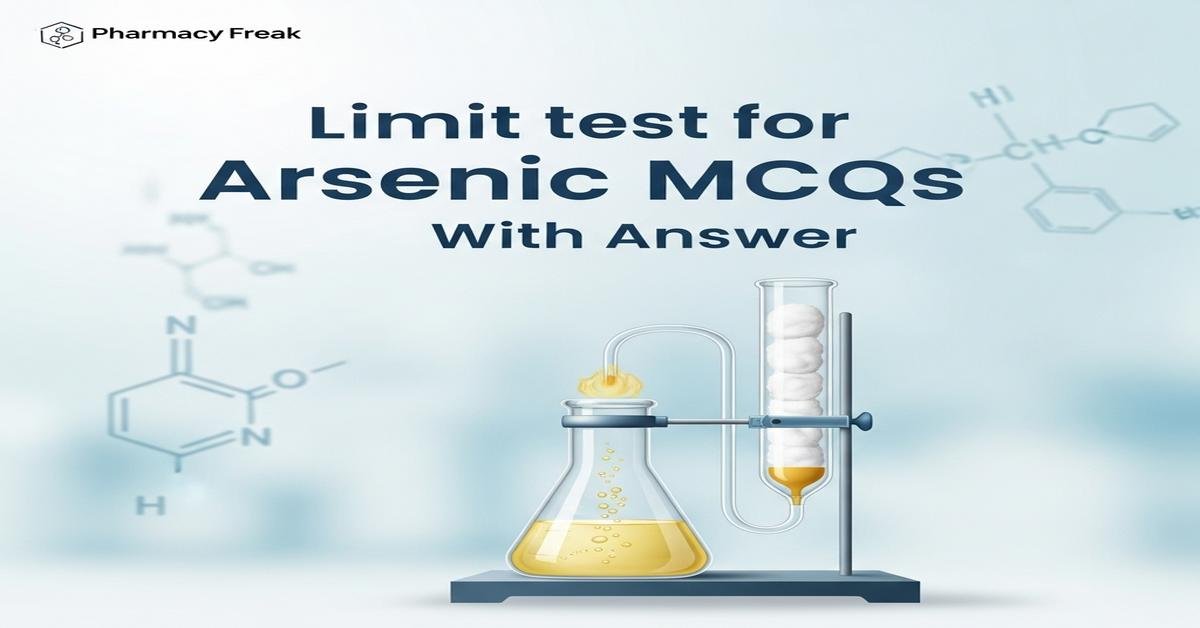
Limit Test for Arsenic MCQs with Answers is an essential topic for B. Pharm students studying pharmaceutical analysis and quality control. This pharmacopeial test (often the Gutzeit method) detects trace arsenic by generating arsine gas (AsH3) from the sample using arsenic-free zinc and acid, then forming a yellow to brown stain on mercuric bromide paper … Read more

Limit test for Iron MCQs With Answer

Limit Test for Iron MCQs With Answer is a high-yield topic for B. Pharm students preparing for Pharmaceutical Analysis and Pharmacopoeial testing. The limit test for iron ensures trace iron impurities in APIs and excipients do not exceed specified limits by visual or spectrophotometric colorimetric comparison. In Indian Pharmacopoeia (IP), iron is detected as a … Read more

Limit test for Sulphate MCQs With Answer

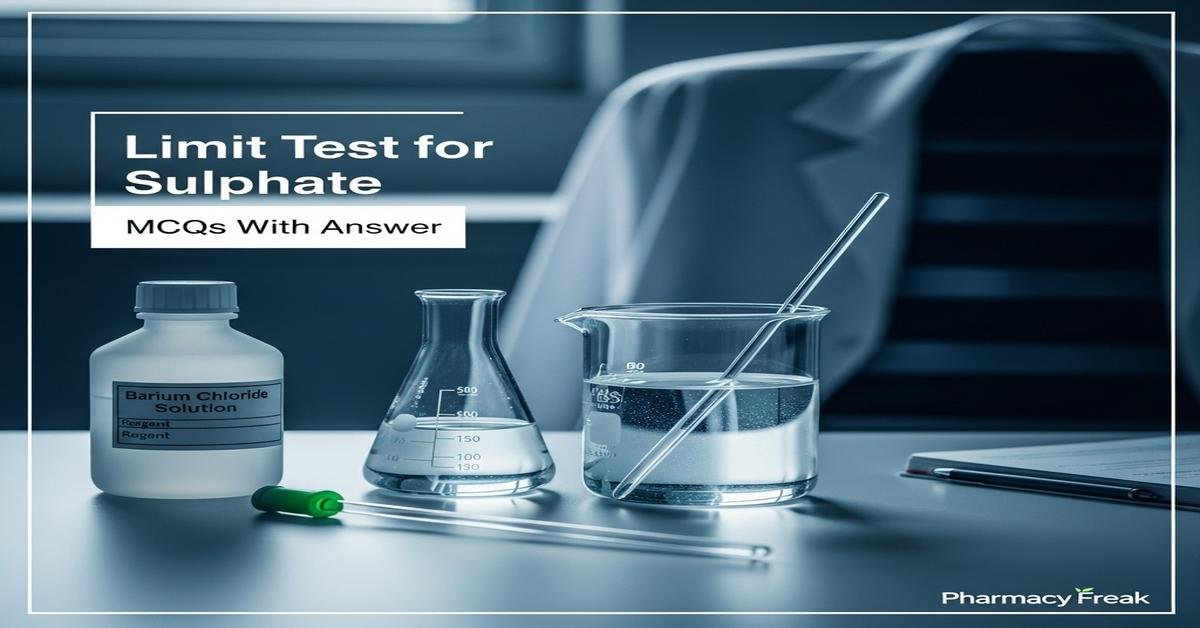
Limit Test for Sulphate MCQs With Answer is a high‑yield topic for B. Pharm students preparing for Pharmaceutical Analysis and Quality Control. The pharmacopeial limit test for sulphate (IP/USP/BP) relies on the formation of barium sulfate turbidity when sulphate ions react with barium chloride under controlled acidity, enabling comparison with a standard. Understanding the principle, … Read more

Limit test for Chloride MCQs With Answer

Limit Test for Chloride MCQs With Answer helps B. Pharm students master a key pharmacopoeial quality control test. In IP/BP/USP, the limit test for chloride detects trace chloride impurities by precipitating chloride ions with silver nitrate in nitric acid medium, producing a characteristic opalescence (AgCl) compared visually against a standard in matched Nessler cylinders. Understanding … Read more

Types of impurities MCQs With Answer

Introduction: Types of Impurities MCQs With Answer for B. Pharm Types of impurities in pharmaceuticals include organic impurities (process-related impurities, intermediates, degradation products), inorganic impurities (reagents, catalysts, residual salts, elemental impurities), and residual solvents. B. Pharm students must know ICH guidelines (Q3A/Q3B for impurities in drug substances/products, Q3C for residual solvents, Q3D for elemental impurities), … Read more

Sources of impurities MCQs With Answer

Sources of Impurities MCQs With Answer for B. Pharm: B. Pharm students must master the sources of pharmaceutical impurities to ensure drug quality control, safety, and regulatory compliance. This concise, Student-friendly guide covers impurities from raw materials, starting materials, reagents, residual solvents, catalysts, water systems, equipment, packaging/closures, degradation products (hydrolysis, oxidation, photolysis), microbial/endotoxin contamination, and … Read more

History of Pharmacopoeia MCQs With Answer

History of Pharmacopoeia MCQs With Answer helps B. Pharm students grasp how official drug standards evolved from early apothecary recipes to modern, legally enforceable compendia. Learn the origins of the term “pharmacopoeia,” milestones like the British Pharmacopoeia (BP), United States Pharmacopeia (USP), Indian Pharmacopoeia (IP), Japanese Pharmacopoeia (JP), European Pharmacopoeia (Ph. Eur.), and WHO’s International … Read more

MCQ Quiz: Major Extra and Intracellular Electrolytes

MCQ Quiz- Major extra and intracellular electrolytes

Electrolytes are essential minerals that are vital for numerous physiological functions, including nerve impulse transmission, muscle contraction, and maintaining acid-base balance. For B.Pharm students, understanding the roles of major ions like sodium, potassium, and calcium is crucial. This knowledge is fundamental to grasping the principles of replacement therapy, such as Oral Rehydration Salts (ORS), and … Read more

MCQ Quiz: Acids, Bases, and Buffers

MCQ Quiz- Acids, Bases and Buffers

The principles of acids, bases, and buffers are fundamental to pharmaceutical science, governing everything from drug stability to patient comfort. For B.Pharm students, a solid understanding of buffer systems, buffer capacity, and tonicity is essential for formulating safe and effective products, especially parenteral and ophthalmic preparations. This quiz covers the key concepts of these critical … Read more

MCQ Quiz: General Methods of Preparation of Inorganic

MCQ Quiz- General methods of preparation

Understanding the general methods used to prepare inorganic pharmaceuticals is a core competency for B.Pharm students. These fundamental chemical processes, from simple neutralization to complex redox reactions, are the foundation of how many essential medicinal agents are synthesized. This quiz covers the key principles behind these preparation methods, which are critical for ensuring the purity, … Read more

PRO
Ad-Free Access
$3.99 / month
  • No Interruptions
  • Faster Page Loads
  • Support Content Creators