Trusted by 50K+ Pharmacy StudentsHigh Quality Notes, MCQs, Mock Tests & Study ResourcesGo Premium (Ads Free)
Pharmacy Freak

Reflex activity MCQs With Answer
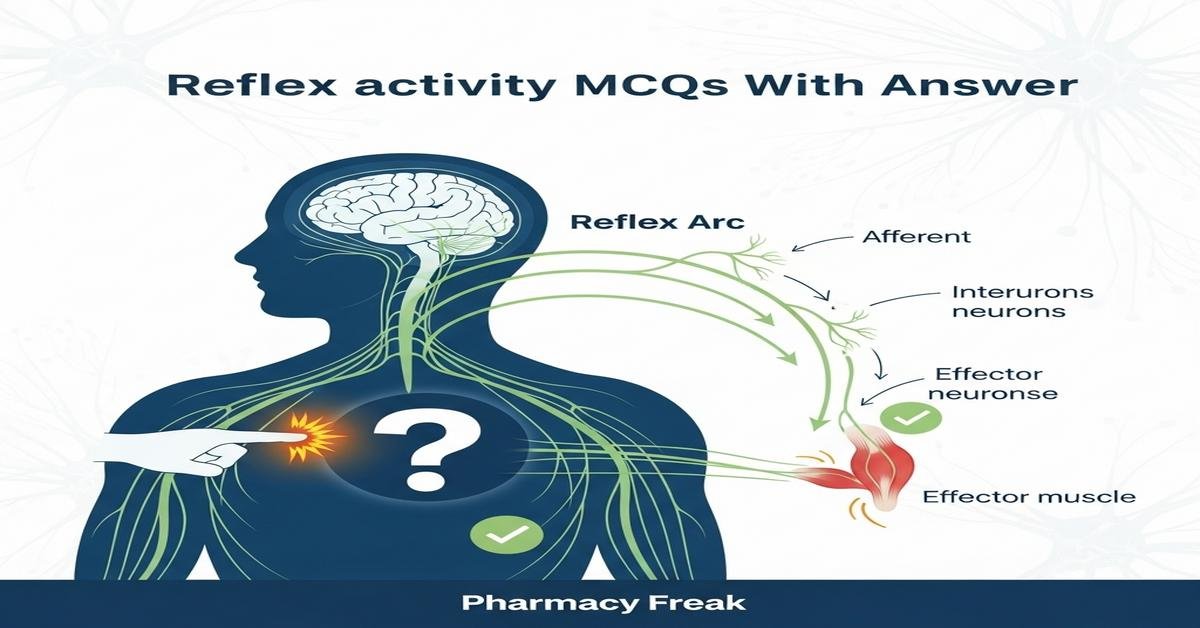
Reflex activity MCQs With Answer offers B.Pharm students a focused, exam-oriented review of reflex physiology and pharmacology. This Student-friendly post covers reflex arc components, afferent and efferent pathways, monosynaptic and polysynaptic reflexes, autonomic reflexes (baroreceptor, cough, gag, pupillary), and drug effects on reflexes. Emphasis on clinical relevance, neurotransmitters, and drug interactions helps students link neurophysiology … Read more
Functions of afferent nerve tracts MCQs With Answer

Functions of afferent nerve tracts MCQs With Answer This concise introduction explains afferent nerve tracts for B. Pharm students, focusing on sensory pathways, physiological roles, and clinical relevance. Afferent tracts—dorsal column–medial lemniscus, spinothalamic, spinocerebellar and trigeminothalamic pathways—convey fine touch, vibration, proprioception, pain and temperature to higher centers. Understanding first-, second- and third-order neurons, decussation points, … Read more

Spinal cord – gross structure MCQs With Answer

The spinal cord – gross structure MCQs With Answer provides B. Pharm students a concise, clinically relevant review of spinal cord anatomy. This introduction highlights key concepts such as segments, cervical and lumbar enlargements, gray and white matter organization, meninges, spinal nerves, blood supply (including the artery of Adamkiewicz), and clinically important regions like the … Read more

Structure and functions of cerebellum MCQs With Answer

Structure and functions of cerebellum MCQs With Answer provides B.Pharm students a focused review of cerebellar anatomy, microcircuitry, and physiology. This introduction covers cerebellar lobes, cortex layers, key cell types like Purkinje and granule cells, afferent fibers (mossy and climbing), deep cerebellar nuclei, peduncles, blood supply and clinical signs such as ataxia and dysdiadochokinesia. Emphasis … Read more

Structure and functions of brain stem MCQs With Answer

Structure and functions of brain stem MCQs With Answer The brain stem — composed of the midbrain, pons and medulla oblongata — controls vital functions such as respiration, cardiovascular regulation, cranial nerve reflexes and arousal. For B.Pharm students, mastering the structure and functions of brain stem is essential for understanding drug effects on respiratory centers, … Read more

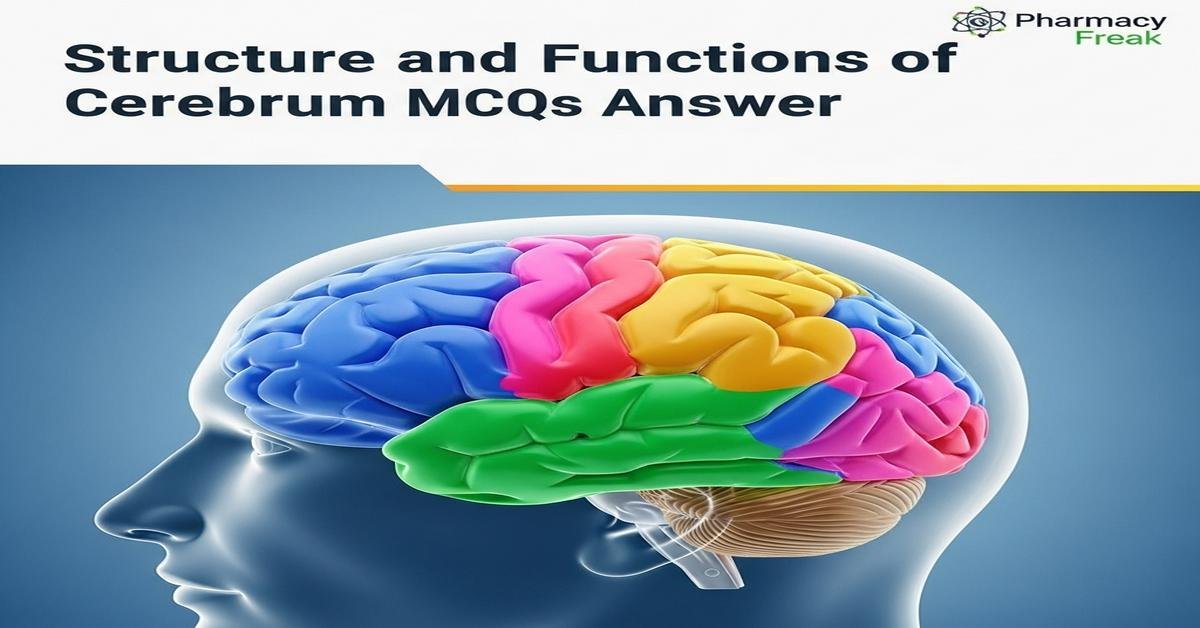
Structure and functions of cerebrum MCQs With Answer

The cerebrum is the largest part of the brain and a core subject for B.Pharm students studying neuroanatomy and neuropharmacology. This concise, keyword-rich introduction covers cerebrum structure, cerebral cortex layers, lobes of cerebrum, hemispheric specialization, white and gray matter, basal ganglia connections, blood supply, functional areas (motor, sensory, association), and clinical correlations relevant to drug … Read more

Cerebrospinal fluid MCQs With Answer

Cerebrospinal fluid MCQs With Answer is an essential revision resource tailored for B. Pharm students preparing for pharmacology, physiology, and clinical pharmacy exams. This concise, keyword-rich introduction focuses on cerebrospinal fluid (CSF) physiology, composition, production by the choroid plexus, circulation, blood-brain barrier interactions, CSF analysis, and implications for drug distribution in the central nervous system. … Read more

Ventricles of brain MCQs With Answer

Ventricles of brain MCQs With Answer — This concise guide is designed for B. Pharm students to master the ventricular system, cerebrospinal fluid (CSF) dynamics, related pathologies and clinical correlations. It covers anatomy of the lateral, third and fourth ventricles, choroid plexus function, ependymal lining, foramina (Monro, aqueduct, Luschka, Magendie), CSF production and absorption, hydrocephalus … Read more

Meninges MCQs With Answer

Meninges MCQs With Answer — a focused, Student-friendly post tailored for B. Pharm learners. The meninges (dura mater, arachnoid mater, and pia mater) protect the central nervous system, regulate cerebrospinal fluid (CSF) flow, and influence drug distribution to the brain and spinal cord. Understanding their anatomy, physiology, vascular supply, innervation, and clinical correlations (meningitis, hematomas, … Read more

Neurotransmitters MCQs With Answer

Introduction: This concise guide on Neurotransmitters MCQs With Answer is designed for B. Pharm students preparing for exams and clinical pharmacy practice. It covers neurotransmitter synthesis, storage, release, receptor pharmacology, reuptake, metabolism, and drug interactions with emphasis on acetylcholine, monoamines, amino acid transmitters and neuropeptides. The questions focus on mechanism of action, key enzymes (e.g., … Read more

PRO
Ad-Free Access
$3.99 / month
  • No Interruptions
  • Faster Page Loads
  • Support Content Creators