Trusted by 50K+ Pharmacy StudentsHigh Quality Notes, MCQs, Mock Tests & Study ResourcesGo Premium (Ads Free)
Pharmacy Freak

Structure and uses of iodoform MCQs With Answer

Structure and uses of iodoform MCQs With Answer — This concise, Student-friendly post helps B.Pharm students master the chemistry and pharmaceutical relevance of iodoform (CHI3). Learn the molecular structure, tetrahedral geometry, physical properties, common preparations (haloform reaction with I2/NaOH), diagnostic iodoform test for methyl ketones and ethanol, and pharmaceutical applications such as historic antiseptic use … Read more

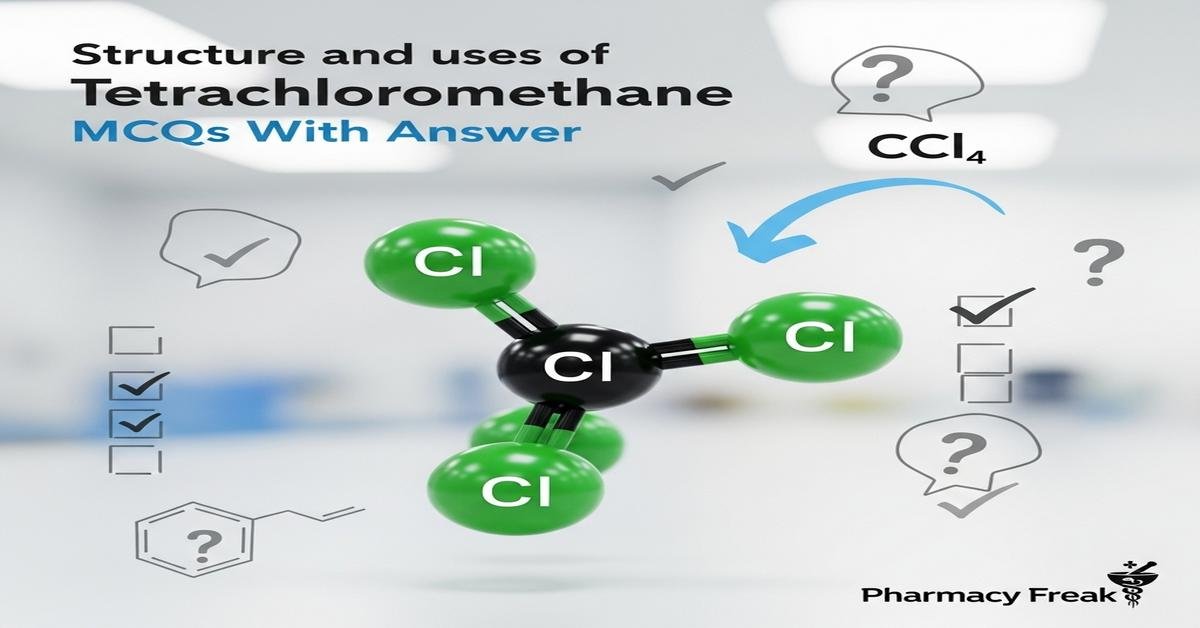
Structure and uses of tetrachloromethane MCQs With Answer

For B.Pharm students, understanding the structure and uses of tetrachloromethane (carbon tetrachloride, CCl4) is essential for courses on pharmaceutical chemistry, toxicology, and industrial pharmacy. This introduction covers molecular geometry, bonding, physical properties, common pharmaceutical and industrial uses, metabolic activation, and safety concerns. Key concepts include tetrahedral geometry, sp3 hybridization, nonpolar solvent behavior, hepatotoxicity via CYP-mediated … Read more

Structure and uses of dichloromethane MCQs With Answer

Dichloromethane (methylene chloride) is a widely used chlorinated solvent with the molecular formula CH2Cl2. B.Pharm students should understand its structure, physical and chemical properties, analytical identification, pharmaceutical applications as an extraction and reaction solvent, and important safety and environmental considerations. This concise guide covers bonding and geometry, spectroscopic signatures, common laboratory and industrial uses, handling … Read more

Structure and uses of tetrachloroethylene MCQs With Answer

Introduction: Tetrachloroethylene (perchloroethylene, PCE) is an important chlorinated solvent with the molecular formula C2Cl4; understanding its structure and uses is essential for B. Pharm students. This introduction covers the structure of tetrachloroethylene, key physical and chemical properties, industrial and pharmaceutical-related uses (dry-cleaning, degreasing, extraction), and health, toxicology and environmental concerns. Emphasis is placed on how … Read more

Structure and uses of trichloroethylene MCQs With Answer

Structure and uses of trichloroethylene MCQs With Answer are essential for B. Pharm students mastering industrial solvents, toxicology, and analytical methods. Trichloroethylene (TCE) is a chlorinated alkene (C2HCl3) widely used as a degreasing solvent and chemical intermediate; understanding its molecular structure, metabolism (formation of trichloroacetic and dichloroacetic acids, glutathione conjugates), environmental fate, analytical detection, and … Read more

Structure and uses of chloroform MCQs With Answer

Introduction: Chloroform (CHCl3) is a fundamental organic solvent and reagent encountered frequently in B. Pharm courses, particularly in pharmaceutical chemistry and pharmacology. Understanding the structure and uses of chloroform — including its molecular geometry, physical properties, synthesis routes, analytical signatures, pharmacological history as an anesthetic, and toxic metabolic pathways — is essential for safe laboratory … Read more

Structure and uses of ethyl chloride MCQs With Answer

This set of 50 multiple-choice questions on the structure and uses of ethyl chloride MCQs with answer is tailored for B. Pharm students seeking deeper mastery. Covering ethyl chloride (chloroethane) molecular structure, bonding, physical properties, synthesis routes, reaction mechanisms (SN2, radical processes), analytical identification (GC, NMR, IR), pharmaceutical and industrial uses, and safety/handling, these MCQs … Read more

Factors affecting SN1 and SN2 reactions MCQs With Answer

Introduction: Understanding the factors affecting SN1 and SN2 reactions is essential for B. Pharm students studying organic reaction mechanisms and medicinal chemistry. This concise guide emphasizes how substrate structure, nucleophile strength, leaving group ability, solvent type, steric hindrance, and carbocation stability govern whether a nucleophilic substitution proceeds via SN1 or SN2. Grasping kinetics, stereochemical outcomes … Read more

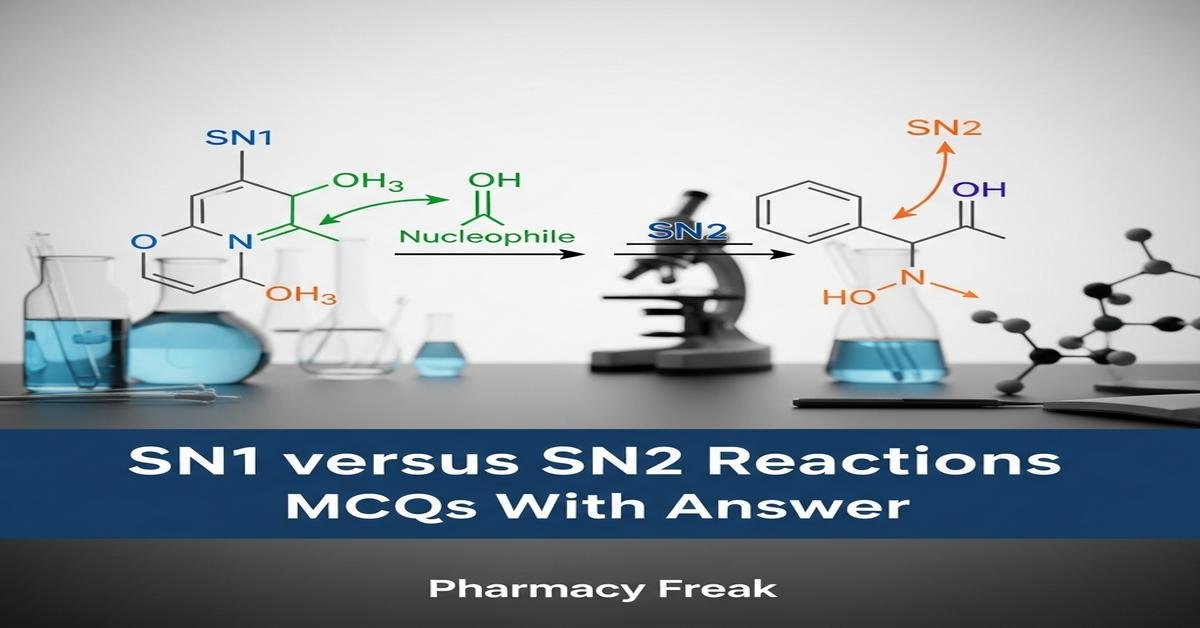
SN1 versus SN2 reactions MCQs With Answer

Introduction: As a B. Pharm student, mastering SN1 versus SN2 reactions is essential for understanding drug metabolism, synthesis, and reaction prediction. This concise guide highlights key differences in mechanism, rate law, stereochemistry, leaving group ability, nucleophile strength, and solvent effects to help you confidently approach reaction problems. Emphasis on carbocation stability, backside attack, and solvent … Read more

Carbocation rearrangement (SN1) MCQs With Answer

Carbocation rearrangement (SN1) MCQs With Answer Understanding carbocation rearrangements during SN1 reactions is crucial for B.Pharm students studying reaction mechanisms and drug synthesis. This concise, keyword-rich introduction covers carbocation stability, hydride and alkyl shifts, resonance and hyperconjugation effects, neighboring group participation, solvent influence, and product distribution in nucleophilic substitution (SN1). Knowing how and why carbocations … Read more

PRO
Ad-Free Access
$3.99 / month
  • No Interruptions
  • Faster Page Loads
  • Support Content Creators