Trusted by 50K+ Pharmacy StudentsHigh Quality Notes, MCQs, Mock Tests & Study ResourcesGo Premium (Ads Free)
Pharmacy Freak

Synthetic cholinergic blocking agents – Cyclopentolate hydrochloride MCQs With Answer

Synthetic cholinergic blocking agents – Cyclopentolate hydrochloride MCQs With Answer

Synthetic cholinergic blocking agents – Cyclopentolate hydrochloride are important antimuscarinic drugs used in ophthalmic practice and pharmacology courses. This introduction covers cyclopentolate’s mechanism as a synthetic antimuscarinic, its ophthalmic uses (mydriasis and cycloplegia), common concentrations (0.5%–2%), onset and duration, systemic and ocular adverse effects, precautions in paediatrics and glaucoma, and safe administration techniques such as … Read more

Synthetic cholinergic blocking agents – Tropicamide MCQs With Answer

Synthetic cholinergic blocking agents – Tropicamide MCQs With Answer

Synthetic cholinergic blocking agents such as tropicamide are essential in ocular pharmacology and therapeutics taught in the B.Pharm curriculum. This concise overview covers mechanism of action, ocular uses as a mydriatic and cycloplegic, pharmacokinetics, topical formulations (0.5% and 1% eye drops), onset and duration of action, systemic absorption pathways, contraindications like narrow‑angle glaucoma, adverse effects … Read more

Solanaceous alkaloids – Ipratropium bromide MCQs With Answer

Solanaceous alkaloids – Ipratropium bromide MCQs With Answer

Solanaceous alkaloids – Ipratropium bromide MCQs With Answer Solanaceous alkaloids such as atropine and scopolamine inspired development of clinically important anticholinergic drugs; among them, ipratropium bromide is a quaternary ammonium derivative widely used as an inhaled bronchodilator. This concise guide for B. Pharm students covers pharmacology, mechanism of action, formulation, pharmacokinetics, adverse effects, drug interactions … Read more

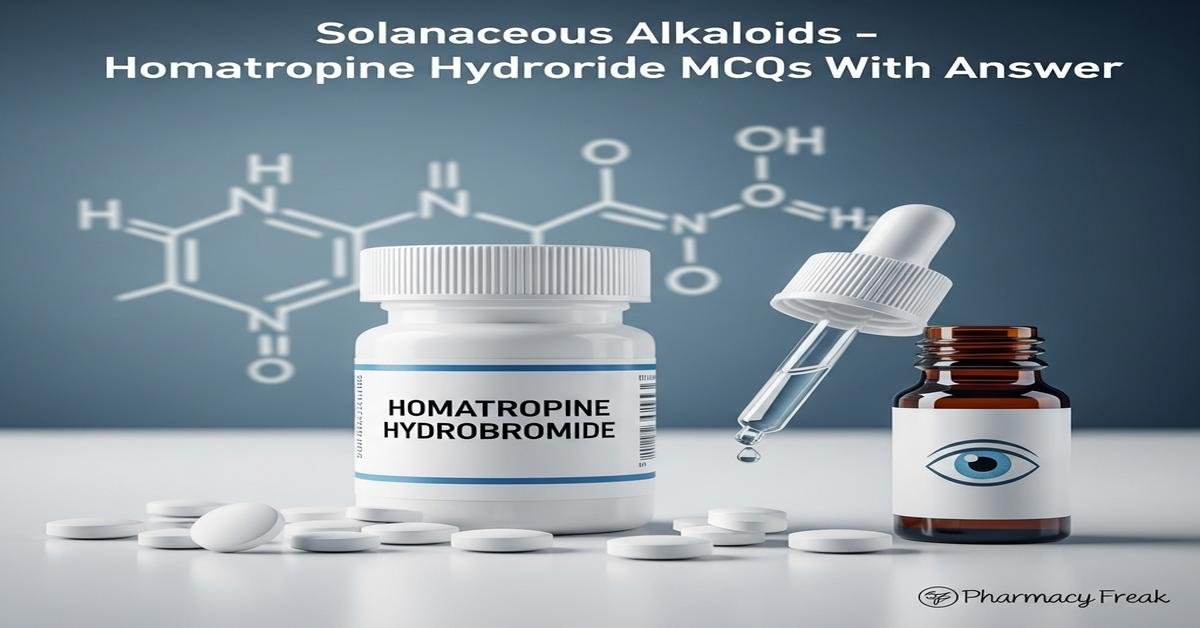
Solanaceous alkaloids – Homatropine hydrobromide MCQs With Answer

Solanaceous alkaloids – Homatropine hydrobromide MCQs With Answer

Solanaceous alkaloids and Homatropine hydrobromide are key topics in pharmacology for B. Pharm students, linking plant-derived tropane compounds to clinical antimuscarinic therapy. This introduction explains sources, chemistry, mechanism of action, therapeutic uses, dosing, adverse effects, contraindications, interactions, and laboratory considerations of homatropine. Emphasis is on its role as a short‑acting mydriatic and cycloplegic derived from … Read more

Solanaceous alkaloids – Scopolamine hydrobromide MCQs With Answer

Solanaceous alkaloids – Scopolamine hydrobromide MCQs With Answer

Solanaceous alkaloids, especially scopolamine hydrobromide, are essential topics for B. Pharm students studying pharmacognosy and pharmacology. This introduction explains tropane alkaloid chemistry, sources (Datura, Hyoscyamus, Atropa), anticholinergic mechanism at muscarinic receptors, clinical uses such as motion sickness and preoperative sedation, pharmacokinetics, dosage forms (transdermal, parenteral), adverse effects, toxicology and laboratory assays. Emphasis on structure–activity relationships, … Read more

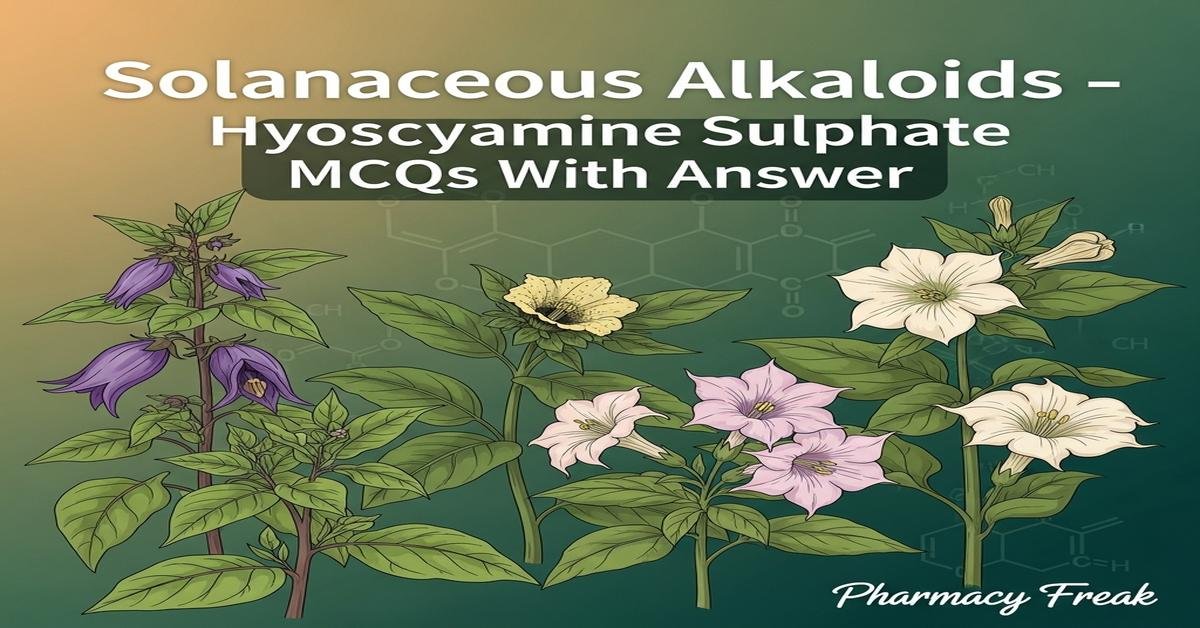
Solanaceous alkaloids – Hyoscyamine sulphate MCQs With Answer

Solanaceous alkaloids – Hyoscyamine sulphate MCQs With Answer

Introduction: Solanaceous alkaloids, especially hyoscyamine sulphate, are essential topics in B. Pharm pharmacognosy and pharmacology. This group of tropane alkaloids—derived from Atropa, Hyoscyamus and Datura species—exhibits potent anticholinergic (antimuscarinic) activity, key therapeutic uses, characteristic toxicity and distinctive extraction/analytical profiles. B. Pharm students must understand chemical structure, stereochemistry (hyoscyamine vs atropine), mechanism of action, clinical indications, … Read more

Solanaceous alkaloids – Atropine sulphate MCQs With Answer

Solanaceous alkaloids – Atropine sulphate MCQs With Answer

Solanaceous alkaloids – Atropine sulphate MCQs With Answer Solanaceous alkaloids like atropine sulphate are essential topics in pharmacognosy and pharmacology for B. Pharm students. This introduction covers chemistry, sources (Atropa belladonna, Datura), mechanism as competitive muscarinic antagonists, pharmacokinetics (tertiary amine, crosses BBB), therapeutic uses (mydriasis, bradycardia, organophosphate poisoning), adverse effects, contraindications, and lab assay methods. … Read more

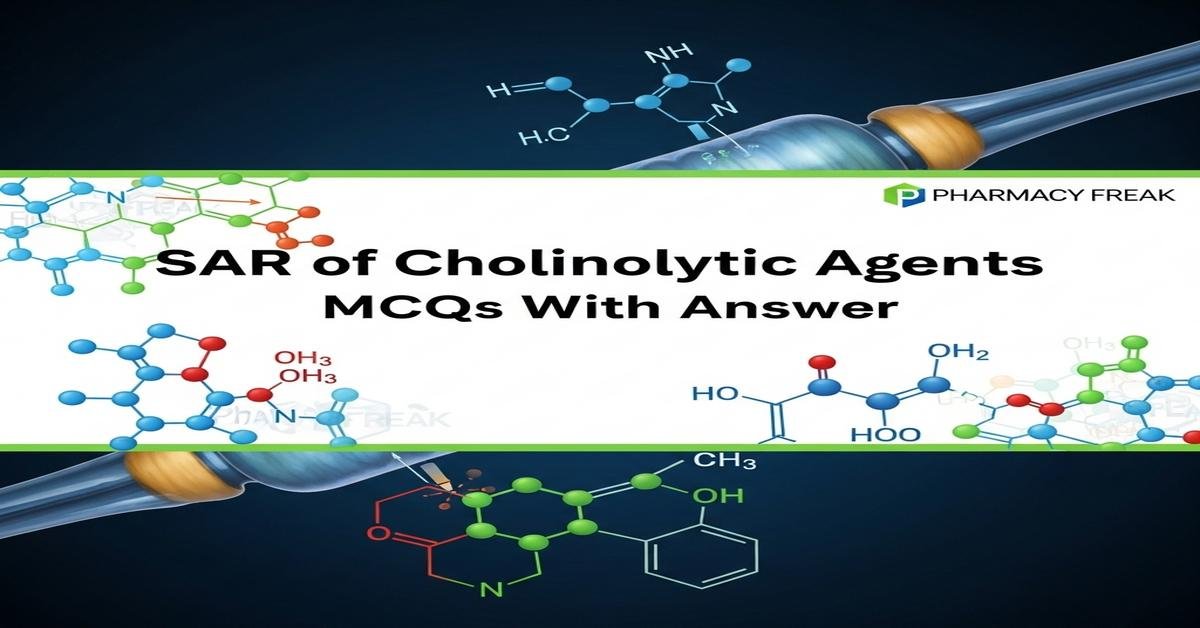
SAR of cholinolytic agents MCQs With Answer

SAR of cholinolytic agents MCQs With Answer

Introduction: The structure-activity relationship (SAR) of cholinolytic agents is a core topic for B. Pharm students preparing for exams and clinical practice. This concise guide emphasizes key SAR concepts for muscarinic antagonists, including pharmacophore elements like the aromatic/heteroaromatic moiety, ester/ether linkages, and tertiary/quaternary amine functionality, as well as factors affecting potency, selectivity, BBB penetration, metabolism, … Read more

Cholinesterase reactivator – Pralidoxime chloride MCQs With Answer

Cholinesterase reactivator – Pralidoxime chloride MCQs With Answer

Pralidoxime chloride is a key cholinesterase reactivator used in managing organophosphate poisoning by regenerating inhibited acetylcholinesterase (AChE) and reversing neuromuscular and muscarinic effects. For B. Pharm students, mastering pralidoxime’s mechanism of action, oxime chemistry, pharmacokinetics, dosing strategies, therapeutic window, adverse effects, and comparisons with other oximes is vital for clinical toxicology and therapeutics. These focused … Read more

Irreversible inhibitors – Malathion MCQs With Answer

Irreversible inhibitors – Malathion MCQs With Answer

Irreversible inhibitors – Malathion MCQs With Answer Irreversible inhibitors, especially organophosphates like malathion, are crucial for B.Pharm students to understand due to their clinical, pharmacological, and toxicological importance. This concise, keyword-rich introduction covers mechanism of action (acetylcholinesterase phosphorylation), metabolic activation to malaoxon, factors affecting toxicity, clinical features (SLUDGE, cholinergic crisis), aging, reactivation by oximes, and … Read more

PRO
Ad-Free Access
$3.99 / month
  • No Interruptions
  • Faster Page Loads
  • Support Content Creators