Trusted by 50K+ Pharmacy StudentsHigh Quality Notes, MCQs, Mock Tests & Study ResourcesGo Premium (Ads Free)
Pharmacy Freak

H1 antagonists – classification, SAR, mechanism, uses MCQs With Answer
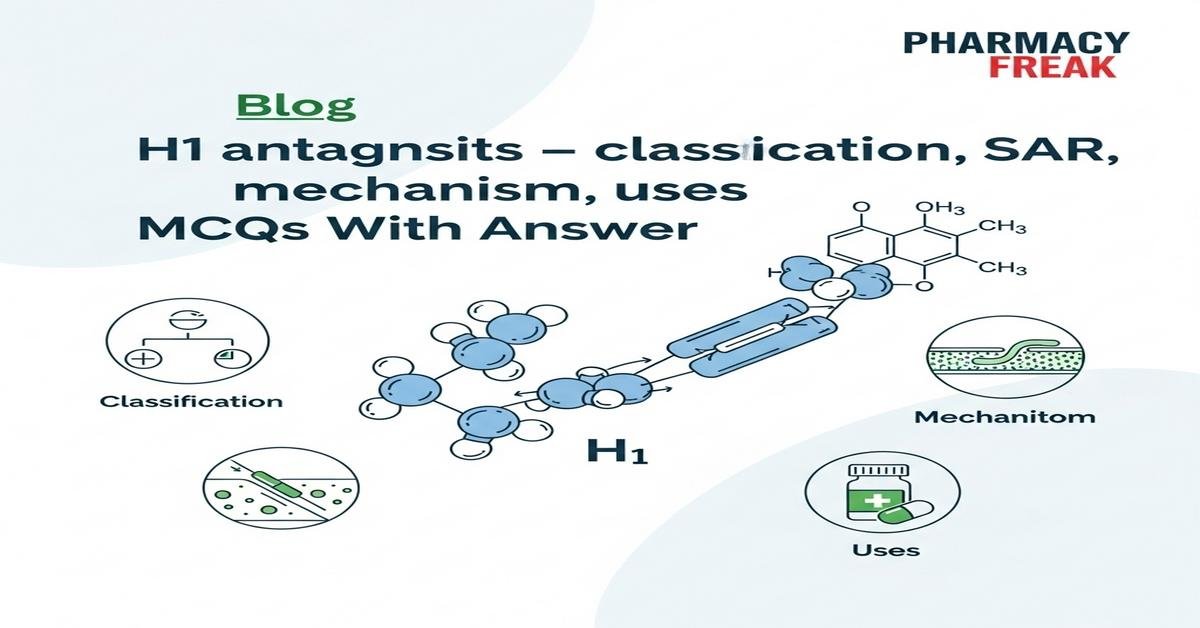
H1 antagonists – classification, SAR, mechanism, uses MCQs With Answer

Introduction: H1 antagonists (histamine H1 receptor antagonists) are essential in pharmacology for allergic disorders, classified as first‑generation and second‑generation agents. This topic covers classification, structure–activity relationships (SAR), mechanism of action (including inverse agonism), pharmacokinetics, adverse effects and therapeutic uses such as allergic rhinitis, urticaria, motion sickness and insomnia. Key SAR features — two aromatic rings, … Read more
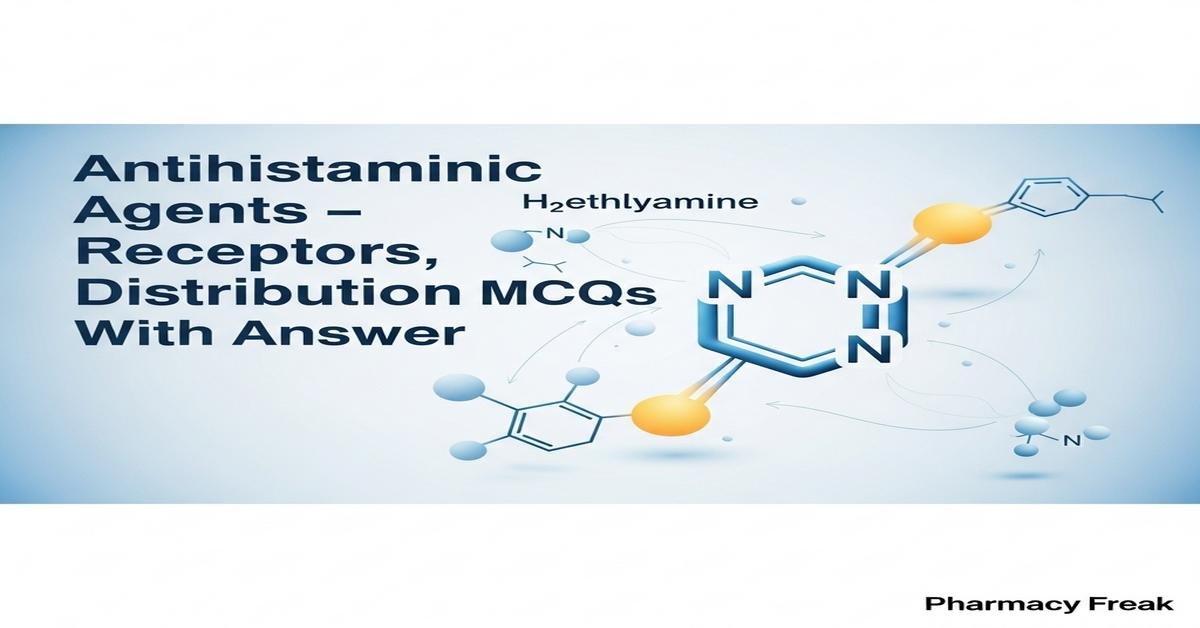
Antihistaminic agents – histamine, receptors, distribution MCQs With Answer

Antihistaminic agents – histamine, receptors, distribution MCQs With Answer

Antihistaminic agents are central to allergy pharmacology for B.Pharm students. This concise introduction covers histamine synthesis, storage, receptor subtypes (H1, H2, H3, H4), tissue distribution, signalling pathways, and clinical relevance. Key concepts include histidine decarboxylase, mast cell and basophil storage, enzymatic inactivation by histamine N‑methyltransferase and diamine oxidase, and receptor coupling (H1‑Gq, H2‑Gs, H3/H4‑Gi). Pharmacology … Read more

Factors affecting drug metabolism MCQs With Answer

Factors affecting drug metabolism MCQs With Answer

Understanding the factors affecting drug metabolism is essential for B.Pharm students studying pharmacokinetics and clinical therapeutics. This introduction covers key concepts such as hepatic metabolism, enzyme induction and inhibition, genetic polymorphism of CYP450 enzymes, age-related changes, disease states, drug interactions, first-pass metabolism, plasma protein binding, and the role of transporters like P-gp. Grasping how intrinsic … Read more

Phase I and Phase II metabolism MCQs With Answer

Phase I and Phase II metabolism MCQs With Answer

Phase I and Phase II metabolism MCQs With Answer Phase I and Phase II metabolism are central topics in drug biotransformation for B.Pharm students. Phase I reactions (oxidation, reduction, hydrolysis) introduce or expose functional groups primarily via cytochrome P450 enzymes, altering drug polarity and activity. Phase II reactions (conjugation) couple metabolites with endogenous donors—glucuronidation, sulfation, … Read more

GPAT 2026 Strategy: The Ultimate 6-Month Study Plan That Toppers Won’t Tell You, Follow This to Secure a Top 100 Rank.

GPAT 2026 Strategy: The Ultimate 6-Month Study Plan That Toppers Won't Tell You, Follow This to Secure a Top 100 Rank.

GPAT can be cracked in six months if you build the right habits early. This plan is designed to push you into the top 100 by focusing on high-yield topics, ruthless revision, and smart test-taking. You’ll know exactly what to study each week, how to make notes that stick, and how to analyze mocks so … Read more

NAPLEX 2026: Why Most International Graduates Fail on Their First Try, The Top 3 Topics You Must Master to Get Licensed in the USA.

NAPLEX 2026: Why Most International Graduates Fail on Their First Try, The Top 3 Topics You Must Master to Get Licensed in the USA.

The NAPLEX is the gate between your pharmacy education and a U.S. license. By 2026, the exam will still measure the same thing it always has: whether you can deliver safe, effective, guideline-based care. Many international graduates fail on their first attempt not because they lack knowledge, but because their preparation does not match how … Read more

Drug metabolism – principles and pathways MCQs With Answer

Drug metabolism – principles and pathways MCQs With Answer

Drug metabolism – principles and pathways MCQs With Answer This concise, student-focused introduction outlines core concepts of drug metabolism and biotransformation for B.Pharm candidates. You will review phase I (oxidation, reduction, hydrolysis) and phase II (conjugation) pathways, major enzyme systems such as CYP450, UGTs and transferases, and clinically important ideas like first-pass metabolism, prodrugs, enzyme … Read more

Physicochemical properties and drug activity MCQs With Answer

Physicochemical properties and drug activity MCQs With Answer

Physicochemical properties and drug activity explores how molecular characteristics such as solubility, lipophilicity (log P/log D), pKa, permeability, crystal form, and stability influence drug absorption, distribution, metabolism, excretion, and pharmacodynamics. For B.Pharm students, mastering these concepts links chemistry to therapeutic effect—predicting bioavailability, optimizing salt forms, designing prodrugs, and selecting assays (e.g., Caco-2, PAMPA, shake-flask). Key … Read more

Structure–activity relationships (SAR) MCQs With Answer

Structure–activity relationships (SAR) MCQs With Answer

Structure–activity relationship (SAR) MCQs With Answer effectively give B. Pharm students focused practice on how chemical structure controls pharmacological activity. These multiple-choice questions explore SAR concepts such as pharmacophore mapping, electronic and steric influences, lipophilicity (logP), pKa, hydrogen bonding, bioisosteres and stereochemistry. They also cover quantitative tools such as QSAR, 3D QSAR, CoMFA, Hansch and … Read more

History and development of medicinal chemistry MCQs With Answer

History and development of medicinal chemistry MCQs With Answer

Introduction: Understanding the history and development of medicinal chemistry gives B. Pharm students a solid foundation for modern drug discovery and therapeutic design. This concise overview highlights milestones—from natural products and Paul Ehrlich’s “magic bullet” and early sulfonamides to Fleming’s penicillin, the rise of synthetic organic methods, Merrifield’s solid‑phase peptide synthesis, and advances like combinatorial … Read more

PRO
Ad-Free Access
$3.99 / month
  • ✓ No Interruptions
  • ✓ Faster Page Loads
  • ✓ Support Content Creators