Trusted by 50K+ Pharmacy StudentsHigh Quality Notes, MCQs, Mock Tests & Study ResourcesGo Premium (Ads Free)
Pharmacy Freak

Antiulcer agents – classification and mechanism MCQs With Answer
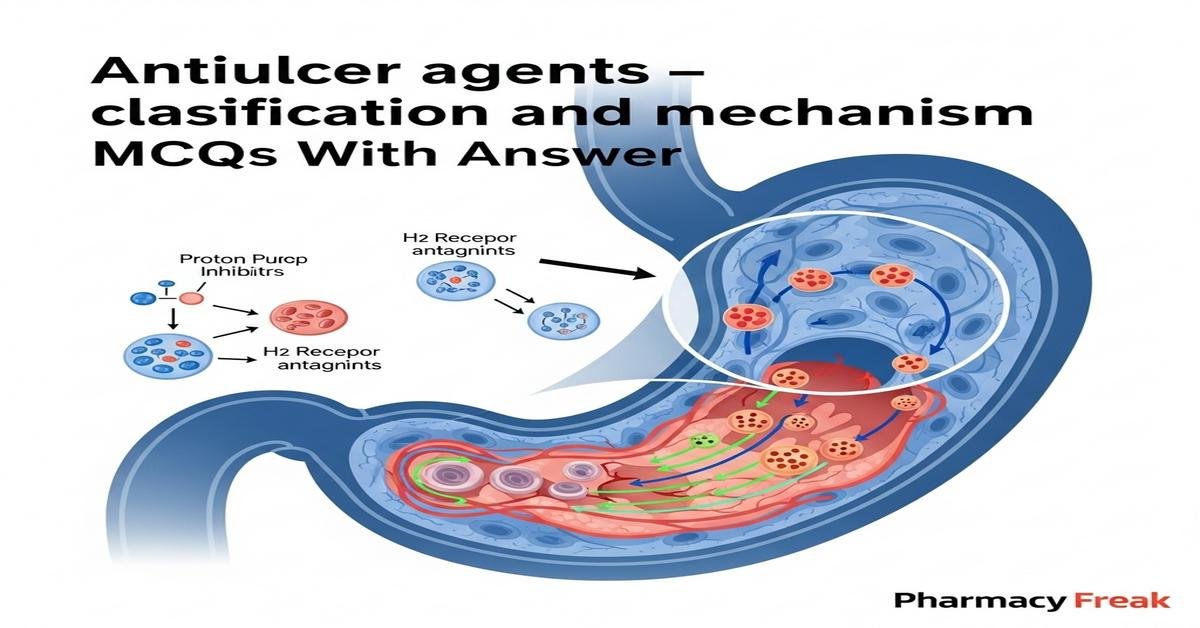
Antiulcer agents – classification and mechanism MCQs With Answer

Antiulcer agents – classification and mechanism MCQs With Answer This concise introduction reviews antiulcer agents for B. Pharm students, focusing on classification, cellular and molecular mechanisms, examples, pharmacokinetics, and clinically relevant adverse effects. Key topics include antacids, H2 receptor antagonists, proton pump inhibitors (PPIs), prostaglandin analogs, sucralfate, bismuth compounds, mucosal protectants, and Helicobacter pylori eradication … Read more
Pharmacology of drugs acting on the gastrointestinal tract MCQs With Answer

Pharmacology of drugs acting on the gastrointestinal tract MCQs With Answer

Pharmacology of drugs acting on the gastrointestinal tract MCQs With Answer is a focused review for B.Pharm students covering mechanisms, therapeutic uses, adverse effects and interactions of agents used in acid-peptic disorders, motility disturbances, antiemetics, laxatives, antidiarrheals and specific antisecretory therapies. This concise set emphasizes key drug classes—antacids, H2-receptor antagonists, proton pump inhibitors, mucosal protectants, … Read more

Respiratory stimulants – mechanism and uses MCQs With Answer

Respiratory stimulants – mechanism and uses MCQs With Answer

Respiratory stimulants are drugs that increase ventilatory drive by acting on central and peripheral chemoreceptors or by altering acid–base balance. This concise review explains mechanisms and clinical uses of key agents — doxapram, methylxanthines (caffeine, theophylline/aminophylline), acetazolamide, almitrine and progestogens — emphasizing pharmacology, indications such as apnea of prematurity, opioid-induced respiratory depression, and high-altitude breathing … Read more

Nasal decongestants – types and adverse effects MCQs With Answer

Nasal decongestants – types and adverse effects MCQs With Answer

Introduction Nasal decongestants are drugs used to relieve nasal airway obstruction by vasoconstriction of nasal mucosal blood vessels. This concise guide for B.Pharm students covers topical decongestants (oxymetazoline, xylometazoline), systemic agents (pseudoephedrine, phenylephrine), mechanism of action as alpha-adrenergic agonists, pharmacokinetics, formulations, and common adverse effects such as rebound congestion (rhinitis medicamentosa), tachyphylaxis, hypertension, insomnia, and … Read more

Antitussives – classification and mechanism MCQs With Answer

Antitussives – classification and mechanism MCQs With Answer

Antitussives are drugs used to suppress coughing by modifying central or peripheral components of the cough reflex. This concise guide for B.Pharm students explains classification and detailed mechanisms of action, highlighting representative drugs such as codeine, dextromethorphan, benzonatate and levodropropizine. Key topics include central versus peripheral antitussives, opioid and non‑opioid mechanisms, CYP2D6 metabolism, pharmacokinetics, adverse … Read more

Expectorants – mechanism and examples MCQs With Answer

Expectorants – mechanism and examples MCQs With Answer

Introduction Expectorants are drugs that enhance clearance of bronchial secretions by changing their volume, viscosity or transport — essential knowledge for B.Pharm students studying respiratory pharmacology. This topic covers mechanisms (secretolytic, mucolytic, mucokinetic, mucoregulator), examples such as guaifenesin, bromhexine, ambroxol and N-acetylcysteine (NAC), and clinical uses in productive cough, bronchitis and COPD. You will learn … Read more

Drugs used in management of COPD MCQs With Answer

Drugs used in management of COPD MCQs With Answer

Introduction Understanding drugs used in the management of COPD is essential for B. Pharm students preparing for clinical pharmacy roles. This concise guide focuses on pharmacology, mechanisms of action, dosing, adverse effects, monitoring, and drug interactions of key COPD treatments: bronchodilators (short‑ and long‑acting beta2‑agonists and anticholinergics), inhaled corticosteroids, methylxanthines, PDE4 inhibitors, and adjunctive agents. … Read more

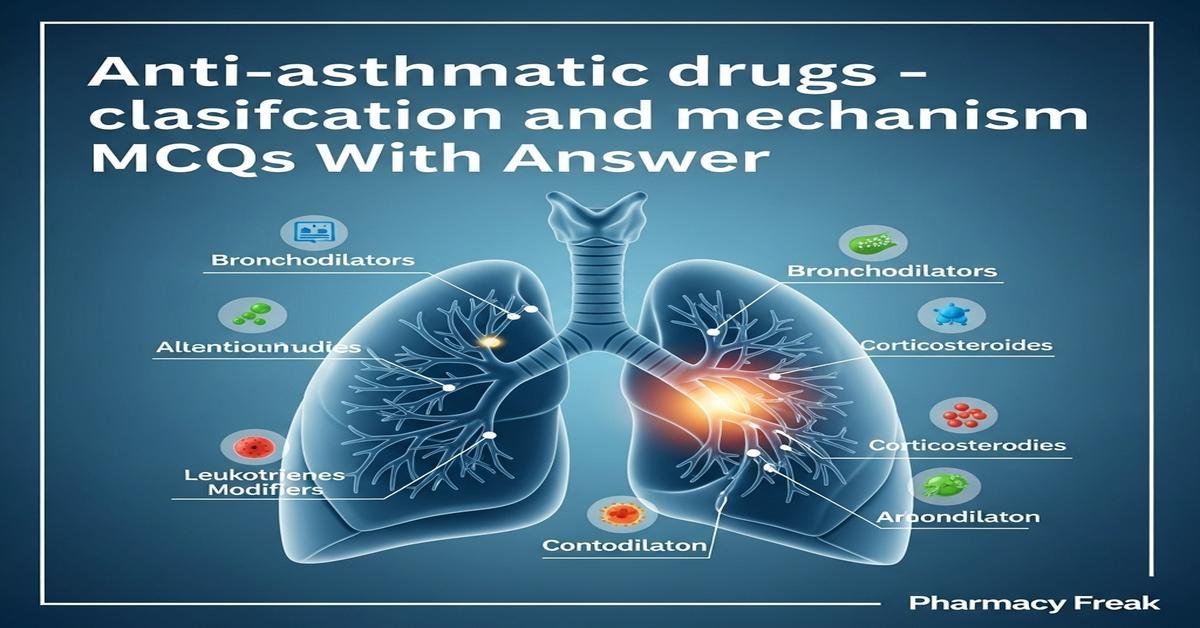
Anti-asthmatic drugs – classification and mechanism MCQs With Answer

Anti-asthmatic drugs – classification and mechanism MCQs With Answer

Anti-asthmatic drugs – classification and mechanism MCQs With Answer Anti-asthmatic drugs encompass bronchodilators, anti-inflammatory agents, and biologics used to manage asthma. For B. Pharm students, understanding classification, receptor targets (beta-2, muscarinic, leukotriene), intracellular mechanisms (cAMP, PDE inhibition, glucocorticoid receptor-mediated gene regulation), pharmacokinetics, side effects and drug interactions is essential. Key drug classes include short- and … Read more

Pharmacology of drugs acting on the respiratory system MCQs With Answer

Pharmacology of drugs acting on the respiratory system MCQs With Answer

Pharmacology of drugs acting on the respiratory system covers mechanisms, pharmacokinetics, therapeutic uses and adverse effects of bronchodilators, anti‑inflammatory agents, mucolytics and antitussives. This concise, exam-focused guide helps B. Pharm students understand beta‑2 agonists, anticholinergics, methylxanthines, inhaled corticosteroids, leukotriene modifiers, cromones and newer agents like PDE4 inhibitors. Emphasis is on receptor targets, onset/duration, routes (inhalation, … Read more

Applications of combinatorial chemistry in drug discovery MCQs With Answer

Applications of combinatorial chemistry in drug discovery MCQs With Answer

Introduction: Combinatorial chemistry in drug discovery uses automated methods to create and screen large compound libraries rapidly, accelerating hit identification and lead optimization. Key techniques include solid-phase synthesis, split-and-mix strategies, diversity-oriented and focused libraries, and DNA-encoded libraries. These approaches support high-throughput screening (HTS), structure–activity relationship (SAR) studies, and faster lead generation while improving chemical diversity … Read more

PRO
Ad-Free Access
$3.99 / month
  • ✓ No Interruptions
  • ✓ Faster Page Loads
  • ✓ Support Content Creators