Trusted by 50K+ Pharmacy StudentsHigh Quality Notes, MCQs, Mock Tests & Study ResourcesGo Premium (Ads Free)
Pharmacy Freak

Microbial biotransformation and pharmaceutical applications MCQs With Answer
Microbial biotransformation and pharmaceutical applications MCQs With Answer

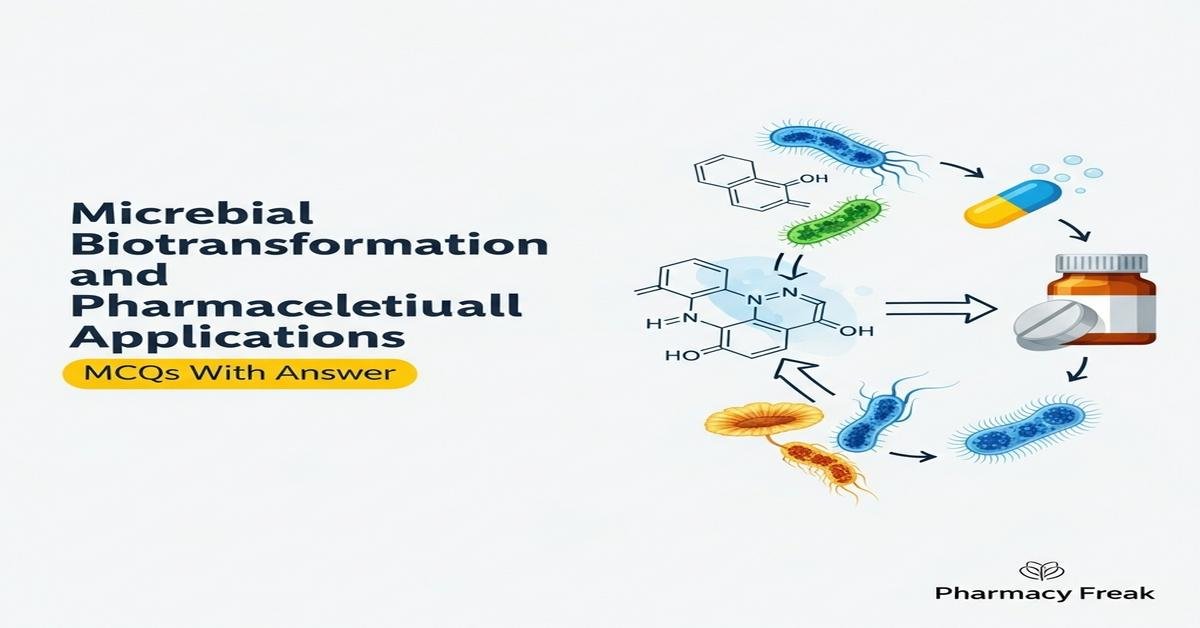
Introduction: Microbial biotransformation is the use of microorganisms or their enzymes to chemically modify drug molecules, producing metabolites, stereoselective products, or impurity profiles valuable in drug development. For B. Pharm students, understanding biocatalysis, microbial strains, enzyme systems, cofactors, and biotransformation pathways is essential for applications such as metabolite synthesis, chiral resolution, prodrug activation, and green … Read more
Plasmids and transposons – structure and significance MCQs With Answer

Plasmids and transposons – structure and significance MCQs With Answer

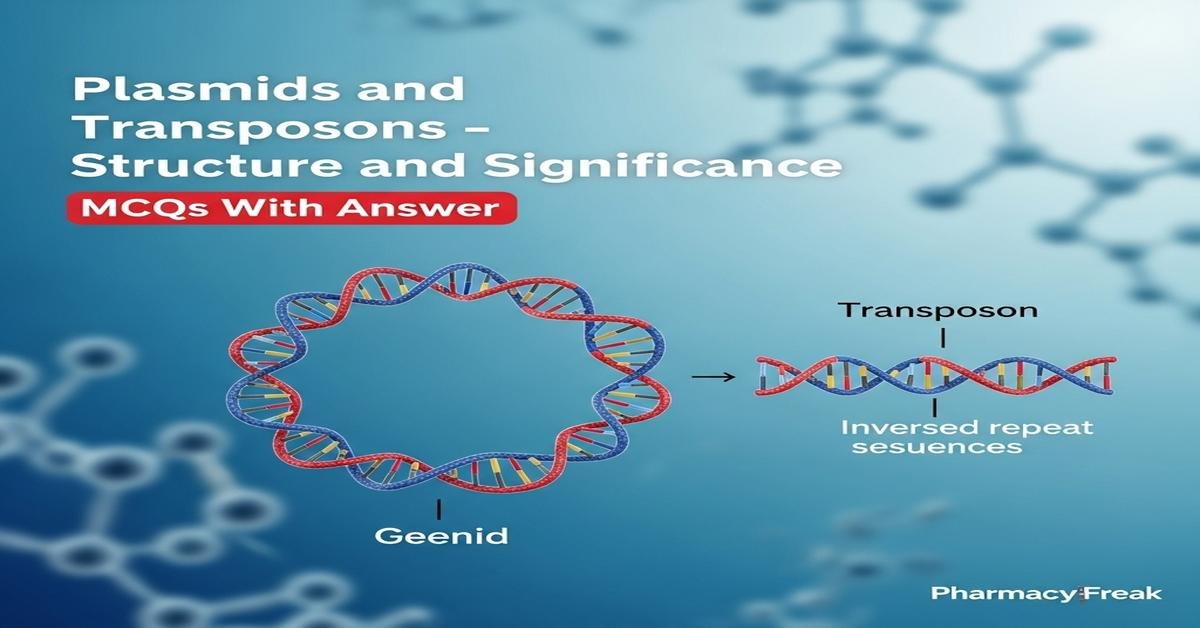
Plasmids and transposons – structure and significance MCQs With Answer Plasmids and transposons are mobile genetic elements central to microbial genetics, antibiotic resistance, and biotechnology. Plasmids are autonomously replicating circular DNA molecules with origins of replication (oriV, oriT), copy number control, partitioning systems, and conjugation genes. Transposons (including insertion sequences, composite transposons, and Tn3 family) … Read more

Microbial genetics – transformation, transduction, conjugation MCQs With Answer

Microbial genetics – transformation, transduction, conjugation MCQs With Answer

Microbial genetics — transformation, transduction, and conjugation — describes mechanisms by which bacteria exchange genetic material. For B.Pharm students this topic links fundamental processes (plasmids, bacteriophages, competence, conjugative pili) to clinical concerns like antibiotic resistance, virulence factor spread, and biotechnology applications such as recombinant DNA and vaccine design. Understanding transformation (uptake of naked DNA), bacteriophage-mediated … Read more

Genetic organization of eukaryotes and prokaryotes MCQs With Answer

Genetic organization of eukaryotes and prokaryotes MCQs With Answer

Introduction Understanding the genetic organization of eukaryotes and prokaryotes is essential for B. Pharm students who study drug targets, gene expression, and microbial resistance. This topic covers chromosome structure, chromatin, nucleoid organization, histones, plasmids, operons, introns/exons, replication origins, and regulatory elements. Key concepts include genome size, gene density, polycistronic versus monocistronic transcription, nucleosome packaging, topoisomerases, … Read more

Immunoblotting techniques – ELISA, Western blotting and Southern blotting MCQs With Answer

Immunoblotting techniques – ELISA, Western blotting and Southern blotting MCQs With Answer

Introduction Immunoblotting techniques such as ELISA, Western blotting and Southern blotting are essential laboratory tools for B.Pharm students to detect and analyze biomolecules. ELISA (enzyme-linked immunosorbent assay) quantifies antigens or antibodies using plate-based immunoassays; Western blotting separates proteins by SDS-PAGE and detects specific proteins on membranes (nitrocellulose or PVDF) using primary and secondary antibodies; Southern … Read more

Blood products and plasma substitutes MCQs With Answer

Blood products and plasma substitutes MCQs With Answer

Blood products and plasma substitutes MCQs With Answer is a concise, clinically focused introduction for B.Pharm students covering blood components, plasma expanders, transfusion pharmacology, and safe transfusion practices. This collection emphasizes key concepts such as red blood cells, platelets, fresh frozen plasma, cryoprecipitate, albumin, colloids (dextrans, hydroxyethyl starch, gelatins), crystalloids, compatibility testing, indications, dosing, storage, … Read more

Hybridoma technology – production and applications of monoclonal antibodies MCQs With Answer

Hybridoma technology – production and applications of monoclonal antibodies MCQs With Answer

Introduction Hybridoma technology is a foundational method for the production of monoclonal antibodies (mAbs), combining antibody-producing B cells with immortal myeloma cells to create hybridomas. This process—involving fusion agents like PEG, HAT selection, limiting dilution cloning, and screening by ELISA or flow cytometry—yields specific, high-affinity IgG antibodies for diagnostics, therapeutics, and research. Key steps include … Read more

Storage conditions and stability of official vaccines MCQs With Answer

Storage conditions and stability of official vaccines MCQs With Answer

Introduction Understanding storage conditions and vaccine stability is essential for B. Pharm students involved in immunization programs, cold chain management, and quality assurance. This topic covers vaccine stability, temperature monitoring, cold chain logistics, vaccine vial monitors (VVMs), lyophilized vs liquid formulations, freeze-sensitive and heat-sensitive vaccines, WHO guidelines, shelf life, potency assays, and stability testing protocols. … Read more

Preparation of viral vaccines, antitoxins and serum derivatives MCQs With Answer

Preparation of viral vaccines, antitoxins and serum derivatives MCQs With Answer

Introduction: Preparation of viral vaccines, antitoxins and serum derivatives is a core B.Pharm topic that covers vaccine design, antigen preparation, inactivation and attenuation methods, cell-culture and egg-based production, purification, adjuvants, potency and safety testing, and formulation/stability considerations. You will study antitoxin and antiserum production, fractionation (Cohn method), F(ab’)2 preparation, complement inactivation, and quality control assays … Read more

Preparation of bacterial vaccines and toxoids MCQs With Answer

Preparation of bacterial vaccines and toxoids MCQs With Answer

Preparation of bacterial vaccines and toxoids covers microbiological, chemical, and pharmaceutical principles essential for B.Pharm students. This topic explores antigen selection, inactivation of pathogens, detoxification of bacterial toxins into toxoids, purification techniques (centrifugation, chromatography, ultrafiltration), formulation with adjuvants, stability and sterility testing, potency assays, and regulatory quality control. Emphasis is placed on practical steps like … Read more

PRO
Ad-Free Access
$3.99 / month
  • ✓ No Interruptions
  • ✓ Faster Page Loads
  • ✓ Support Content Creators