Trusted by 50K+ Pharmacy StudentsHigh Quality Notes, MCQs, Mock Tests & Study ResourcesGo Premium (Ads Free)
Pharmacy Freak

Applications of GRDDS in sustained drug release MCQs With Answer
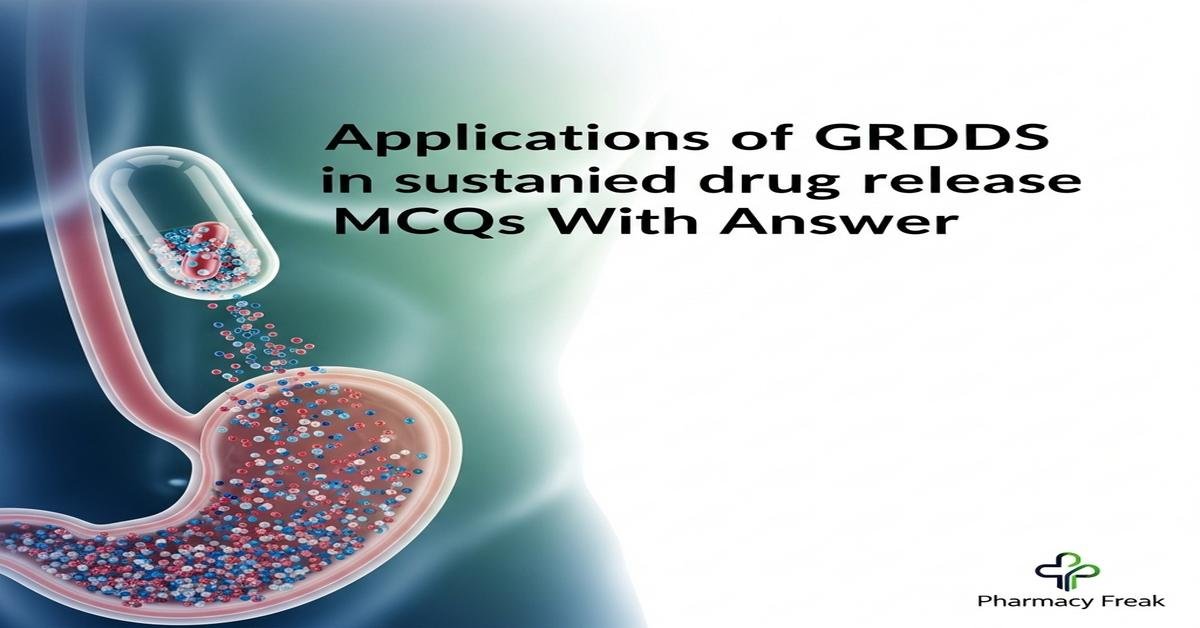
Applications of GRDDS in sustained drug release MCQs With Answer

Introduction: Gastroretentive drug delivery systems (GRDDS) enhance sustained drug release by prolonging gastric residence time, improving bioavailability for drugs with a narrow absorption window. GRDDS applications include floating systems, bioadhesive/mucoadhesive systems, expandable and high-density designs that control buoyancy, swelling and adhesion. Key formulation considerations include choice of polymers like HPMC and Carbopol, gas-generating agents (e.g., … Read more
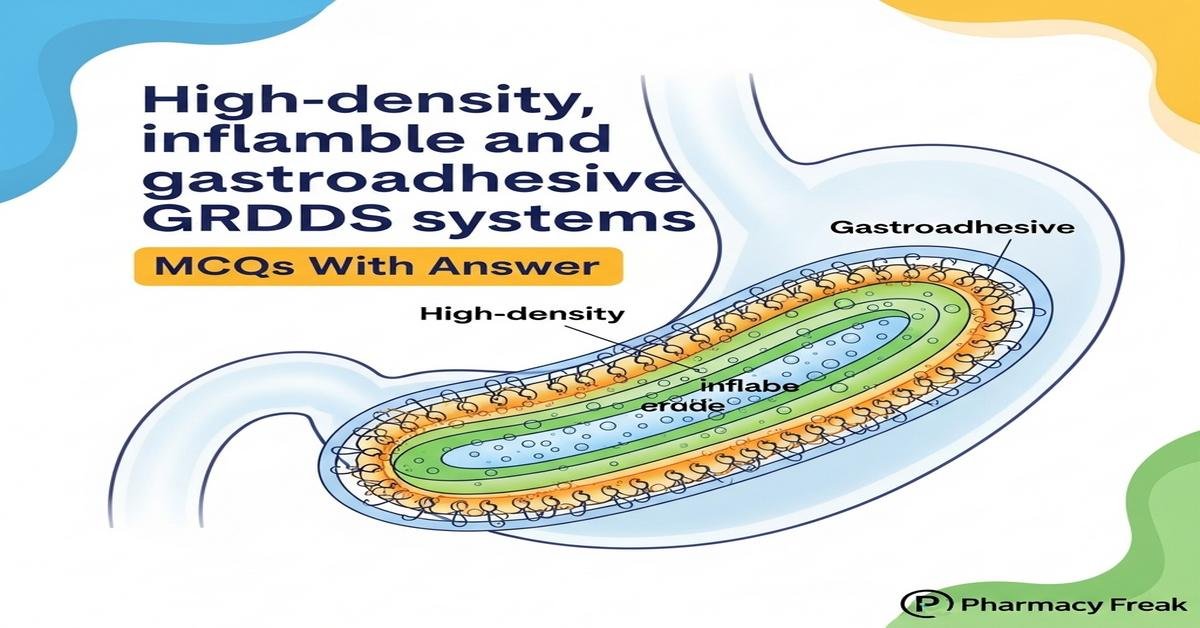
High-density, inflatable and gastroadhesive GRDDS systems MCQs With Answer

High-density, inflatable and gastroadhesive GRDDS systems MCQs With Answer

Introduction: High-density, inflatable, and gastroadhesive GRDDS (gastroretentive drug delivery systems) are specialized formulations designed to prolong gastric residence, enhance bioavailability, and target drugs to the stomach or proximal small intestine. High-density systems sink to the antrum, inflatable/expandable systems enlarge to prevent pyloric passage, and gastroadhesive (mucoadhesive) systems attach to the mucosal lining using polymers like … Read more

Floating drug delivery systems and their mechanisms MCQs With Answer

Floating drug delivery systems and their mechanisms MCQs With Answer

Floating drug delivery systems and their mechanisms MCQs With Answer introduce B. Pharm students to buoyant formulations designed for prolonged gastric retention and targeted upper GI release. This concise, informative overview covers key concepts: hydrodynamically balanced systems, effervescent and non-effervescent approaches, low-density polymers, swellable matrices, microballoons, raft-forming systems, float lag time, in vitro buoyancy testing, … Read more

Advantages and disadvantages of GRDDS MCQs With Answer

Advantages and disadvantages of GRDDS MCQs With Answer

Gastroretentive drug delivery systems (GRDDS) extend gastric residence time of oral dosage forms to improve absorption, bioavailability and therapeutic outcomes for drugs with narrow absorption windows. This introduction reviews advantages — such as enhanced bioavailability, localized stomach delivery, reduced dosing frequency and controlled release — and disadvantages like variable gastric retention, food effects, manufacturing complexity … Read more

Gastroretentive drug delivery systems (GRDDS) – concepts and need MCQs With Answer

Gastroretentive drug delivery systems (GRDDS) – concepts and need MCQs With Answer

Gastroretentive drug delivery systems (GRDDS) are advanced oral formulations designed to prolong gastric residence time, improving absorption and therapeutic efficacy for drugs with a narrow absorption window, local gastric action, or poor intestinal stability. GRDDS concepts include floating (effervescent and non-effervescent), mucoadhesive, high-density, expandable and superporous systems that exploit buoyancy, adhesion, density and swelling mechanisms. … Read more

Formulation approaches and evaluation of TDDS MCQs With Answer

Formulation approaches and evaluation of TDDS MCQs With Answer

Transdermal drug delivery system (TDDS) formulation approaches and evaluation are essential topics for B.Pharm students learning how to design safe, effective patches. This introduction covers key concepts: matrix and reservoir systems, rate-controlling membranes, backing layers, adhesives, permeation enhancers, and microneedle/iontophoresis strategies. Important formulation considerations include drug physicochemical properties (molecular weight, lipophilicity, daily dose), polymer selection, … Read more

Basic components of transdermal drug delivery systems (TDDS) MCQs With Answer

Basic components of transdermal drug delivery systems (TDDS) MCQs With Answer

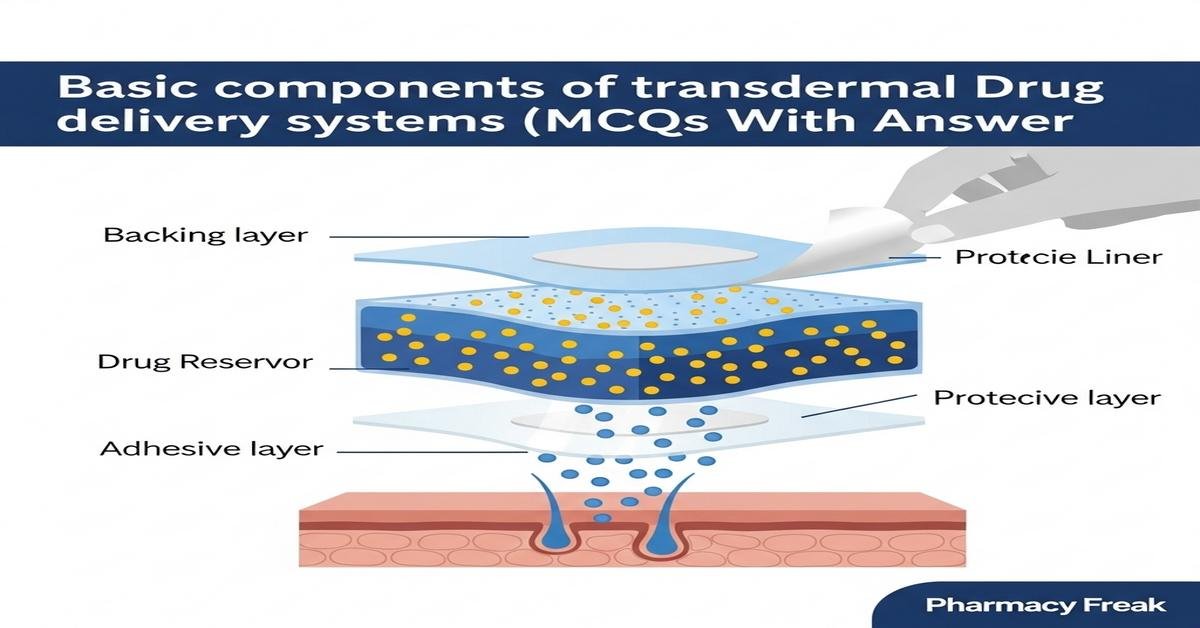
Transdermal drug delivery systems (TDDS) provide controlled systemic delivery of drugs through the skin using specialized patches. Understanding the basic components—backing layer, drug reservoir or matrix, rate-controlling membrane, adhesive layer, release liner, and penetration enhancers—is essential for formulation, evaluation and patient safety. This review emphasizes formulation principles and evaluation methods, including polymer selection, drug loading, … Read more

Use of permeation enhancers in transdermal formulations MCQs With Answer

Use of permeation enhancers in transdermal formulations MCQs With Answer

Introduction: The use of permeation enhancers in transdermal formulations is a key topic for B.Pharm students studying drug delivery. Permeation enhancers (chemical penetration enhancers) increase skin permeation by reversible modification of the stratum corneum structure, improving drug partitioning and diffusion. Important keywords include transdermal delivery, skin permeation, stratum corneum, penetration enhancers, flux, lag time, bioavailability, … Read more

Time Management for GPAT: How to Attempt 125 Questions in 180 Minutes, Toppers Reveal Their Time-Saving Secrets for the Exam Hall.

Time Management for GPAT: How to Attempt 125 Questions in 180 Minutes, Toppers Reveal Their Time-Saving Secrets for the Exam Hall.

Speed on the GPAT is not about rushing. It is about controlling where your minutes go. You have 180 minutes and 125 questions. Toppers do not try to solve every question deeply. They scan, sort, and strike quickly, then invest time only where marks are likely. This guide shows the exact timing plans, decision rules, … Read more

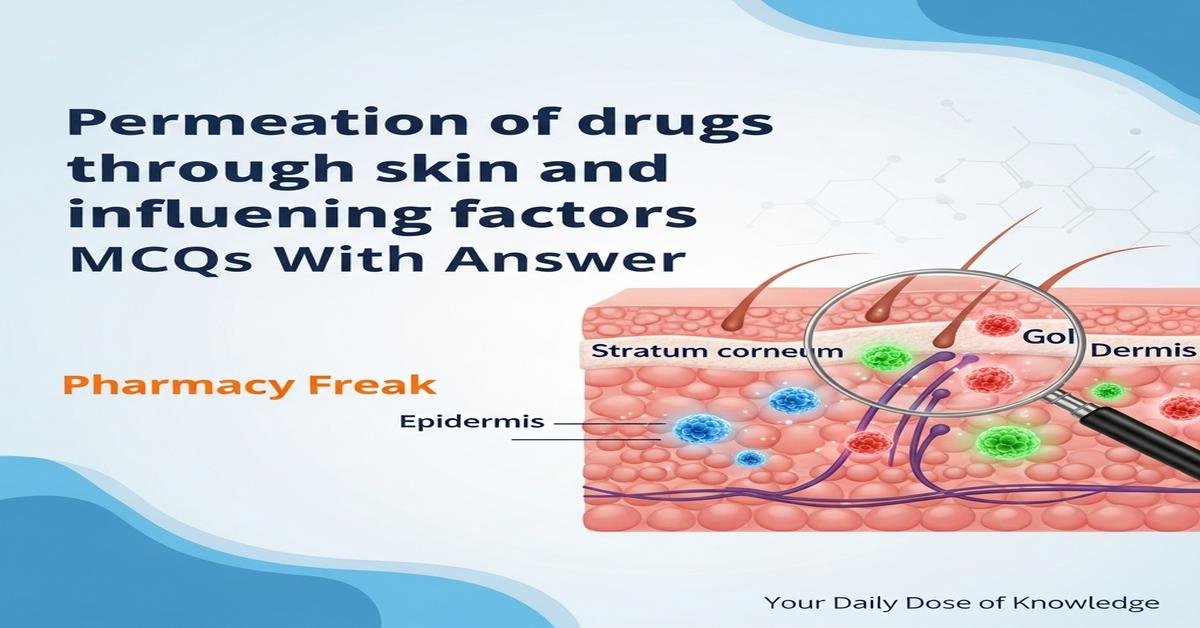
Permeation of drugs through skin and influencing factors MCQs With Answer

Permeation of drugs through skin and influencing factors MCQs With Answer

Introduction Permeation of drugs through skin is a key topic in transdermal delivery and topical therapy for B. Pharm students. Understanding mechanisms—stratum corneum barrier, diffusion, partitioning, and skin appendage pathways—helps predict drug flux, permeability coefficient, lag time, and bioavailability. Influencing factors include molecular weight, lipophilicity (log P), ionization, vehicle composition, skin hydration, occlusion, chemical enhancers, … Read more

PRO
Ad-Free Access
$3.99 / month
  • ✓ No Interruptions
  • ✓ Faster Page Loads
  • ✓ Support Content Creators