
Trusted by 50K+ Pharmacy StudentsHigh Quality Notes, MCQs, Mock Tests & Study ResourcesGo Premium (Ads Free)
Pharmacy Freak

Concept and importance of Biostatistics in Pharmacy MCQs With Answer
Concept and importance of Biostatistics in Pharmacy MCQs With Answer

Biostatistics in Pharmacy is the application of statistical methods to design, analyze, and interpret data from pharmaceutical research, clinical trials, pharmacokinetics, and epidemiology. For B.Pharm students, mastering descriptive statistics, probability, hypothesis testing, confidence intervals, regression, and survival analysis is essential for evidence-based drug development, therapeutic monitoring, and regulatory submissions. Understanding sampling, power and sample size, … Read more
Introduction to Statistics and Biostatistics MCQs With Answer

Introduction to Statistics and Biostatistics MCQs With Answer

Introduction to Statistics and Biostatistics MCQs With Answer provides B. Pharm students with clear, practical practice on core topics in statistics and biostatistics essential for pharmacy studies. It covers descriptive statistics (mean, median, mode, standard deviation), probability distributions, hypothesis testing (p-value, Type I/II errors), confidence intervals, sample size, and analytical methods used in pharmacology and … Read more

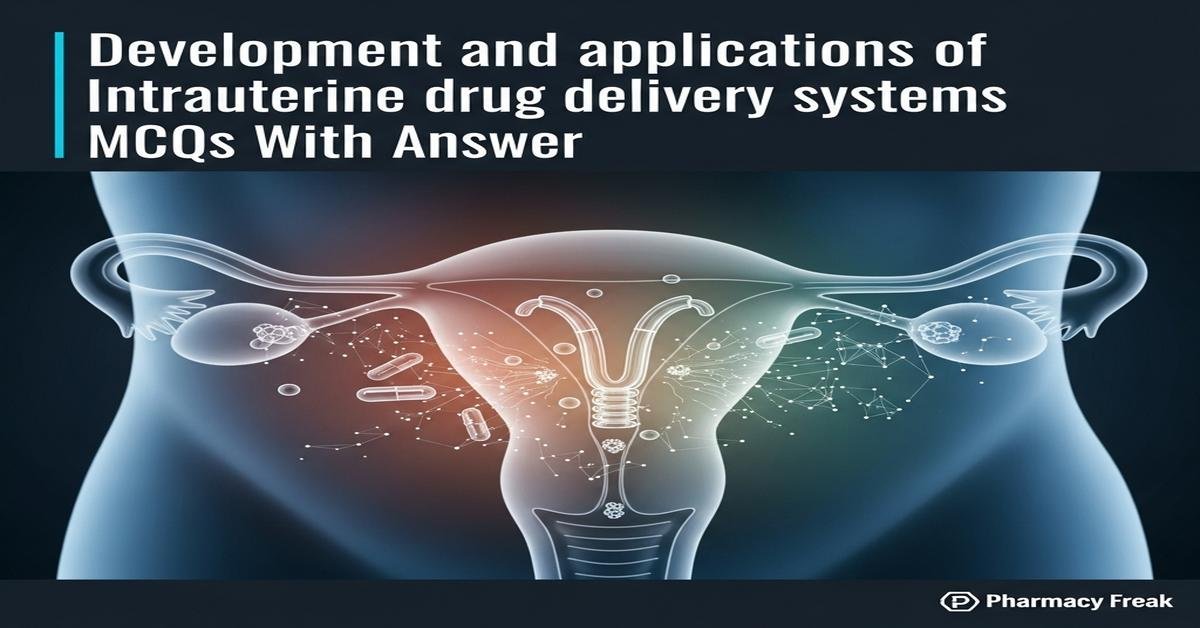
Development and applications of intrauterine drug delivery systems MCQs With Answer

Development and applications of intrauterine drug delivery systems MCQs With Answer

Intrauterine drug delivery systems are specialized intrauterine devices (IUDs/IUS) engineered to provide controlled, local drug delivery directly to the uterine cavity. This concise overview for B.Pharm students highlights device design, biocompatible polymers (PDMS, EVA, PLGA), release mechanisms (diffusion-controlled reservoir, matrix erosion), pharmacokinetics (high uterine concentration, low systemic exposure), clinical applications (contraception, treatment of menorrhagia, emergency … Read more

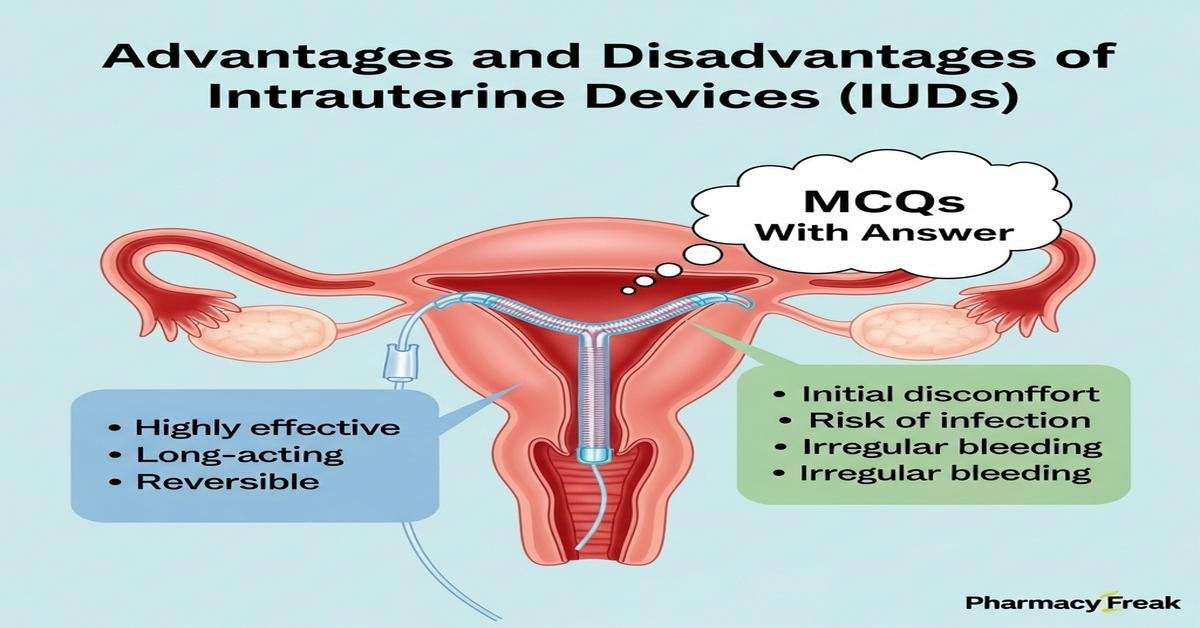
Advantages and disadvantages of intrauterine devices (IUDs) MCQs With Answer

Advantages and disadvantages of intrauterine devices (IUDs) MCQs With Answer

Introduction: Intrauterine devices (IUDs) are long-acting reversible contraceptives widely used in clinical practice. This introduction reviews advantages and disadvantages of intrauterine devices, including copper IUDs and levonorgestrel intrauterine systems (LNG-IUS). Key topics cover mechanisms of action, efficacy (failure rates 6 weeks postpartum Nulliparity only Heavy menses and younger age Using LNG-IUS rather than copper Correct … Read more

Intrauterine drug delivery systems – introduction and overview MCQs With Answer

Intrauterine drug delivery systems – introduction and overview MCQs With Answer

Intrauterine drug delivery systems (IU-DDS) are specialized devices designed to provide localized, controlled drug release directly within the uterine cavity. This introduction covers key concepts such as device design, materials (biodegradable polymers like PLGA, PCL, and non-degradable materials), pharmacokinetics of local delivery, levonorgestrel-releasing IUS, copper IUDs, mechanisms of action, bioadhesion, release kinetics (zero-order, Higuchi, Korsmeyer–Peppas), … Read more

Ocular formulations and ocuserts – design and evaluation MCQs With Answer

Ocular formulations and ocuserts – design and evaluation MCQs With Answer

Ocular formulations and ocuserts – design and evaluation explore principles of ophthalmic drug delivery, sustained-release ocusert systems, and critical evaluation methods for B.Pharm students. This introduction covers formulation strategies, polymers, rate-controlling membranes, mucoadhesion, sterilization, stability, in vitro release testing, and in vivo correlation to improve ocular bioavailability and patient compliance. Key topics include selection of … Read more

Intraocular barriers and methods to overcome them MCQs With Answer

Intraocular barriers and methods to overcome them MCQs With Answer

Introduction: Intraocular barriers are physiological and anatomical obstacles—such as the tear film, corneal epithelium, conjunctiva, blood-aqueous barrier and blood-retinal barrier—that restrict drug entry and distribution within the eye. Understanding permeability, ocular clearance, efflux transporters, enzymatic metabolism and melanin binding is essential for rational ocular drug design. Methods to overcome these barriers include topical penetration enhancers, … Read more

Ocular drug delivery systems – introduction and challenges MCQs With Answer

Ocular drug delivery systems – introduction and challenges MCQs With Answer

Introduction: Ocular drug delivery systems address unique challenges of delivering therapeutics to the eye, balancing anatomy, physiology, and formulation science. B.Pharm students must understand corneal and conjunctival barriers, tear turnover, limited ocular bioavailability, and routes such as topical, periocular, and intravitreal. Key topics include formulation types (solutions, suspensions, gels, ointments, inserts, implants), sustained-release systems, mucoadhesive … Read more

Applications of targeted systems in therapy MCQs With Answer

Applications of targeted systems in therapy MCQs With Answer

Applications of targeted systems in therapy focus on delivering drugs precisely to diseased cells or tissues to improve efficacy and reduce side effects. For B.Pharm students, understanding targeted drug delivery—including targeted systems such as nanoparticles, liposomes, antibody‑drug conjugates (ADCs), polymeric micelles and stimuli‑responsive carriers—is essential. Key concepts include passive and active targeting, receptor‑mediated endocytosis, blood‑brain … Read more

Monoclonal antibodies as targeted drug carriers MCQs With Answer

Monoclonal antibodies as targeted drug carriers MCQs With Answer

Introduction: Monoclonal antibodies as targeted drug carriers combine the specificity of monoclonal antibodies with potent cytotoxic agents to form antibody-drug conjugates (ADCs). These engineered bioconjugates use precise conjugation chemistry, linker design and optimized drug-antibody ratio (DAR) to deliver payloads selectively to diseased cells, minimizing systemic toxicity. Key concepts include antigen targeting, internalization, lysosomal release, cleavable … Read more

PRO
Ad-Free Access
$3.99 / month
  • ✓ No Interruptions
  • ✓ Faster Page Loads
  • ✓ Support Content Creators