
Trusted by 50K+ Pharmacy StudentsHigh Quality Notes, MCQs, Mock Tests & Study ResourcesGo Premium (Ads Free)
Pharmacy Freak

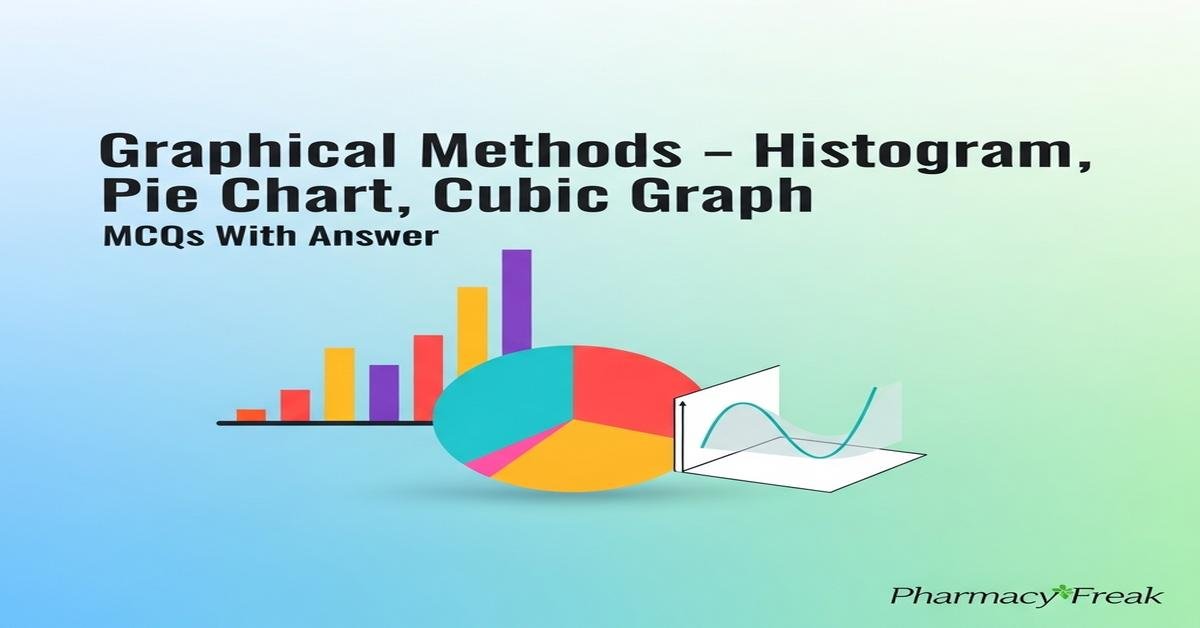
Graphical methods – histogram, pie chart, cubic graph MCQs With Answer
Graphical methods – histogram, pie chart, cubic graph MCQs With Answer

Introduction: Graphical methods such as histograms, pie charts, and cubic graphs are essential tools in pharmaceutical data analysis for B. Pharm students. These visualization techniques help present frequency distributions, component proportions, and nonlinear trends in formulation studies, stability testing, dissolution profiles, and pharmacokinetic data. Mastery of histogram design (bin width, class intervals), pie chart interpretation … Read more

Plagiarism – definition, types and avoidance MCQs With Answer

Plagiarism – definition, types and avoidance MCQs With Answer

Introduction Plagiarism undermines academic integrity and research credibility in B.Pharm education. This guide explains plagiarism — its definition, common types (direct copying, paraphrasing without citation, mosaic plagiarism, and self-plagiarism), and practical avoidance strategies such as proper citation, paraphrasing techniques, use of referencing styles (Vancouver, APA), plagiarism detection tools, and ethical lab reporting. It highlights implications … Read more

Design of experiments – basic concepts and objectives MCQs With Answer

Design of experiments – basic concepts and objectives MCQs With Answer

Design of experiments (DOE) introduces systematic planning and analysis of tests to understand how factors and their levels influence responses in pharmaceutical research. For B.Pharm students, DOE covers key concepts — factors, levels, treatments, experimental units, randomization, replication, blocking, factorial and fractional designs, interactions, ANOVA and response-surface methods — with practical objectives: identify critical process … Read more

Introduction to research and need for experimentation MCQs With Answer

Introduction to research and need for experimentation MCQs With Answer

Introduction to Research and Need for Experimentation MCQs With Answer Research and experimentation are core to B. Pharm education, training students in pharmaceutical research, study design, hypothesis testing, variables, controls, and data analysis. Understanding laboratory techniques, good laboratory practice (GLP), ethical approval, sampling, randomization, blinding, and statistical concepts like p-value, power, and error types is … Read more

Kruskal–Wallis test and Friedman test MCQs With Answer

Kruskal–Wallis test and Friedman test MCQs With Answer

Introduction: The Kruskal–Wallis test and Friedman test are essential non-parametric statistical tools in B. Pharm and biostatistics for comparing group differences when data violate parametric assumptions. The Kruskal–Wallis test compares medians across three or more independent groups using rank sums, while the Friedman test evaluates differences across repeated measures or matched groups by ranking within … Read more

Mann–Whitney U test and its applications MCQs With Answer

Mann–Whitney U test and its applications MCQs With Answer

Mann–Whitney U test is a nonparametric statistical method widely used in B.Pharm research to compare two independent groups when data are ordinal or not normally distributed. This rank-sum test (also called Wilcoxon rank-sum) assesses differences in central tendency or distribution without assuming normality, making it useful for pharmacology, clinical trials, dissolution studies, bioequivalence, and adverse … Read more

Non-parametric tests – Wilcoxon Rank Sum Test MCQs With Answer

Non-parametric tests – Wilcoxon Rank Sum Test MCQs With Answer

Non-parametric tests like the Wilcoxon Rank Sum Test are essential in B. Pharm biostatistics for comparing two independent groups when data are ordinal, skewed, or sample sizes are small. Also known as the Mann–Whitney U test, the rank-sum approach compares medians and distributions without assuming normality, making it ideal for pharmacology outcomes, drug efficacy scores, … Read more

Least significant difference (LSD) method MCQs With Answer

Least significant difference (LSD) method MCQs With Answer

Least significant difference (LSD) method MCQs With Answer provides B. Pharm students a focused review of the LSD post-hoc test used after ANOVA for pairwise comparisons. This introduction covers key concepts such as pooled error variance, MSE, t-critical values, significance level (alpha), protection by overall F-test, and practical applications in pharmacology, bioassay, formulation studies and … Read more

Pharmaceutics 101: Why Tablets Fail the Dissolution Test, Understanding This One Concept Is Crucial for Your Viva and Career.

Pharmaceutics 101: Why Tablets Fail the Dissolution Test, Understanding This One Concept Is Crucial for Your Viva and Career.

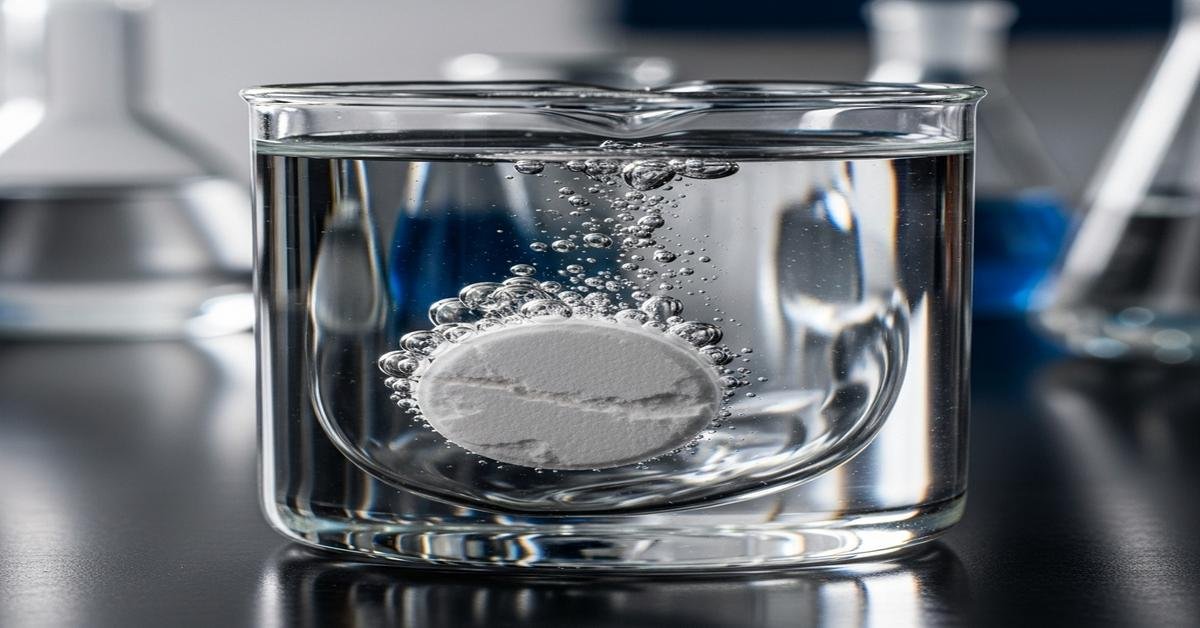
Dissolution looks simple: put tablets in a medium and watch drug release. In practice, many tablets fail. The reason is almost always the same and easy to miss. If you understand this one concept—how much wetted drug surface area your tablet creates and maintains during the test—you can predict, troubleshoot, and design for success. This … Read more

ANOVA – one-way and two-way analysis MCQs With Answer

ANOVA – one-way and two-way analysis MCQs With Answer

Analysis of variance (ANOVA) is a core statistical tool in pharmaceutical research that compares mean responses across multiple groups. B.Pharm students must master one-way ANOVA for single-factor experiments (e.g., comparing dissolution rates among formulations) and two-way ANOVA to evaluate two factors plus interaction effects (e.g., formulation and storage temperature). Key concepts include the F-test, sums … Read more

PRO
Ad-Free Access
$3.99 / month
  • ✓ No Interruptions
  • ✓ Faster Page Loads
  • ✓ Support Content Creators