Table of Contents
Introduction
H2 antagonists, also called H2 receptor blockers, are drugs used to reduce gastric acid secretion in conditions such as peptic ulcer disease, gastroesophageal reflux disease (GERD), and Zollinger–Ellison syndrome. These drugs block histamine H2 receptors located on gastric parietal cells, thereby inhibiting acid production.
Common H2 antagonists include cimetidine, ranitidine, famotidine, and nizatidine. By reducing both basal and stimulated gastric acid secretion, these drugs promote healing of ulcers and reduce gastric irritation.
The mechanism of H2 receptor antagonists is a commonly tested pharmacology topic in examinations such as USMLE, NEET PG, FMGE, PLAB, INICET, NCLEX, and MCCQE.
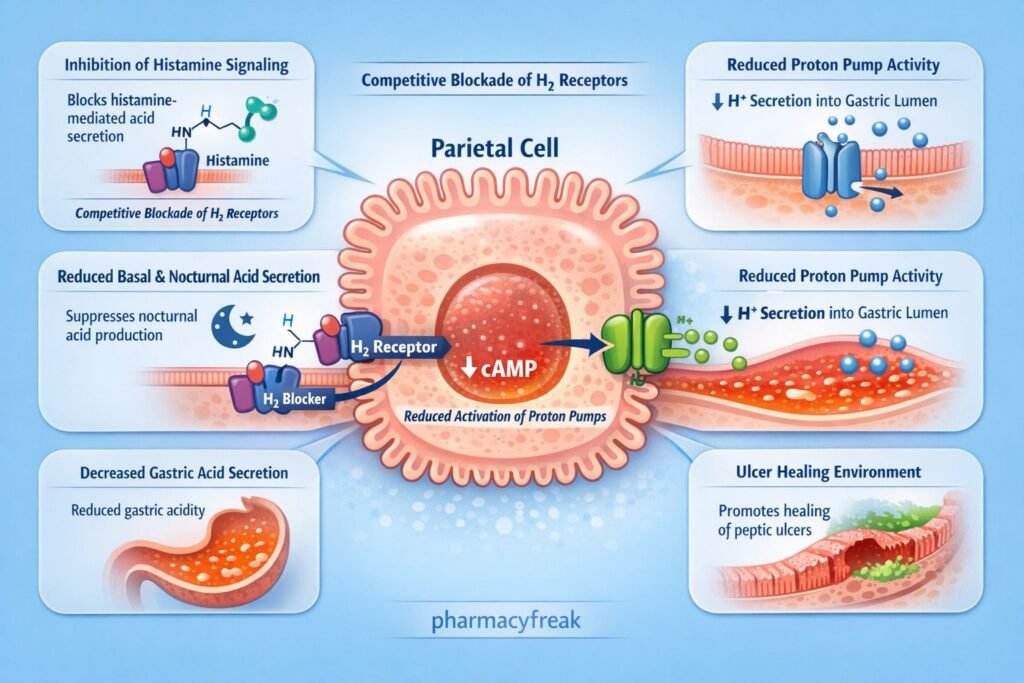
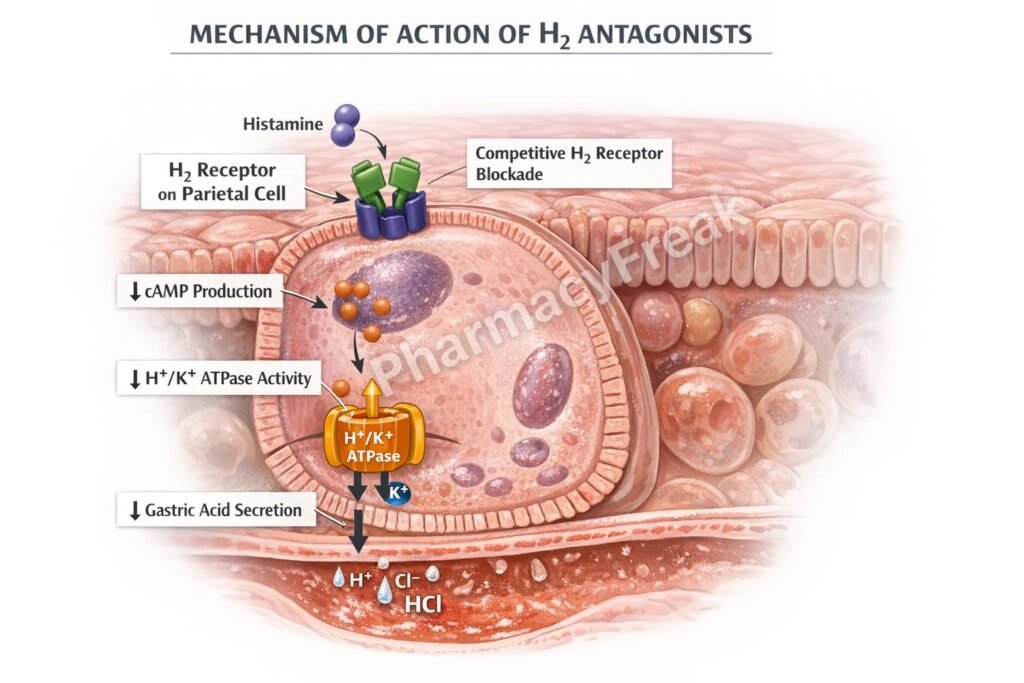
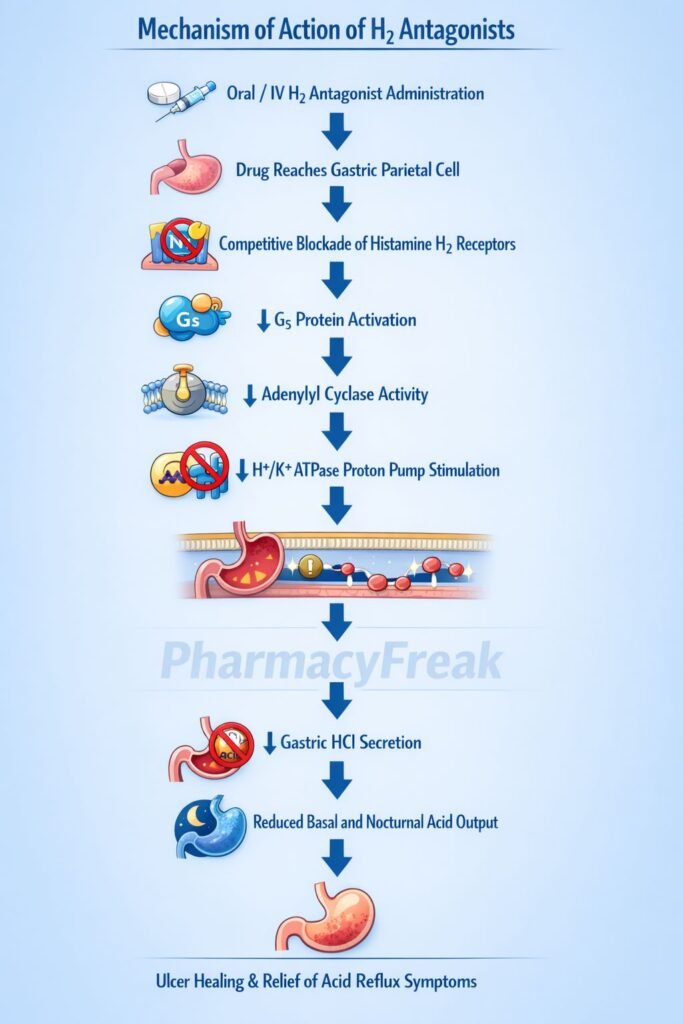
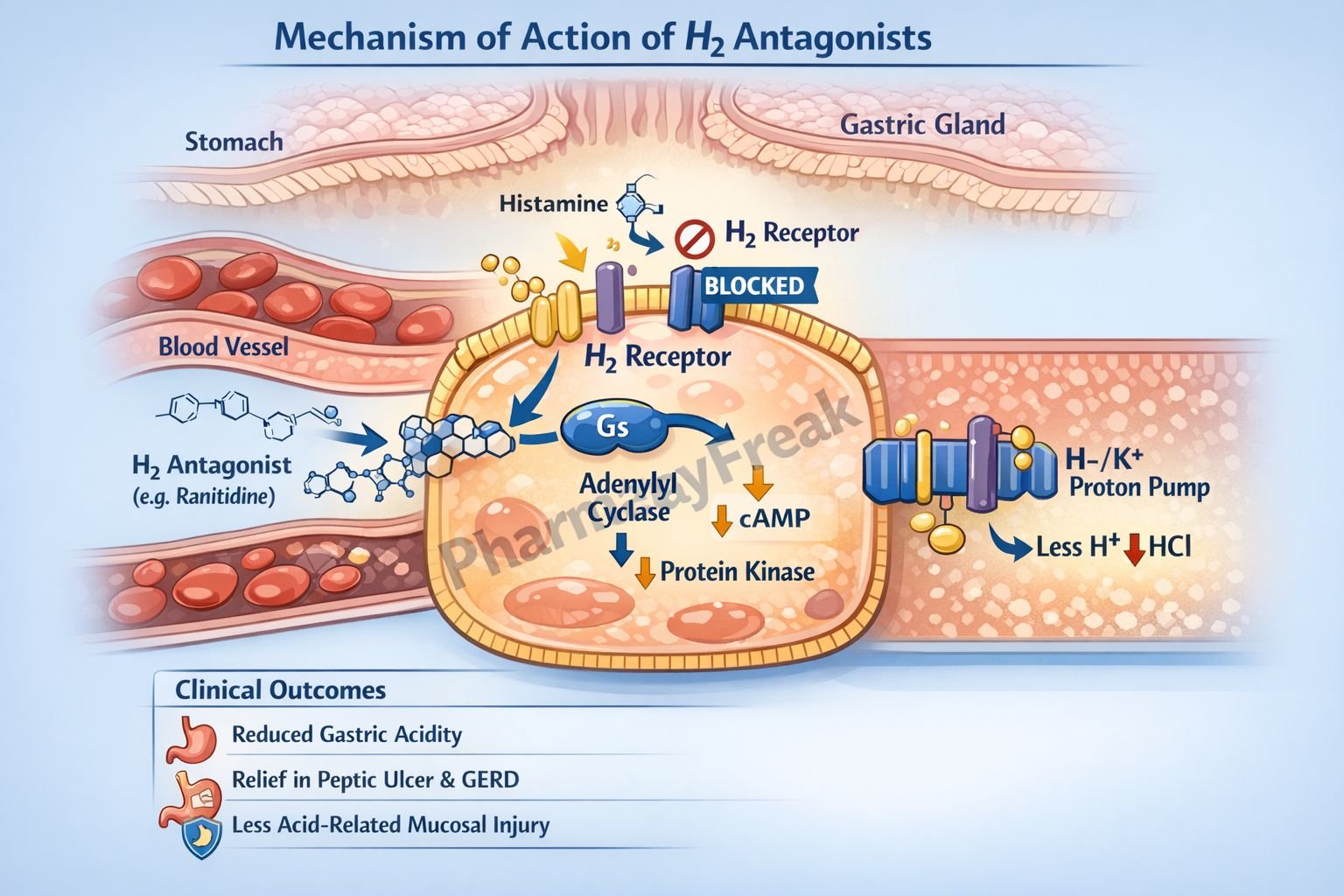
Mechanism of Action (Step-wise)
H2 antagonists decrease gastric acid secretion by blocking histamine mediated activation of parietal cells.
Step 1: Histamine release in the stomach
Histamine is released from enterochromaffin like (ECL) cells in the gastric mucosa.
Step 2: Activation of H2 receptors
Histamine binds to H2 receptors located on gastric parietal cells.
Step 3: Activation of adenylate cyclase
H2 receptor stimulation activates adenylate cyclase, increasing intracellular cyclic AMP (cAMP).
Step 4: Activation of proton pump
Increased cAMP stimulates the H+/K+ ATPase proton pump, which secretes hydrogen ions into the gastric lumen.
Step 5: Competitive blockade by H2 antagonists
H2 antagonists competitively inhibit H2 receptors on parietal cells.
Step 6: Reduced acid secretion
Blocking H2 receptors decreases cAMP production, leading to reduced activity of the proton pump and decreased gastric acid secretion.
Overall effect:
Reduced gastric acid secretion, particularly basal and nocturnal acid production.
Important pharmacology concept:
H2 antagonists mainly inhibit histamine mediated acid secretion but have less effect on gastrin and acetylcholine mediated stimulation compared with proton pump inhibitors.
Pharmacokinetics
Absorption:
Well absorbed after oral administration.
Distribution:
Widely distributed in body tissues including gastric mucosa.
Metabolism:
Partially metabolized in the liver.
Excretion:
Primarily excreted through the kidneys.
Duration:
Usually taken once or twice daily depending on the drug.
Clinical Uses
- Peptic ulcer disease
- Gastroesophageal reflux disease (GERD)
- Zollinger–Ellison syndrome
- Stress ulcer prophylaxis in hospitalized patients
- Dyspepsia and acid related disorders
These drugs reduce gastric acidity and promote healing of gastric and duodenal ulcers.
Adverse Effects
H2 antagonists are generally well tolerated.
Common adverse effects:
- Headache
- Diarrhea
- Dizziness
Specific adverse effects:
- Cimetidine may cause gynecomastia and impotence due to anti androgen effects
- Drug interactions due to cytochrome P450 inhibition (especially with cimetidine)
Rare adverse effects:
- Confusion in elderly patients
- Vitamin B12 deficiency with long term use
Comparative Analysis
| Feature | H2 Antagonists | Proton Pump Inhibitors | Antacids |
|---|---|---|---|
| Mechanism | Block H2 receptors | Inhibit H+/K+ ATPase | Neutralize gastric acid |
| Acid suppression | Moderate | Very strong | Immediate but short |
| Onset | Moderate | Slower onset | Rapid |
| Duration | 6–12 hours | Up to 24 hours | Short |
| Clinical role | Ulcers and GERD | Severe acid disorders | Symptomatic relief |
Explanation:
H2 antagonists reduce gastric acid secretion by blocking histamine stimulation of parietal cells. Proton pump inhibitors act downstream by directly inhibiting the proton pump and therefore provide stronger acid suppression. Antacids do not affect acid production but instead neutralize existing acid in the stomach.
MCQs
- H2 antagonists block which receptor?
a) H1 receptor
b) H2 receptor
c) M3 receptor
d) Beta receptor
Answer: b) H2 receptor
- H2 receptors are located on:
a) Gastric chief cells
b) Gastric parietal cells
c) Hepatocytes
d) Pancreatic cells
Answer: b) Gastric parietal cells
- Histamine stimulates acid secretion by increasing:
a) cAMP
b) cGMP
c) Calcium only
d) Sodium influx
Answer: a) cAMP
- The proton pump responsible for acid secretion is:
a) Na+/K+ ATPase
b) H+/K+ ATPase
c) Ca2+ ATPase
d) Mg2+ ATPase
Answer: b) H+/K+ ATPase
- Which drug is an H2 antagonist?
a) Omeprazole
b) Cimetidine
c) Misoprostol
d) Sucralfate
Answer: b) Cimetidine
- H2 antagonists mainly reduce:
a) Basal acid secretion
b) Gastrin secretion
c) Pepsin secretion
d) Bile secretion
Answer: a) Basal acid secretion
- Which H2 antagonist commonly causes gynecomastia?
a) Famotidine
b) Nizatidine
c) Cimetidine
d) Ranitidine
Answer: c) Cimetidine
- Compared with proton pump inhibitors, H2 antagonists are:
a) More potent
b) Less potent
c) Equally potent
d) Faster acting always
Answer: b) Less potent
- H2 antagonists decrease acid secretion by reducing:
a) Calcium influx
b) cAMP production
c) Sodium influx
d) Potassium efflux
Answer: b) cAMP production
- Main therapeutic use:
a) Hypertension
b) Peptic ulcer disease
c) Asthma
d) Diabetes
Answer: b) Peptic ulcer disease
FAQs
- How do H2 antagonists reduce gastric acid?
They block histamine H2 receptors on parietal cells, reducing acid secretion. - Which acid secretion is most strongly inhibited by H2 blockers?
Basal and nocturnal acid secretion. - What is the difference between H2 antagonists and PPIs?
H2 antagonists block histamine receptors, while proton pump inhibitors block the acid producing proton pump directly. - Which H2 antagonist causes hormonal side effects?
Cimetidine may cause gynecomastia and impotence. - Are H2 antagonists effective in GERD?
Yes, they reduce acid reflux and help relieve GERD symptoms. - Can H2 antagonists cause drug interactions?
Yes, especially cimetidine due to inhibition of cytochrome P450 enzymes.
References
Goodman & Gilman’s Pharmacological Basis of Therapeutics
https://accessmedicine.mhmedical.com/book.aspx?bookID=2189
Katzung BG. Basic and Clinical Pharmacology
https://accessmedicine.mhmedical.com/book.aspx?bookID=2249
Tripathi KD. Essentials of Medical Pharmacology
https://jaypeedigital.com/book/9789354651970
Harrison’s Principles of Internal Medicine
https://accessmedicine.mhmedical.com/book.aspx?bookID=3095