
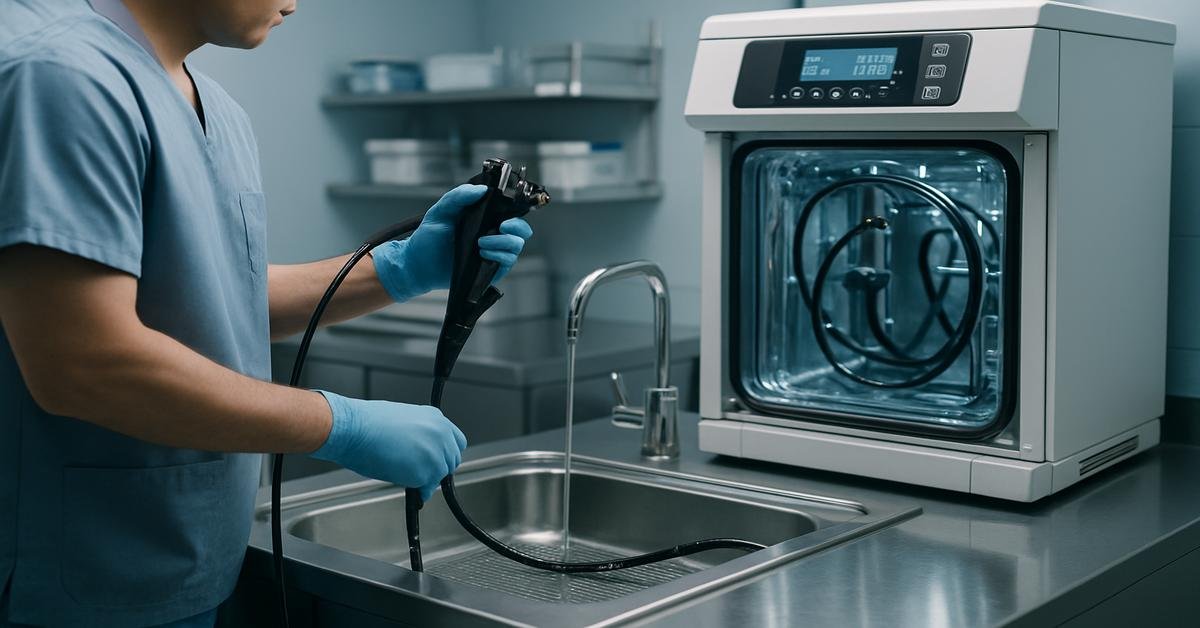
Gastroenterology clinics depend on endoscopes every day. These devices help clinicians diagnose ulcers, remove polyps, control bleeding, and screen for cancer. But an endoscope is only as safe as the process used to clean and disinfect it after each case. That is why more clinics are paying close attention to CER endoscope tech, or specialized scope reprocessors built for complex endoscope workflows. The demand is growing for a simple reason: modern GI clinics handle more patients, use more advanced scopes, and face tighter infection-control expectations than ever before. A basic cleaning setup is no longer enough. Clinics need systems that reduce human error, document each cycle, protect equipment, and keep patient flow moving.
Why endoscope reprocessing has become a bigger issue in GI care
Endoscopes are not simple tools. A flexible GI scope has long channels, valves, surfaces, and moving parts that come into contact with body fluids and tissue. After a procedure, organic material can remain inside tiny internal spaces if cleaning is delayed or done poorly. That matters because leftover debris can block disinfectant from reaching the full surface of the device.
The risk is not theoretical. Reprocessing failures have been linked to patient infections, procedure delays, scope damage, and failed inspections. In a busy GI clinic, the challenge grows quickly. One room may finish a colonoscopy while another is preparing for an upper endoscopy. Staff are turning over rooms, documenting care, handling biopsy tools, and trying to keep the day on schedule. In that environment, reprocessing steps must be reliable and repeatable.
That is where specialized reprocessors come in. They are designed to standardize a process that has many points where mistakes can happen. The goal is not to remove trained staff from the equation. The goal is to support them with equipment that makes correct practice easier and more consistent.
What CER endoscope tech usually means in practice
In practical terms, CER endoscope tech refers to dedicated reprocessing systems and related technology used to clean, disinfect, rinse, dry, and document the handling of endoscopes. Depending on the clinic and the manufacturer, this may include automated endoscope reprocessors, leak-testing tools, channel irrigation systems, drying cabinets, traceability software, and workflow controls.
These systems matter because GI endoscope reprocessing is not one single step. It is a chain. A typical process may include:
-
Bedside pre-cleaning immediately after the procedure to prevent soil from drying inside channels.
-
Leak testing to check whether the scope has damage that could let fluid enter areas that should stay sealed.
-
Manual cleaning with detergents and brushing to remove visible debris.
-
High-level disinfection or sterilization, depending on the scope and the clinic’s process.
-
Rinsing and drying to remove chemicals and reduce moisture that can support microbial growth.
-
Storage and documentation so the scope remains ready for safe use and the clinic can prove that each step was completed.
A specialized reprocessor supports one or more of these stages in a controlled way. That control is the main value. It helps the clinic produce the same result every time, even when staffing changes or procedure volume spikes.
Why modern GI clinics are driving stronger demand
The growth in demand is tied to several changes happening at once.
First, procedure volume is higher. Colon cancer screening programs, aging populations, and broader use of endoscopy for diagnosis and treatment have increased the number of procedures many clinics perform each week. More cases mean more scope turns per day. As turnaround pressure rises, clinics need reprocessing systems that are fast but still validated and consistent.
Second, endoscopes are more complex and more expensive. Advanced scopes often have intricate channels and delicate components. A clinic cannot afford to clean them carelessly. Poor reprocessing can cause both infection risk and equipment damage. Specialized systems help protect that investment by using standardized cycles and compatible handling methods.
Third, oversight is stronger. Infection prevention is under more scrutiny from regulators, accreditation bodies, and patients. A clinic must be able to show not only that it has a policy, but that the policy was followed. Manual logs are harder to trust and harder to audit. Digital traceability and cycle records are becoming much more valuable.
Fourth, staffing is harder. Many clinics face turnover, cross-training demands, and shortages of experienced sterile processing staff. When teams are stretched, well-designed reprocessing technology reduces variability. It does not replace training, but it does lower the chance that a rushed or inexperienced employee will miss a critical step.
The limits of manual processes alone
Manual cleaning remains essential. No clinic can skip it just because it owns advanced equipment. Debris must still be removed from the scope before disinfection can work properly. But relying too heavily on manual steps creates problems.
People work differently. One technician may be meticulous about brushing every channel for the full recommended time. Another may rush because three more scopes are waiting. One may document each serial number clearly. Another may leave gaps in the log. In a low-volume setting, those differences may be less visible. In a busy GI clinic, they become serious operational and safety risks.
Specialized reprocessors help by reducing variation. For example, an automated system can confirm cycle completion, monitor contact times, control disinfectant exposure, and create a record tied to a specific scope. That does not make the process foolproof. But it closes some of the most common gaps between policy and real-world practice.
How specialized reprocessors improve safety
The strongest argument for CER endoscope tech is patient safety. Every improvement in reprocessing aims to lower the chance that a contaminated or poorly dried scope reaches the next patient.
There are several ways these systems help:
-
Standardized cycle parameters. The machine follows validated settings instead of relying on memory or guesswork. That matters because disinfectant contact time, temperature, and flow are not small details. They determine whether the process is effective.
-
Channel-specific processing. Endoscope channels are where many problems hide. Systems designed for these devices can direct fluids through internal pathways in a controlled way, which is much harder to achieve consistently by hand.
-
Reduced handling. Every extra transfer creates another chance for contamination or damage. A more integrated workflow reduces touchpoints.
-
Drying support. Moisture left inside a scope can support microbial growth during storage. Specialized drying steps and drying cabinets address a part of the process that clinics once underestimated.
-
Alerts and documentation. If a cycle is interrupted, incomplete, or out of range, the system can flag it. That is far better than discovering a problem after the scope has already been used.
In short, the technology helps clinics move from “we think it was cleaned correctly” to “we can show how it was cleaned, when, and by whom.” That difference matters in both patient care and quality management.
Why documentation and traceability now matter as much as cleaning power
A reprocessor is not just a cleaning tool anymore. It is also part of the clinic’s data system. That shift is important.
If a clinic ever has to investigate a possible infection event, it needs clear answers. Which scope was used? On which patient? Was leak testing done? Did the disinfection cycle complete normally? Who handled the scope? Was it stored correctly before reuse? Without traceability, these questions are slow and difficult to answer.
Specialized reprocessing systems can record cycle details automatically. Some also support scope tracking, user identification, and links to patient or procedure records. This improves accountability, but it also improves daily operations. Staff spend less time chasing paper logs. Managers can identify bottlenecks, repeat errors, or devices that need service more often.
For clinic leaders, this documentation is not just defensive. It is a practical management tool. It helps them spot patterns before they become incidents.
The operational case: patient flow, staffing efficiency, and fewer delays
Demand for CER endoscope tech is also rising because clinic operations are tighter than they used to be. Many GI centers run on carefully planned schedules. If one scope is delayed in reprocessing, the effect spreads. A room may sit idle. A patient may wait longer. Staff may scramble to borrow another scope or reshuffle the case order.
Specialized reprocessors help clinics manage this pressure in a few practical ways:
-
More predictable turnaround times. Standard cycles make it easier to plan scope availability.
-
Better use of staff time. Skilled technicians can focus on inspection, manual cleaning quality, and exception handling instead of carrying every step manually.
-
Less avoidable rework. If a process is interrupted or undocumented, a scope may need to be reprocessed again. Reliable systems cut down on these losses.
-
Lower risk of device damage. Correct connectors, validated chemistries, and controlled handling reduce wear caused by improvised methods.
These benefits directly affect the clinic’s capacity. A center does not need reprocessing technology because it sounds advanced. It needs it because smooth reprocessing supports the entire day’s schedule.
What clinics should look for when choosing a specialized reprocessor
Not every reprocessing setup fits every GI clinic. A small outpatient center has different needs than a large hospital-based endoscopy unit. Still, some selection points are broadly important.
-
Compatibility with scope types. The system must support the clinic’s actual device inventory, including channel configurations and manufacturer requirements.
-
Clear workflow design. Equipment should make correct steps obvious. Confusing connectors, awkward loading, or poor screen prompts increase error risk.
-
Reliable drying and storage support. Clinics now understand that drying is not a side issue. It is part of infection prevention.
-
Traceability features. Automatic recordkeeping, user tracking, and easy audit retrieval save time and improve confidence.
-
Service and training support. A good machine without good onboarding can still fail in practice. Staff need training that fits real workflow, not just a one-time demo.
-
Throughput that matches demand. Clinics should choose based on peak daily volume, not average volume alone. Bottlenecks happen during the busiest hours.
It is also wise to think beyond purchase price. A cheaper system may cost more later if it causes downtime, shortens scope life, or creates documentation gaps that burden staff.
Why technology alone is not enough
Even the best CER endoscope tech cannot fix a weak reprocessing culture. Clinics still need trained staff, written procedures, competency checks, maintenance schedules, and quality audits. Bedside pre-cleaning still has to happen on time. Manual brushing still matters. Leak testing still matters. Scopes still need inspection for wear, residue, and damage.
The best results come when technology and human process support each other. A strong clinic does not buy a reprocessor and assume the problem is solved. It builds a system around that equipment. That means assigning responsibility, reviewing logs, investigating failed cycles, and retraining staff when patterns appear.
This is especially important because GI clinics often operate under time pressure. Without a culture that backs safe reprocessing, even advanced equipment can be bypassed, rushed, or used inconsistently.
Where the market is heading
The demand for specialized scope reprocessors will likely keep growing because the forces behind it are not temporary. GI procedure volume is still rising. Scope designs are not getting simpler. Patients expect higher safety standards. Regulators expect better proof. Clinics want efficient turnover without cutting corners.
Future systems will likely place even more emphasis on integration. Clinics will want reprocessors that connect with inventory tracking, maintenance records, staff credentials, and patient scheduling systems. They will also want better support for drying verification, easier audit preparation, and smarter alerts when a process step is missed.
In other words, reprocessing technology is becoming part of the clinic’s core infrastructure, not just a utility in the back room. That is a major shift. It shows that leaders now understand how much safe endoscope handling affects patient care, financial performance, and regulatory readiness.
The bottom line
CER endoscope tech is gaining ground in modern GI clinics because reprocessing is now too important, too complex, and too visible to manage with basic methods alone. Specialized reprocessors help clinics standardize cleaning and disinfection, improve drying, document every cycle, and keep procedure schedules on track. They also support a more important goal: reducing preventable risk for patients.
The growing demand is not driven by trend or marketing. It is driven by the daily reality of GI care. Clinics are handling more scopes, more advanced devices, and more scrutiny. In that setting, specialized reprocessing systems are becoming a practical necessity. They help good teams do difficult work more safely and more consistently. And in endoscopy, consistency is what protects both patients and the clinic itself.

