Table of Contents
Introduction
Rifampicin, also known as rifampin, is a bactericidal antibiotic primarily used in the treatment of tuberculosis and other mycobacterial infections. It belongs to the rifamycin class and acts by inhibiting bacterial RNA synthesis. Rifampicin is an essential first-line antitubercular drug and is also used in prophylaxis against meningococcal and Haemophilus influenzae infections.
Mechanism of Action (Step-wise)
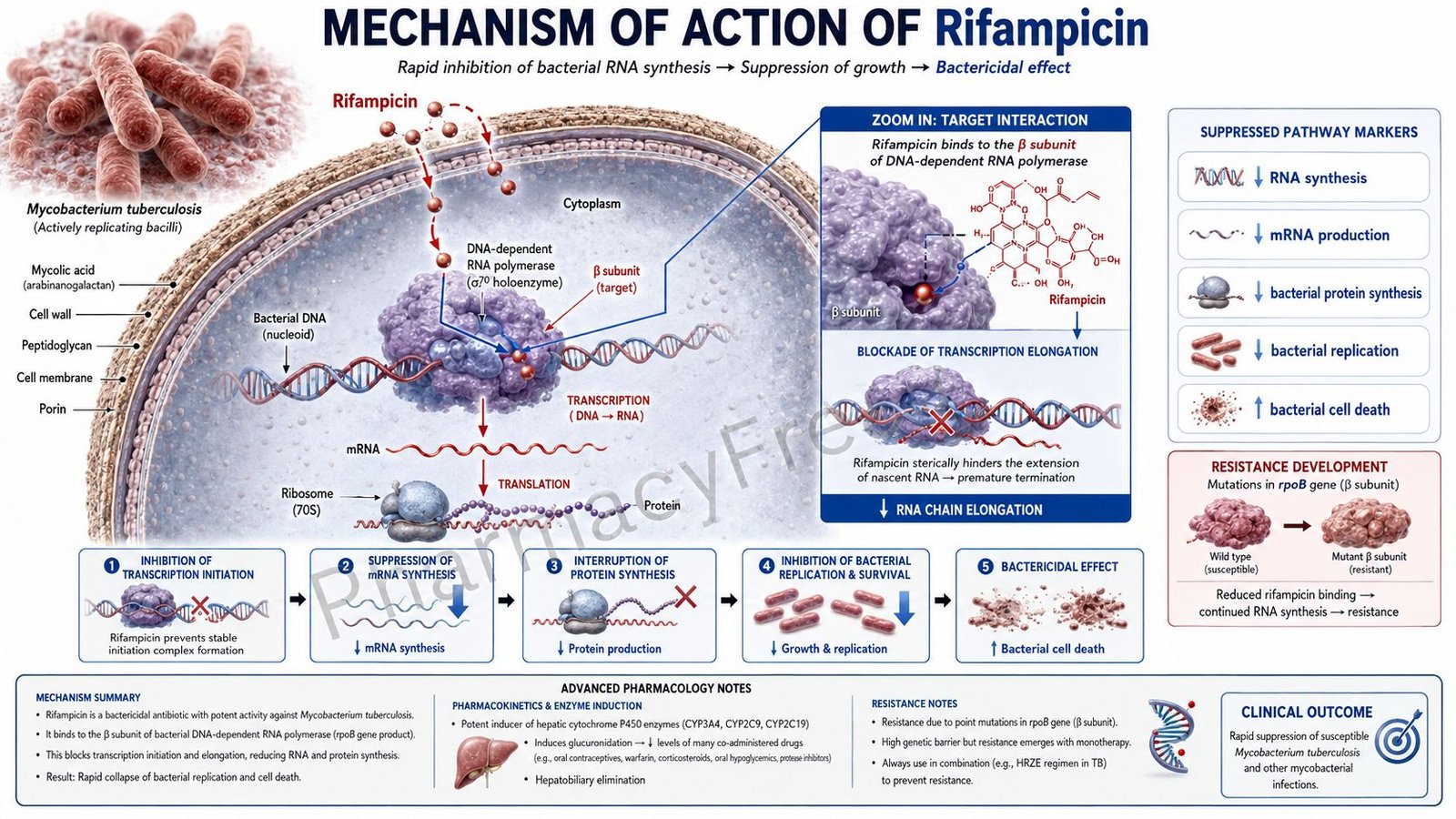
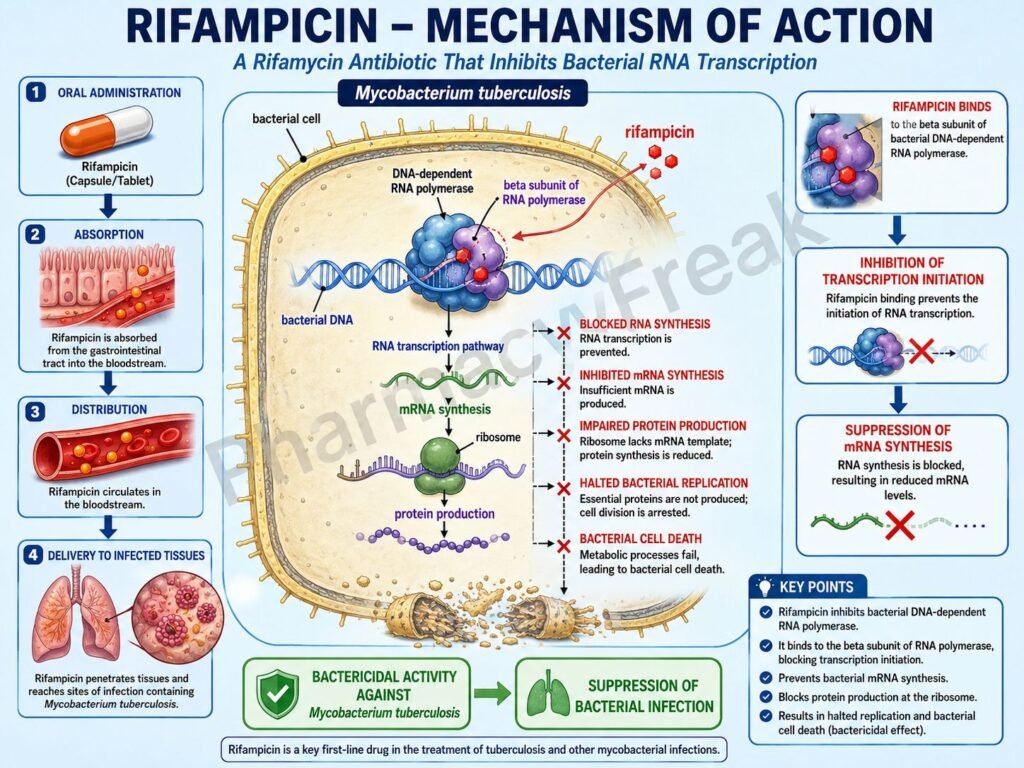
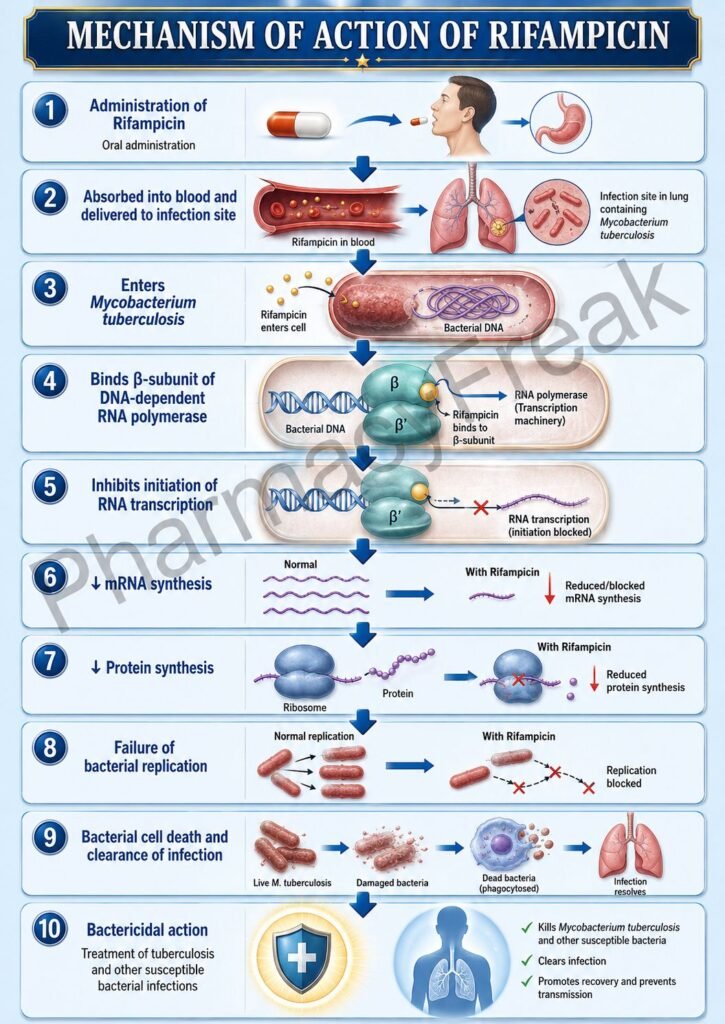
- Rifampicin enters susceptible bacterial cells.
- It binds specifically to the β-subunit of bacterial DNA-dependent RNA polymerase.
- RNA polymerase normally catalyzes transcription of bacterial DNA into messenger RNA (mRNA).
- Rifampicin inhibits initiation of RNA transcription.
- Formation of bacterial mRNA is blocked.
- Without mRNA, bacterial protein synthesis cannot proceed.
- Cellular metabolism and bacterial replication are impaired.
- The drug is particularly effective against rapidly dividing mycobacteria.
- Rifampicin penetrates intracellular tissues and macrophages where mycobacteria reside.
- The overall effect is bactericidal inhibition of bacterial growth and survival.
A key exam point is that rifampicin inhibits bacterial DNA-dependent RNA polymerase and blocks RNA synthesis.
Pharmacokinetics
Rifampicin is administered orally and is well absorbed. It is widely distributed throughout body tissues and penetrates cerebrospinal fluid during meningeal inflammation. Rifampicin undergoes hepatic metabolism and biliary excretion. It is a potent inducer of cytochrome P450 enzymes, leading to many drug interactions.
Clinical Uses
Rifampicin is a first-line drug for tuberculosis and is used in combination therapy to prevent resistance. It is also used in leprosy, prophylaxis of Neisseria meningitidis and Haemophilus influenzae type b infections, and certain staphylococcal infections.
Adverse Effects
Common adverse effects include hepatotoxicity, gastrointestinal upset, rash, and orange-red discoloration of body fluids such as urine, sweat, saliva, and tears. Because rifampicin strongly induces CYP450 enzymes, it reduces effectiveness of many drugs including oral contraceptives and warfarin.
Comparative Analysis
| Feature | Rifampicin | Isoniazid | Ethambutol |
|---|---|---|---|
| Main target | RNA polymerase | Mycolic acid synthesis | Arabinosyl transferase |
| Effect | Inhibits RNA synthesis | Inhibits cell wall synthesis | Inhibits cell wall formation |
| Bactericidal activity | Strong | Strong | Mostly bacteriostatic |
| CYP450 induction | Strong | Minimal | Minimal |
| Body fluid discoloration | Yes | No | No |
| Main toxicity | Hepatotoxicity | Neuropathy, hepatotoxicity | Optic neuritis |
Rifampicin differs from isoniazid and ethambutol because it inhibits bacterial RNA synthesis rather than mycobacterial cell wall synthesis.
MCQs
- Rifampicin primarily inhibits:
a) DNA gyrase
b) RNA polymerase
c) Ribosomes
d) Cell wall peptidoglycan synthesis
Answer: b) RNA polymerase
- Rifampicin binds to which bacterial enzyme subunit?
a) α-subunit
b) β-subunit
c) γ-subunit
d) δ-subunit
Answer: b) β-subunit
- Rifampicin mainly blocks bacterial:
a) Protein synthesis directly
b) RNA synthesis
c) Cell wall synthesis
d) DNA replication only
Answer: b) RNA synthesis
- Rifampicin is mainly used in treatment of:
a) Asthma
b) Tuberculosis
c) Diabetes mellitus
d) Hyperthyroidism
Answer: b) Tuberculosis
- Rifampicin is classified as:
a) Antifungal drug
b) Rifamycin antibiotic
c) Antiviral drug
d) Antimalarial agent
Answer: b) Rifamycin antibiotic
- Rifampicin is bactericidal because it inhibits:
a) Bacterial transcription
b) Histamine release
c) Potassium transport
d) ATP production only
Answer: a) Bacterial transcription
- A characteristic side effect is:
a) Blue discoloration of urine
b) Orange-red discoloration of body fluids
c) Green stool formation
d) Permanent tooth staining
Answer: b) Orange-red discoloration of body fluids
- Rifampicin strongly induces:
a) Acetylcholinesterase
b) Cytochrome P450 enzymes
c) Carbonic anhydrase
d) MAO enzymes
Answer: b) Cytochrome P450 enzymes
- A major adverse effect is:
a) Hepatotoxicity
b) Hypercalcemia
c) Cataracts
d) Severe hypoglycemia
Answer: a) Hepatotoxicity
- Rifampicin prophylaxis is commonly used for exposure to:
a) Neisseria meningitidis
b) Streptococcus pyogenes
c) Candida albicans
d) Plasmodium species
Answer: a) Neisseria meningitidis
- Compared with isoniazid, rifampicin mainly affects:
a) RNA synthesis
b) Mycolic acid synthesis
c) Folate synthesis
d) Cell membrane sterols
Answer: a) RNA synthesis
- Rifampicin may reduce effectiveness of oral contraceptives because it:
a) Blocks estrogen receptors
b) Induces hepatic metabolism
c) Prevents absorption
d) Inhibits progesterone release
Answer: b) Induces hepatic metabolism
FAQs
What is the mechanism of action of rifampicin?
Rifampicin inhibits bacterial DNA-dependent RNA polymerase and blocks RNA synthesis.
Why is rifampicin important in tuberculosis treatment?
Because it is strongly bactericidal against Mycobacterium tuberculosis.
Why does rifampicin cause orange discoloration of body fluids?
Due to the natural pigment color of the drug and its metabolites.
What is a major adverse effect of rifampicin?
Hepatotoxicity.
Why does rifampicin cause many drug interactions?
Because it strongly induces cytochrome P450 enzymes.
Why is rifampicin used in combination therapy for TB?
To reduce development of bacterial resistance.
References
Goodman & Gilman’s The Pharmacological Basis of Therapeutics – Antimycobacterial Drugs
https://accessmedicine.mhmedical.com/book.aspx?bookid=3191
Katzung: Basic and Clinical Pharmacology – Drugs Used in Tuberculosis
https://accessmedicine.mhmedical.com/content.aspx?bookid=3382
Tripathi: Essentials of Medical Pharmacology – Antitubercular Drugs
https://www.jaypeedigital.com
Harrison’s Principles of Internal Medicine – Tuberculosis
https://accessmedicine.mhmedical.com