Table of Contents
Introduction
Griseofulvin is an antifungal antibiotic primarily used to treat dermatophyte infections such as tinea infections of the skin, hair, and nails. It is derived from the mold Penicillium griseofulvum and works by inhibiting fungal cell division.
Unlike many antifungal drugs that target the fungal cell membrane, griseofulvin acts on fungal microtubules and mitotic spindle formation, preventing fungal replication. It is particularly effective against dermatophytes including Trichophyton, Microsporum, and Epidermophyton species.
Its mechanism is frequently tested in pharmacology examinations such as USMLE, NEET PG, FMGE, PLAB, INICET, NCLEX, and MCCQE.
Mechanism of Action (Step-wise)
Griseofulvin acts by disrupting fungal cell division and preventing fungal growth.
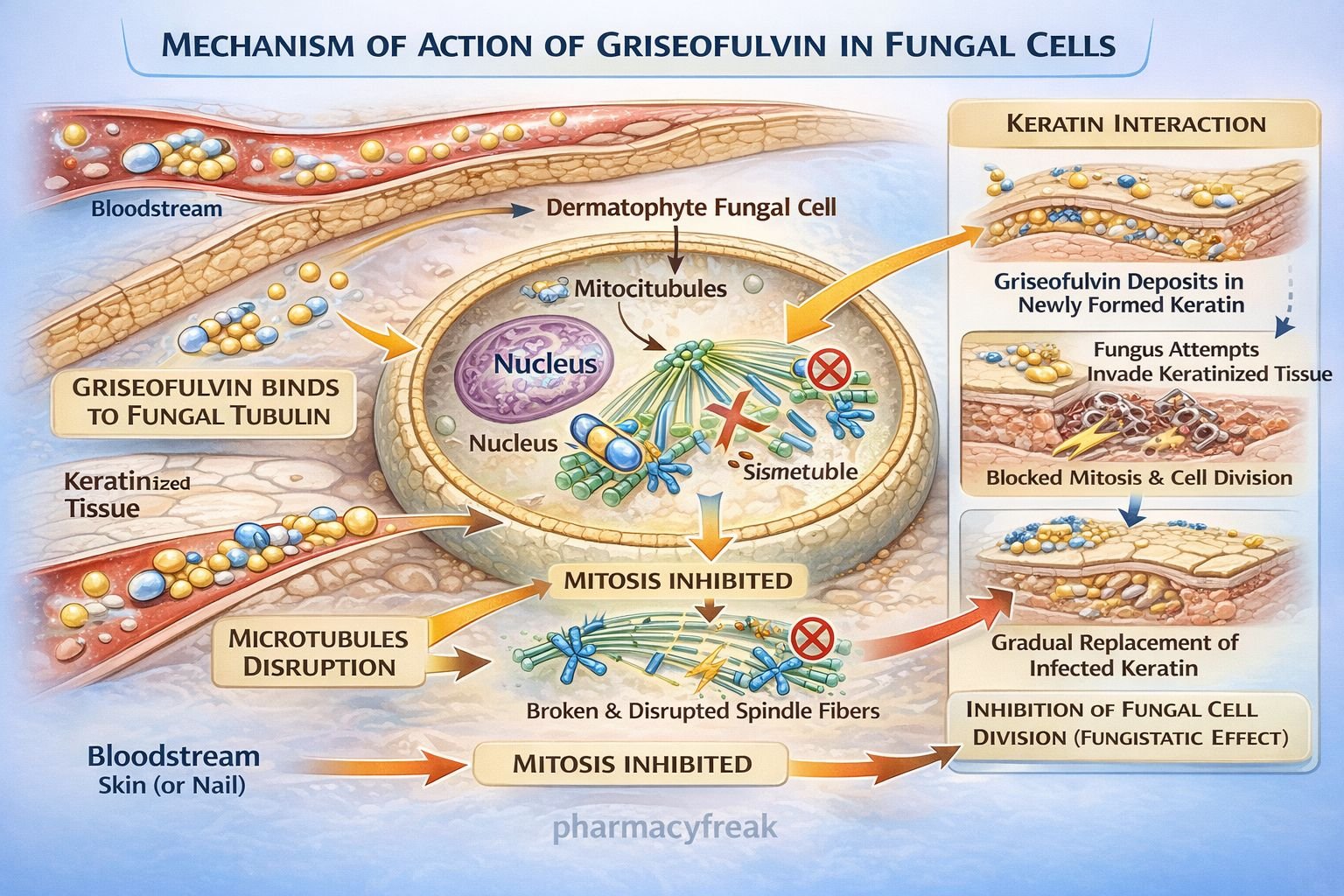
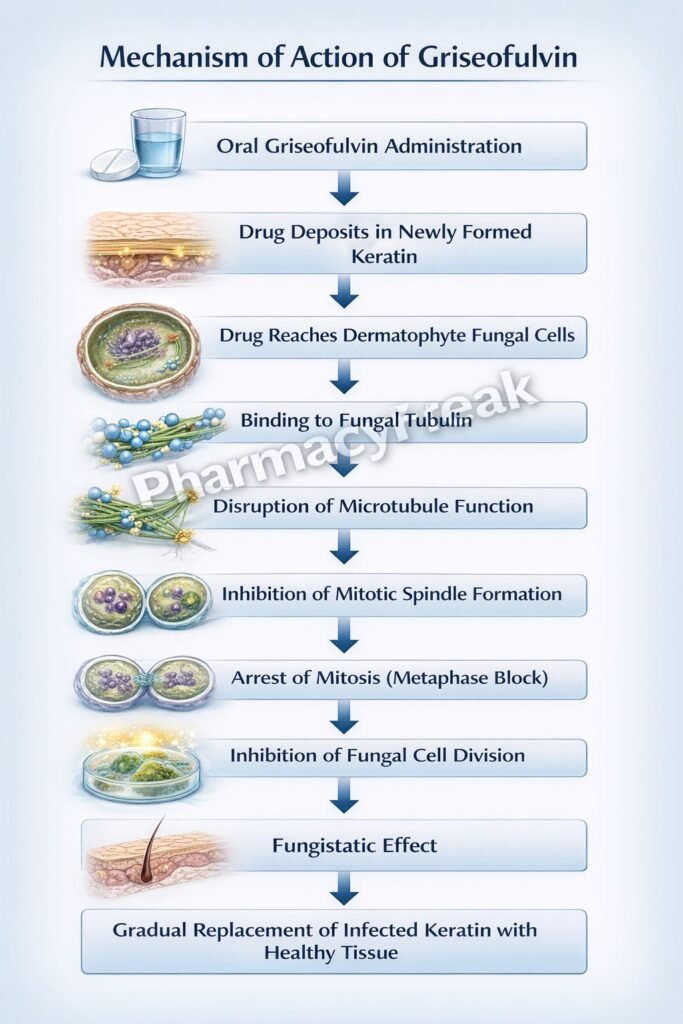
Step 1: Binding to fungal microtubules
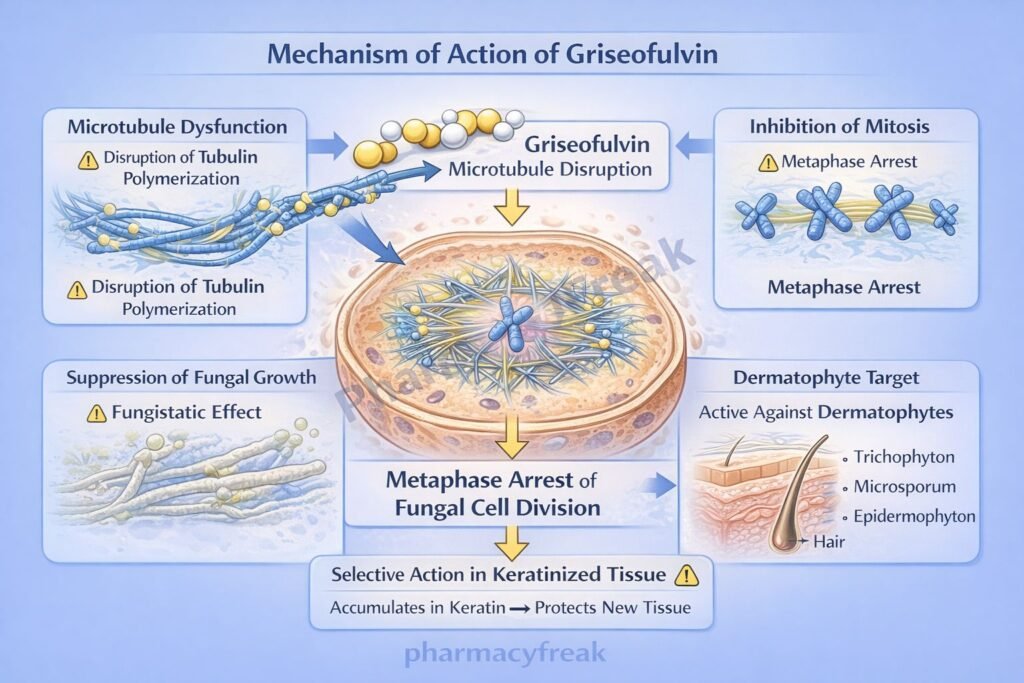
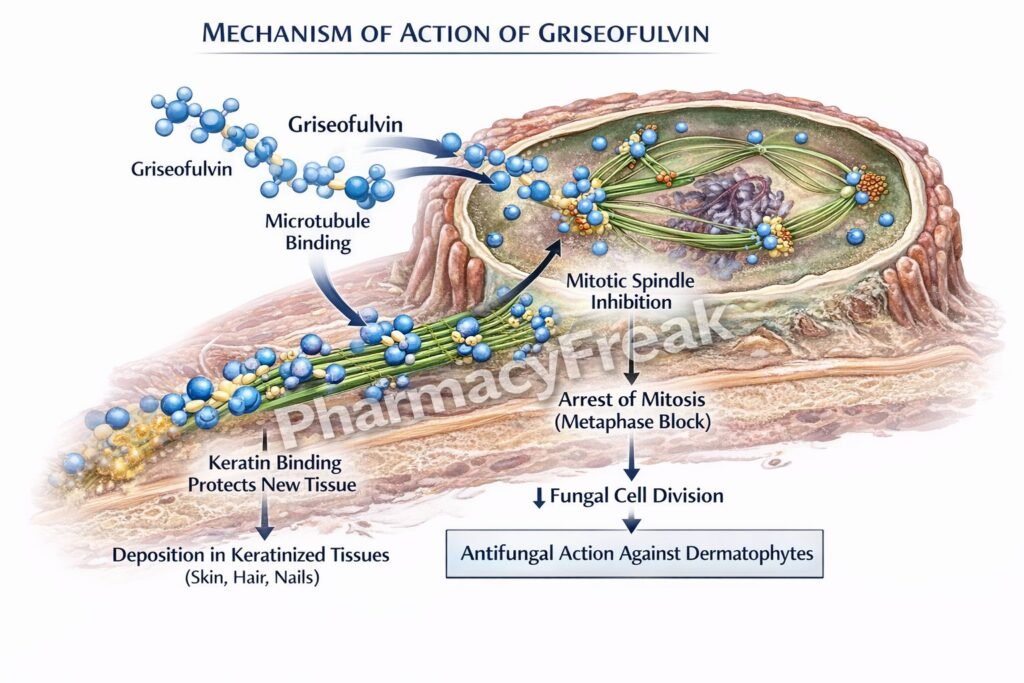
Griseofulvin binds to tubulin in fungal cells, interfering with microtubule function.
Step 2: Disruption of mitotic spindle formation
By affecting microtubules, the drug disrupts mitotic spindle formation required for cell division.
Step 3: Inhibition of mitosis
The inability to form a proper mitotic spindle prevents chromosome separation during mitosis.
Step 4: Arrest of fungal cell division
Fungal cells become arrested in metaphase, preventing replication.
Step 5: Deposition in keratinized tissues
Griseofulvin accumulates in keratin precursor cells of skin, hair, and nails.
Step 6: Protection of newly formed keratin
The drug binds to keratin, making the tissue resistant to fungal invasion.
Overall effect:
Fungistatic activity by inhibiting fungal mitosis and preventing infection of newly formed keratinized tissue.
Important pharmacology concept:
Griseofulvin does not kill fungi directly but inhibits their growth until infected tissue is replaced by healthy keratin.
Pharmacokinetics
Absorption:
Absorption from the gastrointestinal tract improves when taken with fatty meals.
Distribution:
Accumulates in keratin rich tissues including skin, hair, and nails.
Metabolism:
Extensively metabolized in the liver.
Excretion:
Excreted mainly through urine.
Duration:
Treatment duration depends on site of infection:
- Skin infections: weeks
- Nail infections: several months
Clinical Uses
- Dermatophyte infections (tinea infections)
- Tinea capitis
- Tinea corporis
- Tinea pedis
- Tinea unguium (onychomycosis)
Griseofulvin is particularly useful in infections of hair and scalp where topical therapy is ineffective.
Adverse Effects
Common adverse effects:
- Headache
- Gastrointestinal upset
- Skin rash
Less common adverse effects:
- Hepatotoxicity
- Photosensitivity
- Peripheral neuropathy
Drug interactions:
- Induces hepatic cytochrome P450 enzymes
- May reduce effectiveness of oral contraceptives and warfarin.
Comparative Analysis
| Feature | Griseofulvin | Terbinafine | Azoles |
|---|---|---|---|
| Mechanism | Inhibits mitosis | Inhibits squalene epoxidase | Inhibits ergosterol synthesis |
| Target | Microtubules | Ergosterol pathway | Lanosterol demethylase |
| Activity | Fungistatic | Fungicidal | Fungistatic |
| Tissue distribution | Keratinized tissues | Skin and nails | Broad tissue distribution |
| Major use | Dermatophytes | Onychomycosis | Systemic fungal infections |
Explanation:
Griseofulvin acts by disrupting fungal cell division through microtubule inhibition. Terbinafine works by blocking squalene epoxidase, leading to ergosterol depletion and fungal cell membrane damage. Azole antifungals inhibit lanosterol demethylase, also disrupting ergosterol synthesis. Because of its unique mechanism, griseofulvin is particularly effective in dermatophyte infections of keratinized tissues.
MCQs
- Griseofulvin acts by inhibiting:
a) Ergosterol synthesis
b) DNA replication
c) Fungal mitosis
d) Protein synthesis
Answer: c) Fungal mitosis
- Griseofulvin binds to:
a) Ergosterol
b) Tubulin
c) DNA polymerase
d) Ribosomes
Answer: b) Tubulin
- Main therapeutic use of griseofulvin:
a) Systemic candidiasis
b) Dermatophyte infections
c) Malaria
d) Tuberculosis
Answer: b) Dermatophyte infections
- Griseofulvin accumulates mainly in:
a) Bone
b) Keratinized tissues
c) Liver
d) Brain
Answer: b) Keratinized tissues
- Griseofulvin activity is:
a) Fungicidal
b) Fungistatic
c) Antibacterial
d) Antiviral
Answer: b) Fungistatic
- Absorption improves when taken with:
a) Water only
b) Fatty meals
c) Empty stomach
d) Antacids
Answer: b) Fatty meals
- Which infection commonly requires griseofulvin?
a) Tinea capitis
b) Candidiasis
c) Aspergillosis
d) Cryptococcosis
Answer: a) Tinea capitis
- Griseofulvin interferes with formation of:
a) Cell membrane
b) Mitotic spindle
c) Cell wall
d) DNA helix
Answer: b) Mitotic spindle
- Which enzyme system is induced by griseofulvin?
a) Cyclooxygenase
b) Cytochrome P450
c) Monoamine oxidase
d) Lipoxygenase
Answer: b) Cytochrome P450
- Reduced effectiveness of oral contraceptives may occur due to:
a) Increased absorption
b) Enzyme induction
c) Renal excretion
d) Reduced metabolism
Answer: b) Enzyme induction
FAQs
- How does griseofulvin treat fungal infections?
By inhibiting fungal mitosis and preventing fungal replication. - Why is griseofulvin effective in skin and nail infections?
Because it accumulates in keratinized tissues. - Is griseofulvin fungicidal or fungistatic?
It is primarily fungistatic. - Why should griseofulvin be taken with fatty meals?
Fat increases its gastrointestinal absorption. - Can griseofulvin affect oral contraceptives?
Yes, it induces hepatic enzymes that may reduce contraceptive effectiveness. - What fungi are mainly targeted by griseofulvin?
Dermatophytes such as Trichophyton, Microsporum, and Epidermophyton.
References
Goodman & Gilman’s Pharmacological Basis of Therapeutics
https://accessmedicine.mhmedical.com/book.aspx?bookID=2189
Katzung BG. Basic and Clinical Pharmacology
https://accessmedicine.mhmedical.com/book.aspx?bookID=2249
Tripathi KD. Essentials of Medical Pharmacology
https://jaypeedigital.com/book/9789354651970
Harrison’s Principles of Internal Medicine
https://accessmedicine.mhmedical.com/book.aspx?bookID=3095