Table of Contents
Introduction
Rosuvastatin is a statin medication used to treat hypercholesterolemia and reduce cardiovascular risk. It lowers low-density lipoprotein (LDL) cholesterol by inhibiting hepatic cholesterol synthesis. Rosuvastatin is one of the most potent HMG-CoA reductase inhibitors and is widely used in prevention of atherosclerotic cardiovascular disease.
Mechanism of Action (Step-wise)
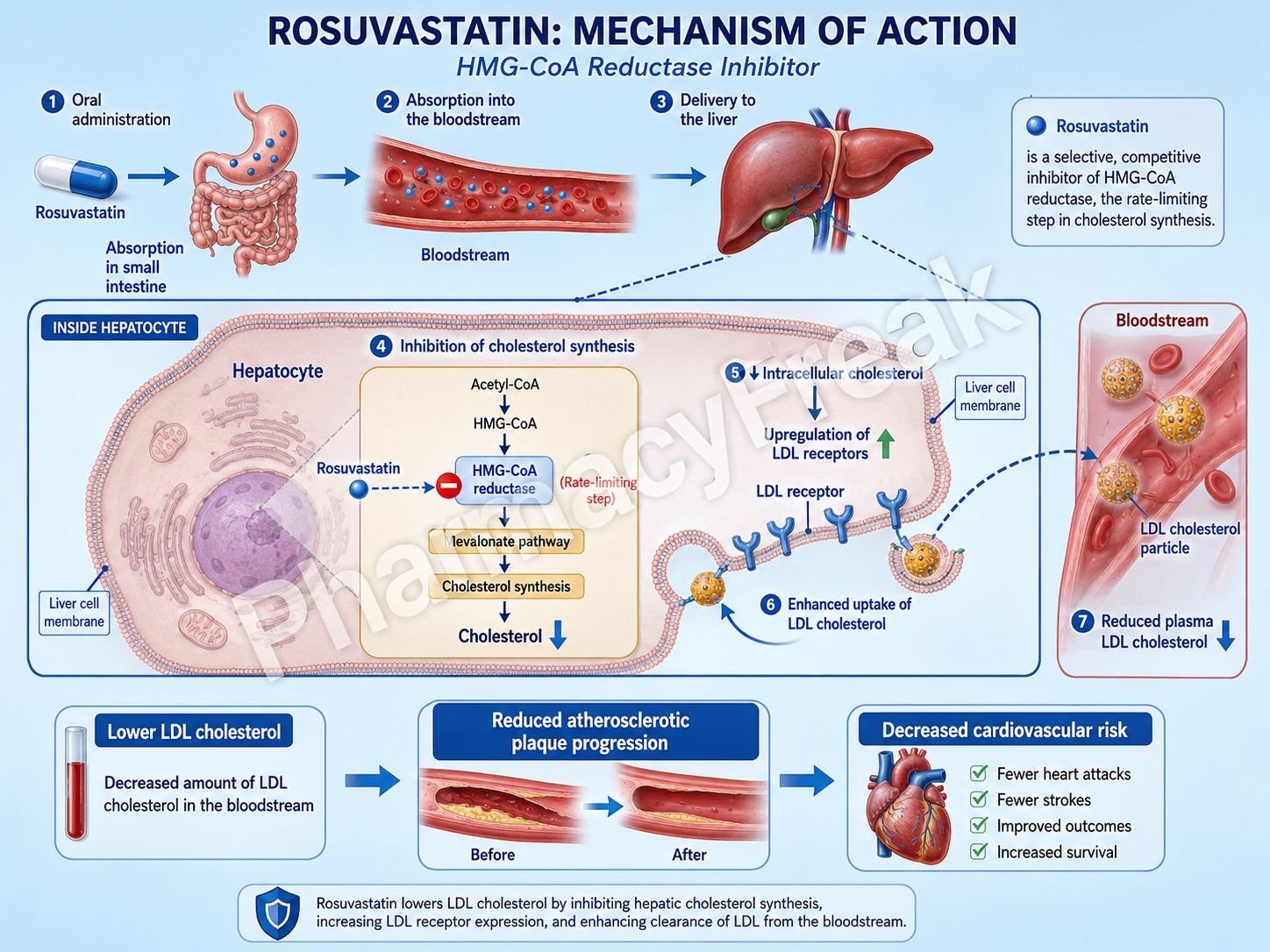
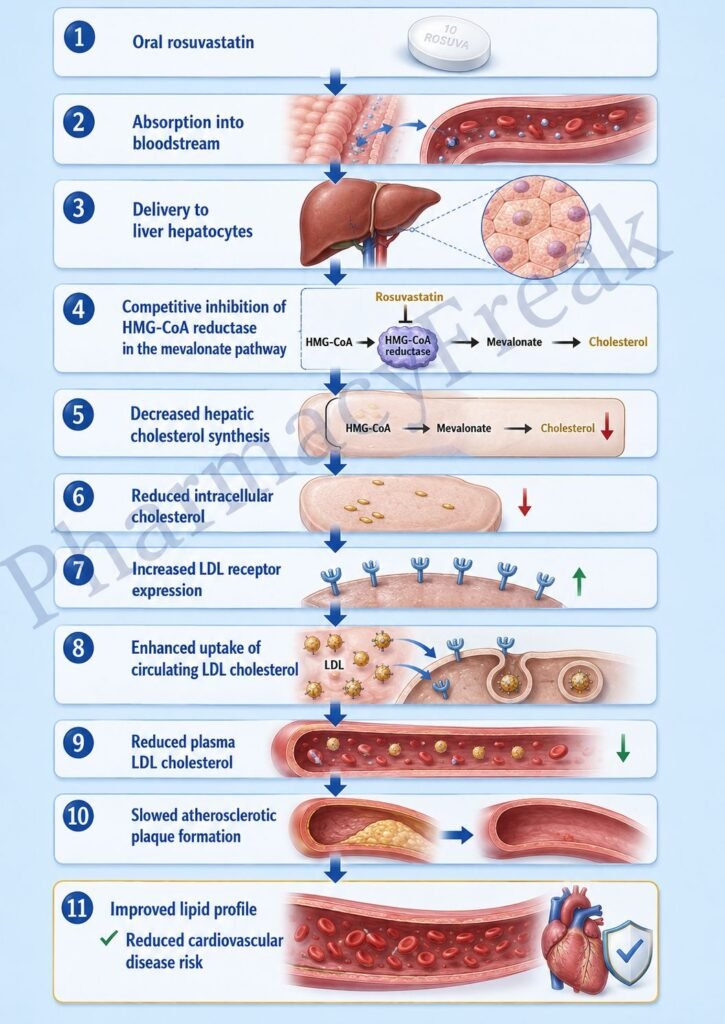
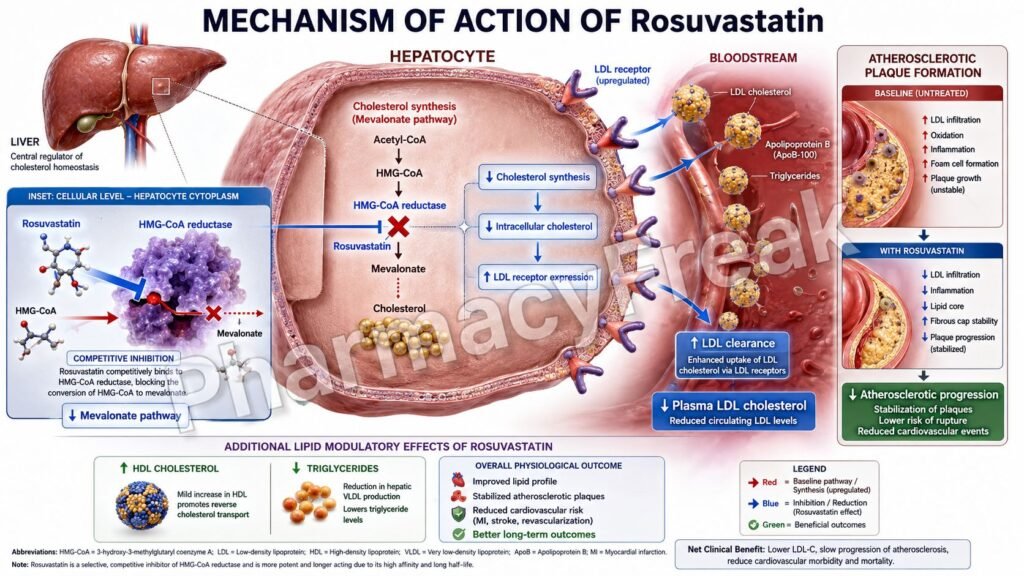
- Rosuvastatin selectively inhibits the enzyme HMG-CoA reductase in hepatocytes.
- HMG-CoA reductase normally converts HMG-CoA into mevalonate.
- This step is the rate-limiting step in hepatic cholesterol synthesis.
- Inhibition of the enzyme decreases intracellular cholesterol production in the liver.
- Reduced hepatic cholesterol levels stimulate upregulation of LDL receptors on hepatocyte surfaces.
- Increased LDL receptor expression enhances uptake of circulating LDL cholesterol from the bloodstream.
- Plasma LDL cholesterol levels decrease significantly.
- Rosuvastatin also moderately decreases triglycerides and slightly increases HDL cholesterol.
- Reduced cholesterol accumulation slows formation of atherosclerotic plaques.
- Statins also improve endothelial function and reduce vascular inflammation.
- The overall effect is reduction of cardiovascular morbidity and mortality.
A key exam point is that rosuvastatin inhibits HMG-CoA reductase, decreasing hepatic cholesterol synthesis and increasing LDL receptor expression.
Pharmacokinetics
Rosuvastatin is administered orally and has good hepatic selectivity. It undergoes limited metabolism compared with many other statins, mainly through CYP2C9. Most of the drug is excreted unchanged in feces. It has a relatively long half-life, allowing once-daily dosing.
Clinical Uses
Rosuvastatin is used in hypercholesterolemia, mixed dyslipidemia, familial hypercholesterolemia, and prevention of cardiovascular events such as myocardial infarction and stroke.
Adverse Effects
Common adverse effects include myalgia, headache, abdominal pain, and nausea. Rare but serious adverse effects include hepatotoxicity and rhabdomyolysis. Liver enzymes and muscle symptoms should be monitored in susceptible patients.
Comparative Analysis
| Feature | Rosuvastatin | Atorvastatin | Ezetimibe |
|---|---|---|---|
| Drug class | Statin | Statin | Cholesterol absorption inhibitor |
| Main mechanism | HMG-CoA reductase inhibition | HMG-CoA reductase inhibition | NPC1L1 inhibition |
| LDL reduction potency | Very high | High | Moderate |
| HDL increase | Mild | Mild | Minimal |
| Main site of action | Liver | Liver | Intestinal brush border |
| Cardiovascular risk reduction | Strong | Strong | Moderate |
Rosuvastatin differs from ezetimibe because it inhibits cholesterol synthesis in the liver rather than intestinal cholesterol absorption. Compared with atorvastatin, rosuvastatin is generally more potent at lowering LDL cholesterol.
MCQs
- Rosuvastatin belongs to which drug class?
a) Fibrates
b) Statins
c) Bile acid sequestrants
d) PCSK9 inhibitors
Answer: b) Statins
- Rosuvastatin inhibits which enzyme?
a) Lipoprotein lipase
b) HMG-CoA reductase
c) Cyclooxygenase
d) Xanthine oxidase
Answer: b) HMG-CoA reductase
- HMG-CoA reductase normally converts HMG-CoA into:
a) Acetyl-CoA
b) Mevalonate
c) Cholestyramine
d) Triglycerides
Answer: b) Mevalonate
- Rosuvastatin primarily lowers which lipoprotein?
a) HDL
b) LDL
c) Chylomicrons
d) VLDL only
Answer: b) LDL
- Reduced hepatic cholesterol stimulates increase in:
a) Histamine receptors
b) LDL receptors
c) Dopamine receptors
d) Sodium channels
Answer: b) LDL receptors
- Rosuvastatin mainly acts in the:
a) Kidneys
b) Liver
c) Pancreas
d) Thyroid gland
Answer: b) Liver
- Rosuvastatin helps prevent:
a) Asthma
b) Cardiovascular disease
c) Epilepsy
d) Hyperthyroidism
Answer: b) Cardiovascular disease
- A common adverse effect is:
a) Myalgia
b) Hypercalcemia
c) Severe bradycardia
d) Cataracts
Answer: a) Myalgia
- A serious adverse effect of statins is:
a) Rhabdomyolysis
b) Hypernatremia
c) Glaucoma
d) Hypoglycemia
Answer: a) Rhabdomyolysis
- Rosuvastatin slightly increases levels of:
a) LDL cholesterol
b) HDL cholesterol
c) Chylomicrons
d) Histamine
Answer: b) HDL cholesterol
- Compared with ezetimibe, rosuvastatin mainly inhibits:
a) Intestinal cholesterol absorption
b) Hepatic cholesterol synthesis
c) Pancreatic lipase activity
d) Triglyceride hydrolysis
Answer: b) Hepatic cholesterol synthesis
- Rosuvastatin reduces atherosclerosis mainly by lowering:
a) Potassium levels
b) LDL cholesterol
c) Calcium excretion
d) Blood glucose only
Answer: b) LDL cholesterol
FAQs
What is the mechanism of action of rosuvastatin?
Rosuvastatin inhibits HMG-CoA reductase, reducing hepatic cholesterol synthesis and increasing LDL receptor activity.
Why does rosuvastatin lower LDL cholesterol?
Because reduced hepatic cholesterol stimulates uptake of LDL from the bloodstream.
What are common side effects of rosuvastatin?
Myalgia, headache, abdominal discomfort, and nausea.
What is a serious adverse effect of rosuvastatin?
Rhabdomyolysis.
How does rosuvastatin differ from ezetimibe?
Rosuvastatin inhibits cholesterol synthesis, while ezetimibe blocks cholesterol absorption in the intestine.
Why are statins important in cardiovascular prevention?
Because they reduce LDL cholesterol and lower risk of heart attack and stroke.
References
Goodman & Gilman’s The Pharmacological Basis of Therapeutics – Drugs for Hyperlipidemia
https://accessmedicine.mhmedical.com/book.aspx?bookid=3191
Katzung: Basic and Clinical Pharmacology – Antihyperlipidemic Drugs
https://accessmedicine.mhmedical.com/content.aspx?bookid=3382
Tripathi: Essentials of Medical Pharmacology – Hypolipidemic Drugs
https://www.jaypeedigital.com
Harrison’s Principles of Internal Medicine – Disorders of Lipid Metabolism and Cardiovascular Disease
https://accessmedicine.mhmedical.com