Table of Contents
Introduction
Phentermine is a sympathomimetic amine used as an appetite suppressant in the short-term management of obesity. It acts primarily on the central nervous system to reduce hunger and increase satiety. Phentermine is structurally similar to amphetamines and is commonly prescribed along with dietary modification and exercise in weight reduction programs.
Mechanism of Action (Step-wise)
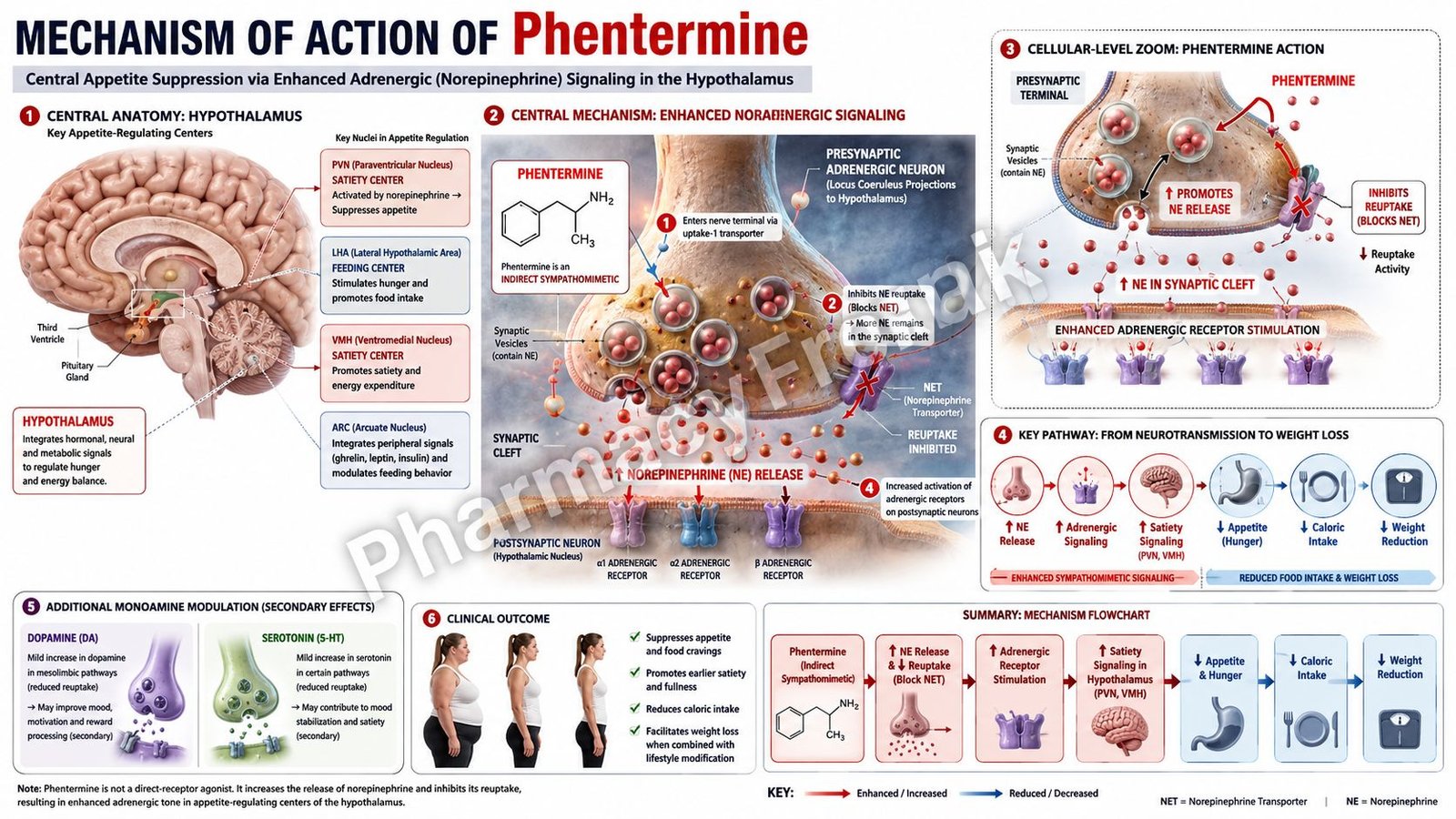
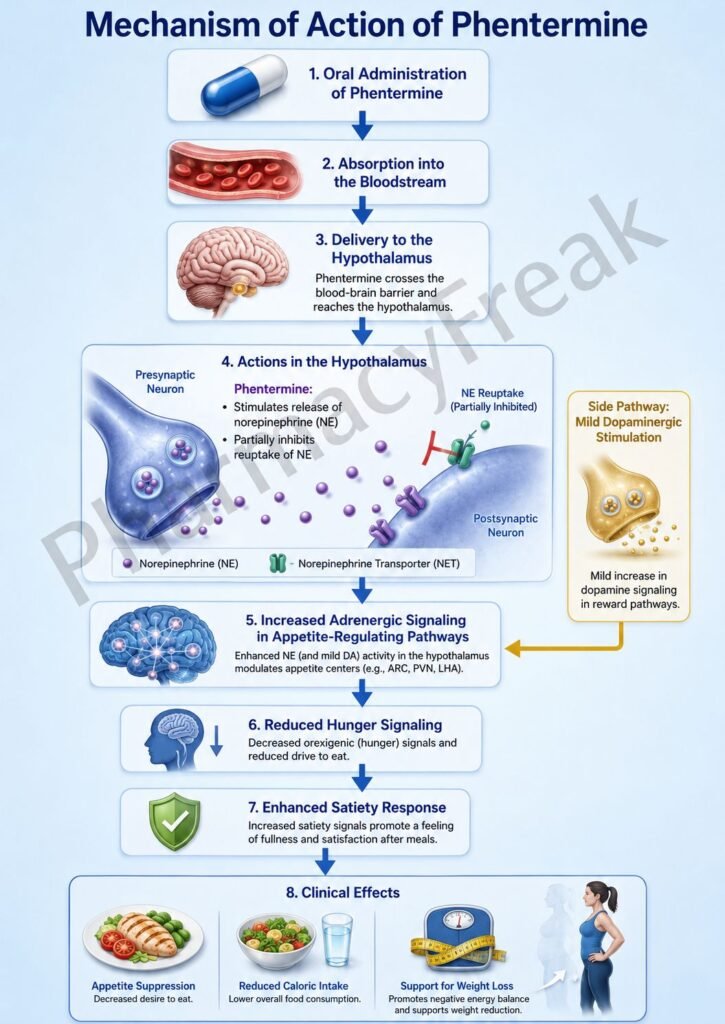
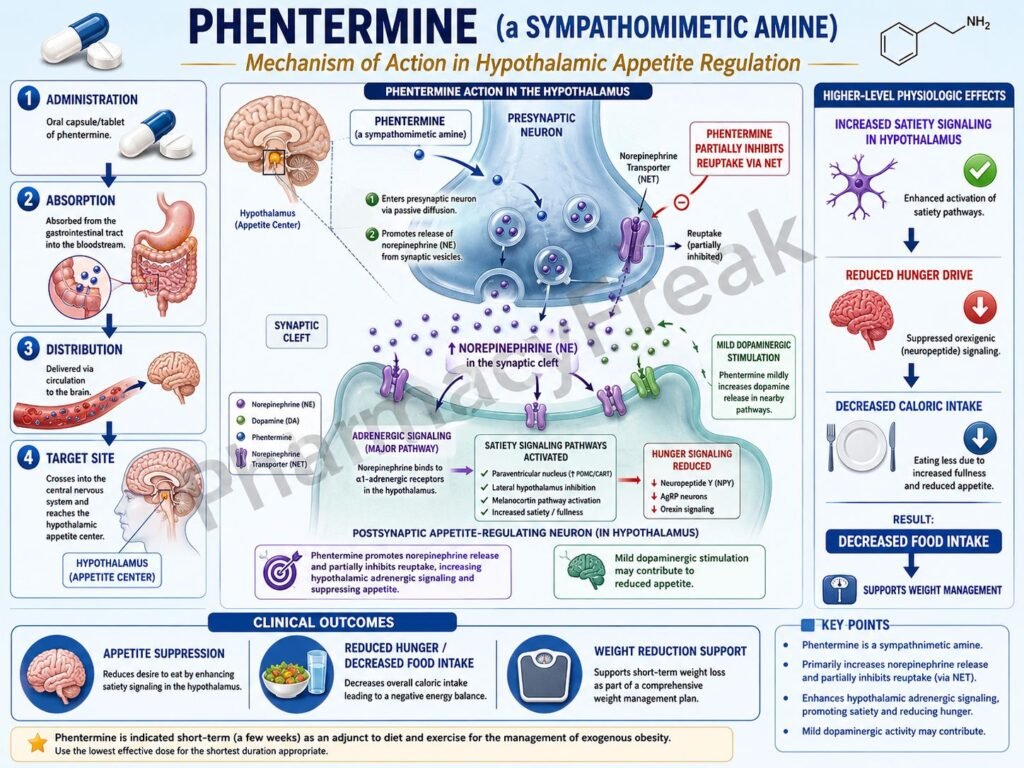
- Phentermine stimulates the release of norepinephrine from presynaptic nerve terminals in the hypothalamus.
- Increased norepinephrine activates adrenergic receptors in appetite-regulating centers of the brain.
- This suppresses hunger signals and reduces appetite.
- Phentermine also increases dopamine release to a lesser extent.
- Mild serotonin release may also contribute to appetite suppression.
- Increased catecholamine activity enhances satiety.
- Sympathetic stimulation may slightly increase energy expenditure.
- The overall effect is reduced food intake and weight loss.
A key exam point is that phentermine suppresses appetite primarily through increased norepinephrine release in the hypothalamus.
Pharmacokinetics
Phentermine is administered orally and is well absorbed from the gastrointestinal tract. It has a relatively long duration of action, allowing once-daily dosing. It undergoes limited hepatic metabolism and is excreted mainly unchanged via the kidneys. Urinary pH affects elimination, with acidic urine increasing excretion.
Clinical Uses
Phentermine is used as a short-term adjunct in obesity management in combination with lifestyle modification. It is prescribed for patients with obesity or overweight individuals with obesity-related comorbidities such as hypertension or diabetes.
Adverse Effects
Common adverse effects include insomnia, dry mouth, tachycardia, palpitations, nervousness, and increased blood pressure. Due to its stimulant properties, it may cause anxiety and restlessness. Dependence potential exists because of its amphetamine-like activity. It should be used cautiously in patients with cardiovascular disease.
Comparative Analysis
| Feature | Phentermine | Orlistat | Liraglutide |
|---|---|---|---|
| Mechanism | ↑ Norepinephrine release | Lipase inhibition | GLP-1 receptor agonist |
| Primary effect | Appetite suppression | Reduced fat absorption | Increased satiety |
| Route | Oral | Oral | Subcutaneous |
| CNS stimulation | Yes | No | Minimal |
| Weight loss effect | Moderate | Moderate | Significant |
| Main adverse effects | Insomnia, tachycardia | GI effects | Nausea |
Phentermine differs from orlistat by acting centrally to suppress appetite rather than reducing fat absorption. Compared to liraglutide, it has more stimulant-related adverse effects.
MCQs
- Phentermine primarily increases release of:
a) Acetylcholine
b) Norepinephrine
c) Histamine
d) GABA
Answer: b) Norepinephrine
- Phentermine acts mainly in the:
a) Liver
b) Hypothalamus
c) Kidney
d) Heart
Answer: b) Hypothalamus
- The primary effect of phentermine is:
a) Increased appetite
b) Appetite suppression
c) Fat absorption
d) Insulin release
Answer: b) Appetite suppression
- Phentermine is structurally similar to:
a) Benzodiazepines
b) Amphetamines
c) Opioids
d) NSAIDs
Answer: b) Amphetamines
- Phentermine may also increase:
a) Dopamine
b) Calcium
c) Sodium
d) Chloride
Answer: a) Dopamine
- Phentermine is used in:
a) Asthma
b) Obesity
c) Epilepsy
d) Anemia
Answer: b) Obesity
- A common adverse effect is:
a) Bradycardia
b) Insomnia
c) Hypoglycemia
d) Hypercalcemia
Answer: b) Insomnia
- Phentermine may cause:
a) Sedation
b) Tachycardia
c) Hypotension
d) Bradykinesia
Answer: b) Tachycardia
- Phentermine is administered:
a) Intravenously
b) Orally
c) Intramuscularly
d) Sublingually
Answer: b) Orally
- Dependence risk occurs because of:
a) GABA activation
b) Amphetamine-like activity
c) COX inhibition
d) Insulin release
Answer: b) Amphetamine-like activity
- Phentermine suppresses appetite by increasing:
a) Parasympathetic activity
b) Sympathetic activity
c) Histamine release
d) Calcium influx
Answer: b) Sympathetic activity
- Compared to orlistat, phentermine acts:
a) Peripherally only
b) Centrally
c) In the intestine only
d) On pancreatic enzymes
Answer: b) Centrally
FAQs
What is the mechanism of action of phentermine?
It suppresses appetite by increasing norepinephrine release in the hypothalamus.
Why is phentermine considered stimulant-like?
Because it is structurally similar to amphetamines and increases catecholamine activity.
What is its main use?
Short-term treatment of obesity.
Why can phentermine cause insomnia?
Due to central nervous system stimulation.
Does phentermine increase metabolism?
It may slightly increase energy expenditure through sympathetic stimulation.
Can phentermine cause dependence?
Yes, due to its stimulant properties.
References
Goodman & Gilman’s The Pharmacological Basis of Therapeutics – Drugs Used in Obesity
https://accessmedicine.mhmedical.com/book.aspx?bookid=3191
Katzung: Basic and Clinical Pharmacology – Antiobesity Drugs
https://accessmedicine.mhmedical.com/content.aspx?bookid=3382
Tripathi: Essentials of Medical Pharmacology – Antiobesity Drugs
https://www.jaypeedigital.com
Harrison’s Principles of Internal Medicine – Obesity Management
https://accessmedicine.mhmedical.com